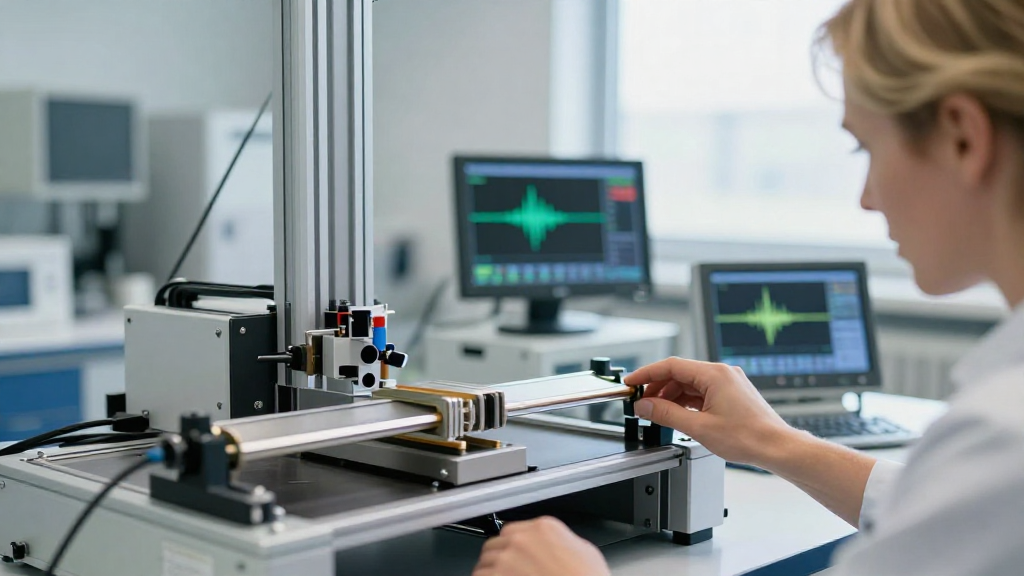
Performing a beam vibration analysis is crucial for assessing structural integrity and ensuring the longevity of engineering structures.
In this article, we’ll explore the processes involved in conducting a comprehensive beam vibration analysis, discussing the importance of this assessment and providing step-by-step guidance.
What is Beam Vibration Analysis?
Beam vibration analysis refers to the study of how beams react to dynamic loads and disturbances, which can lead to oscillations.
This analysis helps engineers to determine the natural frequency, mode shapes, and damping ratios of beams in various applications like bridges, buildings, and machinery.
By understanding beam vibrations, engineers can identify potential issues that may arise due to resonance or excessive vibrations, ultimately leading to safer designs.
Why is Beam Vibration Analysis Important?
-
Structural Integrity:
Assessing vibrations helps in predicting the lifespan of beams and identifying weaknesses that could lead to failure. -
Safety Compliance:
Many engineering standards require vibration analysis to ensure that structures meet safety codes. -
Performance Optimization:
Analyzing vibrations can help in optimizing performance and enhancing the overall efficiency of structures. -
Cost Reduction:
Early detection of issues through analysis can save significant repair costs down the line.
What Equipment is Needed for Beam Vibration Analysis?
To carry out a successful beam vibration analysis, you will need the following equipment:
-
Accelerometers:
These sensors measure the acceleration of the beam’s surface. They are essential for capturing vibration data. -
Data Acquisition System:
You will need a system to collect and analyze data from the accelerometers. -
Amplifiers:
These are needed to enhance the signal from the accelerometers. -
Computational Software:
Software applications, such as MATLAB or ANSYS, can help in modeling and analyzing vibration data. -
Calibration Equipment:
This ensures that your sensors are functioning accurately.
How Do You Prepare for Beam Vibration Analysis?
Proper preparation sets the foundation for a successful beam vibration analysis. Follow these steps:
-
Define Objectives:
Determine the purpose of the analysis and what you intend to measure. -
Select the Beam Type:
Choose the type of beam suitable for your study (simply supported, fixed, cantilever, etc.). -
Gather Data:
Collect information related to the beam properties, including:
– Length
– Cross-section area
– Material properties (E-modulus, density) -
Site Inspection:
Examine the physical condition of the beams, noting any existing damage or unusual wear. -
Preliminary Model Creation:
Before running the actual analysis, create a basic model using computer software for simulation.
How is Beam Vibration Analysis Performed?
Step 1: Setting Up Equipment
-
Install Accelerometers:
Place accelerometers at critical points on the beam where vibrations are likely to differ. -
Connect Data Acquisition System:
Ensure all equipment is connected and properly calibrated.
Step 2: Data Collection
-
Conduct Baseline Measurements:
Record vibration data under non-loading or static conditions. -
Apply Dynamic Loads:
Introduce dynamic loads (e.g., hammering the beam) and measure the response.
Step 3: Data Analysis
-
Fourier Transform:
Use Fast Fourier Transform (FFT) algorithms to translate time-domain data into frequency-domain data. -
Identify Resonance Frequencies:
Analyze the frequency response function to determine the natural frequencies of the beam. -
Mode Shape Analysis:
Assess the mode shapes to understand how the beam deforms during vibration. -
Damping Ratio Calculation:
Calculate the system’s damping ratios to evaluate energy dissipation.
Step 4: Validation
-
Compare with Theoretical Models:
Validate your results against theoretical predictions or prior studies. -
Conduct Additional Testing:
If necessary, repeat tests to ensure accuracy.
What are Common Challenges in Beam Vibration Analysis?
-
Environmental Factors:
External vibrations, temperature variations, and material inconsistencies can affect results. -
Equipment Limitations:
The sensitivity and frequency response of the sensors used can limit the accuracy of your analysis. -
Complex Geometry:
Real-world beams often have complex geometries that complicate modeling. -
Data Overload:
Large amounts of data can be overwhelming, making interpretation difficult.
How Can You Improve Your Beam Vibration Analysis?
Here are some strategies to enhance your beam vibration analysis process:
-
Utilize Advanced Computational Models:
Software that supports finite element analysis can provide more accurate results. -
Implement Signal Processing Techniques:
Techniques like averaging or filtering can minimize noise in the data. -
Focus on Training:
Ensure that personnel involved in the analysis are well-trained in both theory and practical applications. -
Incorporate Real-time Monitoring:
Use online monitoring systems to track beam vibrations continuously.
What are the Applications of Beam Vibration Analysis?
Beam vibration analysis has numerous practical applications in various fields:
-
Civil Engineering:
Used in designing and maintaining bridges and buildings. -
Aerospace:
Helps analyze wing and fuselage vibrations to enhance safety and performance. -
Mechanical Engineering:
Used in the manufacturing of machinery to avoid resonance and improve efficiency. -
Automotive Engineering:
Essential for ensuring vehicle stability and passenger safety.
Conclusion
Performing a beam vibration analysis is a vital process that ensures the integrity and safety of various structures and applications.
Through the combination of proper planning, effective equipment, and a thorough understanding of vibration principles, engineers can accurately assess and predict beam performance.
The importance of this analysis cannot be overstated, as it plays a crucial role in delivering safe, reliable, and efficient engineering solutions across various industries.
By following the steps outlined in this article, you can efficiently conduct a beam vibration analysis that meets your objectives and standards.
For further guidance or to learn more about advanced techniques in beam vibration analysis, consider consulting with experts in structural dynamics or related fields.