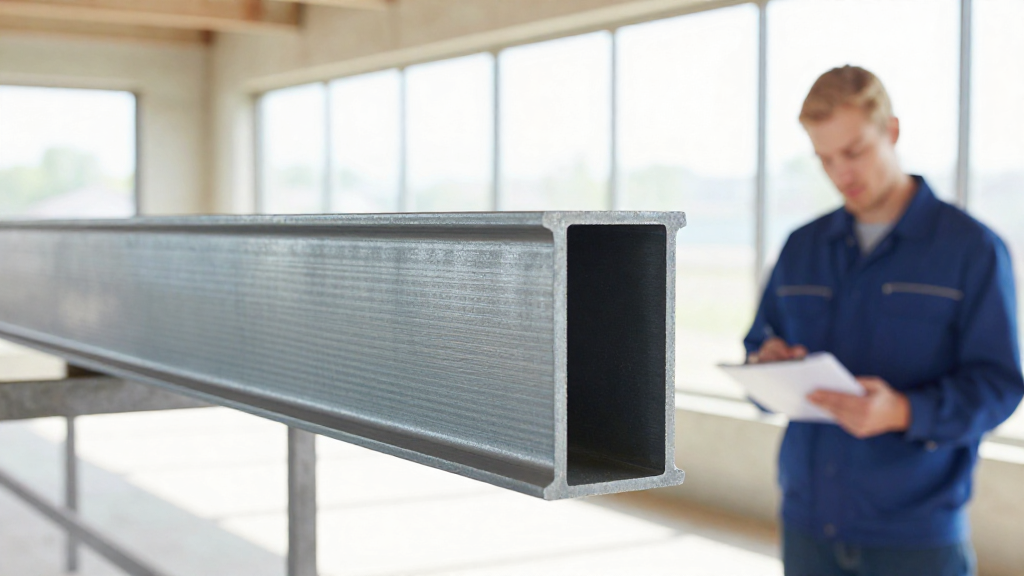
Designing a beam with eccentric load can pose unique challenges for engineers and architects.
Understanding how to effectively design these beams is crucial to maintaining structural integrity and ensuring safety.
What Is an Eccentric Load?
An eccentric load refers to a force applied at a distance from the beam’s centerline.
This results in bending moments and shear forces that can significantly affect the performance of the beam.
Understanding the Terminology
Before we delve into the design process, it’s essential to clarify a few key terms:
- Beam: A structural element that primarily resists loads applied laterally to its axis.
- Eccentric Load: A load not applied at the centroid of the beam’s cross-section.
- Bending Moment: A measure of the bending effect due to external forces.
- Shear Force: A force acting along the beam’s length that tends to cause one part of the beam to slide past an adjacent part.
By comprehending these basic concepts, designers can better approach the task of creating a beam with eccentric load.
How Do Eccentric Loads Affect Beams?
Eccentric loads can lead to:
- Increased bending moments
- Additional shear forces
- Changes in deflection profiles
Key Impacts on Design
When designing a beam with eccentric load, consider the following impacts:
- Deflection: Eccentric loading typically causes greater deflection in beams.
- Bending Stress: The eccentricity increases the bending moment, which translates into higher bending stress.
- Shear Stress: It can also lead to higher shear stresses, especially near supports.
What Steps Should Be Taken to Design a Beam with Eccentric Load?
Designing a beam with eccentric load involves several critical steps to ensure its robustness and safety.
Step 1: Identify Load Characteristics
Begin by identifying:
- Magnitude of the eccentric load
- Location where the load is applied
- Direction of the load
This information forms the basis for subsequent calculations.
Step 2: Calculate Bending Moments
To calculate the bending moments, use the following equation:
[ M = F \times d ]
Where:
- ( M ) = Bending moment
- ( F ) = Magnitude of the eccentric load
- ( d ) = Distance from the center of the beam to the point of load application
Step 3: Determine Shear Forces
Next, calculate the shear forces using equilibrium equations:
[ V = \sum{F_y} ]
Where ( V ) is the shear force and ( F_y ) is the vertical load acting on the beam.
Step 4: Analyze Deflections
Using relevant deflection formulas, analyze how much the beam will deflect under the loads.
Some commonly used equations incorporate beam length, type, material properties, and load type.
Step 5: Material Selection
Choosing the right material for a beam with eccentric load is critical.
Consider factors such as:
- Strength: Ensure it can handle the increased bending.
- Weight: Lighter materials can reduce the overall load.
- Durability: Look for materials that can withstand environmental factors.
Step 6: Safety Factors
Incorporate appropriate safety factors into your design.
Typically, this involves multiplying calculated loads and moments by a safety factor to ensure reliability under unexpected overload conditions.
What Design Codes Apply to Eccentric Loads?
Eccentric loads must comply with various design codes.
These codes vary by region and application but may include:
- ACI (American Concrete Institute) for concrete beams
- AISC (American Institute of Steel Construction) for steel beams
- Eurocode standards for design in Europe
Familiarity with these codes ensures that your beam with eccentric load meets national and local safety requirements.
How to Account for Eccentricity in Structural Analysis?
When analyzing a beam with eccentric load, it’s essential to consider both static and dynamic analyses.
Static Analysis
- Use simplified methods for preliminary design.
- Apply numerical methods for more complex scenarios, like finite element analysis (FEA).
Dynamic Analysis
Incorporate dynamic considerations if your beam experiences varying loads over time:
- Resonance: Avoid natural frequency matches that can amplify deflections.
- Impact Loads: Consider sudden loads that can lead to unexpected stresses.
What Are the Common Mistakes to Avoid?
Designing a beam with eccentric load can become error-prone without careful consideration.
Here are common mistakes to avoid:
- Ignoring Load Conditions: Not accounting for all load scenarios can lead to insufficient design.
- Underestimating Deflections: Incorrect calculations can lead to excessive bending.
- Inadequate Material Choice: Failing to select appropriate materials can compromise safety.
- Neglecting Code Compliance: Skipping relevant design codes can result in legal repercussions.
Conclusion: Why Proper Design of Beams with Eccentric Loads is Crucial
In summary, designing a beam with eccentric load requires a thorough understanding of load characteristics, calculations for bending moments and shear forces, and adherence to safety standards.
Proper design is not just an aesthetic endeavor; it’s vital for the structural integrity and longevity of a building.
By following the outlined steps and avoiding common mistakes, engineers can successfully tackle the challenges associated with eccentric loads.
With careful planning and execution, you can design robust, safe beams that stand the test of time.