Great food photography depends on controlled light, accurate color, and enough flexibility to shape highlights without making dishes look flat. The right flash or continuous light can help you capture crisp textures, rich colors, and appetizing dimension in nearly any setting.
These 10 lighting options cover tabletop shoots, overhead compositions, macro details, and larger home or studio setups. Use the guide below to match power, portability, and control features to the way you photograph food.
Best 10 Camera Flashes for Food Photography Picks for 2026
Macro Detail Specialist
Godox ML150 II Macro Ring Flash

- Soft, surrounding illumination for close-ups
- Eight adapter rings from 49mm to 77mm
- 11 manual brightness levels
Best For: Macro food photography and detailed close-ups
Compact Tabletop Lighting

- Compact softbox for small indoor setups
- 50W LED with 2500–7500K adjustment
- Folding stand and soft diffuser included
Best For: Small tabletop food photography and home studios
Best Wireless Value

- GN60 output for tabletop scenes
- 100-meter 2.4G wireless range
- Up to 230 full-power flashes
Best For: Affordable off-camera food photography setups
Best Continuous Fill Kit
EMART 60 LED Portable Light 2-Pack

- Two 5500K continuous LED panels
- 90+ CRI for natural color
- Compact tabletop mini-tripod design
Best For: Small food and product photography setups
Best TTL Pocket Strobe
Godox AD200Pro II 200Ws TTL Strobe

- 200Ws off-camera strobe output
- TTL exposure control
- One-tap pairing with X3 trigger
Best For: Portable Godox TTL lighting systems
Best Portable Fill Light
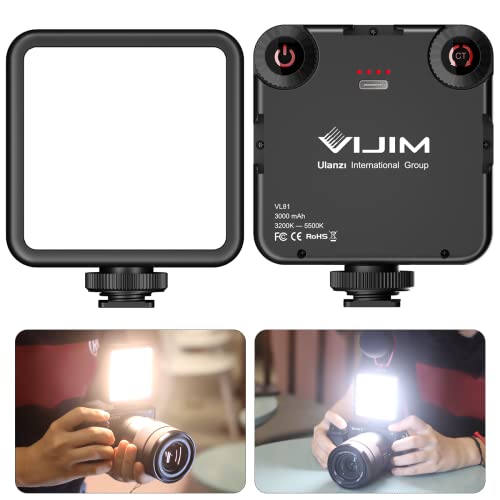
- 81-bead LED panel with CRI95 output
- 3200K–5600K adjustable color temperature
- Rechargeable 3000mAh battery and softbox
Best For: Portable food photography, phones, cameras, and video content
Best Studio Strobe Setup
Godox MS300V 300W Studio Flash

- 300W output with GN58 guide number
- Bowens mount for lighting modifiers
- 0.1–1.8-second recycle time and wireless control
Best For: Dedicated studio setups for controlled food and product photography
Best Budget Speedlite

- GN33 output with eight manual power levels
- S1/S2 optical wireless trigger modes
- Includes stand, pouch, and 12 color filters
Best For: Beginners learning manual flash for food and product photography
Macro Detail Specialist – Godox ML150 II Macro Ring Flash
Among camera flashes for food photography, the Godox ML150 II stands out for close-up work. Its ring-shaped illumination surrounds the lens for soft, shadow-controlled detail, while 11 brightness levels and eight adapter rings make it practical for photographing food and other small subjects.
Best For: Macro food photography, close-up detail, and photographers who need broad lens-diameter compatibility.
Pros:
- Surrounding light helps create soft, shadowless illumination.
- Includes adapter rings for 49mm through 77mm lens diameters.
- Offers 11 manual brightness levels for fine adjustments.
- Simple controls are approachable for beginners.
Cons:
- Its guide number of 12 is oriented toward close-up subjects rather than broad scenes.
- Uses a wired connection and manual exposure control.
- Requires four AA batteries.
The ML150 II is a specialized choice rather than a general-purpose speedlight. For plated dishes, ingredients, and other close subjects where even lighting matters, its ring design and included adapters are useful advantages.
Full-Scene Soft Light – Torjim 16-Inch LED Softbox Kit
For food photography that benefits from broad, consistent illumination, the Torjim softbox kit offers two 16-inch softboxes with adjustable 3000–7500K LED bulbs. The diffusers and reflective interiors are designed to soften light and reduce harsh shadows across tabletop setups.
Best For: Indoor food photography, tabletop scenes, product images, and creators who want a two-light kit.
Pros:
- Two softboxes provide flexible coverage for tabletop arrangements.
- Soft diffusers and reflective interiors help produce even light.
- Adjustable color temperature ranges from 3000K to 7500K.
- Includes two tripods, bulbs, diffusers, and a remote.
Cons:
- It is a continuous LED softbox system, not a camera-mounted flash.
- The listed CRI is 80.
- The lights are not water resistant.
This kit is a practical alternative when you want to see the lighting effect continuously while arranging food. Its two-light configuration can help shape a main light and fill light, though it requires more setup space than a compact flash.
Manual Speedlight Value – NEEWER TT560 Camera Flash
The NEEWER TT560 is a straightforward manual speedlight for photographers who want a portable option among camera flashes for food photography. It provides GN38 output, eight power levels, bounce and swivel movement, and S1/S2 optical slave modes for simple off-camera lighting.
Best For: Budget-conscious photographers comfortable setting flash power manually and using compatible cameras with a standard center-contact hot shoe.
Pros:
- Offers eight manual power levels from 1/128 to full power.
- Tilts 0°–90° and rotates 0°–270° for bounce and directional lighting.
- Supports S1/S2 optical slave modes and PC sync.
- GN38 output gives it more reach than a dedicated macro ring flash.
Cons:
- No TTL, HSS, automatic exposure, or camera-menu control.
- Compatibility must be checked carefully, and some electronic-shutter cameras cannot trigger it.
- Requires four AA batteries, which are not included.
The TT560 can work well for controlled food setups when you are willing to adjust power, ISO, aperture, and shutter speed yourself. It is less convenient for fast-changing scenes, but its adjustable head and optical slave modes add useful flexibility.
Compact Tabletop Lighting – RALENO 16-Inch LED Softbox
The RALENO 16-inch softbox is a compact continuous-light option for small food photography setups. Its 50W LED bulb, reflective interior, and soft diffuser are designed to provide bright, even illumination, while the folding stand suits limited indoor space.
Best For: Small tabletop food scenes, home studios, and creators who need one compact softbox with adjustable light.
Pros:
- Compact 16-inch design is suited to small indoor shooting areas.
- Reflective lining and diffuser help create soft, even light.
- 50W LED bulb offers adjustable 2500K–7500K color temperature.
- Reverse-folding stand adjusts from approximately 16.5 to 60 inches.
Cons:
- Includes one softbox, so coverage is more limited than a two-light kit.
- It is continuous LED lighting rather than a camera flash.
- The light is listed with a CRI of 82 and is not water resistant.
Choose the RALENO when portability and simple tabletop setup matter more than multi-light control. It is especially convenient for food photos in a small room, where a compact stand and visible continuous light can make positioning easier.
Best Wireless Value – Godox TT600 Speedlite
For photographers seeking versatile camera flashes for food photography, the Godox TT600 offers a powerful, portable option with manual control and broad camera compatibility. Its built-in 2.4G wireless system supports remote setups when paired with compatible Godox triggers.
Best For: Food photographers building an affordable off-camera lighting setup with compatible Godox wireless gear.
Pros:
- GN60 output provides strong illumination for tabletop scenes.
- Built-in 2.4G wireless transmission reaches up to 100 meters.
- Supports up to five groups and 32 channels for multi-light setups.
- Offers approximately 230 full-power flashes with 0.1–2.6-second recycling.
Cons:
- Requires four AA batteries, which are not included.
- On-camera HSS is not available; HSS requires a compatible wireless trigger.
- Manual flash operation may require more setup than TTL lighting.
The TT600 is a practical choice when you want strong output and room to expand into multi-light food photography. Budget separately for batteries and a compatible trigger if you need remote control or HSS.
Best Continuous Fill Kit – EMART 60 LED Portable Light 2-Pack
Although these are continuous LED lights rather than traditional flashes, the EMART 2-pack is a useful alternative among camera flashes for food photography when you want to see shadows and highlights in real time. The compact tabletop design suits small product and food setups.
Best For: Beginners and tabletop photographers who prefer continuous, adjustable illumination for food styling and product scenes.
Pros:
- Two 60-LED panels provide continuous 5500K daylight-balanced light.
- 90+ CRI supports natural-looking color rendering.
- Adjustable brightness and 180-degree angle positioning improve setup flexibility.
- Includes mini tripods and color filters for varied visual effects.
Cons:
- These are continuous lights, not electronic flash units.
- Mini-tripods reach a maximum height of 11 inches.
- They require corded electric power and are intended for indoor use.
The EMART kit makes exposure and shadow placement easy to judge before shooting, making it particularly approachable for tabletop food work. Its limited stand height and continuous-light design are less suitable for larger scenes or traditional flash techniques.
Best TTL Pocket Strobe – Godox AD200Pro II 200Ws TTL Strobe
The Godox AD200Pro II is a compact 200Ws TTL pocket strobe for photographers who want a more substantial off-camera lighting system for food photography. Its one-tap wireless pairing with the Godox X3 trigger is designed to simplify setup and keep attention on the scene.
Best For: Food photographers who want a portable TTL strobe and already use, or plan to add, a Godox X3 wireless trigger.
Pros:
- 200Ws output provides more strobe capacity than a basic speedlight.
- TTL operation supports quicker exposure setup.
- One-tap wireless sync with the X3 trigger streamlines pairing.
- Pocket-style monolight design is suited to portable lighting setups.
Cons:
- The supplied information does not specify recycling time, battery life, or wireless range.
- One-tap pairing is specifically described for use with the X3 trigger.
- It may be more capability than needed for simple, close tabletop scenes.
The AD200Pro II is the strongest fit here for photographers who want TTL convenience in a dedicated off-camera strobe. Its wireless workflow is especially appealing within the Godox ecosystem, but confirm trigger compatibility and your need for 200Ws output before buying.
Best Portable Fill Light – ULANZI VL-81 LED Video Light
For shoppers comparing camera flashes for food photography, the ULANZI VL-81 is a compact continuous-light alternative. Its 81-bead LED panel, softbox, adjustable 3200K–5600K color temperature, and CRI95 rating provide controllable illumination for tabletop scenes, recipe videos, and close-up food shots.
Best For: Food photographers and content creators who need lightweight, adjustable fill light for cameras, phones, or video setups.
Pros:
- Softbox helps create less-dazzling illumination for food and product scenes.
- Adjustable warm-to-cool color temperature from 3200K to 5600K.
- Built-in 3000mAh rechargeable battery with up to 150 minutes at maximum brightness.
- Three cold-shoe mounts support multiple lights or accessories.
Cons:
- Provides continuous LED illumination rather than a traditional flash burst.
- Not water resistant.
The VL-81 is a practical choice when you want portable, repeatable lighting rather than flash synchronization. Its small 120g design and integrated battery make it especially convenient for mobile food photography and short-form video.
Best Studio Strobe Setup – Godox MS300V 300W Studio Flash
For controlled tabletop work, the Godox MS300V is a more powerful studio option among camera flashes for food photography. Its 300W output, GN58 guide number, Bowens mount, adjustable LED modeling lamp, and 0.1–1.8-second recycle time suit repeatable lighting setups for dishes, ingredients, and product-style images.
Best For: Home studios and photographers who want a dedicated strobe with modifier compatibility and wireless control.
Pros:
- 300W studio strobe delivers strong output for larger or more controlled setups.
- Standard Bowens mount works with a wide range of compatible modifiers.
- Wireless control supports power, modeling lamp, and buzzer adjustments.
- Anti-preflash function helps synchronize with cameras that use a preflash.
Cons:
- Manual exposure control; it does not provide HSS.
- Designed for studio use rather than handheld or travel photography.
- The lamp cover must be removed before use.
The MS300V makes the most sense when you can leave a light stand and modifier in place. Its stable output and Bowens compatibility offer room to shape food-lighting setups, though it requires more space and equipment than a speedlite.
Best Budget Speedlite – PHOTOOLEX FK300 Manual Flash
The PHOTOOLEX FK300 is a straightforward hot-shoe option for photographers seeking camera flashes for food photography without automatic exposure features. Its GN33 output, eight manual power levels, and S1/S2 optical modes can support on-camera fill or simple off-camera tabletop lighting.
Best For: Beginners and budget-conscious photographers who want a manual flash for food, product, portrait, or event work.
Pros:
- Eight power levels range from 1/128 to full power for controlled exposure.
- S1 and S2 optical modes support basic wireless off-camera setups.
- Universal single-contact hot shoe fits a broad range of camera brands.
- Includes a stand, pouch, and 12 color filters.
Cons:
- Manual-only exposure control requires hands-on adjustments.
- Optical triggering can be less flexible than radio-based systems.
- No trigger is included with this version.
The FK300 is a useful entry point for learning flash placement and power control around a food set. Its included filters and stand add versatility, but photographers wanting automated TTL control or advanced wireless features will need a more capable flash system.
How We Picked the Best Camera Flashes for Food Photography
We focused on lighting tools that can realistically support food photography across different budgets and working styles. The selection includes speedlights, wireless strobes, macro ring flashes, LED panels, softbox kits, and compact studio lights. We considered output, light quality, power options, portability, triggering and compatibility, color control, and how easily each option can be modified or positioned around a tabletop scene.
Because food photographers often work in kitchens, dining rooms, or small studios, practical setup and control matter as much as maximum power. Continuous LEDs are useful for previewing shadows and reflections, while flash systems provide more freezing power and can overpower ambient window light.
Quick Comparison
- Best for macro details: Godox ML150 II Macro Ring Flash.
- Best for simple tabletop lighting: EMART 60 LED Portable Product Photography Light 2-Pack.
- Best budget speedlight: NEEWER TT560.
- Best wireless speedlight upgrade: Godox TT600.
- Best portable high-power option: Godox AD200 Pro II.
- Best studio value: Godox MS300V.
- Best compact continuous light: ULANZI VL-81.
- Best ready-to-use softbox kits: Torjim and RALENO kits.
Key Buying Factors for Camera Flashes for Food Photography
Flash Power and Light Size
More power helps when you use large softboxes, bounce light from a wall, or shoot at lower ISO settings. A compact speedlight is often sufficient for a single plate, while a studio strobe is better for large modifiers or brighter ambient conditions.
Flash Versus Continuous LED
Flash delivers short bursts that can freeze steam, moving hands, or subtle motion. LED lighting stays on, making it easier to preview shadows and compose video-friendly content. LEDs are especially convenient for beginners, recipe creators, and tabletop product work.
Color and Light Control
Look for consistent color output, adjustable brightness, and compatibility with softboxes, umbrellas, grids, or reflectors. Soft, directional light usually produces more attractive food texture than an unmodified direct flash.
Compatibility and Triggering
Check camera-mount compatibility before buying a speedlight or TTL system. Manual flashes can be affordable and reliable, but wireless triggering, TTL exposure, and remote power control can significantly speed up multi-light setups.
Portability and Power
Battery-powered units are valuable for location shoots, while AC-powered strobes suit permanent studios. Also consider recycle time, charging requirements, stand stability, and the space needed for modifiers.
Who Should Buy Which Camera Flashes for Food Photography?
Choose a macro ring flash if you regularly photograph close-up garnishes, ingredients, or small details. Pick a speedlight such as the NEEWER TT560 or Godox TT600 for a flexible, affordable setup that can bounce from nearby surfaces or work off-camera.
LED panels and softbox kits are the easiest choices for beginners and creators who want to see the lighting effect continuously. The EMART, ULANZI, Torjim, and RALENO options suit small tabletop scenes, social content, and mixed photo-video workflows.
For demanding commercial work, the Godox AD200 Pro II offers portable power and advanced control, while the MS300V is a practical choice for a more permanent studio. Whatever you choose, budget for a light stand, diffuser, reflector, or softbox; shaping the light often improves food images more than simply buying a brighter flash.