Low-light photography is easier when your flash matches both your camera and your shooting style. The right model can add cleaner illumination, freeze motion, and preserve more natural-looking detail without making your kit bulky.
We’ve gathered 10 compact flashes and camera lights suited to mirrorless cameras, DSLRs, close-up work, and casual video. Use the guide below to compare compatibility, power, control, and portability before choosing.
Best 10 Camera Flashes for Low Light Picks for 2026
Best Modular Canon Kit
GODOX iT32 TTL Flash + X5C Trigger

- TTL and HSS up to 1/8000 second
- Magnetic on-camera and wireless trigger system
- Rechargeable kit with reflector and diffuser
Best For: Canon users building a flexible Godox X-system setup
Best Compact 3-in-1 Light

- Flash, focus-assist, and continuous-light modes
- GN16 output with seven power levels
- Up to 550 full-power flashes per charge
Best For: Portable low-light shooting and hybrid photo-video use
Best Sony Wireless Mini Flash

- TTL, HSS, and multiple flash modes
- Magnetic X5S trigger supports wireless control
- GN18 output and up to 510 full-power flashes
Best For: Sony users seeking a compact expandable flash system
Best Continuous Fill Light
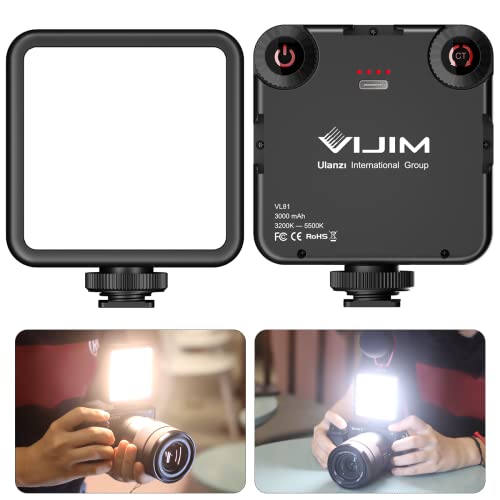
- Bi-color 3200K–5600K illumination
- CRI95 output with included softbox
- Up to 480 minutes of battery life
Best For: Vlogging, phone photography, and continuous fill lighting
Best Macro Ring Flash
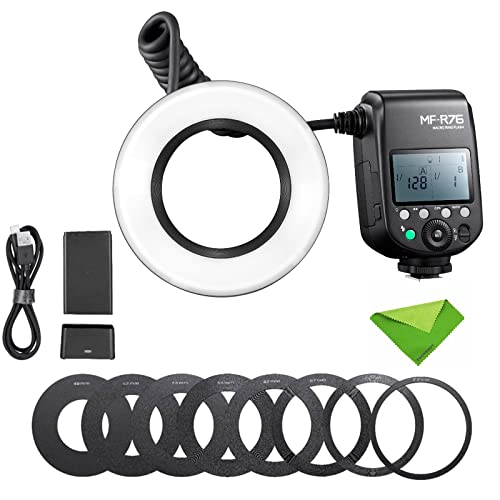
- Eight adapter rings support 49–77mm lenses
- Dual tubes offer independent lighting control
- Up to 660 full-power flashes per charge
Best For: Manual macro photography and close-up lighting
Best Compact Manual Flash

- Four adjustable manual power levels
- 90-degree tilt enables indoor bounce lighting
- Portable design with auxiliary fill light
Best For: Compatible cameras and simple indoor flash setups
Best Fujifilm TTL Flash

- TTL and manual modes for flexible exposure control
- Ultra-light 45g design for travel kits
- 700 flashes per charge with 1.5-second recycling
Best For: Compatible Fujifilm cameras and lightweight everyday shooting
Best Sony TTL Pick

- TTL metering for compatible Sony cameras
- Built-in tunable video light
- Flip head, filters, and 500-flash battery rating
Best For: Sony photographers and creators needing TTL and continuous light
Best Manual Multi-Camera Value
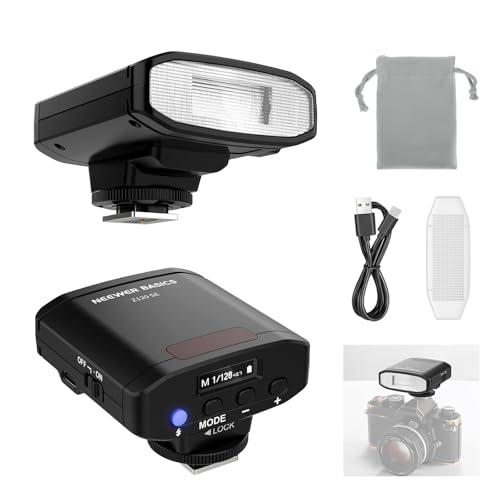
- GN12 manual flash with 1/128–1/1 output
- Works with standard single-contact hot shoes
- Up to 500 flashes with 0.1–1.8-second recycling
Best For: Photographers comfortable with manual flash settings
Best Ultra-Compact Manual Flash

- Ultra-light 0.07-pound design
- Four manual power levels with GN8 output
- USB-C charging and 500-plus full-power flashes
Best For: Travel and everyday carry with compatible single-contact cameras
Best Modular Canon Kit – GODOX iT32 TTL Flash + X5C Trigger
For Canon photographers choosing camera flashes for low light, the GODOX iT32 paired with the X5C trigger offers TTL, HSS up to 1/8000 second, and flexible on-camera or wireless operation. Its magnetic trigger design and rechargeable USB-C battery make it a versatile option for changing setups.
Best For: Canon users who want TTL flash with a straightforward path to off-camera Godox X-system lighting.
Pros:
- Supports TTL and HSS up to 1/8000 second.
- Magnetic X5C trigger can work as an on-camera hot shoe or wireless master.
- Includes a reflector, diffuser, and rechargeable USB-C battery.
- Works with multiple compatible Canon cameras and Godox X-system flashes.
Cons:
- Canon R50 and 50V users require the AD-E1 adapter.
- It is not water resistant.
The iT32 is a strong choice when you want one compact flash kit that can handle direct TTL shooting and more advanced multi-light setups. Check your Canon model and adapter requirements before buying.
Best Compact 3-in-1 Light – ULANZI F16R Speedlite
The ULANZI F16R combines a GN16 flash, focus-assist light, and bi-color continuous light in a compact hot-shoe design. For camera flashes for low light, its quick recycling, built-in battery, and adjustable illumination make it useful for casual portraits, street photography, and video.
Best For: Shooters who need a small, simple light for dim scenes, focus assistance, and occasional video work.
Pros:
- Three functions: flash, focus assist, and continuous video light.
- Seven flash power levels with 0.5–3-second recycle times.
- Built-in 1200mAh battery provides up to 550 full-power flashes.
- 90-degree tilt and included diffuser support direct or softer bounce lighting.
Cons:
- Not compatible with Canon 1500D, 3000D, or 200D Mark II, or systems without a standard center contact.
- Its GN16 output is more suited to nearby subjects than large spaces.
- The listed warranty is only one month.
The F16R is appealing when portability and versatility matter more than high output or advanced wireless control. Confirm that your camera has a compatible standard center-contact hot shoe.
Best Sony Wireless Mini Flash – Godox iT32 TTL + X5S
The Godox iT32 with X5S trigger is a compact Sony-focused option for camera flashes for low light, with TTL, HSS, GN18 output, and manual power from 1/128 to full power. The detachable magnetic trigger supports both on-camera shooting and wireless control.
Best For: Sony photographers who want a compact TTL flash that can expand into a Godox 2.4GHz wireless lighting system.
Pros:
- Offers TTL, HSS, Auto, Manual, and Multi-Flash modes.
- Supports HSS up to 1/8000 second.
- Detachable X5S trigger provides on-camera or wireless operation.
- Includes an LED modeling lamp, diffuser, USB-C cable, and storage bag.
Cons:
- Not compatible with the Sony ZV-1F.
- It is not water resistant.
- Compatibility should be checked against the specific Sony camera model.
With GN18 output and up to 510 full-power flashes, the iT32 balances portability with useful control features. It is particularly attractive for Sony users already considering Godox wireless flashes.
Best Continuous Fill Light – ULANZI VL-81 LED Panel
The ULANZI VL-81 is a constant LED panel rather than a traditional flash, making it useful when you need previewable illumination for photos, video, or live content. For camera flashes for low light, its bi-color output, softbox, and long battery life provide a simple continuous-light alternative.
Best For: Vloggers, phone shooters, and photographers who prefer continuous, adjustable fill light over a single flash burst.
Pros:
- Uses 81 beads with CRI95 output for improved color rendering.
- Adjustable color temperature from 3200K to 5600K.
- Built-in 3000mAh battery lasts up to 150 minutes at maximum brightness and 480 minutes at minimum.
- Softbox and three cold-shoe mounts support softer light and accessory expansion.
Cons:
- It is a continuous LED light, not a burst flash with TTL or HSS.
- It is not water resistant.
- Charging takes about three hours according to the supplied notes.
The VL-81 makes sense when consistent, adjustable illumination matters more than flash-freezing power. Its compact design and multiple mounts are especially convenient for small-camera, smartphone, and video setups.
Best Macro Ring Flash – Godox MF-R76 Macro Ring Flash
For close-up work where even illumination matters, the Godox MF-R76 is a specialized choice among camera flashes for low light. Its ring design, dual flash tubes, and broad adapter-ring compatibility make it useful for macro photography, though it requires manual exposure control and a shutter speed of 1/250 second or slower.
Best For: Macro photographers who need adjustable, front-facing illumination for detailed close-ups.
Pros:
- Includes eight adapter rings for lenses from 49mm to 77mm.
- Dual flash tubes allow separate or combined lighting with adjustable ratios.
- Rechargeable battery provides up to 660 full-power flashes.
- Built-in focus light offers 10 brightness levels for dark shooting environments.
Cons:
- No TTL; exposure adjustments are manual.
- Shutter speed should not exceed 1/250 second.
- Its ring-flash format is more specialized than a standard hot-shoe flash.
The MF-R76 is a strong fit when consistent, shadow-reducing macro light is more important than automatic exposure. Its extensive lens-ring support and long battery life add flexibility, while the manual-only operation suits photographers comfortable setting flash power themselves.
Best Compact Manual Flash – ULANZI SL03 Mini Flash
The ULANZI SL03 is a compact, manual-only option for photographers seeking portable camera flashes for low light. It offers four power levels, a 90-degree tilt range, and a fill-light function, but compatibility must be checked carefully because it requires a single-contact hot shoe and does not provide TTL.
Best For: Casual indoor photographers who want a small, rechargeable flash for compatible cameras.
Pros:
- Compact design is easy to carry with a small camera kit.
- Four manual power levels range from 1/1 to 1/8.
- 90-degree tilt supports bounce lighting from nearby ceilings or walls.
- Added fill light can assist focusing in flash mode.
Cons:
- No TTL or automatic exposure control.
- Requires a single-contact hot shoe and has several listed camera exclusions.
- For reliable synchronization, shutter speed should not exceed 1/250 second.
The SL03 makes sense as a lightweight backup or minimalist indoor flash, especially when bounce surfaces are available. Its low complexity can be an advantage, but buyers should verify the exact camera model and be prepared to set flash power manually.
Best Fujifilm TTL Flash – Godox iT20F TTL Mini Flash
Fujifilm users looking for camera flashes for low light may appreciate the Godox iT20F for its tiny 45-gram design and automatic TTL mode. It also includes manual output control, magnetic diffusion and CTO filters, and fast recycling, but it does not support high-speed sync and is intended specifically for compatible Fujifilm cameras.
Best For: Fujifilm mirrorless and GFX photographers who want an ultra-portable TTL flash for everyday shooting.
Pros:
- TTL and manual modes switch quickly with a dedicated button.
- Weighs only 45g, making it highly portable.
- Recycles at full power in about 1.5 seconds and provides up to 700 flashes per charge.
- Includes a magnetic diffuser and two CTO color filters.
Cons:
- Does not support HSS; recommended synchronization is 1/160 second or slower.
- Compatibility is limited to listed Fujifilm mirrorless and GFX cameras.
- Large or telephoto lenses may require a separate Godox TTL Hot Shoe Riser.
The iT20F is a convenient choice when a Fujifilm kit needs a flash that adds minimal weight. TTL simplifies exposure for changing conditions, while the manual mode and magnetic accessories provide extra control for more deliberate lighting.
Best Sony TTL Pick – ULANZI FT16 TTL Flash
For Sony shooters comparing camera flashes for low light, the ULANZI FT16 is a compact option that combines automatic TTL exposure with a continuous video light. Its GN16 output, autofocus assistance, and adjustable fill head make it useful for dim rooms, night streets, and portraits.
Best For: Sony photographers and creators who want TTL convenience plus a built-in video light.
Pros:
- TTL exposure control works with compatible Sony cameras and offers ±3 EV compensation.
- Lightweight 5.29-ounce design with a 0–90° flip fill light.
- Includes a continuous 2500K–6500K LED, three magnetic filters, and approximately 500 full-power flashes per charge.
Cons:
- Designed for Sony Multi Interface Shoe cameras rather than universal compatibility.
- Optical slave modes are provided, but the notes do not indicate radio wireless triggering.
The FT16 stands out when you want a small Sony-specific flash that can handle both still photography and video. Its TTL automation is especially helpful in changing low-light conditions, while the adjustable LED adds flexibility for vlogging and close-up fill.
Best Manual Multi-Camera Value – NEEWER Basics Z120 SE
The NEEWER Basics Z120 SE is a straightforward choice among camera flashes for low light if you are comfortable setting flash power yourself. It uses a standard single-contact hot shoe, provides GN12 output, and works across compatible Canon, Nikon, Sony, Fujifilm, and other cameras.
Best For: Budget-conscious photographers who prefer manual control and broad standard-hot-shoe compatibility.
Pros:
- Compact 4.52-ounce body with manual output from 1/128 to 1/1.
- Built-in 2000mAh battery supports up to 500 full-power flashes.
- Offers 0.1–1.8-second recycle time, S1/S2 optical slave modes, and a translucent diffuser.
Cons:
- No TTL, HSS, automatic exposure, or camera-menu control.
- Fujifilm and other mirrorless cameras must use mechanical shutter mode.
- Best suited to lenses 88mm or shorter; longer focal lengths may produce lower-frame underexposure.
This flash is a practical fit for controlled portraits, studio work, and outdoor setups where manual exposure is acceptable. Confirm that your camera has a standard center-contact hot shoe, and keep shutter speed at 1/200 second or slower for reliable synchronization.
Best Ultra-Compact Manual Flash – ULANZI SL01 Mini Flash
For photographers seeking highly portable camera flashes for low light, the ULANZI SL01 offers a simple, single-contact design in an exceptionally small package. It delivers GN8 output, four manual power levels, and more than 500 full-power flashes per charge.
Best For: Travel, everyday carry, and compatible-camera users who need basic fill light with minimal weight.
Pros:
- Extremely light 0.07-pound design for portable shooting.
- Four output levels, 6500K color temperature, and 97+ CRI for color reproduction.
- USB-C charging takes about 60 minutes, with charging and use possible simultaneously.
Cons:
- No TTL or automatic exposure; it requires a single-contact hot shoe.
- GN8 output is lower than the other flashes in this roundup.
- Charger and cable are not included, and compatibility exclusions require careful checking.
The SL01 makes the most sense when size and weight matter more than advanced automation or high output. Its simple controls suit quick fill-light work, but verify your exact camera model and hot-shoe type before ordering.
How We Picked These Camera Flashes for Low Light
We selected products across several common low-light needs rather than focusing only on maximum output. The lineup includes TTL flashes for automatic exposure, compact manual speedlites for everyday carry, macro ring lighting, and continuous LED options for video or previewable illumination.
Our comparisons consider camera compatibility, flash control, guide number or rated output, color consistency, battery capacity, recycle behavior, mounting flexibility, and overall practicality. Because compatibility varies by camera system, always verify the listing for your exact body and hot-shoe configuration before buying.
Quick Comparison
| Type | Best suited to | Main advantage |
|---|---|---|
| TTL mini flash | Travel and event photography | Automatic exposure in a small package |
| Manual mini speedlite | Casual portraits and snapshots | Simple, affordable fill light |
| Continuous LED light | Video, product shots, and close-ups | Light output is visible before shooting |
| Macro ring flash | Close-up and detail photography | Even illumination around the subject |
Key Buying Factors for Camera Flashes for Low Light
TTL Versus Manual Control
TTL automatically meters flash output through the camera and is useful when distance or composition changes quickly. Manual flashes can be more predictable in a controlled setup, but they require you to adjust power yourself. Confirm that TTL support matches your camera brand; a Canon-compatible unit may not provide the same automation on Sony, Nikon, or Fujifilm bodies.
Output, Recycle Time, and Battery Life
A higher guide number can help illuminate larger rooms or subjects farther away, while a fast recycle time makes repeated shots more practical. For occasional fill flash, compact output may be sufficient. For events, action, or bounced lighting, prioritize stronger output, reliable recycling, and a rechargeable battery with enough capacity for your session.
Color and Light Quality
Most flashes produce daylight-balanced light, while bi-color or adjustable LED panels offer more control for mixed indoor lighting and video. Look for diffusion, softboxes, or adjustable brightness when you need gentler shadows. Macro photographers should prioritize even coverage over maximum range.
Size, Mounting, and Compatibility
Small flashes are easier to carry but may offer fewer controls or less power. Check whether the unit fits your hot shoe, supports your camera’s communication system, and includes the trigger or adapter shown in the listing. Multiple cold-shoe mounts can be useful for lights, microphones, or other accessories.
Who Should Buy Which Camera Flashes for Low Light?
Choose a TTL mini flash if you want fast, camera-assisted results for travel, portraits, or events. A basic manual mini speedlite is a sensible low-cost option for snapshots and simple off-camera experiments. Select a continuous LED light for video, tabletop photography, or situations where you need to see the lighting effect before recording.
For close-up subjects such as jewelry, insects, or small products, a macro ring flash is the most specialized choice. If your camera system is not listed clearly, favor a broadly compatible manual model or confirm electronic compatibility with the seller before purchase.