If you want paper files to reach your cloud storage fast, the right scanner makes all the difference. The best document scanners with cloud upload can save time, reduce clutter, and keep records organized across work and home.
Below, we’ve rounded up 10 strong options for different needs, from compact mobile scanners to higher-capacity desktop models with wireless convenience.
Best 10 Document Scanners with Cloud Upload Picks for 2026
ScanSnap Premium Hub
ScanSnap iX2500 Wireless or USB Scanner

- 45 ppm duplex scanning
- Wi‑Fi 6, USB-C, and cloud support
- 100-sheet feeder with touchscreen profiles
Best For: Connected users who want a flexible cloud-ready desktop scanner
Portable Cloud Picker
Epson WorkForce ES-50 Mobile Scanner

- Ultra-light USB-powered design
- Scans to cloud with included software
- Handles receipts, IDs, and long pages
Best For: Travel and light office scanning with cloud storage support
Space-Saving Cloud Choice
ScanSnap iX1300 Wireless or USB Scanner

- Compact design for small desks
- 30 ppm duplex scanning
- USB, Wi‑Fi, and cloud service support
Best For: Home offices that need a small cloud-ready scanner
Ultra-Portable Choice
Brother DS-640 Compact Mobile Document Scanner

- Scans up to 16 ppm in color or black and white
- USB-powered and highly portable at about 1.5 lbs
- Scan-to cloud services available through iPrint&Scan
Best For: Traveling users who need a pocketable scanner with cloud upload options
Wireless Office Pick
Epson WorkForce ES-500W II Wireless Color Duplex Desktop Scanner

- Wireless scan-to cloud storage, phones, tablets, and computers
- Fast 35 ppm/70 ipm duplex scanning with 50-sheet ADF
- Includes OCR and ScanSmart tools for file management
Best For: Users who want fast batch scanning and easy cloud sharing from a desktop
Touchscreen Cloud Workflow Pick
ScanSnap iX1500 Color Duplex Document Scanner
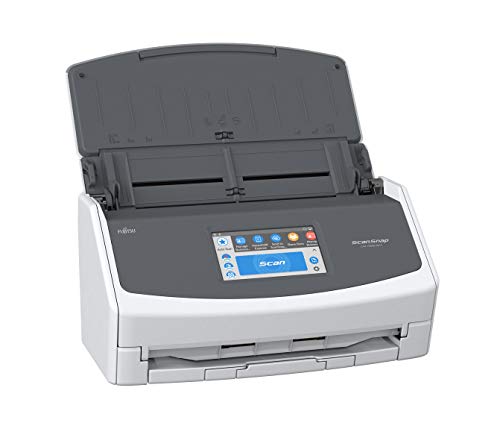
- 4.3-inch touch screen with one-touch scanning
- Scans to Google Drive, Dropbox, folders, and mobile devices
- 50-sheet capacity with multiple user profiles
Best For: Shared environments that want simple, touch-driven cloud scanning
Ultra-Compact Wireless Pick
Epson Workforce ES-C320W Compact Duplex Scanner
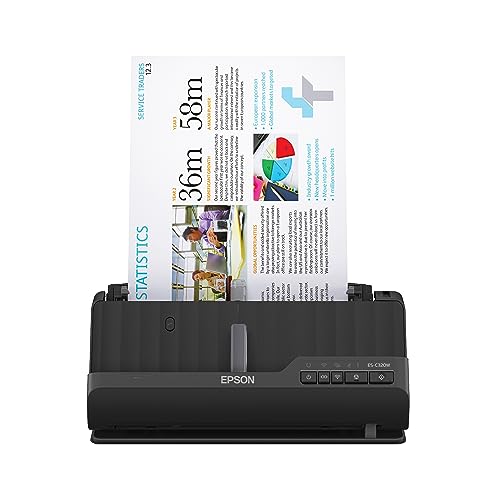
- Wireless scanning to cloud storage accounts
- Ultra-compact design saves desk space
- 20-page ADF with duplex scanning
Best For: Small desks and wireless cloud-first scanning
Fast Cloud Workflow Pick
Epson Workforce ES-400 II Desktop Scanner

- 50-sheet ADF for faster batch scanning
- ScanSmart supports cloud upload and auto file naming
- Duplex scans with OCR and editable file conversion
Best For: Fast desktop scanning with cloud-friendly software
High-Capacity Wireless Pick
Epson Workforce ES-580W Wireless Duplex Scanner

- 100-sheet ADF for larger batches
- Wireless scanning to cloud storage accounts
- 4.3-inch touchscreen and fast duplex scanning
Best For: Heavy scanning with wireless cloud sharing
Canon Office Workhorse – Canon imageFORMULA R40II Office Document Scanner
If you want document scanners with cloud upload for a straightforward office setup, the Canon imageFORMULA R40II focuses on speed and reliable everyday handling. It scans both sides at once, supports a wide variety of document types, and includes cloud scanning through Canon CaptureOnTouch.
Best For: Small offices and home users who want fast duplex scanning with simple cloud upload support.
Pros:
- Up to 45 pages per minute with one-touch duplex scanning.
- 60-sheet automatic feeder helps with batch jobs.
- Handles receipts, business cards, contracts, long documents, and thick or thin pages.
- Includes Canon CaptureOnTouch software and scans to cloud.
Cons:
- Designed exclusively for the bundled Canon CaptureOnTouch software.
- TWAIN and ISIS drivers are not supported.
- Uses a USB-C computer connection rather than built-in wireless.
Overall, the R40II is a practical pick if you value quick throughput and broad paper handling more than advanced driver compatibility or wireless convenience.
ScanSnap Premium Hub – ScanSnap iX2500 Wireless or USB Scanner
The ScanSnap iX2500 is built for document scanners with cloud upload when you want a high-speed, connected desktop scanner with flexible workflow options. It combines a large touchscreen, Wi-Fi 6, USB-C, and support for cloud services, so you can send scans to computers, mobile devices, or online storage.
Best For: Users who want a feature-rich scanner with touchscreen shortcuts and cloud-connected workflows.
Pros:
- Fast 45 ppm double-sided scanning with a 100-sheet feeder.
- Built-in Wi-Fi 6 plus USB-C connectivity.
- Large touchscreen with customizable profiles and Quick Menu.
- Supports sending scans to PC, Mac, mobile devices, and cloud services.
Cons:
- More desktop-oriented than a truly portable scanner.
- May be more scanner than needed for very simple scan-and-save tasks.
- Requires compatible software and supported devices for full workflow use.
If you want a scanner that streamlines repeated tasks and can move files into cloud services without much friction, the iX2500 offers one of the most complete feature sets here.
Portable Cloud Picker – Epson WorkForce ES-50 Mobile Scanner
The Epson WorkForce ES-50 is a compact option in document scanners with cloud upload, especially if portability matters more than batch capacity. It is USB-powered, scans a single page quickly, and includes software that can send files directly to online storage accounts.
Best For: Mobile users and light-duty scanning tasks where space, weight, and cloud upload support matter most.
Pros:
- Very lightweight and compact for travel or desk-free use.
- USB-powered, so no batteries or external power supply are needed.
- Scans documents up to 8.5 x 72 inches and handles receipts and ID cards.
- Includes software for scan-to-cloud and searchable PDFs.
Cons:
- Single-sheet-fed design means no automatic document stack feeding.
- Best suited to lighter scanning volumes.
- Requires a computer connection for power and operation.
The ES-50 makes sense when you need a simple, travel-friendly scanner that can still push files to the cloud through bundled software.
Space-Saving Cloud Choice – ScanSnap iX1300 Wireless or USB Scanner
The ScanSnap iX1300 is a strong pick among document scanners with cloud upload when you need a smaller footprint but still want wireless convenience. It scans a range of items, supports cloud services, and can run through ScanSnap Home for organizing documents, receipts, photos, and cards.
Best For: Small desks and users who want a compact scanner with wireless cloud workflow support.
Pros:
- Space-saving design that stays out of the way.
- Up to 30 ppm duplex scanning with automatic image cleanup features.
- USB or Wi-Fi connectivity with cloud service support.
- Handles documents, photos, business cards, and thicker items.
Cons:
- 20-sheet capacity is lower than larger desktop scanners.
- Slower than the higher-capacity ScanSnap model in this roundup.
- Cloud and mobile features depend on the ScanSnap software workflow.
For a compact everyday scanner, the iX1300 balances desk-friendly size with the cloud-connected flexibility many home offices want.
Ultra-Portable Choice – Brother DS-640 Compact Mobile Document Scanner
If you want document scanners with cloud upload that travel well, the Brother DS-640 is built for quick, on-the-go capture. It scans color and black-and-white pages at up to 16 ppm and works from a micro USB 3.0 connection, so you can scan directly from a PC or laptop without hunting for an outlet.
Best For: Mobile users who need a tiny, USB-powered scanner for occasional cloud upload workflows.
Pros:
- Very compact and light at about 1.5 lbs
- Supports scan-to cloud services through Brother iPrint&Scan
- USB-powered for use where no outlet is available
- Includes image cleanup tools like background removal and text enhancement
Cons:
- Single-sheet design is not meant for batch scanning
- Cloud scanning depends on the included desktop app and connected computer
The DS-640 is a strong pick if portability matters more than speed for large stacks. It is best viewed as a compact scan-and-send tool for receipts, cards, and documents rather than a high-volume office workhorse.
Wireless Office Pick – Epson WorkForce ES-500W II Wireless Color Duplex Desktop Scanner
For buyers comparing document scanners with cloud upload, the Epson WorkForce ES-500W II offers a more traditional desktop setup with strong wireless convenience. It scans to smartphones, tablets, computers, and online cloud storage accounts, and the included ScanSmart software makes it easy to preview, email, upload, and organize files.
Best For: Home offices and small teams that want fast duplex scanning with direct cloud sharing.
Pros:
- Wireless scanning to cloud storage accounts and mobile devices
- Fast single-pass duplex scanning up to 35 ppm/70 ipm
- 50-sheet ADF handles multi-page jobs efficiently
- OCR, automatic file naming, and image correction tools included
Cons:
- Larger desktop footprint than a mobile scanner
- Requires more setup than a simple USB-only unit
This model stands out when you need speed, cloud access, and batch handling in one scanner. It is a practical fit for shared workspaces that process a steady stream of paperwork.
Touchscreen Cloud Workflow Pick – ScanSnap iX1500 Color Duplex Document Scanner
The ScanSnap iX1500 is a polished option in document scanners with cloud upload, especially if you want a simple one-touch workflow. Its 4.3-inch touch screen, Wi-Fi, and USB connections make setup straightforward, and it can scan to popular cloud services like Google Drive and Dropbox as well as desktop folders and mobile devices.
Best For: Users who want an easy touch-screen scanner with flexible cloud destinations.
Pros:
- Large 4.3-inch touch screen simplifies scanning
- PC-less scanning to cloud services, folders, and mobile devices
- Supports multiple user profiles for shared use
- 50-sheet capacity suits everyday document batches
Cons:
- More expensive, feature-rich setup than basic scanners
- Cloud workflow depends on wireless or connected setup
If you value convenience and shared access, the iX1500 is designed to reduce friction. It is a strong pick for households, teams, or classrooms that want quick scans pushed to named destinations without extra steps.
Ultra-Compact Wireless Pick – Epson Workforce ES-C320W Compact Duplex Scanner
If you want document scanners with cloud upload for a tight desk or home office, the Epson WorkForce ES-C320W is built around simplicity and space savings. Its wireless workflow lets you scan directly to smartphones, tablets, computers, and cloud storage accounts, while the compact body and 20-page ADF keep everyday scanning manageable.
Best For: Small desks, hybrid workers, and anyone who wants wireless scanning to cloud services without a bulky footprint.
Pros:
- Saves about 60% of desk space with an ultra-compact design.
- Wireless scanning to cloud storage accounts, plus smartphones, tablets, and computers.
- Single-Step Technology scans both sides in one pass up to 30 pages per minute.
- 20-page Auto Document Feeder handles mixed stacks, plus cards and passports.
Cons:
- Smaller 20-sheet feeder means more frequent reloads for bigger batches.
- Best suited to lighter-duty jobs than high-capacity office scanners.
The ES-C320W is a good fit if you value wireless convenience and cloud upload more than raw capacity. It covers the essentials well for home or small-office document workflows.
Fast Cloud Workflow Pick – Epson Workforce ES-400 II Desktop Scanner
For document scanners with cloud upload in a busy home office or small team setting, the Epson WorkForce ES-400 II focuses on speed and workflow tools. Epson ScanSmart lets you preview scans, email files, upload to the cloud, and auto-name files, while the 50-sheet ADF keeps larger batches moving.
Best For: Users who want fast batch scanning with simple cloud upload and file organization.
Pros:
- 50-sheet Auto Document Feeder handles bigger stacks for productive batch scanning.
- ScanSmart software supports preview, email, cloud upload, and automatic file naming.
- Duplex scanning, OCR, and editable Word or Excel conversion help streamline documents.
- Works with popular cloud storage services like Dropbox, Evernote, Google Drive, and OneDrive.
Cons:
- USB connection only, so it is less flexible than wireless models.
- Higher-capacity office workflows may outgrow the 50-sheet feeder.
The ES-400 II is a practical choice when speed and organization matter more than wireless convenience. It is especially appealing if you want cloud upload built into a straightforward desktop scanner workflow.
High-Capacity Wireless Pick – Epson Workforce ES-580W Wireless Duplex Scanner
If you need document scanners with cloud upload for heavier day-to-day use, the Epson WorkForce ES-580W brings a larger feeder and a touchscreen-driven wireless workflow. It scans to cloud storage accounts, email, USB, or the Epson Smart Panel app, and the 100-sheet ADF is built for bigger stacks.
Best For: Busy users who want a larger-capacity wireless scanner with direct cloud sharing.
Pros:
- 100-sheet Auto Document Feeder supports larger batch scanning.
- Wireless scanning to online cloud storage accounts from the scanner or Smart Panel app.
- Large 4.3-inch touchscreen makes on-device scanning easier.
- Fast duplex capture scans both sides in one pass up to 35 ppm/70 ipm.
Cons:
- It is a renewed unit, not a brand-new product.
- Bulkier and heavier than compact desktop scanners.
The ES-580W stands out when you want more capacity and wireless cloud sharing in one device. It is a strong pick for users who scan often and do not want to keep reloading paper.
How We Picked These Document Scanners with Cloud Upload
We focused on models that make scanning and sending files simple, reliable, and useful in real-world workflows. Priority went to scan speed, duplex capability, wireless support, feeder capacity, portability, and how easily each scanner connects to cloud destinations or companion software.
We also looked for a mix of form factors so you can choose the right fit whether you scan receipts on the road, contracts at a desk, or multi-page stacks in a busy office.
Quick Comparison
Portable scanners are best for travel and occasional use, while desktop models with ADFs are better for higher volumes and batch jobs. Wireless models are more flexible for shared spaces, and USB-only designs can be a simpler choice if you want straightforward setup. If cloud upload matters most, choose a scanner with native cloud workflows or strong app support rather than relying on manual file handling.
Key Buying Factors for Document Scanners with Cloud Upload
Cloud Workflow Support
Look for direct scan-to-cloud features, or at minimum software that easily sends scans to common cloud services. The smoother the transfer, the less time you spend renaming, moving, and re-uploading files.
Duplex Scanning and Speed
Duplex scanning is important if you regularly digitize two-sided pages. Faster pages-per-minute ratings help when you handle long document stacks, but real-world speed also depends on file settings and computer performance.
Feeder Capacity and Paper Handling
A larger ADF is useful for office work and batch processing, while compact feed paths are usually enough for light use. If you scan mixed media, check support for receipts, business cards, long pages, and fragile originals.
Connectivity and Setup
Wireless models offer more flexibility, especially if multiple users need access. USB models can be easier to configure and are often a better fit for a single workstation or travel bag. Confirm compatibility with your operating system and cloud apps before buying.
Who Should Buy Which Document Scanners with Cloud Upload?
Choose a compact mobile scanner if you need portability first. Pick a wireless desktop scanner if you want convenient cloud access from a home office or shared workspace. If your priority is volume, go with a higher-capacity ADF model that can keep up with frequent batch scanning.
In short, the best choice depends on how often you scan, how many pages you handle at once, and how directly you want files to move into the cloud.