A headphone amplifier with preamp output can do more than drive headphones. The right model can connect a DAC, turntable, powered speakers, stereo amplifier, or gaming setup while giving you better control over your listening chain.
We selected 10 options covering high-resolution desktop audio, Bluetooth, tube sound, vinyl playback, multi-headphone sharing, and compact budget systems. Use the guide below to match features, connections, and power to your setup.
Best 10 Headphone Amplifiers with Preamp Output Picks for 2026
Best High-Fidelity Pick

- 24-bit R2R DAC with NOS/OS modes
- XLR, RCA, 4.4mm, and 6.35mm outputs
- LDAC, 10-band PEQ, and 2400mW output
Best For: Feature-rich desktop headphone and preamp systems
Best for Shared Monitoring
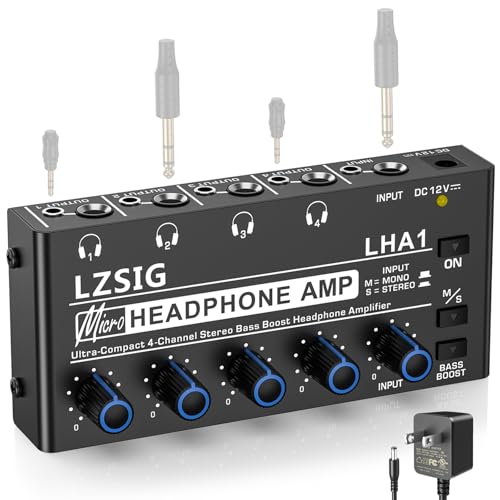
- Four independently controlled headphone outputs
- Supports 3.5mm and 6.35mm headphones
- Metal chassis with low-noise circuitry
Best For: Studio, rehearsal, and group monitoring
Best Tube-Style Value
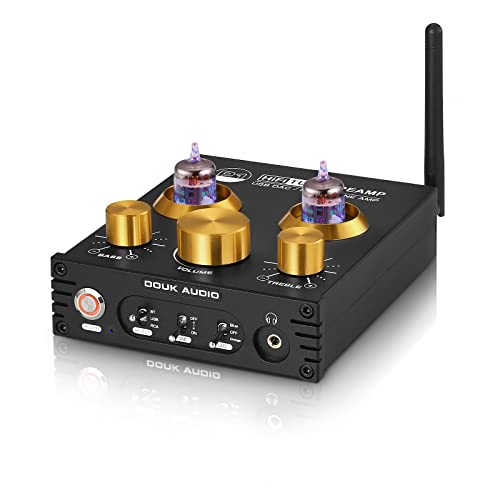
- JAN5725 tube stage for warm sound
- USB 24-bit/192kHz DAC and aptX-HD Bluetooth
- Headphone output supports 32–300Ω loads
Best For: Warm-sounding desktop and home-stereo setups
Best Compact Splitter

- Four headphone outputs from one source
- Independent volume for each listener
- Compact metal, plug-and-play design
Best For: Tracking sessions and simple shared monitoring
Vinyl-Friendly Value

- MM phono input with RIAA response
- 3.5mm headphone and RCA outputs
- Low-noise design with included 12V supply
Best For: MM turntable owners building a compact headphone and powered-speaker setup
Desktop Gaming Hub
Aveek DAC-200 Headphone Preamp
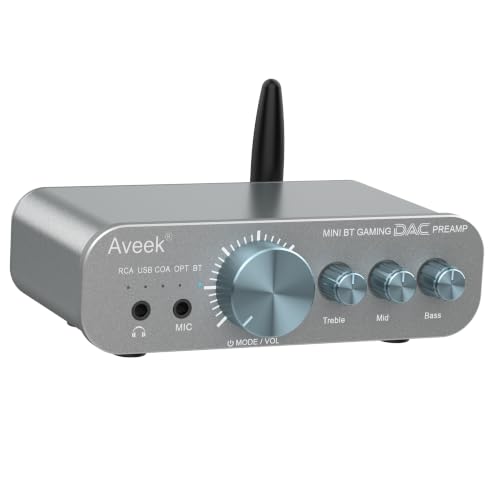
- Five inputs for digital and analog sources
- 3-band EQ and front headphone monitoring
- 3.5mm preamp output for downstream equipment
Best For: PC and PS5 desktop setups with headphones, game chat, and multiple sources
Tube-Toned Flexibility
Douk Audio T9 Phono Headphone Preamp

- Supports both MM and MC cartridges
- 16–300Ω headphone amplifier output
- Tube display, tone controls, and replaceable tubes
Best For: Vinyl enthusiasts seeking MM/MC support and adjustable tube-style listening
Best All-in-One Pick
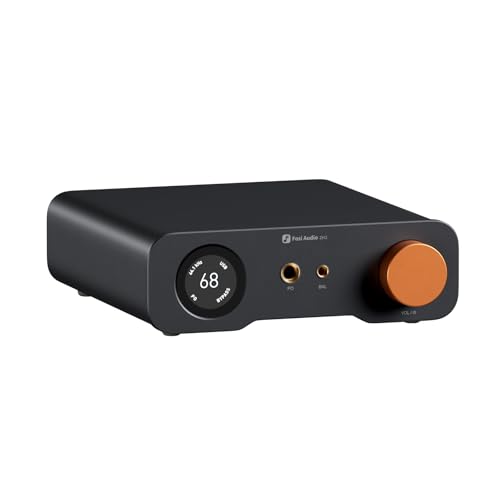
- DAC, headphone amp, and preamp in one desktop unit
- Balanced 4.4mm and RCA/XLR output options
- Supports PCM 768kHz/32-bit and DSD512
Best For: Desktop systems using headphones and active speakers
Best Tube Option
Ampapa H1 Balanced Tube Amplifier

- Class A tube design with dual ECC83 tubes
- Balanced output rated up to 4000mW
- RCA/TRS preamp connections and HP+Line mode
Best For: Warm-sounding HiFi systems with expandable preamp control
Best Budget Signal Booster
ATNEDCVH PA001 Mini Preamplifier
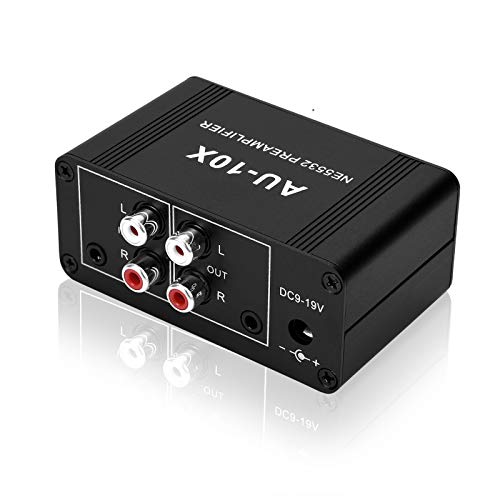
- Adds 20dB of line-level gain
- RCA and 3.5mm input/output connections
- Includes a basic low-impedance headphone output
Best For: Simple desktop setups using line-level sources and active speakers
Best High-Fidelity Pick – FiiO K13 R2R
The FiiO K13 R2R is a versatile choice among headphone amplifiers with preamp output, combining a 24-bit R2R DAC, powerful headphone amplification, balanced XLR and RCA outputs, and wireless streaming in one desktop unit.
Best For: Desktop listeners who want a feature-rich DAC, headphone amp, and preamp for balanced or single-ended systems.
Pros:
- Offers XLR balanced line out, dual RCA outputs, and 4.4mm and 6.35mm headphone outputs.
- Supports PCM up to 384kHz/32-bit and DSD256 decoding.
- Includes NOS/OS modes, 10-band PEQ, and LDAC Bluetooth 5.4.
- Delivers up to 2400mW of output power.
Cons:
- Its extensive features may be more than casual listeners need.
- Designed for desktop use rather than portable listening.
The K13 R2R stands out when you need both serious headphone drive and flexible preamp connectivity. Its balanced outputs, EQ tools, and multiple digital inputs make it suitable for a more elaborate desktop audio setup.
Best for Shared Monitoring – LZSIG LHA2 4-Channel Amp
The LZSIG LHA2 is a practical multi-output headphone amplifier for studios and shared listening. While it is not a dedicated preamp, its 1-in/4-out layout makes it useful when several listeners need independent volume control from one source.
Best For: Home studios, rehearsals, and monitoring setups that need four separately controlled headphone feeds.
Pros:
- Drives up to four pairs of 32–100Ω headphones.
- Provides independent level controls for all four outputs.
- Accepts both 3.5mm and 6.35mm connections and includes stereo/mono switching.
- Features a metal chassis, low-noise circuitry, and a bass-boost function.
Cons:
- It is a headphone distributor, not a mixer or preamp.
- Its stated headphone range may not suit higher-impedance models.
Choose the LHA2 when the priority is straightforward headphone distribution rather than source switching or preamp output. Its compact metal construction and individual controls are well suited to collaborative monitoring.
Best Tube-Style Value – Douk Audio P1 Tube Preamp
The Douk Audio P1 combines a tube preamp, headphone amplifier, USB DAC, and Bluetooth receiver in a compact stereo component. It is a flexible option among headphone amplifiers with preamp output for listeners who want warmer tube character alongside convenient digital sources.
Best For: Desktop or home-stereo listeners seeking tube coloration, Bluetooth streaming, USB playback, and headphone amplification.
Pros:
- JAN5725 tubes provide a warm, dynamic, analog-style presentation.
- Supports aptX-HD Bluetooth and USB decoding up to 24-bit/192kHz.
- Drives headphones rated from 32–300Ω with up to 160mW output.
- Offers adjustable bass and treble controls with a bypass switch.
Cons:
- Its 160mW output may be less suitable for especially demanding headphones.
- It has two-channel stereo output rather than multichannel distribution.
The P1 is a good fit when tonal character and connectivity matter as much as raw amplification. Its tube stage, tone controls, USB DAC, and Bluetooth support give a simple desktop system several ways to play music.
Best Compact Splitter – Mackie HM-4 4-Channel Amp
The Mackie HM-4 is a compact four-channel headphone amplifier designed to turn one source into four independently adjustable headphone feeds. It is not a preamp-output component, but it is a straightforward choice for basic monitoring and rehearsal distribution.
Best For: Tracking sessions, rehearsals, and small setups where four listeners need their own volume controls.
Pros:
- Drives four headphones from a 1/4-inch or 1/8-inch source output.
- Gives each listener an independent level control.
- Compact metal housing can be attached to a desk, rack, or stand.
- Offers simple plug-and-play operation with no separate power-supply hassle.
Cons:
- It does not provide preamp outputs or advanced source features.
- Its single-source design does not allow independent mixes.
The HM-4 is best viewed as a no-frills headphone distribution tool. Its compact footprint and four individual volume controls make it convenient for shared sessions where simplicity is more important than additional processing.
Vinyl-Friendly Value – Box X1 Phono Headphone Preamp
The Fosi Audio Box X1 is a compact choice for listeners seeking headphone amplifiers with preamp output in a vinyl-focused setup. It accepts an MM turntable signal, provides a 3.5mm headphone jack, and sends line-level audio through RCA for powered speakers or other compatible equipment.
Best For: MM turntable owners who want simultaneous headphone and RCA line output in a compact phono preamp.
Pros:
- Provides both 3.5mm headphone and RCA line outputs.
- Supports MM cartridges and follows the RIAA frequency-response standard.
- Includes a grounding post, 12V power adapter, and durable aluminum case.
Cons:
- Designed for MM turntables rather than MM/MC flexibility.
- Single-channel phono preamp configuration is more specialized than a general-purpose DAC.
The Box X1 is a straightforward, low-noise option for integrating headphones and powered speakers with an MM record player. Its simultaneous outputs make it especially practical for simple desktop or small-room vinyl systems.
Desktop Gaming Hub – Aveek DAC-200 Headphone Preamp
The Aveek DAC-200 is a versatile pick among headphone amplifiers with preamp output, combining a DAC, headphone amplifier, and compact audio preamp. Its Bluetooth, USB, optical, coaxial, and RCA inputs suit mixed desktop systems, while the rear 3.5mm output can feed compatible downstream audio equipment.
Best For: PC and PS5 users who want headphone listening, game-chat support, EQ controls, and flexible source switching from one desktop unit.
Pros:
- Offers five audio inputs, including Bluetooth, USB, optical, coaxial, and RCA.
- Includes independent bass, mid, and treble controls.
- Supports headphones from 16–100Ω and provides a 3.5mm preamp output.
- Provides 24-bit/96kHz processing with 113dB SNR and THD below 0.003%.
Cons:
- Its headphone-drive range is specified up to 100Ω, limiting suitability for some higher-impedance models.
- Requires a nonstandard battery according to the listed specifications.
With broad connectivity and front-panel gaming controls, the DAC-200 is the most adaptable option here for a modern desktop. It is a strong fit when headphone amplification and preamp functionality need to coexist with consoles, computers, and multiple digital sources.
Tube-Toned Flexibility – Douk Audio T9 Phono Headphone Preamp
The Douk Audio T9 combines a phono preamp, headphone amplifier, and line-level source switching for listeners comparing headphone amplifiers with preamp output. It supports both MM and MC cartridges, accepts RCA sources, and adds tube-based styling, adjustable tone controls, and a dedicated 3.5mm headphone circuit.
Best For: Vinyl listeners who want MM/MC compatibility, adjustable bass and treble, and a tube-oriented presentation with headphone output.
Pros:
- Supports both MM and MC phono cartridges plus RCA input sources.
- Dedicated headphone amplifier handles headphones rated from 16–300Ω.
- Provides adjustable treble and bass controls.
- Replaceable tube sockets and an all-metal case add customization and durability.
Cons:
- Its tube-based design is more specialized than a simple solid-state preamp.
- The supplied notes specify headphone output but do not identify a separate line-level output connector.
The T9 stands out for its broad phono compatibility and vintage-inspired tube presentation. It is a compelling choice for listeners who prioritize vinyl flexibility and tone shaping, though buyers specifically requiring a documented preamp line output should verify the connection layout before purchase.
Best All-in-One Pick – Fosi Audio ZH3
The Fosi Audio ZH3 is a versatile choice for shoppers seeking headphone amplifiers with preamp output. It combines a DAC, headphone amplifier, and preamp, with USB, optical, coaxial, and RCA inputs plus RCA and XLR preamp outputs. Its balanced design, high-resolution support, and multiple gain levels suit a broad range of desktop listening systems.
Best For: Desktop users who want one unit for headphones, active speakers, and varied digital or analog sources.
Pros:
- Supports PCM up to 768kHz/32-bit and DSD512 through its AKM4493SEQ and XMOS XU316 platform.
- Offers 4.4mm balanced and 6.35mm single-ended headphone outputs, with up to 2570mW at 32 ohms through balanced output.
- Provides RCA and XLR preamp outputs, 12V trigger support, remote control, and several digital inputs.
- Includes bass and treble adjustment, six filter options, and swappable op-amps for headphone-output customization.
Cons:
- EQ adjustments apply only to the headphone output, not the preamp output.
- RCA and XLR output levels differ significantly, so matching the output to downstream equipment requires care.
The ZH3 stands out when flexibility matters more than a minimalist setup. It is especially appealing for listeners building a desktop system around both headphones and active speakers, provided they understand the separate behavior of its preamp outputs and headphone EQ.
Best Tube Option – Ampapa H1 Balanced Tube Amplifier
The Ampapa H1 is a tube-based option for shoppers comparing headphone amplifiers with preamp output. Its Class A output stage, ECC83 tubes, and RCA/TRS preamp connectivity give it a warmer presentation while supporting balanced and single-ended headphones. Multiple output modes also let you use headphones, a preamp connection, or both.
Best For: HiFi listeners who want tube character, balanced headphone drive, and preamp control for active speakers or power amplifiers.
Pros:
- Discrete Class A output stage delivers up to 4000mW through its balanced high-gain output.
- Supports 4.4mm, four-pin XLR, and 6.35mm headphones across a stated 16–600-ohm range.
- RCA and TRS analog connectivity supports source selection and preamp links to power amplifiers or active speakers.
- Three gain levels, HP/Line/HP+Line modes, a 1.5-inch OLED, and 12V trigger add setup flexibility.
Cons:
- Its warm, rich tube profile may not suit listeners seeking a strictly neutral presentation.
- Tube-based operation and pluggable op-amps add more hardware and tuning considerations than a simple solid-state unit.
The H1 is a strong fit for a more expressive, expandable audio system. Choose it when tube voicing and preamp functionality are priorities, especially if your setup includes balanced headphones and compatible downstream gear.
Best Budget Signal Booster – ATNEDCVH PA001 Mini Preamplifier
The ATNEDCVH PA001 is a compact line-level booster for shoppers who need a simple preamp output and basic headphone amplification. It provides 20dB of gain through RCA and 3.5mm connections, plus a dedicated headphone jack with its own volume control. This is a signal booster rather than a full-featured DAC or dedicated phono stage.
Best For: Desktop users who need to raise a weak line-level source before connecting it to an amplifier or active speakers.
Pros:
- Provides 20dB, or 10x, line-level signal gain for phones, TVs, PCs, tablets, and similar sources.
- Includes RCA and 3.5mm stereo input and output connections in a compact metal-housed desktop format.
- Has a dedicated 3.5mm headphone output with independent volume control for headphones up to 16 ohms.
- Dual NE5532 op-amps and a noise-reduction circuit are designed for clean, transparent amplification.
Cons:
- It is not a dedicated RIAA phono stage and requires a turntable with a built-in phono preamp.
- The headphone output is intended for headphones up to 16 ohms, limiting compatibility with many full-size models.
- It cannot drive passive speakers directly.
The PA001 makes sense for a narrowly defined need: boosting a low line-level signal while adding a basic headphone output. It is less suitable for demanding headphones or a high-resolution digital setup, but its compact design can simplify a modest desktop or active-speaker system.
How We Picked the Best Headphone Amplifiers with Preamp Output
We focused on models that combine headphone amplification with a usable preamp, line-level, or pass-through output. That makes them suitable for systems where headphones and speakers share the same source. We also considered input and output variety, headphone power, gain or tone controls, digital compatibility, phono support, build format, and likely use cases.
Because these products serve different roles, no single specification determines the winner. A balanced desktop DAC may suit demanding headphones, while a simple line-level booster or multi-output amplifier may be the better choice for a compact or shared listening setup.
Quick Comparison
| Best For | Features to Prioritize | Models in This Roundup |
|---|---|---|
| High-resolution desktop listening | DAC quality, balanced outputs, headphone power | FiiO K13 R2R, Fosi Audio ZH3 |
| Bluetooth and gaming | Wireless input, console compatibility, EQ | Aveek Gaming DAC |
| Vinyl systems | MM/MC support, phono gain, RCA output | Fosi Audio Box X1, Douk Audio T9 |
| Multiple listeners | Several headphone outputs and independent control | LZSIG, Mackie HM-4 |
| Tube-style sound | Tube stage, tone controls, preamp connectivity | Douk Audio Bluetooth Tube Preamp, Balanced Tube H1 |
Key Buying Factors for Headphone Amplifiers with Preamp Output
Outputs and Signal Routing
Check whether the preamp output is fixed or variable. A variable output lets the amplifier control connected powered speakers or a power amplifier; a fixed line output is better when another component handles volume. Confirm the connector type, such as RCA, 3.5mm, TRS, or balanced outputs.
Power and Headphone Compatibility
High-impedance headphones may need more voltage, while low-sensitivity planar headphones often benefit from higher current and overall power. Look for adjustable gain and verify the manufacturer’s output figures at the impedance you use. More power is not automatically better if the volume control becomes difficult to use.
Inputs and Digital Features
Choose USB, optical, coaxial, Bluetooth, or analog inputs according to your sources. Bluetooth codecs matter for wireless listening, while a built-in DAC can simplify a computer or console setup. If you use a turntable, select a model with the correct phono support rather than assuming any RCA input will work.
Controls and System Convenience
Useful features include a front-panel volume knob, bass and treble controls, remote operation, channel balance, and an easy headphone-to-speaker switching method. Tube products may add character, but tubes can require replacement and may not be ideal for a neutral monitoring system.
Who Should Buy Which Headphone Amplifiers with Preamp Output?
Choose the FiiO K13 R2R or Fosi Audio ZH3 for a serious desktop digital setup with a dedicated DAC and preamp flexibility. The Aveek is a practical fit for users who want Bluetooth, gaming connectivity, and EQ in one compact unit.
Vinyl listeners should consider the Fosi Audio Box X1 or Douk Audio T9, checking cartridge compatibility before buying. For shared listening, the LZSIG and Mackie HM-4 make more sense because they emphasize multiple headphone connections.
Finally, choose a tube model or the Mini Audio Preamplifier when compact analog control, tone shaping, or signal boosting matters more than advanced digital features. Before ordering, map every source and destination in your system and confirm that the amplifier provides the required connectors and output type.