The best memory card readers make it easier to move photos, videos, and other files between cards and modern devices. The right model depends on your card formats, connection type, transfer needs, and whether you want to use multiple cards at once.
This roundup compares 10 memory card readers with options for photographers, mobile creators, travelers, and everyday file transfers.
Best 10 Memory Card Readers Picks for 2026
Best All-Around 4-in-1

- Reads four card formats simultaneously
- USB-C and USB 3.0 connectors
- 18-month warranty
Best For: Mixed card formats and device connections
Best Compact Dual-Interface Pick

- USB 3.0 up to 5Gbps
- Reads SD and microSD simultaneously
- Slim plug-and-play design
Best For: Portable SD and microSD transfers
Best for USB-C Phones

- Supports SD, microSD, CF, and MS
- USB-C with detachable USB adapter
- OTG plug-and-play file transfers
Best For: Mobile photo and video transfers
Best USB-A Value

- Supports four major card formats
- USB 3.0 with USB 2.0 compatibility
- Works with Windows, macOS, and Linux
Best For: USB-A desktops and laptops
Best All-Around Choice
5-in-1 USB-C Memory Card Reader
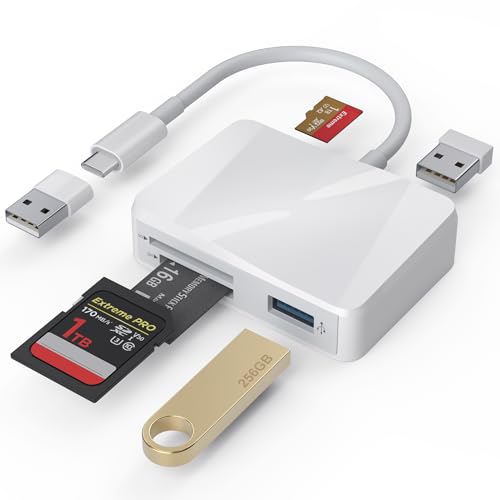
- Reads SD, microSD, and MS cards
- USB-C plus detachable USB adapter
- Dual USB-A ports and plug-and-play setup
Best For: Photographers and mixed-device households
Best for Multi-Card Transfers
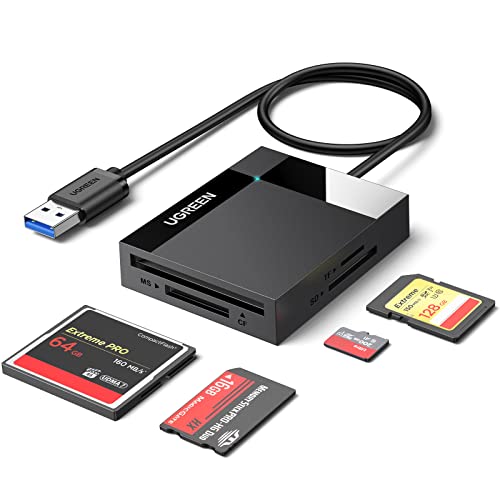
- Four slots for SD, microSD, CF, and MS
- Reads and writes four cards simultaneously
- USB 3.0 rated up to 5Gbps
Best For: Photographers handling multiple card formats
Best Compact USB-C Pick
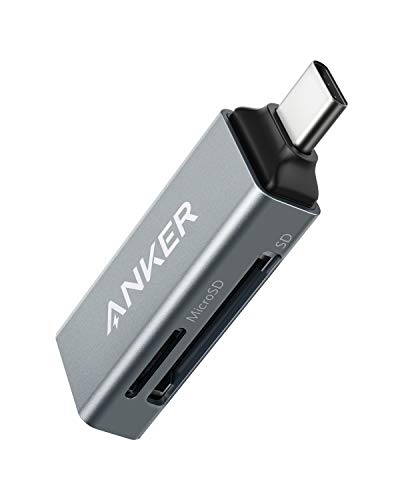
- Separate SD and microSD slots
- Ultra-compact 9g USB-C design
- 18-month warranty included
Best For: Travelers using USB-C phones and laptops
Most Versatile
7-in-1 USB-C Multi Card Reader

- Seven slots cover CF, SD, microSD, XD, and MS cards.
- USB-C and USB-A connectivity with 5Gbps transfers.
- Can read and write up to five cards simultaneously.
Best For: Photographers handling multiple card formats
Best Travel Pick
Acer Dual-Slot USB-C Card Reader

- Reads and writes SD and microSD cards simultaneously.
- USB-A and USB-C headers fit many current devices.
- Lightweight design includes port covers and an attached cord.
Best For: Travelers using SD and microSD cards
Best Simple Value

- Compact USB 3.0 reader for SD and microSD cards.
- Delivers 5Gbps transfers with plug-and-play setup.
- Backed by a two-year warranty and 24/7 support.
Best For: Everyday SD and microSD file transfers
Best All-Around 4-in-1 – BENFEI 4-Card Reader
If you need versatile memory card readers for a mix of cameras, computers, and USB-C devices, the BENFEI 4-in-1 is a strong all-purpose option. Its USB-C and USB 3.0 connectivity supports SD, microSD, MS, and CF cards, with simultaneous access to all four card types.
Best For: Users who need broad card-format support and USB-C/USB-A flexibility.
Pros:
- Reads and writes SD, microSD, MS, and CF cards simultaneously.
- Integrated USB-C and USB 3.0 connectors work with newer and older computers.
- Supports transfer rates up to 160MB/sec in UHS-I mode, depending on the card and port.
- Includes an 18-month warranty.
Cons:
- Not compatible with standard Memory Stick, Memory Stick Micro (M2), or CF Type I cards.
- Older Windows and macOS versions may not support exFAT SDXC cards.
Choose the BENFEI if your devices use several card formats and you value the convenience of reading multiple cards at once. Its integrated dual-interface design also makes it practical for mixed USB-C and USB-A setups.
Best Compact Dual-Interface Pick – UGREEN USB-C/USB 3.0 Reader
For portable memory card readers, the UGREEN USB-C and USB 3.0 model keeps connectivity simple while supporting both full-size SD and microSD cards. It is plug-and-play, compact, and designed for quick transfers from cameras, GoPros, dash cams, and similar devices.
Best For: Photographers and creators who want a lightweight reader for SD and microSD cards.
Pros:
- USB 3.0 supports data transmission up to 5Gbps.
- USB-C and USB-A interfaces support newer and older devices.
- Can read SD and microSD cards simultaneously.
- Works with Windows, macOS, and most Android devices without drivers.
Cons:
- Supports SD and microSD formats but does not list CF or Memory Stick support.
- Transfer performance depends on the card and connected device.
The UGREEN is a practical choice when your workflow centers on SD and microSD cards. Its dual connectors and simultaneous two-card operation add useful flexibility without requiring a separate adapter.
Best for USB-C Phones – RRSITIAU 4-in-1 Reader
This 4-in-1 reader is aimed at mobile workflows, giving USB-C phones, tablets, and computers direct access to SD, microSD, CF, and Memory Stick cards. A detachable USB-C-to-USB adapter adds compatibility with standard USB ports, while plug-and-play OTG support simplifies file transfers.
Best For: USB-C phone and tablet users who transfer photos and videos from multiple card types.
Pros:
- Supports SD, microSD, CF, and Memory Stick cards.
- USB-C connector works with compatible phones, tablets, Macs, and PCs.
- Detachable adapter enables use with standard USB ports.
- Supports common photo and video formats without additional drivers or software.
Cons:
- Does not support Wi-Fi SD cards.
- Listed transfer rate is up to 480Mbps, below USB 3.0-class readers.
- Compatibility depends on device OTG support.
If your priority is moving camera files directly to a USB-C mobile device, this reader offers broad format support in a compact setup. It is less compelling for users whose main concern is maximum desktop transfer speed.
Best USB-A Value – SmartQ C368 Card Reader
The SmartQ C368 is a straightforward USB-A option among memory card readers, supporting SD, microSD, MS, and CF cards through a four-slot design. It works with Windows, macOS, and Linux without drivers, and its blue LED shows when the reader is powered.
Best For: Desktop and laptop users who primarily need USB-A connectivity and broad card support.
Pros:
- Supports SD, microSD, MS, and CF card families.
- USB 3.0 interface is compatible with USB 2.0 ports.
- Works with Windows, Mac OS, and Linux without driver installation.
- Blue LED provides a clear power/status indication.
Cons:
- Uses USB-A rather than USB-C.
- The listed 5Gbps speed is the USB interface maximum, not a guaranteed card-transfer rate.
- Memory cards are not included.
The C368 makes sense for users with conventional USB-A computers who want one reader for several card formats. Its broad operating-system support and simple plug-and-play design keep the setup uncomplicated.
Best All-Around Choice – 5-in-1 USB-C Memory Card Reader
For shoppers comparing memory card readers for phones, tablets, and computers, this 5-in-1 adapter offers broad connectivity in a compact design. It combines SD, microSD, and MS card slots with dual USB-A ports, plus both USB-C and USB connections for moving photos, videos, and files across modern and older devices.
Best For: Photographers and users who need one reader for USB-C devices, USB computers, multiple card formats, and attached USB accessories.
Pros:
- Supports SD, microSD, and MS cards, with capacities up to 2TB listed.
- USB-C connector and detachable USB adapter support newer and older computers.
- Dual USB-A ports can read or write alongside a memory card.
- Plug-and-play operation works across Windows, macOS, Linux, Chrome, and iOS-compatible setups without extra drivers.
Cons:
- Its 480MB/s listed transfer rate is below the 5Gbps specification of some USB 3.0 readers.
- The larger feature set may be more than needed for basic SD-to-computer transfers.
This is a flexible choice when compatibility matters most. Its combination of card formats, dual host connectors, and USB-A expansion makes it particularly useful for photographers and households using a mix of phones, tablets, and computers.
Best for Multi-Card Transfers – UGREEN USB 3.0 Card Hub
If you regularly work with several card types, this UGREEN model is one of the more capable memory card readers in the group. Its four dedicated slots cover SD, microSD, CompactFlash, and Memory Stick formats, while USB 3.0 connectivity is rated for transfers up to 5Gbps.
Best For: Photographers and professionals who need to read or write four different memory cards simultaneously from a Windows, Mac, Linux, or Chrome OS computer.
Pros:
- Supports SD, microSD, CompactFlash, and Memory Stick families.
- Can read and write four different memory cards at the same time.
- USB 3.0 transmission is rated up to 5Gbps for large-file transfers.
- Compact body and 1.7-foot cable make it practical for mobile workstations.
Cons:
- Uses a standard USB connection rather than USB-C.
- Its four-slot design is less convenient if you only need a small, phone-focused reader.
Choose this reader when simultaneous access and format coverage outweigh minimal size. The CompactFlash slot and four-card workflow give it a clear advantage for camera users managing multiple cards at once.
Best Compact USB-C Pick – Anker Dual-Slot Card Reader
For simple file transfers on the go, this compact Anker reader keeps the design focused. It provides one standard SD slot and one microSD slot in a small USB-C adapter, making it a convenient memory card reader for compatible laptops and smartphones.
Best For: USB-C laptop and smartphone users who want a lightweight reader for standard SD and microSD cards.
Pros:
- Dual slots support standard SD and microSD card formats.
- Ultra-compact 9g design is easy to carry with other peripherals.
- USB-C connection is designed for compatible phones and laptops.
- Includes an 18-month warranty and customer support.
Cons:
- It does not offer USB-A connectivity or additional card slots.
- Device cases may need to be removed for a proper connection.
- Compatibility is centered on USB-C devices rather than older USB computers.
This is the streamlined option for everyday SD and microSD access. Its small footprint suits travel and phone use, while the dual-slot layout avoids carrying separate adapters for the two most common card formats.
Most Versatile – 7-in-1 USB-C Multi Card Reader
If you need memory card readers for several camera and device formats, this Rocketek model offers unusually broad coverage. It includes CF, SD, microSD/TF, XD, and MS slots, plus both USB-C and USB-A connectivity, making it a flexible choice for mixed-device workflows.
Best For: Photographers and users who work with multiple card formats across computers, tablets, and phones.
Pros:
- Supports seven slots and can read and write up to five cards simultaneously.
- USB-C and USB 3.0 connectors support flexible device access.
- 5Gbps transfer rate and broad Windows, Mac, Linux, Chrome OS, and Android compatibility.
- Includes a 12-month warranty.
Cons:
- Its larger number of slots may be unnecessary for users who only use SD or microSD cards.
- It does not offer a built-in cable according to the supplied specifications.
This is the strongest all-around option when compatibility matters more than minimal size. Its simultaneous multi-card support can also help streamline file management for photography and media work.
Best Travel Pick – Acer Dual-Slot USB-C Card Reader
Among compact memory card readers, this Acer model stands out for travel-friendly dual connectivity. It has SD and microSD slots, USB-A and USB-C headers, protective port covers, and an attached cord for convenient use with laptops, phones, tablets, and cameras.
Best For: Mobile photographers, creators, and travelers who primarily use SD and microSD cards.
Pros:
- Supports simultaneous reading and writing from SD and microSD cards.
- USB-A and USB-C connectors work with a wide range of devices.
- Compact 15-gram design with protective covers and an attached cord.
- 5Gbps transfers and plug-and-play setup.
Cons:
- Does not support CF, CFexpress, XQD, MS, or Memory Stick cards.
- Thick device cases may prevent full insertion.
- Not compatible with Lightning-port devices.
This reader is a practical choice when portability and modern USB compatibility are priorities. Its limited format support is easy to accept if your workflow centers on standard SD and microSD media.
Best Simple Value – USB 3.0 SD and MicroSD Reader
For straightforward memory card readers, this Wansurs adapter keeps the setup simple with SD and microSD slots and a USB 3.0 plug. It offers 5Gbps transfers, plug-and-play operation, and broad Windows, Mac, Linux, and Android compatibility in a small, lightweight body.
Best For: Users who need an affordable, compact reader for standard SD and microSD file transfers.
Pros:
- Dual SD and microSD slots support several SD-family formats.
- 5Gbps USB 3.0 transfers help reduce time spent moving large files.
- Compact, 10-gram design is easy to carry.
- Includes a two-year warranty and 24/7 customer support.
Cons:
- SD and microSD cards cannot be used simultaneously.
- Uses a USB connection rather than USB-C according to the supplied details.
- Its format support is narrower than that of multi-format readers.
This is a sensible low-fuss option for everyday transfers from cameras, phones, and other SD-based devices. Choose it when small size and basic functionality matter more than simultaneous card access or broad legacy-card support.
How We Picked These Memory Card Readers
We focused on compatibility, connection options, practical port design, and ease of use. The selection includes compact single- and dual-slot readers as well as multi-format adapters for SD, microSD, CompactFlash, Memory Stick, and other card types. We also considered whether each reader supports USB-C, USB-A, simultaneous card access, and plug-and-play use across common operating systems.
Because advertised performance depends on the card, host device, file type, and connection standard, transfer speeds should be treated as maximums rather than guaranteed real-world results. A reader with USB 3.0 or faster connectivity can help, but it cannot make a slow memory card perform beyond its own limits.
Quick Comparison
- Best for broad format support: Choose a 4-in-1, 5-in-1, or 7-in-1 reader if you use several card types.
- Best for USB-C devices: USB-C readers connect directly to many current phones, tablets, MacBooks, and Windows laptops.
- Best for older computers: Models with USB-A support or included adapters offer more flexibility.
- Best for multi-card workflows: Look for a reader specifically advertised for simultaneous reading and writing.
- Best for portability: Dual-slot and compact microSD/SD readers take up less space in a camera bag.
Key Buying Factors for Memory Card Readers
Card Format Compatibility
Check every card format you plan to use before buying. SD and microSD support is common, while CF, MS, XD, MMC, and related formats are less universal. A physical slot does not always guarantee support for every capacity or card generation, so confirm the specifications when using older or specialized media.
Connector and Device Compatibility
USB-C is useful for newer phones, tablets, and laptops, while USB-A remains common on desktops and older computers. Some readers include both connectors or a USB adapter. For iPhone and iPad use, also verify that the device, operating system, and file-management workflow support external storage access.
Speed and Simultaneous Access
USB 3.0 and 5Gbps-rated connections are suitable for routine photo and video transfers, but actual results vary. If you regularly copy from multiple cards, select a model that explicitly supports simultaneous reading and writing rather than assuming every slot can operate independently.
Build and Everyday Convenience
A compact housing is easier to carry, but a short integrated cable or attached connector may be more convenient than a separate cable. Consider slot spacing, card insertion, heat management, and whether the reader could block nearby ports when connected to a laptop or tablet.
Who Should Buy Which Memory Card Readers?
Photographers and videographers should prioritize the formats used by their cameras, reliable USB 3.0-or-faster connectivity, and simultaneous card support when handling multiple cards. Mobile creators will usually prefer a USB-C reader that works directly with a phone or tablet and supports both SD and microSD.
Travelers and students may benefit from a small dual-slot reader with broad device compatibility. Owners of older computers should choose a model with USB-A support or an included adapter. If you only use one microSD or SD card occasionally, a simple two-in-one reader is often more convenient and cost-effective than a large multi-format hub.