A strong mesh network does more than eliminate dead zones. With Ethernet backhaul, compatible nodes use wired connections to communicate, helping preserve wireless bandwidth and improve stability throughout the home.
We compare 10 mesh WiFi systems across WiFi generations, coverage claims, port speeds, features, and overall value so you can choose a system that fits your internet plan, home layout, and networking needs.
Best 10 Mesh Wifi Systems with Ethernet Backhaul Picks for 2026
Best Balanced Coverage
TP-Link Deco X55 AX3000 3-Pack

- Wi-Fi 6 coverage up to 6,500 square feet
- Three Gigabit ports per unit with wired backhaul
- Supports up to 150 connected devices
Best For: Large homes wanting simple, reliable Wi-Fi 6 coverage
Best for Gaming Networks

- Tri-band Wi-Fi 6 with AiMesh wireless backhaul
- Four Gigabit LAN ports per unit
- Gaming QoS and lifetime internet security included
Best For: Gamers and streamers needing flexible network controls
Best for Multi-Gigabit Backhaul

- Two 2.5 Gbps ports on every node
- Supports wired Ethernet backhaul
- Coverage up to 6,500 square feet
Best For: Multi-gigabit homes with NAS devices or Ethernet wiring
Best for Maximum Stated Coverage
WAVLINK AX3000 CUBE Air 3-Pack

- Stated coverage up to 7,300 square feet
- Supports wired and wireless backhaul
- Rated for 256-plus connected devices
Best For: Large homes or offices needing flexible Wi-Fi 6 coverage
Best 6E Upgrade
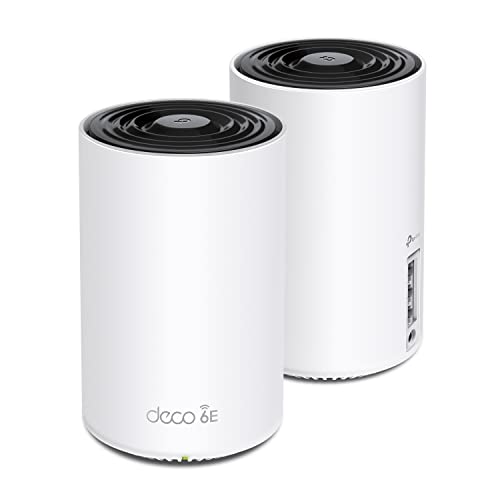
- Wi-Fi 6E tri-band design
- Up to 5,500 sq. ft. coverage
- 6 GHz can serve as backhaul
Best For: Large homes and Wi-Fi 6E households
Best High-Capacity Value

- Dual-band Wi-Fi 6
- Up to 5,600 sq. ft. coverage
- Supports up to 200 devices
Best For: Large families and busy connected homes
Best Budget Wired-Backhaul Pick
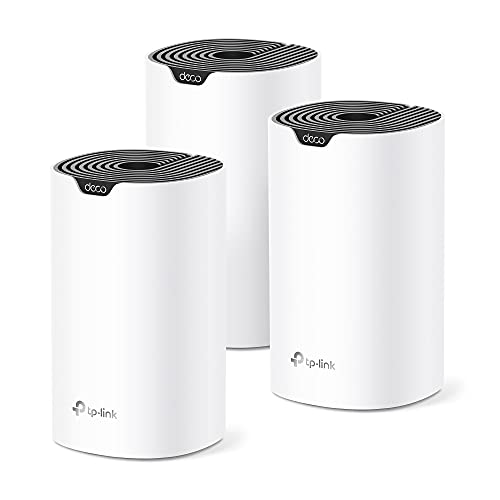
- Three-unit Wi-Fi 5 system
- Supports wired Ethernet backhaul
- Six gigabit Ethernet ports
Best For: Budget-focused homes with Ethernet cabling
Best Premium Wi-Fi 7 Pick
Future-Ready Whole-Home Performance

- Tri-band Wi-Fi 7 with up to 7,600 sq. ft. coverage
- Supports wired backhaul and multi-gigabit networking
- Designed for 200+ connected devices
Best For: Large homes and performance-focused networks
Best Value Ethernet-Backhaul System
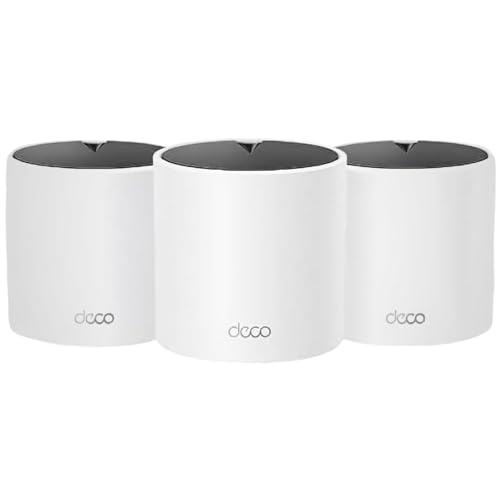
- Wi-Fi 6 speeds up to AX1500
- Covers up to 5,600 sq. ft. with three nodes
- Six total Gigabit Ethernet ports support wired backhaul
Best For: Everyday homes needing broad, wired mesh coverage
Best Compact Wi-Fi 7 Option

- Wi-Fi 7 with MLO, Multi-RUs, and 4K-QAM
- Up to 4,500 sq. ft. coverage and 150 devices
- Two 2.5Gbps ports on every node
Best For: Medium-to-large homes wanting compact Wi-Fi 7 coverage
Best Balanced Coverage – TP-Link Deco X55 AX3000 3-Pack
The TP-Link Deco X55 is a practical choice among mesh wifi systems with ethernet backhaul, combining Wi-Fi 6 performance, broad coverage, and simple app-based management. Its three nodes cover up to 6,500 square feet, while wired backhaul can help improve speed and consistency when Ethernet cabling is available.
Best For: Large homes that need broad Wi-Fi 6 coverage, support for many devices, and straightforward setup.
Pros:
- Three-unit system covers up to 6,500 square feet.
- Each node has three Gigabit Ethernet ports and supports wired Ethernet backhaul.
- Supports up to 150 connected devices and includes useful HomeShield features.
Cons:
- Dual-band design provides fewer dedicated wireless-backhaul options than a tri-band system.
- Gigabit ports are less suitable for internet plans or wired devices above 1 Gbps.
Choose the Deco X55 when dependable whole-home coverage and easy management matter more than multi-gigabit networking. Ethernet backhaul makes it especially appealing for homes that already have network cabling.
Best for Gaming Networks – ASUS RT-AX92U AX6100 2-Pack
The ASUS RT-AX92U is a strong option among mesh wifi systems with ethernet backhaul for gaming and busy households. Its tri-band design, AiMesh support, multiple Gigabit ports, and gaming-oriented controls give wired and wireless devices more flexibility.
Best For: Gamers and streamers who want a tri-band mesh system with extensive wired connectivity and advanced network controls.
Pros:
- Tri-band Wi-Fi 6 design supports wireless backhaul between nodes.
- Each unit provides four Gigabit LAN ports plus USB connectivity.
- Includes adaptive QoS, AiProtection Pro security, and parental controls.
Cons:
- The supplied notes do not specify a square-foot coverage rating.
- The listed 1 Gbps data and port specifications are not aimed at multi-gigabit networking.
The RT-AX92U is best suited to users who value gaming features, security tools, and port selection. It can also use a wired Ethernet connection, but its tri-band wireless-backhaul capability is a notable advantage when cabling is limited.
Best for Multi-Gigabit Backhaul – TP-Link Deco X55 Pro 3-Pack
The TP-Link Deco X55 Pro is one of the most capable mesh wifi systems with ethernet backhaul in this roundup. Each node has two 2.5 Gbps WAN/LAN ports, making the three-pack a better fit for internet service above 1 Gbps, multi-gigabit wired devices, and high-speed Ethernet backhaul.
Best For: Homes with multi-gigabit internet, NAS storage, or Ethernet wiring that can take advantage of 2.5 Gbps connections.
Pros:
- Two 2.5 Gbps ports on every unit support multi-gigabit connections and wired backhaul.
- Covers up to 6,500 square feet and supports more than 150 devices.
- Includes Wi-Fi 6, AI-driven mesh, app management, and HomeShield features.
Cons:
- Its dual-band design may offer less wireless-backhaul capacity than a tri-band alternative.
- Multi-gigabit benefits require compatible internet service and wired devices.
If your network includes a faster-than-gigabit connection or a wired NAS, the Deco X55 Pro is the clearest upgrade over standard Gigabit mesh hardware. It retains the easy setup and broad coverage expected from a three-node Deco system.
Best for Maximum Stated Coverage – WAVLINK AX3000 CUBE Air 3-Pack
The WAVLINK AX3000 CUBE Air is a budget-conscious contender among mesh wifi systems with ethernet backhaul, offering a stated coverage area of up to 7,300 square feet. It supports both wireless and wired backhaul, with app or web setup and access point mode for flexible installations.
Best For: Large homes or small offices seeking high stated coverage, Wi-Fi 6 performance, and flexible router or access-point operation.
Pros:
- Three-pack is rated for up to 7,300 square feet and 256-plus devices.
- Supports Ethernet backhaul as well as wireless backhaul.
- Offers WPA3 security, parental controls, QoS, and app/web management.
Cons:
- Its Ethernet ports are Gigabit rather than multi-gigabit.
- The supplied warranty is one year, shorter than the two-year warranties listed for the TP-Link and ASUS systems.
The CUBE Air stands out for its stated coverage and device capacity. It is a sensible fit when you need to extend Wi-Fi across a large space and have Gigabit Ethernet available for wired backhaul, without needing 2.5 Gbps networking.
Best 6E Upgrade – TP-Link Deco XE75
The TP-Link Deco XE75 is a strong choice for shoppers seeking mesh wifi systems with ethernet backhaul, especially when they want Wi-Fi 6E capacity and a dedicated wireless backhaul option. Its tri-band design covers up to 5,500 square feet and supports up to 200 devices.
Best For: Larger homes, busy households, and Wi-Fi 6E devices that need high capacity.
Pros:
- Wi-Fi 6E tri-band performance with a dedicated 6 GHz band that can serve as the backhaul by default.
- Up to 5,500 square feet of coverage and support for up to 200 devices.
- Each unit includes gigabit Ethernet connectivity and supports access point mode.
- Deco app provides guided setup, management, parental controls, and basic security tools.
Cons:
- Wi-Fi 6E benefits require compatible client devices.
- Most internet providers require a separate modem.
Choose the Deco XE75 if you want modern tri-band capacity and a flexible backhaul design. Its 6 GHz band can prioritize node-to-node connections, while Ethernet remains available for wired networking.
Best High-Capacity Value – Tenda Nova MX15 Pro
The Tenda Nova MX15 Pro is a practical option among mesh wifi systems with ethernet backhaul for households that need broad coverage and support for many connected devices. Its dual-band Wi-Fi 6 system covers up to 5,600 square feet and is rated for up to 200 devices.
Best For: Families wanting wide Wi-Fi 6 coverage, high device capacity, and app-based controls.
Pros:
- Dual-band AX5400 Wi-Fi 6 speeds with 2.4 GHz and 5 GHz connectivity.
- Up to 5,600 square feet of coverage and support for up to 200 devices.
- MU-MIMO and OFDMA help support simultaneous connections.
- Includes WPA3 security, guest networking, parental controls, and remote management.
Cons:
- It is dual-band rather than tri-band.
- Its listed LAN ports are 10/100 Mbps, which may limit wired throughput.
The MX15 Pro emphasizes coverage and capacity at a potentially lower tier than Wi-Fi 6E systems. It is worth considering when a large coverage area and simple management matter more than having a third wireless band.
Best Budget Wired-Backhaul Pick – TP-Link Deco S4
The TP-Link Deco S4 is a straightforward choice for shoppers comparing mesh wifi systems with ethernet backhaul on a budget. This three-pack uses Wi-Fi 5, covers up to 5,500 square feet, and specifically supports wired Ethernet backhaul for more consistent node connections.
Best For: Budget-conscious households that want broad coverage and wired backhaul support.
Pros:
- Three-unit system covers up to 5,500 square feet.
- Each unit has two gigabit Ethernet ports, with six ports total.
- Supports wired Ethernet backhaul and seamless roaming under one network name.
- Deco app setup includes parental controls and guest Wi-Fi management.
Cons:
- Wi-Fi 5 offers less capacity than newer Wi-Fi 6 and Wi-Fi 6E systems.
- Rated capacity is up to 100 devices, lower than the other listed options.
- A separate modem is required for most internet providers.
The Deco S4 makes the most sense when dependable whole-home coverage and Ethernet backhaul are priorities, but you do not need the latest wireless generation. Its three units and six gigabit ports also provide useful placement flexibility.
Best Premium Wi-Fi 7 Pick – Future-Ready Whole-Home Performance
For shoppers seeking mesh wifi systems with ethernet backhaul, the Deco 7 Pro stands out with tri-band Wi-Fi 7, wired backhaul support, and multi-gigabit ports. Its three-node design is aimed at large homes and busy networks with many connected devices.
Best For: Large homes, demanding households, and buyers planning for multi-gigabit networking.
Pros:
- Three-pack coverage is rated for up to 7,600 square feet and more than 200 devices.
- Tri-band Wi-Fi 7 supports high combined speeds for streaming, gaming, and newer devices.
- Four 2.5G WAN/LAN ports, a 10G-capable connection, and USB 3.0 provide room to expand.
- Supports wired backhaul, AI roaming, parental controls, IoT security, and VPN client features.
Cons:
- Its advanced Wi-Fi 7 and multi-gigabit features may be more than casual users need.
- Coverage and real-world speeds vary with walls, distance, device compatibility, and network conditions.
- A separate modem is required for most internet services.
The Deco 7 Pro is the strongest fit here for buyers who want maximum capacity and upgrade flexibility. Use Ethernet between nodes where possible to take advantage of its wired-backhaul capability and reduce dependence on wireless mesh links.
Best Value Ethernet-Backhaul System – Affordable Wi-Fi 6 Coverage
The Deco X15 is a practical choice among mesh wifi systems with ethernet backhaul for households that want dependable Wi-Fi 6 coverage without moving to Wi-Fi 7. Its three units include six Gigabit Ethernet ports in total and support wired backhaul.
Best For: Families and homeowners who need broad coverage, wired node connections, and straightforward network management.
Pros:
- Three-pack coverage is rated for up to 5,600 square feet and up to 120 devices.
- Wi-Fi 6 dual-band performance reaches up to 1,201 Mbps on 5 GHz and 300 Mbps on 2.4 GHz.
- Each node has two Gigabit Ethernet ports and supports wired Ethernet backhaul.
- The Deco app provides setup, remote management, security features, parental controls, and QoS.
Cons:
- Dual-band Wi-Fi 6 has less capacity and fewer wireless bands than the tri-band Wi-Fi 7 alternatives.
- Gigabit Ethernet ports limit wired throughput compared with multi-gigabit systems.
- Some premium security features may require a subscription.
Choose the X15 when coverage and Ethernet backhaul matter more than cutting-edge wireless speeds. It offers a balanced setup for everyday streaming, work, gaming, and smart-home use, particularly when you can connect the nodes with Ethernet.
Best Compact Wi-Fi 7 Option – Multi-Gigabit Two-Node Mesh
The Deco 7 BE23 is a compact option for shoppers comparing mesh wifi systems with ethernet backhaul. Its two-node Wi-Fi 7 system combines wired and wireless backhaul, two 2.5G WAN/LAN ports per unit, and coverage rated for up to 4,500 square feet.
Best For: Medium-to-large homes, newer Wi-Fi 7 devices, and users who want multi-gigabit wired connections in a smaller kit.
Pros:
- Wi-Fi 7 features include Multi-Link Operation, Multi-RUs, and 4K-QAM.
- Two-pack coverage is rated for up to 4,500 square feet and 150 devices.
- Each unit has two 2.5 Gbps WAN/LAN ports for high-speed wired devices and backhaul.
- Supports simultaneous wired and wireless backhaul, AI roaming, WPA3, IoT networking, and parental controls.
Cons:
- The two-pack covers less area than the three-node Deco alternatives.
- Dual-band design has less dedicated wireless capacity than a tri-band system.
- Wi-Fi 7 benefits depend on compatible client devices and suitable network conditions.
The BE23 makes sense when you want Wi-Fi 7 and 2.5Gbps Ethernet without buying a larger three-pack. Its simultaneous wired and wireless backhaul support adds flexibility, while the two-node layout keeps the system relatively simple to deploy.
How We Picked the Best Mesh Wifi Systems with Ethernet Backhaul
We selected systems representing several budgets and WiFi generations, from affordable WiFi 5 and WiFi 6 kits to newer WiFi 6E and WiFi 7 options. Our comparison focuses on features that matter when nodes can be connected with Ethernet: wired port capability, wireless capacity, coverage flexibility, setup tools, security features, and long-term upgrade value.
Advertised coverage and throughput are best-case figures. Actual results depend on construction materials, interference, client devices, placement, and the speed of your internet service.
Quick Comparison
| Best For | Recommended Direction | Why It Stands Out |
|---|---|---|
| Affordable whole-home coverage | Deco S4 or Deco X15 | Simple multi-node coverage at a lower cost |
| Most homes | Deco X55 | Balanced WiFi 6 performance and features |
| Faster wired networking | Deco X55 Pro | Better suited to high-speed Ethernet connections |
| Multi-gigabit and newer devices | Deco XE75 or WiFi 7 models | More capacity and modern wireless standards |
| Gaming features | ASUS RT-AX92U | Gaming-focused controls and AiMesh support |
| Large homes on a budget | WAVLINK or Tenda | Broad advertised coverage and value-oriented pricing |
Key Buying Factors for Mesh Wifi Systems with Ethernet Backhaul
Ethernet Ports and Link Speed
Check whether each satellite has a usable Ethernet port and whether ports are gigabit, 2.5Gbps, or faster. Ethernet backhaul only improves the network if your home wiring, switches, and router ports support the speeds you expect.
WiFi Generation and Device Support
WiFi 6 is a strong fit for most households. WiFi 6E adds access to the less congested 6GHz band, while WiFi 7 can offer higher capacity and newer features for compatible devices. A newer standard is most valuable when you already own, or plan to buy, matching phones, laptops, or access points.
Coverage, Placement, and Wired Layout
Use the manufacturer’s coverage estimate as a starting point, not a guarantee. Place nodes where Ethernet cables can reach them and where clients still have a strong connection. Wired backhaul lets you position access points more freely than a wireless-only mesh system.
Internet Speed and Network Features
Match the system to your broadband plan and local traffic. Multi-gigabit service benefits from faster ports, while gaming households may prefer low-latency controls, traffic prioritization, parental controls, and reliable firmware support.
Who Should Buy Which Mesh Wifi Systems with Ethernet Backhaul?
Choose a WiFi 6 system such as the Deco X55 for a dependable all-around upgrade. Consider the X55 Pro when faster wired connections or demanding local transfers matter. The Deco XE75 is a practical step toward 6GHz networking, while the Deco 7 Pro and Deco 7 BE23 are better suited to buyers building a newer WiFi 7 network.
Budget-conscious shoppers can look at the Deco S4 or Deco X15, while large homes may prefer the broader coverage claims of the WAVLINK or Tenda kits. Gamers and advanced users should consider the ASUS system for its gaming-oriented controls and ecosystem features. Regardless of the model, prioritize Ethernet compatibility, port speeds, and dependable placement over headline coverage numbers.