Apartment networks often need more wired connections than a router can provide, especially for desktops, TVs, game consoles, streaming devices, and access points. The best network switches for apartments add ports without taking up much space or requiring complicated setup.
We selected compact Gigabit and multi-gigabit models across several budgets and use cases, from simple plug-and-play switches to smart options with VLAN and traffic-management features.
Best 10 Network Switches for Apartments Picks for 2026
Best Compact Metal Pick
TP-Link TL-SG105 5-Port Gigabit Switch

- Five gigabit ports with auto-negotiation
- Fanless metal design for quiet use
- Plug-and-play setup with QoS and IGMP Snooping
Best For: Quiet, durable wired expansion in apartments
Best Smart Features
NETGEAR GS305E 5-Port Gigabit Switch

- Five 1Gbps ports for fast wired connections
- Supports VLANs, QoS, monitoring, and security controls
- Fanless metal design with desktop or wall mounting
Best For: Small apartment networks needing manageable features
Best Budget Space Saver
TP-Link LS1005G 5-Port Gigabit Switch

- Five gigabit ports with automatic connection detection
- Tiny, lightweight body fits tight spaces
- Fanless plug-and-play operation
Best For: Simple wired expansion where space is limited
Best for More Devices
TP-Link TL-SG108E 8-Port Smart Switch
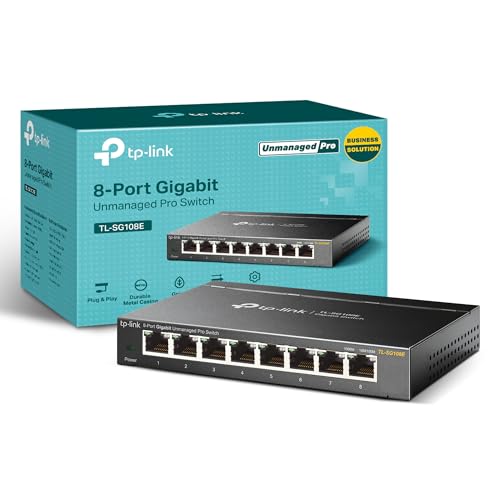
- Eight gigabit ports for larger wired setups
- VLAN, QoS, IGMP Snooping, and LAG support
- Metal desktop or wall-mountable enclosure
Best For: Apartments with many wired devices and advanced network needs
Apartment Essential
NETGEAR GS305 5-Port Gigabit Switch

- Five auto-negotiating 1Gbps ports
- Plug-and-play, fanless operation
- Desktop or wall mounting
Best For: Small apartment networks needing a few quiet wired connections
Multi-Gig Upgrade
TP-Link TL-SG105S-M2 2.5G Switch

- Five 2.5Gbps Ethernet ports
- Supports 100Mbps, 1Gbps, and 2.5Gbps
- Silent fanless metal design
Best For: Apartments using multi-Gigabit networking equipment
Room-to-Room Expansion
NETGEAR GS308 8-Port Gigabit Switch
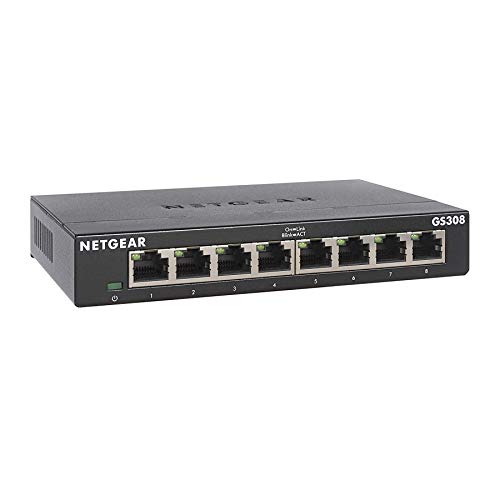
- Eight auto-negotiating 1Gbps ports
- Plug-and-play unmanaged setup
- Quiet, energy-efficient fanless design
Best For: Apartments needing several wired connections and expansion room
High-Capacity Apartment Hub
TP-Link TL-SG116 16-Port Gigabit Switch
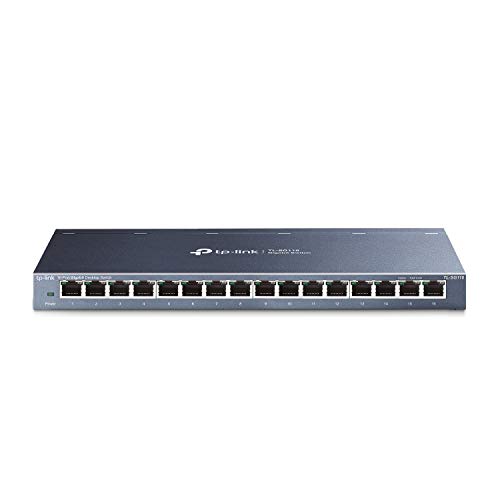
- 16 Gigabit ports for extensive wired expansion
- Fanless, quiet metal design
- Supports QoS and IGMP Snooping
Best For: Larger apartments and shared households with many wired devices
Maximum Port Count
NETGEAR GS324 24-Port Gigabit Switch

- 24 Gigabit Ethernet ports
- Silent fanless operation
- Desktop, wall, or rack mounting
Best For: Large apartment networks with many wired devices
Compact Quiet Pick
TP-Link TL-SG108 8-Port Gigabit Switch

- Eight Gigabit ports for everyday expansion
- Compact fanless metal housing
- Plug-and-play with energy-efficient operation
Best For: Small apartments, bedrooms, and home offices
Best Compact Metal Pick – TP-Link TL-SG105 5-Port Gigabit Switch
For apartments that need a few additional wired connections, the TP-Link TL-SG105 is a compact choice among network switches for apartments. Its five gigabit ports, fanless design, and plug-and-play setup make it practical for connecting devices such as a desktop, TV, printer, or gaming console without adding configuration work.
Best For: Apartment users who want a quiet, durable switch with straightforward wired expansion.
Pros:
- Five 10/100/1000Mbps ports support auto-negotiation and Auto MDI/MDIX.
- Fanless operation keeps noise down in living spaces.
- Metal casing and desktop or wall-mounting options suit flexible placements.
- QoS and IGMP Snooping help prioritize voice, video, and multicast traffic.
Cons:
- Unmanaged design does not provide VLAN or web-based network configuration.
- Five ports may be limiting for larger apartment setups.
The TL-SG105 is a sensible fit when reliability, quiet operation, and simple installation matter more than advanced management features. Its sturdy enclosure also makes it easier to place in a visible or high-use area.
Best Smart Features – NETGEAR GS305E 5-Port Gigabit Switch
The NETGEAR GS305E adds manageable network controls to a compact five-port design, making it a flexible option among network switches for apartments. Its Easy Smart interface supports VLANs, QoS, port monitoring, and security management while retaining fanless, quiet operation.
Best For: Apartment users who want advanced network controls without moving to a larger business-class switch.
Pros:
- Five 1Gbps ports work with existing Cat5e or Cat6 cables.
- Easy Smart features support VLANs, QoS, port monitoring, and security management.
- Fanless operation and IEEE 802.3az energy efficiency suit shared living spaces.
- Metal housing supports desktop or wall-mounted installation.
Cons:
- It is designed for use in the U.S. and Canada only.
- Managed features require more setup than a basic plug-and-play switch.
The GS305E is a strong choice when a small apartment network needs segmentation or traffic prioritization. It preserves the convenience of five gigabit ports while giving more control than an unmanaged model.
Best Budget Space Saver – TP-Link LS1005G 5-Port Gigabit Switch
The TP-Link LS1005G is a small, lightweight option for apartments where space and simplicity are priorities. With five gigabit ports, automatic port detection, and no software installation required, it provides an easy way to add wired connections to a router or modem.
Best For: Space-conscious apartment users connecting a handful of everyday wired devices.
Pros:
- Five 10/100/1000Mbps ports support Auto-Negotiation and Auto MDI/MDIX.
- Plug-and-play operation requires no software or configuration.
- Compact, lightweight body can be tucked out of sight.
- Fanless design provides quiet operation and energy-efficient networking.
Cons:
- Plastic housing is less rugged than the metal alternatives.
- Unmanaged operation offers no VLAN or traffic-management controls.
- One uplink leaves four output ports when connected to a router or modem.
The LS1005G is well suited to a basic apartment setup with limited equipment and little room for networking hardware. It delivers gigabit expansion without the cost or complexity of a managed switch.
Best for More Devices – TP-Link TL-SG108E 8-Port Smart Switch
For apartments with several wired devices, the TP-Link TL-SG108E provides eight gigabit ports and a broader set of management tools. It supports VLANs, QoS, IGMP Snooping, port mirroring, loop prevention, cable diagnostics, and link aggregation for a more organized home network.
Best For: Larger apartment networks with multiple wired devices or a need for traffic segmentation and monitoring.
Pros:
- Eight 10/100/1000Mbps ports provide more expansion capacity than five-port models.
- Supports VLANs, QoS, IGMP Snooping, and link aggregation.
- Port mirroring, loop prevention, and cable diagnostics assist with network management.
- Sturdy metal enclosure supports desktop or wall-mounted installation.
Cons:
- Its management features add setup complexity compared with an unmanaged switch.
- The larger enclosure takes more space than compact five-port options.
- Advanced features may be unnecessary for a basic apartment network.
The TL-SG108E is the most expandable choice in this group. It makes sense when an apartment has wired entertainment equipment, computers, access points, or other devices that exceed the capacity of a five-port switch.
Apartment Essential – NETGEAR GS305 5-Port Gigabit Switch
For apartments that need a few extra wired connections, the NETGEAR GS305 is a straightforward choice among network switches for apartments. Its five auto-negotiating Gigabit Ethernet ports support existing Cat5e or Cat6 cables, while the compact metal housing fits on a desk or wall.
Best For: Apartment residents who need a simple, quiet way to connect several wired devices.
Pros:
- Five 1Gbps Ethernet ports support high-speed wired connections.
- Plug-and-play setup requires no software or configuration.
- Fanless, energy-efficient design operates quietly.
- Desktop or wall mounting suits compact apartment spaces.
Cons:
- Five ports provide less expansion room than an eight-port switch.
- Supports Gigabit Ethernet rather than multi-Gigabit speeds.
- Made for use in the U.S. and Canada only.
The GS305 is a practical fit for a small apartment network where simplicity, quiet operation, and easy placement matter more than advanced features or multi-Gigabit performance.
Multi-Gig Upgrade – TP-Link TL-SG105S-M2 2.5G Switch
The TP-Link TL-SG105S-M2 is a strong option for apartments with multi-Gigabit internet or newer wired devices. All five ports support 100Mbps, 1Gbps, or 2.5Gbps connections, providing up to 25Gbps of switching capacity without requiring Cat6 wiring upgrades.
Best For: Apartment users with 2.5G Wi-Fi access points, NAS devices, workstations, gaming systems, or other multi-Gigabit hardware.
Pros:
- Five 2.5Gbps ports support multi-Gigabit devices.
- Auto-negotiation accommodates 100Mbps, 1Gbps, and 2.5Gbps links.
- Fanless construction provides silent operation.
- Metal casing supports desktop or wall mounting.
Cons:
- Five ports may limit expansion in larger setups.
- Its multi-Gigabit capability may be unnecessary for basic Gigabit networks.
- The listed dimensions are larger than some compact apartment switches.
Choose this TP-Link when your apartment network includes multi-Gigabit equipment and you want a simple unmanaged upgrade. For standard 1Gbps devices, a conventional Gigabit switch may be sufficient.
Room-to-Room Expansion – NETGEAR GS308 8-Port Gigabit Switch
With eight Gigabit Ethernet ports, the NETGEAR GS308 gives apartment networks more room for wired devices than a five-port model. It uses auto-negotiating ports with Cat5e or Cat6 cables, and its unmanaged plug-and-play design keeps setup simple.
Best For: Apartments with multiple computers, servers, streaming devices, networking hardware, or future wired connections.
Pros:
- Eight 1Gbps ports provide useful connection capacity.
- Plug-and-play operation requires no software or configuration.
- Fanless design delivers quiet operation.
- Metal housing supports desktop or wall placement.
Cons:
- It does not provide multi-Gigabit Ethernet speeds.
- The larger port count may be unnecessary for a small setup.
- Made for use in the U.S. and Canada only.
The GS308 is a sensible pick among network switches for apartments when you want extra wired capacity without managing a complex network. It is especially useful for households adding devices over time.
High-Capacity Apartment Hub – TP-Link TL-SG116 16-Port Gigabit Switch
For apartments with several wired devices, the TP-Link TL-SG116 is one of the more practical network switches for apartments. Its 16 Gigabit ports provide room for computers, streaming equipment, consoles, printers, and other Ethernet devices without requiring configuration.
Best For: Larger apartments, shared households, and home offices that need many wired connections.
Pros:
- Offers 16 auto-negotiating 10/100/1000Mbps RJ45 ports.
- Fanless construction supports quiet operation in living spaces.
- Metal housing, shielded ports, and desktop or wall-mounting options provide flexible placement.
- Includes traffic-prioritization features such as 802.1p/DSCP QoS and IGMP Snooping.
Cons:
- Its larger capacity and 11.3-inch length may be more than a small apartment setup needs.
- As an unmanaged switch, it does not offer advanced configuration controls.
The TL-SG116 is a strong choice when you want substantial wired expansion with quiet performance. Its 16-port layout and traffic-optimization features make it especially useful for busy apartment networks.
Maximum Port Count – NETGEAR GS324 24-Port Gigabit Switch
The NETGEAR GS324 is designed for apartment networks that need the most wired capacity in this group. With 24 Gigabit ports, it can connect numerous devices while retaining a plug-and-play setup suitable for users who do not want to manage network software.
Best For: Large apartments, multi-room setups, and households with extensive wired entertainment or computing equipment.
Pros:
- Provides 24 auto-negotiating 1Gbps Ethernet ports.
- Fanless operation is suited to noise-sensitive living areas.
- Supports desktop, wall, or rack mounting.
- IEEE 802.3az Energy Efficient Ethernet helps reduce power consumption.
Cons:
- Its 24-port capacity and larger enclosure can be excessive for smaller apartments.
- The supplied notes specify U.S. and Canada regional compatibility.
Choose the GS324 when port count is the priority. It offers broad expansion, quiet operation, and flexible mounting, although smaller households may prefer a more compact switch.
Compact Quiet Pick – TP-Link TL-SG108 8-Port Gigabit Switch
For smaller setups, the TP-Link TL-SG108 is a compact option among network switches for apartments. Its eight Gigabit ports make it easy to add wired connections for computers, consoles, printers, and other Ethernet-enabled devices without software or manual configuration.
Best For: Small apartments, bedrooms, home offices, and modest wired networks.
Pros:
- Offers eight 10/100/1000Mbps RJ45 Gigabit ports.
- Fanless design provides silent operation in bedrooms and home offices.
- Sturdy metal housing and shielded ports support reliable placement.
- Automatically adjusts power use based on link status and cable length.
Cons:
- Eight ports may not be enough for a growing or device-heavy apartment network.
- Its unmanaged design does not provide configurable network administration.
The TL-SG108 is an uncomplicated choice when you need a few extra wired ports without adding noise or taking up much space. It is best suited to smaller apartment networks rather than extensive installations.
How We Picked the Best Network Switches for Apartments
We focused on switches that suit apartment layouts, where space, noise, cable management, and straightforward installation matter. The lineup includes five-, eight-, 16-, and 24-port models, along with a 2.5Gbps option for newer high-speed internet plans or fast local file transfers.
Our selection also considers port capacity, Ethernet speed, management features, physical construction, mounting flexibility, power efficiency, and likely long-term usefulness. Unmanaged switches are prioritized for simple home networks, while smart-managed models are included for buyers who need VLANs, traffic controls, or more visibility.
Quick Comparison
| Best For | Recommended Type | Why It Makes Sense |
|---|---|---|
| Basic wired expansion | 5-port unmanaged | Small, affordable, and plug-and-play |
| Several connected rooms | 8-port unmanaged | Adds capacity without a large footprint |
| Network controls | Smart-managed switch | Supports features such as VLANs and QoS |
| Fast local networking | 2.5Gbps multi-gig | Works with compatible high-speed devices |
| Many wired devices | 16- or 24-port switch | Provides room for offices, entertainment, and smart-home equipment |
Key Buying Factors for Network Switches for Apartments
Port Count and Placement
Count the router’s available LAN ports, then add every device you expect to connect. A five-port switch is usually enough for a desk or media center, while an eight-port model offers better flexibility. Choose 16 or 24 ports if you are wiring multiple rooms, several access points, cameras, or a home office.
Speed and Compatibility
Gigabit Ethernet remains the practical standard for most apartments and supports internet plans up to 1Gbps plus fast local streaming. A 2.5Gbps switch is worthwhile only when your router, computer, NAS, or internet service can use the extra bandwidth. Ethernet switches generally negotiate down to slower connection speeds when needed.
Managed Versus Unmanaged
Unmanaged switches require almost no configuration: connect power and Ethernet cables, and they begin forwarding traffic. Smart-managed models cost more but can provide VLAN support, QoS, monitoring, and other controls useful for work, guest networks, or advanced smart-home setups.
Noise, Design, and Installation
For living spaces, select a fanless model whenever possible. Metal housings can improve durability and heat handling, while wall-mounting or a compact desktop design helps keep cables organized. Leave ventilation around the switch and use suitable Ethernet cables for your target speed.
Who Should Buy Which Network Switches for Apartments?
Buy a five-port unmanaged switch if you need a few extra connections with the least setup. Choose an eight-port model for a typical apartment entertainment center or home office. Select a smart-managed switch when you need VLANs, traffic prioritization, or greater control over the network. A 2.5Gbps model is best for newer multi-gig hardware, while 16- and 24-port switches suit larger apartments, shared workspaces, or buyers planning substantial wired expansion.