A well-chosen patch bay can make a live audio rack faster to connect, easier to troubleshoot, and less vulnerable to repeated cable changes at the back of your equipment. The right model depends on your connector format, channel count, rack space, and preferred normalled or feed-through workflow.
We’ve compared 10 patch bays for live sound, from 48-point balanced TRS units to compact XLR panels, so you can match your stage, rehearsal, installation, or mobile-rig setup with less guesswork.
Best 10 Patch Bays for Live Sound Picks for 2026
Flexible Routing

- 48-point balanced TRS layout
- Normal, half-normal, and thru modes
- 1U rack-mountable metal design
Best For: Live sound racks needing flexible balanced 1/4-inch routing
Premium TRS Connectivity

- 48-point TRS patchbay
- 96 gold-plated connectors
- Three-way mode switch
Best For: TRS-based live sound and recording rigs
Maximum Mode Flexibility
Behringer ULTRAPATCH PRO PX3000

- 48-point balanced patchbay
- Four selectable routing functions
- Rugged construction
Best For: Complex racks requiring highly configurable signal routing
Fast XLR Identification

- Eight color-coded XLR ports
- Female-to-female feed-through design
- 1U, 19-inch rack format
Best For: XLR-based live sound racks needing simple, traceable patching
Best XLR Organizer

- 16 XLR channels with 32 connectors
- Fully shielded steel 1U rack enclosure
- Reversible rack ears and PCB wiring
Best For: Live sound racks and 16-channel XLR setups
Best High-Capacity Patch Bay
Art Pro Audio P48 48-Point Patch Bay

- Provides 48 balanced patch points
- Fits a standard 19-inch rack
- Designed for live sound, PA, and studio use
Best For: Larger installed or rack-based audio systems
Best Touring-Ready Option

- Reversible male/female XLR ports
- Heavy-duty steel chassis for touring
- Mounting screws included
Best For: Flexible 16-port XLR routing in live sound rigs
Flexible TRS Routing
- Eight balanced signal points
- Switchable half-normal and normal modes
- Rugged aluminum case with TRS jacks
Best For: Balanced 1/4-inch TRS live sound and studio racks
Front-Access XLR Routing
Hosa PDR-369 12-Point XLR Patchbay

- 12 balanced XLR channels
- Reversible patchbay design
- Single steel rack chassis
Best For: XLR mixer, preamp, and interface connections
Modular Tour-Ready XLR
AA Audio Accessory AP16 XLR Patchbay

- 16 channels in four modular blocks
- Full-steel chassis with reversible rack ears
- Gold-plated XLR pins for reliable routing
Best For: Larger live and studio racks requiring modular XLR maintenance
Flexible Routing – Samson S-Patch Plus
Samson S-Patch Plus Balanced 48-Point 1/4" Patch Bay | 1/4 Inch Phone Connections
Check Price On AmazonThe Samson S-Patch Plus is a practical choice for patch bays for live sound when you need balanced 1/4-inch connections and quick access to rack-mounted equipment. Its 48-point layout and front-panel mode switches help keep routing organized without reaching behind the rack.
Best For: Live sound racks and audio setups using balanced TRS connections with configurable signal routing.
Pros:
- 48 fully balanced 1/4-inch phone connections on the front and rear.
- Front-panel switches select normal, half-normal, or thru operation.
- 1U rack-mountable metal construction with a clearly readable blue panel.
Cons:
- Uses 1/4-inch TRS connections rather than XLR feed-through ports.
- The unit provides 48 points, which may be more than needed for smaller systems.
Its flexible switching and balanced signal path make the S-Patch Plus a strong all-purpose routing hub for installations where fast, repeatable access matters.
Premium TRS Connectivity – Black Lion Audio PBR TRS3
The Black Lion Audio PBR TRS3 is a streamlined option among patch bays for live sound, pairing 48 points with 96 gold-plated TRS connectors. Its three-way mode switch supports adaptable routing for microphones, guitars, speakers, and other compatible equipment.
Best For: Users who want a 48-point TRS patchbay with gold-plated connectors and three-way switching.
Pros:
- Provides 48 patch points and 96 TRS connectors.
- Gold-plated connectors support a durable connection interface.
- Three-way mode switching adds routing flexibility.
- Includes a two-year warranty.
Cons:
- The supplied notes do not specify the exact three switching modes.
- Its TRS design may not suit systems centered on XLR-only patching.
The PBR TRS3 is worth considering when connector quality and flexible TRS routing are priorities in a compact patchbay setup.
Maximum Mode Flexibility – Behringer ULTRAPATCH PRO PX3000
Behringer ULTRAPATCH PRO PX3000 Multi-Functional 48-Point 3-Mode Balanced Patchbay
Check Price On AmazonThe Behringer ULTRAPATCH PRO PX3000 brings extensive routing flexibility to patch bays for live sound with 48 balanced TRS points and selectable channel modes. It is designed to reduce cable clutter while giving each channel a choice of parallel, half-normalled, normalled, or open operation.
Best For: Complex audio racks that need multiple selectable routing modes and balanced TRS connectivity.
Pros:
- Offers 48 points with 96 high-quality jack connectors.
- Supports parallel, half-normalled, normalled, and open functions.
- Rugged construction is intended for long service life.
- Supports TRS, TS, XLR, and MIDI connectivity according to the supplied specifications.
Cons:
- The multiple operating modes may require more setup attention.
- Its broad routing feature set may be unnecessary for simple patching needs.
With four channel configurations and a rugged build, the PX3000 is a versatile choice for engineers managing varied signal paths in a larger rack.
Fast XLR Identification – AMIMA 8-Channel XLR Patch Bay
The AMIMA 8-Channel XLR Patch Bay offers a straightforward alternative for patch bays for live sound, using eight color-coded female-to-female XLR feed-through ports in a 1U rack panel. The distinct colors are intended to simplify signal tracing and reduce setup mistakes.
Best For: Live sound racks that rely on XLR connections and benefit from clearly identified, direct feed-through patching.
Pros:
- Eight color-coded XLR ports make signal identification easier.
- Female-to-female feed-through design provides direct XLR patching.
- 1U, 19-inch rack-mount format suits standard equipment racks.
- Gold-plated contacts are included in the product description.
Cons:
- Provides eight XLR channels rather than a larger multi-point TRS layout.
- It is a feed-through panel, so the supplied notes do not indicate configurable normalled modes.
- Designed for XLR cabling rather than 1/4-inch TRS patching.
For XLR-centered systems, the AMIMA emphasizes simple installation and quick visual identification instead of multi-mode routing.
Best XLR Organizer – ART P16 XLR Balanced Patchbay
For live sound systems that rely on XLR connections, the ART P16 provides a compact way to organize 16 channels in a standard rack space. Its front-panel female and rear-panel male connectors can help keep connections accessible while reducing cable wear.
Best For: Live sound racks, PA setups, and installations needing 16 balanced XLR channels.
Pros:
- Provides 16 XLR channels with 32 total connectors.
- Uses PCB wiring and a fully shielded steel enclosure.
- Fits a 19-inch, 1U rack space.
- Reversible rack ears support flexible installation.
Cons:
- Limited to XLR connectivity.
- The 16-channel layout may be more capacity than smaller systems require.
The P16 is a straightforward choice among patch bays for live sound when you want rack-mounted XLR access, sturdy construction, and a clearly defined 16-channel layout.
Best High-Capacity Patch Bay – Art Pro Audio P48 48-Point Patch Bay
The Art Pro Audio P48 is a 48-point balanced patch bay for routing and organizing audio connections in studios, PA systems, and live sound installations. Its rack-mount format helps centralize cabling and reduce wear on equipment connectors.
Best For: Larger live sound, PA, recording, AV, and home-theater systems that need 48 patch points.
Pros:
- Offers 48 balanced patch points.
- Designed for standard 19-inch rack installation.
- Fully shielded construction helps organize installed cabling.
- Suitable for professional and home recording, PA, AV, and live sound use.
Cons:
- Its 48-point capacity may be excessive for compact rigs.
- Listed connector information is XLR-focused, so buyers should verify compatibility with their exact setup.
Choose the P48 when channel capacity is the priority. It is particularly practical for patch bays for live sound used in larger or more permanently installed systems.
Best Touring-Ready Option – DIYTECH 16-Port XLR Patchbay
The DIYTECH 16-Port XLR Patchbay is built for flexible signal routing in live sound rigs, theaters, houses of worship, broadcast carts, and studios. Reversible XLR ports let you change male/female configurations without rewiring the panel.
Best For: Touring and installed live sound systems needing a customizable 16-port XLR patch panel.
Pros:
- Reversible male/female XLR connectors support flexible configurations.
- Heavy-duty steel chassis with black powder coating suits touring use.
- Balanced three-pin wiring is designed to minimize noise and interference.
- Mounting screws are included for standard 19-inch rack installation.
Cons:
- Provides 16 ports, which may not suit larger systems.
- Intended for indoor use according to the supplied specifications.
For patch bays for live sound that need adaptable connector layouts and a rugged rack-mount build, the DIYTECH offers useful flexibility without requiring panel rewiring.
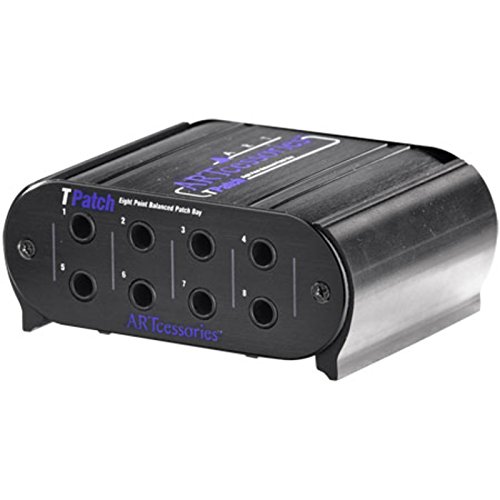
Flexible TRS Routing – Art Pro Audio TPatch
For patch bays for live sound setups that need balanced 1/4-inch connectivity, the Art Pro Audio TPatch provides eight points for organizing direct signals in a compact, rugged enclosure. Its switchable operating modes give you flexibility when configuring signal paths.
Best For: Live sound racks and small studio systems using balanced 1/4-inch TRS connections.
Pros:
- Provides eight points of balanced direct signals.
- Four channels use linked input/output pairs.
- Switchable half-normal and normal modes support different routing needs.
- Rugged extruded aluminum case with 1/4-inch TRS jacks.
Cons:
- Uses 1/4-inch TRS connections rather than XLR.
- Eight channels may be limiting for larger systems.
The TPatch is a practical choice when your rack is built around balanced TRS lines and you want selectable routing modes without a complicated installation. Its compact, durable construction also suits mobile or permanent setups.
Front-Access XLR Routing – Hosa PDR-369 12-Point XLR Patchbay
For patch bays for live sound systems built around XLR connections, the Hosa PDR-369 brings 12 channels of balanced XLR access to the front of a rack. Its reversible design helps adapt the panel to different routing and installation arrangements.
Best For: Racks that need convenient front-panel access to mixer inputs, microphone preamps, or audio interface connections.
Pros:
- Offers 12 channels in a single rack chassis.
- Uses balanced three-pin XLR connections.
- Reversible patchbay design supports flexible installation.
- Steel outer construction and a limited lifetime warranty.
Cons:
- Designed specifically for XLR connections, so it is less suitable for TRS-based systems.
- The supplied notes do not specify additional switching modes.
The PDR-369 is a straightforward option when XLR accessibility is the main priority. It can make difficult-to-reach rack connections easier to manage while keeping 12 channels in one unit.
Modular Tour-Ready XLR – AA Audio Accessory AP16 XLR Patchbay
For patch bays for live sound that need organized XLR routing and serviceable construction, the AA Audio Accessory AP16 combines 16 channels with four independent modular blocks. Its steel chassis and flexible rack-ear orientation are suited to demanding rack installations.
Best For: Professional live systems and studios needing modular 16-channel XLR routing with flexible rack mounting.
Pros:
- Four modular blocks can be configured for 4, 8, 12, or 16 channels.
- Individual modules can be removed or replaced for easier maintenance.
- 24K gold-plated XLR pins and a dual-layer PCB are designed for reliable signal routing.
- Full-steel chassis and reversible rack ears support demanding installations.
Cons:
- Its 16-channel format may be more capacity than smaller systems need.
- The supplied notes do not specify XLR gender or signal-normaling options.
- At 3.08 pounds, it is heavier than a basic compact patch panel.
The AP16 stands out for users who value modular maintenance and flexible rack integration. It is a strong fit for larger, evolving systems where replacing or reorganizing one section is preferable to reworking an entire panel.
How We Picked These Patch Bays for Live Sound
We focused on practical routing needs rather than features that look impressive on a specification sheet. The selection covers balanced 1/4-inch TRS patch bays, XLR feed-through panels, compact eight-point designs, and higher-capacity 48-point units. We considered connector compatibility, channel density, rack-mount practicality, routing flexibility, build quality, labeling, and how easily each format can fit into a live sound workflow.
Because live systems vary widely, there is no single best patch bay for every rig. A touring rack may benefit from dense TRS routing, while a stage box or installed panel may be easier to manage with clearly labeled XLR connectors.
Quick Comparison
- Best for high-density TRS routing: Samson S-Patch Plus, Behringer ULTRAPATCH PRO PX3000, and Art Pro Audio P48.
- Best for balanced XLR connections: ART P16, AMIMA 8-Channel, DIYTECH 16 Port, Hosa PDR-369, and AA AUDIO ACCESSORY AP16.
- Best for compact setups: Art Pro Audio TPatch.
- Best for flexible TRS patching: Black Lion Audio PBR TRS3.
Key Buying Factors for Patch Bays for Live Sound
Connector Type and Signal Compatibility
Start with the connectors already used in your mixer, outboard gear, stage box, and rack. TRS patch bays are a strong fit for balanced line-level equipment, while XLR panels make more sense when your workflow is built around microphone, console, or snake connections. Check whether the unit supports the signal types and cable lengths in your system.
Normalled, Half-Normalled, or Feed-Through Routing
Normalled connections pass a signal through until you insert a patch cable, which can keep a default routing scheme intact. Half-normalled designs can provide useful split or multing behavior, depending on the wiring. Feed-through panels are simpler: they connect front to back directly and are often ideal for stage racks or permanent cable management. Confirm the routing mode before buying, as layouts and terminology vary.
Channel Count and Rack Space
More points provide greater flexibility but require more labeling and cable discipline. A 48-point unit can consolidate a busy rack, whereas an eight- or 16-channel XLR panel may be easier to operate during a fast changeover. Measure the available rack space and leave room for cable bends, strain relief, and access to adjacent equipment.
Durability and Identification
Live use rewards sturdy chassis construction, secure connectors, and clear labeling. Color-coded ports can speed up setup, while front-panel labels or writable strips make troubleshooting easier. Gold-plated contacts may help resist corrosion, but connector fit, mounting strength, and reliable internal wiring matter just as much.
Who Should Buy Which Patch Bays for Live Sound?
Choose a 48-point TRS model if you manage several balanced line-level devices and want centralized rack routing. Choose an XLR patch bay if your system relies on microphone lines, stage snakes, or front-to-back rack connections. Choose a compact eight-point model for a smaller rehearsal, broadcast, or project rack. If you frequently change routing, prioritize flexible switching and clear labeling; if you mainly want cleaner permanent connections, a straightforward feed-through panel may be the better choice.