The best portable field monitors make it easier to frame, focus, expose, and review footage when your camera’s built-in display is too small or difficult to see. The right model can also add professional monitoring tools, touchscreen control, and better visibility in bright locations.
We compared 10 options across screen brightness, resolution, connectivity, monitoring features, portability, and value to help you choose a display that fits your camera rig and shooting style.
Best 10 Portable Field Monitors Picks for 2026
Outdoor Pro
Osee G7 Pro 7-inch 3000-Nit Monitor

- 3000-nit display for bright outdoor shooting
- 4K HDMI and 3G-SDI input/output
- Touch camera control and advanced scopes
Best For: Professional outdoor and SDI-based production
Ready-to-Shoot Value
FEELWORLD S55 V3 6-inch Monitor Bundle
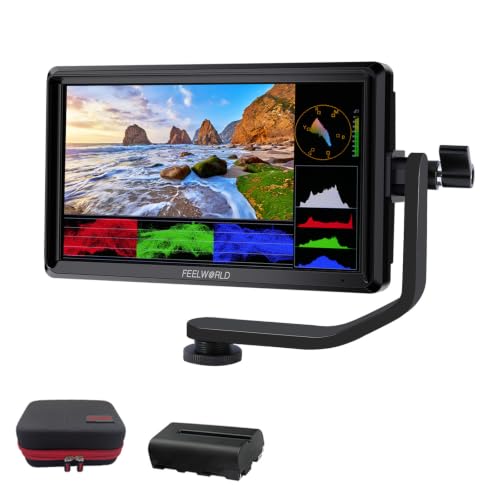
- Full HD 6-inch display with 4K HDMI loop-out
- Includes battery, case, sunshade, and tilt arm
- Useful exposure and focus-assist tools
Best For: Lightweight DSLR, mirrorless, and gimbal rigs
Bright Workflow Choice

- 2000-nit Full HD touchscreen
- 4K HDMI loop-in/out with audio monitoring
- Two NP-F750 batteries and extensive scopes
Best For: Extended shoots requiring bright viewing and flexible power
Lightweight Specialist

- Compact 5.2-inch Full HD touchscreen
- Advanced waveforms, LUT output, and focus tools
- Compatible with NP-F and LP-E6 batteries
Best For: Lightweight DSLR and mirrorless camera rigs
Best Value Starter
NEEWER F100 7-inch Field Monitor
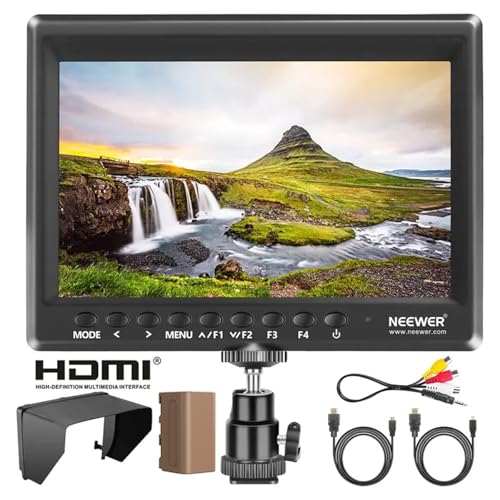
- 7-inch IPS display with 1280x800 resolution
- Includes battery, sunshade, ball head, and HDMI cables
- Offers focus, histogram, safe-frame, and image tools
Best For: Budget-conscious creators needing basic camera monitoring
Best Bright-Daylight Pick
Desview A7 Touchscreen Monitor

- 1920x1080 display rated at 2800 nits
- 4K HDMI input and output with headphone monitoring
- Waveform, vectorscope, histogram, and custom LUT support
Best For: On-set work requiring high brightness and advanced monitoring tools
Best Professional Connectivity

- 1920x1080 OLED touchscreen with 1200-nit brightness
- HDMI loop-out and 3G-SDI input/output
- Includes two NP-F750 batteries and supports custom LUTs
Best For: Professional crews using SDI and advanced monitoring workflows
Bright 5.5-Inch Pick

- 1200-nit Full HD touchscreen
- 4K HDMI input/output with 3D LUT support
- Includes battery, sunshade, cables, and case
Best For: Portable outdoor shooting with advanced exposure and focus tools
Lightweight Starter Pick

- 7-inch IPS screen for easier framing
- Histogram, zebra, false color, and focus assist
- 300g body with two batteries and cable adapters
Best For: Beginners using handheld, gimbal, or mobile camera rigs
Sunlight Visibility Pick

- 2200-nit 7-inch touchscreen with light sensor
- 1920x1200 display with LUT preview
- Waveform, vector, histogram, and focus assist
Best For: Outdoor filming in bright sunlight and professional field production
Outdoor Pro – Osee G7 Pro 7-inch 3000-Nit Monitor
The Osee G7 Pro is one of the most capable portable field monitors for bright outdoor production. Its 3000-nit display, 4K HDMI support, 3G-SDI connectivity, touchscreen camera control, and advanced exposure tools make it well suited to demanding cinema and hybrid-camera workflows.
Best For: Filmmakers who need high-brightness monitoring, SDI connectivity, and supported-camera control in the field.
Pros:
- Very bright 3000-nit display with reflection-reducing coating for outdoor viewing.
- Supports 4K HDMI input/output and 3G-SDI input/output up to 1080p60.
- Touch focus, focus tracking, and compatible-camera controls can streamline shooting.
- Includes waveform, histogram, vectorscope, false color, and 3D-LUT support.
Cons:
- At 1.76 pounds, it is heavier than compact 5- or 6-inch alternatives.
- Camera-control features require a supported camera, Type-C connection, and NP-F battery power.
- Battery is not included.
The G7 Pro stands out when visibility and connectivity matter more than minimum size. It is a strong choice for professional crews, especially those working with cameras that can take advantage of its control and touch-focus features.
Ready-to-Shoot Value – FEELWORLD S55 V3 6-inch Monitor Bundle
The FEELWORLD S55 V3 is a practical choice among portable field monitors for compact camera rigs. This bundle combines a 6-inch Full HD display with a battery, carry case, sunshade, tilt arm, cable, and core exposure tools, making it convenient for shooters who want a ready-to-use setup.
Best For: DSLR and mirrorless users building a lightweight handheld, gimbal, or stabilizer rig.
Pros:
- Compact 6-inch Full HD display with a 160-degree viewing angle.
- Accepts 4K HDMI signals and provides HDMI loop-out for a second monitor.
- Includes a rechargeable battery, carry case, sunshade, tilt arm, and Micro HDMI cable.
- Offers peaking, false color, zebra, histogram, zoom, and image-flip tools.
Cons:
- Its 500 cd/m² brightness is less suited to direct sunlight than brighter monitors.
- The included battery plate supports NP-F and LP-E6 batteries, but camera power requires a separate dummy battery or coupler.
- It lacks the SDI connectivity found on more production-focused models.
For buyers who value convenience, the S55 V3 bundle covers the essentials without requiring a separate accessory hunt. Its modest brightness is best matched with shaded or controlled shooting environments.
Bright Workflow Choice – NEEWER F700 7-inch Monitor
The NEEWER F700 is a flexible option for portable field monitors when a large, bright touchscreen and extensive monitoring tools are priorities. Its 2000-nit Full HD panel supports 4K HDMI loop-in/out, custom 3D LUTs, multiple power methods, and included dual batteries.
Best For: Shooters who want a bright 7-inch monitor with long-session power flexibility and detailed image-analysis tools.
Pros:
- 2000-nit touchscreen with automatic or manual backlight adjustment.
- Supports 4K HDMI loop-in/out and headphone audio monitoring.
- Includes two NP-F750 batteries and supports Type-C, DC, and NP-F power.
- Provides waveform, vectorscope, histogram, false color, zebras, HDR, and custom LUT support.
Cons:
- At 15.7 ounces without batteries, it is not the lightest 7-inch option.
- Cooling fans may be less desirable for especially noise-sensitive recording situations.
- DC power cable, headphones, and SD card are not included.
The F700 offers a strong feature-to-accessory balance, particularly for extended shoots. Its included batteries and broad power support reduce interruptions, while the 2000-nit screen remains useful in bright locations.
Lightweight Specialist – Portkeys PT6 5.2-inch Monitor
The Portkeys PT6 is a compact entry in the portable field monitors category, emphasizing low weight and detailed image-assistance tools. Its 5.2-inch Full HD touchscreen, 178-degree viewing angle, waveform options, 3D-LUT output, and vertical-shooting support suit streamlined DSLR and mirrorless setups.
Best For: Mobile shooters who prioritize a lightweight monitor with professional exposure, focus, and framing aids.
Pros:
- Light and slim design with a 5.2-inch Full HD touchscreen.
- Offers luma and RGB waveforms, histogram, false color, zebra, peaking, and audio meters.
- Supports 3D-LUT output, anamorphic viewing, image flip, and customized image crops.
- Works with Sony NP-F and Canon LP-E6 battery types.
Cons:
- Its 600-nit brightness is lower than the brighter 7-inch alternatives.
- Battery is not included.
- The smaller screen may provide less viewing area for complex compositions.
The PT6 is a sensible choice when every ounce matters but basic professional monitoring tools still count. It is best suited to controlled or shaded environments where its compact design is more valuable than maximum brightness.
Best Value Starter – NEEWER F100 7-inch Field Monitor
The NEEWER F100 is a practical choice for creators seeking portable field monitors with a straightforward 7-inch display, useful camera-assist tools, and included mounting and power accessories. Its 1280×800 IPS panel, 450-nit brightness, and sunshade make it suitable for general indoor work and shaded outdoor setups.
Best For: DSLR and camcorder users who want an affordable, ready-to-use monitor for framing and focus assistance.
Pros:
- 7-inch IPS display with 1280×800 resolution and 450-nit brightness
- Includes peaking focus assist, histogram, false-color-style check field, safe frames, and image tools
- 4400mAh F750 battery provides up to 3.5 hours of stated runtime
- Includes a 360-degree mini ball head, sunshade, and HDMI cables
Cons:
- Lower resolution and brightness than the other monitors in this roundup
- Only one HDMI port is listed
- Battery runtime may require a spare or USB power source for longer shoots
The F100 focuses on essential monitoring features and useful included accessories rather than premium resolution or connectivity. It is a sensible entry-level option for basic camera monitoring and mobile production.
Best Bright-Daylight Pick – Desview A7 Touchscreen Monitor
The Desview A7 stands out among portable field monitors for its high-brightness 7-inch touchscreen and broad monitoring toolkit. With a 1920×1080 display, 2800-nit brightness, 4K HDMI support, and waveform, vectorscope, and histogram tools, it is designed for more demanding on-set viewing.
Best For: Filmmakers who need a bright touchscreen, exposure tools, custom LUT support, and flexible power options.
Pros:
- Full HD 1920×1080 IPS display with 2800-nit brightness
- Supports 4K HDMI input and output, plus a 3.5mm headphone connection
- Includes waveform, histogram, vectorscope, false color, and peaking tools
- Supports custom LUT uploads and NP-F, DC, and Type-C power options
Cons:
- Supplied notes contain inconsistent panel-size information despite the 7-inch product title
- Its glossy screen finish may reflect surrounding light
- Battery and power accessories are not specified as included
The A7 offers a strong balance of visibility, color-management features, and connectivity. It is particularly appealing when a production calls for a bright screen and more advanced image analysis than a basic monitor provides.
Best Professional Connectivity – NEEWER F700U OLED Monitor
The NEEWER F700U is a professional-leaning option among portable field monitors, pairing a 7-inch 1920×1080 OLED touchscreen with HDMI loop-out and 3G-SDI input and output. Its extensive exposure, focus, audio, and LUT tools make it well suited to multi-device production setups.
Best For: Videographers and crews needing OLED contrast, SDI connectivity, HDMI loop-through, and advanced monitoring controls.
Pros:
- 1920×1080 OLED touchscreen with 100000:1 contrast and 1200-nit brightness
- Supports 4K HDMI input and loop-out for simultaneous monitoring and output
- Provides 3G-SDI input and output for professional video workflows
- Includes two 4400mAh NP-F750 batteries and supports up to 64 custom LUTs
Cons:
- SDI cable and DC 12V adapter are not included
- Custom LUT storage requires an SD card, which is not included
- More advanced connectivity may be unnecessary for simple HDMI-only setups
The F700U is the strongest fit for productions that can take advantage of SDI and extensive image-analysis features. Its included batteries and OLED display add practical value for longer, more demanding shoots.
Bright 5.5-Inch Pick – VILTROX DC-550 Pro II
The VILTROX DC-550 is one of the more versatile portable field monitors for creators who need a bright, compact display and detailed monitoring tools. Its 1200-nit 5.5-inch touchscreen supports Full HD viewing, 4K HDMI input/output, custom 3D LUTs, and multiple exposure and focus aids.
Best For: DSLR, mirrorless, and cinema-camera users who want a bright monitor with advanced on-set tools and flexible power options.
Pros:
- 1200-nit IPS touchscreen is designed for clearer daylight viewing.
- Includes waveform, vectorscope, histogram, false color, and focus-assist tools.
- Supports 4K HDMI input/output and custom 3D LUT loading.
- Comes with an NP-F550 battery, sunshade, cables, and carrying case.
Cons:
- The 5.5-inch screen is smaller than the displays on the two 7-inch alternatives.
- The listed native resolution is 1920×1080, despite supporting higher-resolution HDMI signals.
Choose the DC-550 when portability, outdoor visibility, and professional monitoring features matter more than maximum screen size. Its included accessories and triple power support also make it convenient for mobile production.
Lightweight Starter Pick – FEELWORLD FW759 Pro
The FEELWORLD FW759 Pro is a practical choice among portable field monitors for beginners, vloggers, and mobile camera operators. Its 7-inch IPS screen provides a larger framing view, while the lightweight design, sunshade, and broad cable selection help it fit easily into handheld and gimbal rigs.
Best For: Beginners and social-content creators who want an affordable-feeling, lightweight 7-inch monitoring setup for indoor or mobile shoots.
Pros:
- 7-inch IPS display gives a larger view than a typical built-in camera screen.
- Includes histogram, zebra, focus assist, and false-color tools.
- Lightweight 300g design suits handheld rigs and gimbals.
- Package includes two F550 batteries, sunshade, and HDMI cable adapters.
Cons:
- At 400 nits, it is less bright than the VILTROX and LUT7 monitors for strong sunlight.
- The 1280×800 resolution is lower than the Full HD resolution of the other options.
- The supplied notes list one HDMI port.
The FW759 Pro makes sense when screen size and low weight are priorities, especially for interviews, tutorials, livestreams, and short-form video. For frequent direct-sunlight work or higher-resolution monitoring, a brighter model may be preferable.
Sunlight Visibility Pick – FEELWORLD LUT7
The FEELWORLD LUT7 stands out among portable field monitors for outdoor production thanks to its 2200-nit 7-inch touchscreen and ambient light sensor. It combines a 1920×1200 display with waveform, vector, RGB histogram, focus-assist, and LUT-preview features for more controlled monitoring on location.
Best For: Filmmakers, wedding shooters, travel vloggers, and other creators who regularly monitor footage outdoors in bright conditions.
Pros:
- 2200-nit brightness and an ambient light sensor support direct-sunlight viewing.
- 7-inch 1920×1200 IPS touchscreen provides a spacious monitoring area.
- Offers waveform, vector, RGB histogram, focus assist, and LUT preview tools.
- HDMI input/output and DC 8.4V camera power output aid rig integration.
Cons:
- Its 7-inch size is less compact than the 5.5-inch VILTROX for minimal rigs.
- The supplied notes do not specify an included battery or sunshade.
- The glossy screen finish may require more attention to reflections in some conditions.
If clear viewing in bright environments is the deciding factor, the LUT7 is the strongest fit in this group. Its large high-resolution display and extensive monitoring tools also suit productions where exposure and focus need close attention.
How We Picked These Portable Field Monitors
We focused on practical features that matter during real-world production rather than screen size alone. Our comparison considers brightness for outdoor shooting, resolution and color support, HDMI or SDI connectivity, touchscreen responsiveness, 3D LUT compatibility, exposure and focus tools, power options, and physical portability.
We also included models across several budgets and use cases. Some are compact choices for lightweight DSLR or mirrorless rigs, while others offer brighter screens, professional video inputs, or advanced tools for cinematography and production work.
Quick Comparison
| What to Compare | Best For | Why It Matters |
|---|---|---|
| 5–5.5-inch screen | Compact handheld or gimbal rigs | Reduces weight and preserves camera balance |
| 7-inch screen | Tripods, cages, and studio-style setups | Provides a larger viewing area for framing and focus |
| 1,200 nits or more | Outdoor production | Improves visibility in bright ambient light |
| 3G-SDI | Professional cameras and longer cable runs | Offers a robust video connection beyond standard HDMI |
| 3D LUTs and scopes | Color-critical monitoring | Helps preview looks and evaluate exposure or color |
Key Buying Factors for Portable Field Monitors
Brightness and Outdoor Visibility
Brightness is one of the most important specifications if you shoot outside. A monitor rated around 400 to 600 nits may work in shade or controlled environments, but high-brightness models around 1,200 nits or more are easier to use in direct daylight. A sun hood can further improve visibility and reduce reflections.
Size, Resolution, and Portability
A 5- or 5.5-inch monitor is easier to mount on a gimbal, compact cage, or run-and-gun camera. A 7-inch display is more comfortable for checking focus and composition, but it adds weight and takes up more mounting space. Full HD resolution is generally sufficient for field monitoring, provided the panel is sharp and displays your camera’s signal correctly.
Inputs, Outputs, and Compatibility
Check your camera’s output before buying. HDMI is common on mirrorless and DSLR cameras, while SDI is more typical on professional video cameras. HDMI loop-through can feed another display or recorder, and supported input resolutions should match your camera’s output settings. Also confirm cable direction, connector size, and whether adapters are required.
Monitoring Tools and Power
Waveforms, histograms, false color, zebras, vectorscopes, focus peaking, and 3D LUT support can be more valuable than extra resolution. Touch control is convenient, but physical buttons may be preferable when working quickly or wearing gloves. Finally, verify the battery type, battery availability, charging method, and runtime before taking a monitor into the field.
Who Should Buy Which Portable Field Monitors?
Choose a compact 5- to 5.5-inch option if you prioritize low weight, mobility, or gimbal compatibility. A 7-inch monitor is the better choice for tripod work, interviews, studio setups, and situations where multiple people need to view the image.
Outdoor shooters should prioritize the highest practical brightness, while filmmakers who grade on set should look for 3D LUT support and exposure scopes. If you use professional cinema equipment, select a model with the required SDI connectivity. For basic framing and focus on a budget, an entry-level HDMI monitor may provide all the functionality you need without adding unnecessary cost or complexity.