The best power amplifiers for home use make it easier to match speakers with the right level of power, connectivity, and control. This roundup covers compact Class D amps, traditional stereo receivers, karaoke-friendly models, and higher-output options for larger rooms.
Before choosing, consider your speakers’ impedance and sensitivity, the inputs you need, and whether you want a simple amplifier or an all-in-one receiver with Bluetooth, radio, USB, microphones, or phono support.
Best 10 Power Amplifiers for Home Use Picks for 2026
Compact Powerhouse

- 300W per channel with the TPA3255 chip
- Bass and treble controls
- Compact RCA-based home audio design
Best For: Compact passive-speaker and bass-shaker systems
Versatile Stereo Receiver

- 100W per channel at 8 ohms
- Bluetooth and phono input
- A/B speaker switching and FM radio
Best For: Traditional living-room stereo systems with multiple sources
Pro-Style Rack Amplification
Rockville RPA9 Power Amplifier
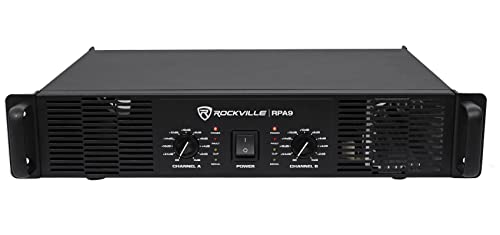
- 800W RMS and 3000W peak output
- Stereo, bridged, and crossover modes
- XLR, RCA, speakON, and banana connections
Best For: Home DJs, rack systems, and high-output setups
Wireless Customizable Amp
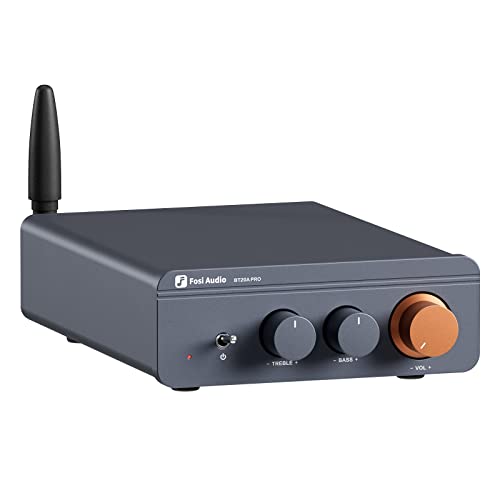
- 300W per channel with Bluetooth 5.0
- Replaceable Op-Amps for customization
- Bass and treble controls included
Best For: Wireless passive-speaker systems and audio enthusiasts
Best Karaoke Receiver
Pyle PDA77BU 800W Home Stereo Amplifier

- 800W peak, four-channel design
- Bluetooth 5.0 plus USB, SD, FM, RCA, and AUX
- Dual microphone inputs with karaoke controls
Best For: Home karaoke, parties, and flexible multi-source audio
Best Hi-Fi Stereo Amp
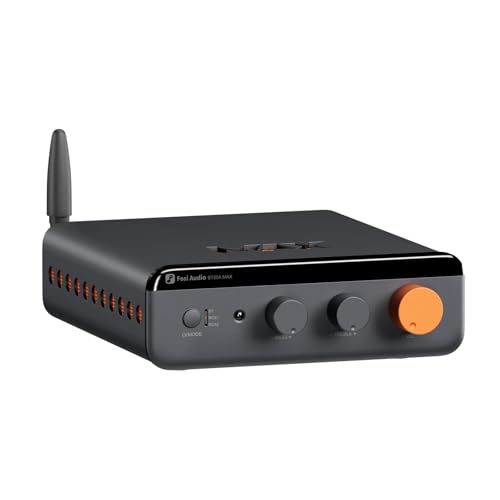
- 180W rated and 300W peak power per channel
- Bluetooth 6.0 with LDAC and aptX Lossless
- Subwoofer output for 2.1 home audio systems
Best For: High-powered stereo and 2.1-channel listening
Best Multi-Input Receiver
Donner MAMP5 440W 4-Channel Amplifier

- 440W peak power with four independent channels
- Bluetooth, USB, SD, FM, RCA, AUX, and dual mic inputs
- Speaker selector for multi-speaker passive systems
Best For: Home theater, studio, karaoke, and multi-speaker setups
Immersive 5.1 Home Theater Amplifier
High-Power Karaoke AV Receiver

- 5.1-channel audio with independent subwoofer channel
- Three microphone inputs for karaoke and announcements
- USB/SD playback, RCA inputs, and remote control
Best For: Home theater and karaoke setups
Compact Stereo Streaming Amplifier

- 100 watts RMS and 200 watts peak output
- Bluetooth, USB, SD, RCA, AUX, and FM inputs
- Bass, treble, microphone, and master-volume controls
Best For: Compact stereo and computer audio systems
Flexible 4-Channel Home Audio Amplifier

- 500-watt peak output for multi-speaker systems
- Bluetooth, USB, microSD, AUX, and AM/FM playback
- Dual microphone inputs with echo and talk-over functions
Best For: Home karaoke and multi-speaker entertainment
Compact Powerhouse – Fosi Audio TB10D
For shoppers comparing power amplifiers for home use, the Fosi Audio TB10D is a compact two-channel option built around the TPA3255 chip. It offers bass and treble controls, RCA connectivity, and passive-speaker outputs for straightforward desktop, living-room, or home-theater setups.
Best For: Users who want a compact, high-output amplifier for passive speakers, bass shakers, or mixed home audio systems.
Pros:
- Rated at 300 watts per channel, with support for 2–8-ohm bookshelf speakers.
- Bass and treble controls allow simple sound adjustment.
- Compact design works with phones, computers, TVs, CD players, and other sources.
- Built-in protection circuits and a 24-month manufacturer warranty support everyday use.
Cons:
- Connectivity is centered on RCA input and passive-speaker output.
- It does not include the broader source selection or radio features of a full stereo receiver.
The TB10D is a practical choice when you need substantial stated output in a small enclosure. Its simple controls and flexible source compatibility make it especially suitable for compact systems.
Versatile Stereo Receiver – Sony STRDH190
The Sony STRDH190 is a traditional two-channel receiver for shoppers seeking power amplifiers for home use with built-in source options. It combines 100 watts per channel into 8 ohms with Bluetooth, a phono input, four stereo RCA inputs, FM radio, and A/B speaker switching.
Best For: Living-room listeners who want one receiver for turntables, Bluetooth streaming, radio, and multiple wired audio sources.
Pros:
- Delivers 100 watts per channel into 8-ohm speakers.
- Includes a phono input for turntables and four stereo RCA inputs.
- Bluetooth supports wireless streaming from compatible devices.
- A/B switching can connect up to four speakers, with a full-size headphone jack included.
Cons:
- Speaker impedance is specified for 6–16 ohms.
- Its 17.1-pound, low-profile receiver format is less compact than a mini amplifier.
The STRDH190 favors convenience and source flexibility over a minimalist footprint. It is a strong fit for a conventional stereo setup where phono, Bluetooth, FM, and remote control all matter.
Pro-Style Rack Amplification – Rockville RPA9 Power Amplifier
The Rockville RPA9 is designed for buyers who need power amplifiers for home use in a rack-based or professional-style audio system. This two-channel unit provides 800 watts RMS and 3000 watts peak output, along with XLR, 1/4-inch, and RCA inputs and speakON or banana outputs.
Best For: Home DJs, rehearsal spaces, event setups, and users pairing a rack amplifier with mixers or professional speakers.
Pros:
- Provides 800 watts RMS and 3000 watts peak output for high-demand setups.
- Supports stereo and bridged modes and includes a built-in crossover.
- Offers XLR, 1/4-inch, and RCA inputs with speakON and banana outputs.
- Dual fans, a heat-sink design, and a rugged metal chassis suit extended use.
Cons:
- The 2U rack-mount format is larger and less home-office friendly than a mini amplifier.
- Its professional connections and cooling system may be more than needed for a simple living-room stereo.
The RPA9 makes the most sense when output, rack compatibility, and professional connectivity take priority. For casual home listening, its size and pro-oriented design may be unnecessary.
Wireless Customizable Amp – Fosi Audio BT20A Pro
The Fosi Audio BT20A Pro is a compact choice among power amplifiers for home use, adding Bluetooth 5.0 to a two-channel Class D design. Its TPA3255-based amplifier is rated at 300 watts per channel and includes bass and treble controls plus replaceable Op-Amps for sound customization.
Best For: Listeners who want a small wireless amplifier for passive speakers with adjustable tone and optional Op-Amp experimentation.
Pros:
- Rated at 300 watts per channel with low idle loss under 2.5W.
- Bluetooth 5.0 provides wireless connectivity and pairing memory.
- Replaceable Op-Amps support multiple listed upgrade and tuning options.
- Specified SNR of at least 108 dB and THD of no more than 0.005%.
Cons:
- The supplied notes identify Bluetooth connectivity but do not list multiple wired input types.
- Op-Amp replacement requires extra components and hands-on customization.
The BT20A Pro stands out for combining a small footprint with wireless playback and enthusiast-oriented customization. It is a better match for flexible passive-speaker systems than for buyers seeking a full-featured receiver.
Best Karaoke Receiver – Pyle PDA77BU 800W Home Stereo Amplifier
If you want a flexible option among power amplifiers for home use, the Pyle PDA77BU combines Bluetooth streaming with multiple wired inputs, media playback, and karaoke features. Its four-channel design, USB and SD support, FM radio, and dual microphone inputs make it suited to varied home entertainment setups.
Best For: Home karaoke, parties, and users who want one receiver for music, radio, external sources, and microphones.
Pros:
- 800W peak power and four-channel configuration
- Bluetooth 5.0 works with phones, tablets, and laptops
- USB, SD card, FM radio, RCA, AUX, and 3.5mm connectivity
- Dual microphone inputs with independent controls, reverb, and delay
Cons:
- The listed 800W figure is peak power, while the product details also list 500W wattage
- Its karaoke-focused controls may be more than needed for a simple stereo system
The PDA77BU is a feature-rich choice when source flexibility and microphone support matter more than a minimalist setup. Verify your speaker requirements and preferred connection layout before buying.
Best Hi-Fi Stereo Amp – Fosi Audio BT20A MAX 300W x 2
The Fosi Audio BT20A MAX is a compact, performance-oriented pick among power amplifiers for home use. It provides 180W rated power per channel, 300W peak power per channel, high-resolution Bluetooth, dual RCA inputs, and a dedicated subwoofer output for stereo or 2.1-channel systems.
Best For: Listeners building a high-powered stereo or 2.1 home audio system who want detailed Bluetooth playback and remote control.
Pros:
- PFFB technology and dual power supplies support low-distortion audio
- Bluetooth 6.0 supports LDAC, aptX Lossless, aptX HD, and other codecs
- Dedicated subwoofer output and HPF adjustment support 2.1 setups
- Includes remote control, 12V trigger input, and bass/treble controls
Cons:
- The cooling fan may speed up when operating at peak power for extended periods
- It has fewer source inputs than a full-size multi-input receiver
With strong wireless specifications and dedicated 2.1 features, the BT20A MAX is a focused choice for serious stereo listening. Its compact design suits systems where amplification quality and Bluetooth capability take priority.
Best Multi-Input Receiver – Donner MAMP5 440W 4-Channel Amplifier
The Donner MAMP5 is a practical option among power amplifiers for home use when you need several playback sources and microphone support. It offers four independently controlled channels, Bluetooth 5.0, USB and SD playback, FM radio, RCA inputs, and a speaker selector for broader home or studio setups.
Best For: Home theater, studio, karaoke, and multi-speaker systems using passive speakers.
Pros:
- 440W peak power with four independently controlled channels
- Supports up to four groups of 8-ohm speakers, with 4–16 ohm impedance listed
- Bluetooth 5.0, USB, SD, FM, RCA, AUX, and dual microphone inputs
- Includes LED display, remote control, bass and treble adjustment, and speaker selector
Cons:
- Requires passive speakers to produce audio
- Remote control functionality is limited to MP3, Bluetooth, and FM volume
- USB and SD playback capacities are limited to 32GB and 16GB respectively
The MAMP5 offers broad connectivity and independent channel control at a practical scale. It is particularly useful for users who want karaoke and multi-source playback, provided their speakers and impedance requirements match the receiver.
Immersive 5.1 Home Theater Amplifier – High-Power Karaoke AV Receiver
If you want power amplifiers for home use that can handle movies, music, and karaoke, this 5.1-channel Viprh model offers a feature-rich setup. It includes an independent subwoofer channel, three microphone inputs, USB/SD playback, RCA connections, and a remote control.
Best For: Home theater rooms, karaoke nights, and small gatherings that need surround sound and multiple microphone connections.
Pros:
- 5.1-channel output with a dedicated subwoofer channel for deeper bass.
- Three microphone inputs with adjustable mixing support karaoke and announcements.
- USB/SD playback, RCA inputs, equalizer functionality, and remote control add flexibility.
- Built-in protection features and eight dual-tube amplifier modules support stable operation.
Cons:
- Its audio output is designed for active subwoofers or active speakers only.
- The listed specifications include both 1500-watt output and 3000-watt peak claims, so buyers should verify the intended power rating.
This is a versatile choice when home entertainment matters more than a minimalist stereo setup. Its microphone inputs and 5.1-channel layout make it especially appealing for users who want one receiver for movies, music, and karaoke.
Compact Stereo Streaming Amplifier – Bluetooth Home Audio Receiver
For shoppers comparing power amplifiers for home use in a compact stereo format, the Pyle PDA29BU.5 combines Bluetooth streaming with wired and physical-media inputs. It delivers 100 watts of RMS continuous power, with 200 watts listed as peak output, and supports two stereo speakers.
Best For: Small home audio systems, computer audio, karaoke, and casual music listening where Bluetooth and multiple input options are useful.
Pros:
- Bluetooth supports wireless playback from smartphones, tablets, iPhones, and computers.
- Includes RCA, USB, SD card, microphone, AUX, and FM radio connectivity.
- Separate controls for microphone volume, bass, treble, and master volume provide straightforward adjustment.
- LED display, remote control, and a compact 7-by-6.2-by-2.4-inch design suit smaller setups.
Cons:
- This is a two-channel stereo amplifier rather than a surround-sound receiver.
- The 200-watt figure is peak power; the listed continuous output is 100 watts.
This model is a practical pick for desktop, living-room, or small karaoke systems that prioritize easy source switching. Its stereo configuration and compact size make it less suited to users seeking a dedicated multi-channel home theater amplifier.
Flexible 4-Channel Home Audio Amplifier – Bluetooth Karaoke Receiver
This Pyle four-channel receiver is one of the more flexible power amplifiers for home use if you need support for multiple speakers, microphones, and playback sources. It offers 500 watts of listed peak power, Bluetooth, USB and microSD playback, FM radio, a subwoofer output, and two microphone inputs.
Best For: Home karaoke, small PA-style setups, and multi-speaker entertainment systems using 4- to 8-ohm speakers.
Pros:
- Four-channel design supports multiple speakers with 4- to 8-ohm impedance.
- Bluetooth, USB, microSD, AUX, iPod/MP3 playback, and AM/FM radio provide varied sources.
- Two microphone inputs include echo and volume controls for karaoke or announcements.
- Subwoofer RCA output, talk-over function, equalizer controls, and remote control expand usability.
Cons:
- The supplied specifications identify 500 watts as peak power without a separate RMS rating.
- Its feature-heavy layout may be more than needed for simple two-speaker listening.
Choose this receiver when input variety and microphone functionality are priorities. It is particularly well matched to entertainment spaces where karaoke, announcements, and multiple playback sources are more important than a streamlined audiophile setup.
How We Picked These Power Amplifiers for Home Use
We selected models across several common home-audio needs rather than focusing on wattage alone. The list includes compact integrated amplifiers for passive speakers, stereo receivers with traditional inputs, rack-mount equipment for more demanding setups, and multi-channel units designed for karaoke or casual home theater.
We also considered connectivity, including Bluetooth, RCA, AUX, USB, SD, FM radio, phono inputs, and microphone connections. Published power figures can use different testing methods, so treat maximum or peak ratings as a general comparison point—not a guarantee of continuous real-world output.
Quick Comparison
- Best for simple stereo systems: Compact Fosi Audio amplifiers offer a small footprint and straightforward operation.
- Best for vinyl and everyday listening: The Sony receiver includes phono connectivity, Bluetooth, and conventional stereo controls.
- Best for karaoke and flexible inputs: Pyle and Donner receivers provide microphone inputs alongside USB, SD, Bluetooth, or radio features.
- Best for higher-output installations: The Rockville rack-mount amplifier is better suited to equipment racks and more demanding audio environments.
- Best for home theater-style setups: Multi-channel models can support more speakers, but verify channel layout and input compatibility before buying.
Key Buying Factors
Power, Impedance, and Speaker Matching
Check the amplifier’s recommended speaker impedance, usually listed in ohms, before connecting your speakers. A useful match should provide enough clean power for your room without forcing the amplifier to run continuously at its limit. Speaker sensitivity matters too: efficient speakers need less power to play loudly.
Inputs and Everyday Convenience
Bluetooth is useful for phones and tablets, while RCA and AUX inputs support CD players, streamers, televisions, and other wired sources. Choose a model with a phono input if you use a turntable without a built-in preamp. USB and SD playback, FM radio, and microphone inputs are helpful extras, but they may matter less than reliable stereo connections.
Channels, Size, and Cooling
Two-channel amplifiers are usually the simplest choice for left-and-right stereo speakers. Four- and five-channel models can support more speakers or specialized entertainment setups, but they may have more complicated controls. Also measure your shelf or rack space and leave room for ventilation, especially around higher-powered equipment.
Who Should Buy Which Power Amplifiers for Home Use?
Choose a compact Fosi Audio model if you want a small, affordable amplifier for passive bookshelf, desktop, patio, or secondary-room speakers. Choose the Sony STR-DH190 if phono input and familiar receiver controls are priorities.
Choose a Pyle or Donner receiver if karaoke, microphones, USB playback, FM radio, or multiple channels are central to your setup. Choose the Rockville RPA9 if you need rack-mount hardware for a more installation-focused system.
Finally, consider a multi-channel home-audio amplifier when you have a clear need for additional speakers or microphone inputs. For most everyday listening, a well-matched two-channel amplifier with the right inputs will be easier to use and less expensive than buying extra features you will not need.