Choosing the right smartphone live streaming encoder can make the difference between a clean, stable broadcast and a frustrating setup. The best options combine solid video quality, low latency, and broad platform support.
Below, we focus on practical picks for creators, event teams, and small production setups that need dependable live streaming without unnecessary complexity.
Best 10 Smartphone Live Streaming Encoder Picks for 2026
4K Multi-Protocol Encoder
URayCoder HDMI to RTSP/RTMP Live Streaming

- 4K UHD input up to 30fps
- Supports RTMP, RTSP, SRT, HLS, and more
- Adds logos, captions, and timestamps
Best For: Multi-platform streaming with branded overlays
Android Monitoring Adapter
Accsoon SeeMo 4K HDMI Transmitter

- Near-zero latency phone monitoring
- Supports live streaming and recording
- 4K30 image quality with H.264 encoding
Best For: Android creators needing fast monitoring and sharing
Branded Live Encoder
J-Tech Digital 4K HDMI IPTV Encoder

- 4K 60Hz input with 1080p output
- Supports H.264, H.265, and MJPEG
- Adds OSD text, logos, and no-signal image
Best For: Events needing audio input and branded livestreams
PoE Streaming Encoder
EXVIST H.265 HDMI Encoder/Decoder
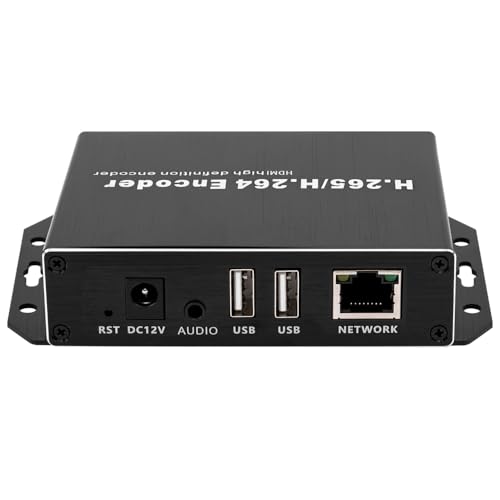
- PoE power with Ethernet cable simplicity
- Encodes HDMI and decodes RTSP streams
- Supports USB webcams and USB recording
Best For: PoE streaming setups with webcam and decoding needs
Compact Pro Encoder
1080P60 Hardware Encoding with Broad IP Protocol Support

- 1080P60 hardware H.265/H.264 encoding
- Broad protocol support including SRT, RTMP, RTSP, WebRTC
- Browser setup, compact low-power design
Best For: Dependable network streaming and live broadcast setups
Mini Stream Box
H.265 Encoder with SD Card Recording

- SD card slot for up to 128G MP4 recording
- Wide protocol support for streaming and playback
- Browser UI with logo and OSD tools
Best For: Live streaming setups that also need local recording
4K Network Streamer
Multi-Protocol HDMI to Ethernet Encoder
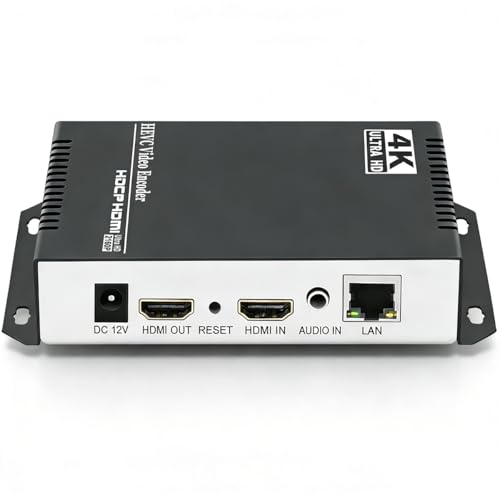
- 4K HDMI input with H.265/H.264 encoding
- Up to 4 simultaneous streams with different protocols
- Advanced overlays and video adjustment tools
Best For: Multi-platform live streaming with higher-resolution sources
Value Streamer

- Supports H.265/H.264 and common live protocols
- No PC required for live broadcasting
- Actual encoding limit is 1080P/30
Best For: Budget-minded 1080P/30 HDMI streaming setups
Portable Pro

- Pocket-sized design with very low power draw
- Supports SRT, RTMP, RTMPS, HLS, RTSP, and UDP
- 1080P60 input with 1080P30 output
Best For: Travel-friendly streaming and compact professional installs
Feature-Rich Streamer

- 4K UHD input support up to 30fps
- Outputs up to 4 streams with different protocols
- Built-in branding and image adjustment tools
Best For: Advanced multi-platform streaming with on-screen customization
4K Multi-Protocol Encoder – URayCoder HDMI to RTSP/RTMP Live Streaming
This smartphone live streaming encoder is built for creators who need a flexible HDMI-to-network solution with strong format support. It handles 4K input, multiple streaming protocols, and branded overlays, making it useful when you want one box to feed several platforms without extra gear.
Best For: Multi-platform live streaming, 4K HDMI sources, and users who want customizable branding tools.
Pros:
- Supports 4K UHD input up to 30fps and up to 120fps at lower resolutions.
- Outputs multiple protocols including RTMP, RTSP, SRT, HLS, UDP, and WebRTC.
- Can push up to 4 streams simultaneously to platforms like YouTube and Facebook.
- Includes text, scrolling captions, logo, timestamp, and basic video adjustment options.
Cons:
- Requires HDMI video sources; it is not a direct phone-capture device.
- Advanced features may be more than casual users need.
Overall, this is a strong pick if you want a feature-rich encoder with broad protocol support and live branding controls. It suits users who value flexibility, stable transmission, and future customization options.
Android Monitoring Adapter – Accsoon SeeMo 4K HDMI Transmitter
This smartphone live streaming encoder is aimed at mobile workflows where near-zero latency monitoring matters. It turns Android phones into professional monitors and also supports live streaming and recording, which makes it handy for creators who want a compact monitoring-and-transmit setup.
Best For: Android users who need real-time monitoring, quick setup, and 4K live viewing.
Pros:
- Turns Android phones into professional monitors with near-zero latency.
- Supports real-time sharing, live streaming, and recording.
- Uses H.264 encoding for efficient compression and smooth transmission.
- Delivers 4K30 image quality for detailed monitoring.
Cons:
- Requires a separate HDMI cable for camera connection.
- Needs an NPF battery to power it on, sold separately.
- The note set mentions the Accsoon SEE app download for iPhone or iPad, so setup details should be checked carefully for Android use.
In practice, this is best viewed as a monitoring-first device with live-streaming capability rather than a full standalone studio encoder. It should appeal most to users who want a portable, low-latency phone-based workflow.
Branded Live Encoder – J-Tech Digital 4K HDMI IPTV Encoder
This smartphone live streaming encoder is a good fit if you need a practical HDMI encoder with flexible audio and multi-platform output. It supports 4K 60Hz input, several common streaming protocols, and branding tools, making it a solid choice for live events and managed streams.
Best For: Churches, conferences, and live events that need HDMI video plus external audio and branding.
Pros:
- Supports H.264, H.265, and MJPEG encoding options.
- Handles 4K 60Hz input and 1080p 60Hz output.
- Includes analog audio input for mixer or soundboard integration.
- Offers custom OSD text, logo overlay, and a no-signal image.
Cons:
- Outputs 1080p, so it does not stream 4K out.
- Best suited to HDMI-based workflows rather than direct smartphone capture.
For teams that want a dependable encoder with simple branding and external audio support, this model covers the basics well. It is especially appealing where stream presentation and protocol flexibility matter more than extreme video resolution.
PoE Streaming Encoder – EXVIST H.265 HDMI Encoder/Decoder
This smartphone live streaming encoder is designed for flexible network streaming, especially when PoE power and webcam support are important. It can encode HDMI input, decode RTSP streams, and work with USB webcams, giving it a broader role than a basic one-way encoder.
Best For: PoE installs, webcam-based broadcasts, and users who want encoding plus decoding in one box.
Pros:
- Supports HDMI encoding plus RTSP decoding and USB webcam input.
- Offers PoE power, which can simplify cable runs.
- Supports many protocols including RTSP, RTMP, SRT, HLS, HTTP, and UDP.
- Can record directly to a USB flash drive in MP4.
Cons:
- HDMI encoding input is limited to 1080p.
- RTMP pushing is H.264 only according to the notes.
- Some features are more relevant to surveillance and network workflows than simple live streaming.
As a practical live-streaming encoder, this model stands out for its PoE convenience and mixed encode/decode functions. It makes the most sense for users building a networked setup that may also need local recording or webcam integration.
Compact Pro Encoder – 1080P60 Hardware Encoding with Broad IP Protocol Support
If you need a smartphone live streaming encoder that feels more like pro AV gear than a hobby box, this unit is built around 1080P60 hardware encoding with H.265/H.264 compression. It’s a practical fit for live broadcast setups that want lower bandwidth, flexible network distribution, and browser-based setup without extra software.
Best For: Streamers, event teams, and AV users who want a compact encoder for dependable 1080P60 network streaming.
Pros:
- Hardware H.265/H.264 encoding at 1080P60 for broadcast-quality output.
- Supports SRT, RTMP, RTSP, RTMPS, UDP, HTTP, HLS, WebRTC, TRTC, Icecast, and SHOUTcast.
- Browser-based configuration with DHCP enabled by default.
- Compact, low-power design for 24/7 deployment.
Cons:
- Only one HDMI input port is listed.
- Best suited to network streaming workflows rather than simple plug-and-play consumer use.
This is a strong choice when you want a single encoder that can handle multiple streaming and distribution workflows while staying small enough for flexible placement.
Mini Stream Box – H.265 Encoder with SD Card Recording
For buyers comparing a smartphone live streaming encoder with recording and browser access, this mini HDMI encoder stands out for its SD card slot and wide protocol support. It can push streams to major platforms, pull to private servers, and also record locally when you want a simple backup workflow.
Best For: Streamers and small production setups that want local recording plus multi-platform live streaming.
Pros:
- Supports RTMP, RTSP, SRT, HLS, HTTP, HTTPS, TCP/IP, UDP, and multicast.
- SD card slot supports up to 128G for MP4 recording.
- Browser UI lets you preview, set audio, add logos, and insert OSD text.
- Works with live streaming and surveillance-style applications.
Cons:
- RTMP is listed as H.264 only.
- Mini HDMI connection may require the right cable setup.
This model makes sense if you want an encoder that does more than stream, especially when local recording and simple browser management are important.
4K Network Streamer – Multi-Protocol HDMI to Ethernet Encoder
If your smartphone live streaming encoder needs room to grow into higher-resolution sources, this URayCoder box is built around 4K HDMI input and dual H.265/H.264 encoding. It also supports multiple simultaneous outputs, making it a strong fit for creators or teams pushing the same source to several services at once.
Best For: Users who want 4K-capable encoding with multi-platform streaming flexibility.
Pros:
- Supports 4K input at up to 30fps and up to 120fps at 2K and lower resolutions.
- Can output 4 streams with different protocols at the same time.
- Supports RTSP, RTMPS, HLS, UDP, SRT, HTTP, FLV, WebRTC, TRTC, and ICECAST.
- Allows text, logos, timestamps, cropping, rotation, flipping, and mirroring.
Cons:
- 4K is limited to 30fps according to the specs provided.
- Designed as a network encoder box, so it is more involved than a basic streaming adapter.
This is the most feature-rich option in the group if you want advanced protocol support, multi-stream output, and more control over the final stream look.
Value Streamer – Compact 1080P HDMI IP Encoder
If you need a straightforward smartphone live streaming encoder alternative for HDMI sources, this Wilxisum model focuses on the basics: IP encoding, common streaming protocols, and simple network-based broadcasting. It supports H.265/H.264 and can stream to platforms like YouTube, Facebook, and Ustream without requiring a computer, but it is important to note that its effective capture/encoding limit is 1080P at 30fps.
Best For: Budget-conscious users streaming 1080P/30 HDMI video to common live platforms without a PC.
Pros:
- Supports SRT, RTMP, RTMPS, RTSP, UDP, HTTP TS/FLV, and HLS.
- No computer needed for live broadcast.
- Works with multi-client viewing in LAN, plus multicast, unicast, and IPTV.
- Backed by 2-year limited warranty and lifelong technical support.
Cons:
- Despite the listing headline, the notes state 1080P/30 is the actual supported capture/encoding limit.
- Not recommended if your source is 1080P/60.
- Only one main stream and one secondary stream are output.
This is a practical entry-level encoder if your workflow is built around 1080P/30 content and standard streaming protocols. It is less suited to higher-frame-rate sources, but for simple HDMI-to-IP live streaming it covers the essentials well.
Portable Pro – Mini 2K Hardware Live Encoder
For anyone shopping for a smartphone live streaming encoder-style hardware box that can travel easily and run quietly, this DDMALL AVC-2K stands out for its tiny size, low power draw, and broad protocol support. It accepts HDMI sources up to 1080P60 and encodes to stable 1080P30, making it a strong fit for mobile live production, compact installations, and low-latency streaming workflows.
Best For: Mobile creators and small installations that want a tiny, low-power HDMI encoder with SRT support.
Pros:
- Ultra-compact design at just 1.13 oz and 2.4W power use.
- Supports H.265/HEVC and H.264/AVC with SRT, RTMP, RTMPS, HLS, RTSP, and UDP.
- Handles 1080P60 input with stable 1080P30 output.
- Includes cloud management via DDMALL LinkCloud and dual-stream output.
Cons:
- Encoding output is 1080P30, not full 60fps.
- Advanced cloud/private-cloud features may be more than casual users need.
- Requires HDMI sources; it is not a direct phone-capture solution.
Overall, this encoder is best when portability and low power matter more than raw format flexibility. Its mix of compact hardware, broad protocol support, and remote management makes it a capable choice for creators who need reliable streaming on the go.
Feature-Rich Streamer – 4K HDMI to IP Network Encoder
If you want a smartphone live streaming encoder alternative with more advanced studio-style controls, this URayCoder HDMI-to-IP encoder is the most feature-heavy option here. It supports 4K UHD input up to 30fps, multiple simultaneous output streams, and a wide list of live protocols, making it a strong fit for users who need flexible distribution across platforms and devices.
Best For: Advanced streamers who want 4K input support, multiple protocols, and on-screen branding tools.
Pros:
- Supports 4K UHD input at up to 30fps, plus higher frame rates at lower resolutions.
- Can output 4 streams with different protocols at once.
- Works with RTSP, RTMP(S), SRT, HLS, WebRTC, ONVIF, UDP/RTP, and more.
- Includes text, logos, timestamps, cropping, rotation, flipping, and mirroring options.
Cons:
- 4K is limited to 30fps.
- The large feature set may be more than basic users need.
- Designed for HDMI sources, so it is not a direct phone encoder.
As a roundup pick, this model offers the deepest feature set and the broadest protocol coverage. It is especially appealing if you want branding tools, multi-platform output, and more control over how your stream looks and where it goes.
How We Picked the Best Smartphone Live Streaming Encoder
We focused on encoder models that balance live-streaming flexibility, input/output support, protocol compatibility, and real-world usability. For a Smartphone Live Streaming Encoder, that means checking whether it can handle common streaming workflows, maintain stable encoding, and support the platforms or private networks you actually use.
We also prioritized features that matter in daily use: hardware encoding, reliable audio handling, multiple streaming protocols, and compact designs that fit mobile or semi-mobile setups.
Quick Comparison
If you want the simplest route, look for a model with strong protocol coverage and easy setup. If you need more advanced production control, choose an encoder with lower-latency options, monitoring support, and flexible input/output handling. If portability matters most, compact and low-power units are usually the better fit.
Key Buying Factors for a Smartphone Live Streaming Encoder
Video Quality and Resolution
Match the encoder’s resolution support to your source and platform needs. Many buyers only need stable 1080p streaming, while others may want 4K input support for future-proofing or better downscaling.
Encoding Standards and Latency
H.264 remains widely compatible, while H.265 can improve efficiency. For live broadcasts, protocol support matters as much as codec choice. Look for RTMP, RTSP, SRT, HLS, and WebRTC if you need platform flexibility or lower latency.
Audio and Connectivity
Good audio support is essential in any Smartphone Live Streaming Encoder setup. Check for clean audio input handling, Ethernet stability, and any extra monitoring or USB connections that simplify production.
Power, Portability, and Workflow
Portable creators should value compact size, low power draw, and simple mounting or monitoring options. Fixed installs may benefit more from PoE, decoder support, or broader network integration.
Who Should Buy Which Smartphone Live Streaming Encoder?
Creators who stream from phones or compact rigs should choose a model that emphasizes ease of use, stable encoding, and broad platform support. Event teams and studios should look for stronger network options, redundancy-friendly protocols, and more advanced compatibility. If you need the best balance, pick a versatile encoder that supports multiple formats without forcing a complicated setup.
In short, the best Smartphone Live Streaming Encoder is the one that matches your workflow first, then your resolution and protocol requirements. Start with your streaming destination, confirm your latency needs, and choose the simplest encoder that meets both.