If you stream from a phone and want cleaner, faster, more professional production, a good switcher can make a big difference. The right setup helps you manage multiple cameras, add audio sources, and switch scenes without slowing down your stream.
Below, we’ve rounded up the best smartphone live streaming switcher options for 2026, with choices for beginners, mobile creators, classrooms, and live event workflows.
Best 10 Smartphone Live Streaming Switcher Picks for 2026
Pro Control Hub
Osee GoStream Deck Pro HDMI Live Stream Switcher

- 4 HDMI inputs, 2 HDMI outputs, plus USB-C and Ethernet
- 8 macro buttons and T-Bar for faster switching
- Audio I/O, SD slot, and multiple keying/transition effects
Best For: Multi-source live productions needing advanced control and routing
Portable Multiview Pick
Mixer Plus Compact 4 HDMI Switcher

- Built-in 4-inch screen with multiview monitoring
- 4 HDMI inputs, zero-latency switching, and scene presets
- PTZ control plus chroma/luma key, PIP, DSK, and overlays
Best For: Portable productions and small teams needing built-in monitoring
Dual-Stream Studio Choice
Stream 1 Live Streaming Switcher
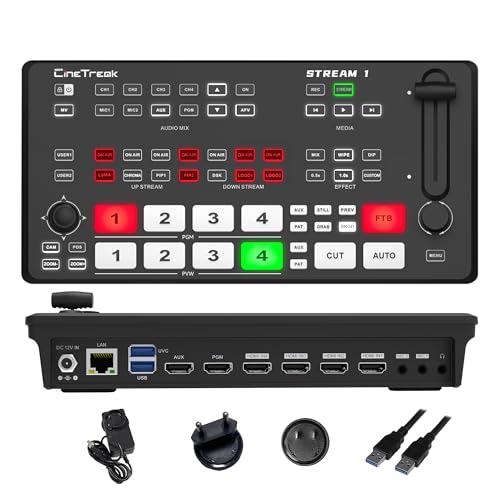
- 4 HDMI inputs plus AUX, PGM, and AUX outputs
- Dual RTMPS streaming and recording/playback support
- PTZ control for 4 cameras with landscape and portrait modes
Best For: Dual-platform broadcasts and vertical live streaming
Hybrid Input Workhorse
Osee GoStream Duet SDI and HDMI Switcher

- 4 SDI and 4 HDMI inputs with USB-C and NDI HX support
- Landscape and portrait support on inputs and outputs
- Up to 3 streaming platforms, plus multiple control methods
Best For: Hybrid SDI/HDMI productions with software and network streaming
Broadcast-Grade Multiview Hub
SPROLINK Neolive R5S PRO 4K60FPS Video Switcher Mixer

- 4 SDI + 4 HDMI inputs with selectable active sources
- Built-in NDI, SRT, RTMP, and dual recording support
- 5.5-inch screen with PTZ joystick and 5-camera control
Best For: Multi-camera productions that need advanced routing and hardware streaming
Compact Hardware Switcher
Osee GoStream Deck HDMI Pro Live Streaming Multi Camera Video Mixer

- 4 HDMI inputs with 2 HDMI outputs for multiview
- Streams to 3 platforms and supports portrait mode
- T-Bar, macros, audio controls, and SD/USB recording
Best For: Portable multi-camera streaming with hands-on hardware control
Easy Compact Switcher
RGBlink Mini Video Mixer Switcher

- 4 HDMI inputs with 2K input/output support
- USB 3.0 output works like a webcam in streaming apps
- 14 transitions, 9 PiP layouts, and LAN remote control
Best For: Solo streaming and compact HDMI-based live production
Pro-Level 4K Control Hub
C1 4x HDMI Video Mixer with 5.5" Screen

- 4 HDMI inputs with PTZ camera control
- Dual streaming plus H.264 recording
- 5.5" multi-view screen and remote control
Best For: Multi-camera creators and live event producers
Flexible Dual-Output Switcher
4 HDMI Video Mixer with Audio Control

- 4 HDMI inputs and 2 HDMI outputs
- 1080p@60Hz output with preview support
- Audio mixing with PiP and dual-screen modes
Best For: Streamers needing simple switching and monitoring
Compact Single-Operator Mixer
LIVEPRO L1 V1 Multi-Camera Switcher

- 4 HDMI inputs with 1080p support
- USB 3.0 output for streaming software
- Compact design for single-person use
Best For: Solo creators and lightweight live setups
Pro Control Hub – Osee GoStream Deck Pro HDMI Live Stream Switcher
The Osee GoStream Deck Pro is a smartphone live streaming switcher for creators who want more connection options and hands-on control in a compact mixer. With HDMI, USB-C, Ethernet, audio I/O, SD card support, and macro buttons, it is built for more involved live productions where switching, monitoring, and audio management all matter.
Best For: Live streamers who need a feature-rich switcher for multi-source productions, audio control, and macro-based workflows.
Pros:
- 4 HDMI inputs plus 2 HDMI outputs for flexible source and monitor setups
- 2 Type-C ports, Ethernet, audio in/out, headphone, mic, and SD card support
- 8 customizable macro buttons for repeatable production actions
- Multiple transition effects, downstream/upstream keyers, chroma key, and T-Bar control
Cons:
- SD card is not included
- Feature set may be more than casual users need
- Firmware update is recommended to unlock the newest capabilities
This is a strong pick if you want a smartphone live streaming switcher that feels closer to a small production console than a basic selector. The rich input/output layout and macro tools make it especially appealing for structured streams and recurring broadcasts.
Portable Multiview Pick – Mixer Plus Compact 4 HDMI Switcher
Mixer Plus is a smartphone live streaming switcher designed for compact setups that still need real-time monitoring and broadcast-style control. Its built-in 4-inch screen, four HDMI inputs, and multiview layout make it practical for on-the-go creators, online classes, and small multi-camera productions.
Best For: Portable live streaming setups that benefit from a built-in display and multiview monitoring.
Pros:
- Built-in 4-inch display for real-time multiview monitoring
- 4 HDMI inputs with zero-latency switching
- 30 transition effects and 4 user-defined scene presets
- PTZ control, chroma/luma key, PIP, DSK, and logo overlay support
Cons:
- Only four HDMI inputs, so it is not built for very large rigs
- Best suited to HDMI-based workflows
- Portable design may trade off some physical space and control depth
For buyers who want a smartphone live streaming switcher with a true portable-first design, Mixer Plus stands out because it combines monitoring and switching in one unit. It is a sensible fit for small teams that want a clean, efficient production setup.
Dual-Stream Studio Choice – Stream 1 Live Streaming Switcher
Stream 1 is a smartphone live streaming switcher aimed at creators who need flexible routing, recording, and multi-platform output in one device. With 4 HDMI inputs, an AUX channel, PTZ control, dual RTMPS streaming, and portrait support, it fits both studio-style work and vertical social broadcasts.
Best For: Streamers who want dual-platform broadcasting, PTZ control, and strong portrait/landscape support.
Pros:
- 4 HDMI inputs plus AUX input for media access
- Dual RTMPS streaming to two destinations at once
- PTZ control for up to 4 cameras, including wireless IP control from a PC or smartphone
- Recording, playback, chroma/luma key, PIP, and 9:16 portrait streaming support
Cons:
- Best described as a desktop-focused unit rather than a tiny travel switcher
- Some advanced features will be most useful in more structured productions
- Compatible devices are listed as desktop-oriented in the supplied details
If your priority is a smartphone live streaming switcher that can handle both standard and vertical streams, Stream 1 has a compelling feature mix. It is particularly useful when you need to broadcast, record, and control multiple cameras without piecing together separate tools.
Hybrid Input Workhorse – Osee GoStream Duet SDI and HDMI Switcher
Osee GoStream Duet Multiple Camera SDI and HDMI Live Stream Video Mixer Switcher
Check Price On AmazonThe Osee GoStream Duet is a smartphone live streaming switcher for users who need both SDI and HDMI flexibility in one system. Its mix of 4 SDI inputs, 4 HDMI inputs, USB-C, NDI HX support, and software control options makes it a versatile choice for more advanced multi-camera workflows.
Best For: Hybrid production setups that combine SDI, HDMI, and software-based streaming control.
Pros:
- 4 SDI inputs, 4 HDMI inputs, USB-C, NDI HX source support, and SD/SSD playback
- Landscape and portrait support for both inputs and outputs
- Multiple control methods: built-in GUI, computer software, and Bitfocus Companion
- Up to 3 streaming platforms at one time, plus Ethernet or smartphone hotspot streaming
Cons:
- More advanced than a basic plug-and-play switcher
- Some features, like NDI, require firmware updates to unlock
- May be more than needed if you only use simple HDMI sources
For buyers weighing a smartphone live streaming switcher with broader input compatibility, GoStream Duet is the most hybrid-friendly option here. It is well suited to users who want one unit that can bridge cameras, software, and network-based workflows.
Broadcast-Grade Multiview Hub – SPROLINK Neolive R5S PRO 4K60FPS Video Switcher Mixer
The SPROLINK Neolive R5S PRO is a smartphone live streaming switcher built for productions that need more than a basic camera feed. With 4 SDI and 4 HDMI inputs, built-in NDI, and multiple program outputs, it suits creators who want a flexible hardware hub for live streaming, recording, and multiview monitoring without relying on a PC for every task.
Best For: Multi-camera live streaming, PTZ-based productions, and creators who need landscape/portrait switching plus built-in streaming tools.
Pros:
- 4 SDI + 4 HDMI inputs with support for selecting any 4 active sources
- 5.5-inch FHD screen, PTZ joystick, and control for up to 5 PTZ cameras
- Triple outputs plus USB 3.0 UVC for 1080p60 capture to OBS, vMix, or Teams
- Built-in NDI, SRT, RTMP, dual-platform streaming, and dual recording support
Cons:
- Feature-heavy design may be more than casual streamers need
- Best suited to users comfortable with advanced switching workflows
- Requires external cameras and production gear to fully benefit from its inputs
This is the most full-featured option here, especially if you need broadcast-style control and flexible routing in one box. It stands out for productions that mix SDI and HDMI gear and want hardware streaming, recording, and monitoring together.
Compact Hardware Switcher – Osee GoStream Deck HDMI Pro Live Streaming Multi Camera Video Mixer
The Osee GoStream Deck is a smartphone live streaming switcher aimed at creators who want direct hardware control in a compact format. Its 4 HDMI inputs, 2 HDMI outputs, Type-C connections, and Ethernet streaming support make it a practical choice for small productions, panel talks, churches, and events that need switching, monitoring, and recording in one unit.
Best For: Portable multi-camera streaming, direct-on-device operation, and creators who want landscape or portrait output with built-in control.
Pros:
- 4 HDMI inputs and 2 HDMI outputs for multiview and monitoring
- Streams to 3 platforms and supports both landscape and portrait modes
- Hardware controls include PVW/PGM buses, T-Bar, and macros
- Audio tools, recording to SD/USB SSD, and playback of MP4 files
Cons:
- HDMI-only input design limits SDI-based workflows
- Best for users who are comfortable with a dedicated hardware panel
- Some expanded functionality depends on software or companion control tools
For teams that want a compact switcher with real broadcast-style controls, this model hits a strong middle ground. It is especially useful when you want to stream from the box itself while still keeping monitoring, audio, and playback on hand.
Easy Compact Switcher – RGBlink Mini Video Mixer Switcher
The RGBlink Mini is a straightforward smartphone live streaming switcher for creators who want simple multi-camera switching without a large control surface. With 4 HDMI inputs, USB 3.0 webcam-style output, and built-in preview/program features, it is a practical fit for solo streamers, social broadcasts, and smaller live setups.
Best For: Solo streamers and small teams that want easy HDMI switching, webcam output, and basic remote control.
Pros:
- 4 HDMI inputs with 2K input/output support
- USB 3.0 output appears as a webcam for streaming software
- 14 transition effects and 9 picture-in-picture layouts
- LAN remote control works from phone or computer
Cons:
- No onboard recording on this model
- HDMI-only design may not fit mixed SDI/HDMI rigs
- Fewer advanced production features than larger switchers
This is the easiest option to approach if you mainly need reliable switching and software-friendly output. It works well when your priority is keeping the setup compact while still adding a more polished look to live streams.
Pro-Level 4K Control Hub – C1 4x HDMI Video Mixer with 5.5" Screen
If you need a smartphone live streaming switcher that can handle serious multi-camera work, the C1 is built for more demanding productions. It combines four HDMI inputs, PTZ camera control, dual-streaming support, and H.264 recording in one unit, making it a practical center for live events, creator studios, and broadcast-style setups.
Best For: Creators and event producers who want multi-camera switching, PTZ control, and built-in recording in one switcher.
Pros:
- Supports up to 4 PTZ cameras with movement, zoom, focus, and iris control.
- Can stream to two platforms at once and record in H.264 while live.
- Includes chroma key, LUMA key, over 30 transitions, and PIP windows.
- Offers a 5.5″ LCD multi-view screen plus smartphone, iPad, and PC remote control.
Cons:
- More advanced than a basic switcher, so it may be more than casual users need.
- Uses HDMI-based connectivity, so source compatibility depends on your gear.
The C1 stands out if you want production features rather than a simple camera switcher. Its combination of multi-camera control, live-stream workflow tools, and flexible remote operation makes it well suited to more polished smartphone live streaming switcher setups.
Flexible Dual-Output Switcher – 4 HDMI Video Mixer with Audio Control
This smartphone live streaming switcher is a straightforward choice if you want reliable HDMI switching with preview and audio control. It supports four HDMI inputs and two HDMI outputs, giving you real-time monitoring while switching between cameras, computers, and other video sources for streams or recordings.
Best For: Streamers who want simple multi-source switching with dual outputs and built-in audio mixing.
Pros:
- 4 HDMI inputs let you switch among multiple sources quickly and smoothly.
- 2 HDMI outputs make previewing and monitoring easier during broadcasts.
- Supports 1080p@60Hz output with 4K/30Hz input compatibility.
- Includes audio mixing plus PiP and dual-screen display modes.
Cons:
- Does not list PTZ camera control or built-in recording.
- Best fit is HDMI-based workflows rather than all-in-one mobile production.
The RIJER mixer focuses on core switching features without overcomplicating the workflow. If your priority is stable source switching, preview monitoring, and audio balance, it offers a practical foundation for a compact live streaming setup.
Compact Single-Operator Mixer – LIVEPRO L1 V1 Multi-Camera Switcher
The FEELWORLD LIVEPRO L1 V1 is a compact smartphone live streaming switcher designed for single-operator use. With four HDMI inputs, USB 3.0 streaming output, and a lightweight body, it is a practical option for creators who want multi-camera production without a bulky setup.
Best For: Solo streamers and small teams that want a lightweight mixer with easy live switching.
Pros:
- 4 HDMI inputs support multi-camera live production in 1080p.
- USB 3.0 output works like a built-in webcam for streaming software.
- Compact design is easy to operate for a single person.
- Includes preview monitoring, transition effects, and LAN-based remote operation.
Cons:
- Smaller feature set than larger mixers with PTZ control or dual streaming.
- Uses a 2″ LCD screen, which is more limited for on-device monitoring.
The L1 V1 is a good fit when you want a simple, portable workflow rather than a feature-heavy broadcast panel. Its webcam-style USB output and compact controls make it especially useful for straightforward live streaming rigs.
How We Picked These Smartphone Live Streaming Switchers
We focused on real-world streaming usefulness rather than specs alone. Priority went to models with reliable multi-input support, practical control layouts, useful recording or streaming outputs, and features that fit phone-based or hybrid mobile workflows. We also considered portability, ease of setup, and whether the switcher makes sense for creators who need to move fast.
Quick Comparison
Most buyers will fall into one of three groups: compact switchers for simple mobile productions, midrange units for multi-camera streaming and teaching, and higher-feature models for PTZ control, SDI/HDMI flexibility, or more advanced broadcast-style use. The best choice depends on how many sources you need to manage and whether you stream mostly from a phone, a camera kit, or a mixed setup.
Key Buying Factors for a Smartphone Live Streaming Switcher
Input Types and Source Count
Check how many HDMI, SDI, USB, or AUX inputs you actually need. If you run several cameras, a laptop, or a mic chain alongside a phone, extra input options can save you from needing adapters later.
Streaming and Output Flexibility
Look for USB output, RTMP support, recording, and clean monitoring options. For a Smartphone Live Streaming Switcher, smooth handoff between capture and broadcast matters more than flashy extras.
Portability and Screen Visibility
Built-in displays can make setup easier when you are streaming on location. Compact units are better for travel, while larger controls often suit studio desks and classroom rigs.
Control Features
PTZ control, macro buttons, audio mixing, and chroma key support can be valuable if you want more production value without adding a separate controller.
Who Should Buy Which Smartphone Live Streaming Switcher?
Choose a compact model if you are a solo creator, educator, or small business owner who wants simple multi-camera switching. Go with a more advanced switcher if you need multiple camera angles, stronger audio control, or broadcast-style tools. If you regularly stream events, classes, or hybrid productions, prioritize stability, intuitive controls, and enough input headroom to grow.
In short, the best Smartphone Live Streaming Switcher is the one that matches your sources, your workflow, and how often you need to set up and tear down. Buy for the production you have now, with a little room for what you plan to add next.