Reliable power management is essential for protecting stage audio gear, simplifying setup, and reducing the risk of damaging equipment during startup or shutdown. The best stage power conditioners with switched outlets combine surge protection, filtering, outlet control, and rack-friendly designs.
This roundup compares 10 options ranging from compact portable units to rackmount sequencers with multiple zones, USB charging, voltage displays, and independent outlet controls. Use the guide below to match features and capacity to your live rig.
Best 10 Stage Power Conditioners with Switched Outlets Picks for 2026
Stage Right Rack Control
Monoprice 15A Power Conditioner and Sequencer
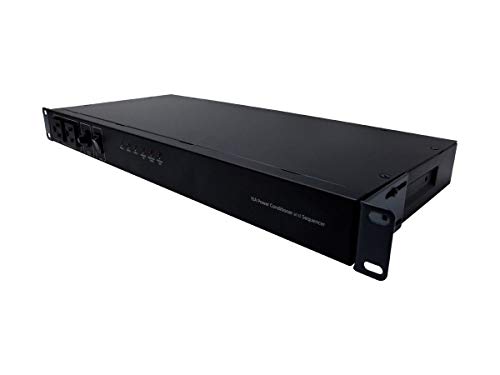
- Eight outlets and three-zone sequencing
- 15-amp capacity with surge protection
- Compact 1U metal rack-mount design
Best For: Organized rack-mounted stage and AV systems
Portable Audio Filtering

- Six outlets with audio filtration
- 540-joule surge protection
- Portable build with a 9-foot power cable
Best For: Portable professional-audio equipment
Three-Zone Power Management
PMX-1100 Power Conditioner and Sequencer

- Ten outlets with eight switched positions
- Three-stage delayed sequencing with reverse shutdown
- EMI/RFI filtering and front USB charging
Best For: Amplifier and active-speaker systems needing staged power
Expanded Rack Switching
Black Lion Audio PG-2 Rackmount Power Conditioner

- Fourteen outlets, including 12 switched
- Two-stage power-up and power-down control
- 2U rack format with LED display
Best For: Larger rack systems with many connected devices
Sequenced Control
FMUSER 10-Outlet Power Sequencer

- Sequential startup and shutdown
- Eight independently switched rear outlets
- 110V–240V input with voltage display
Best For: Stage and DJ systems needing sequenced power management
High-Capacity Distribution
MU-208FX 30A Rack Power Controller

- 10 continuously powered outlets
- 30A or 6600W total load rating
- 1U metal rackmount design
Best For: 110V professional AV and stage racks with heavy loads
Maximum Outlet Count
Pyle PCO860 19-Outlet Rack PDU
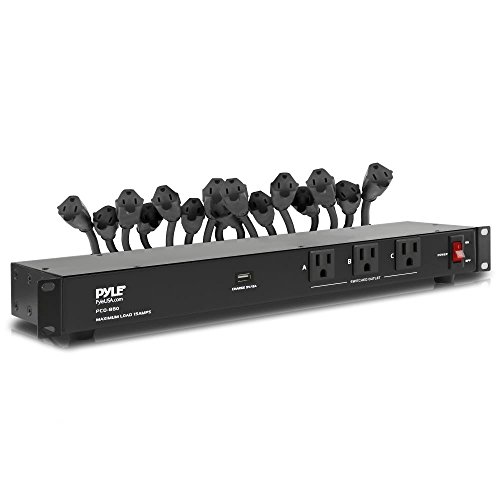
- 19 total outlets with flexible rear spacing
- 15A circuit breaker and switched front outlet
- USB port and 15-foot power cord
Best For: Large setups needing many outlets and extended reach
Most Flexible Sequencing
20A 10-Outlet Power Conditioner

- Eight independently controlled sequenced outlets
- Two always-on outlets plus LCD voltage display
- Bypass mode and external remote-switch input
Best For: Rack-based audio systems needing detailed outlet control
Best High-Power Option
3300W Rack-Mount Power Sequencer

- Eight rear and two front universal sockets
- Independent switching with sequential startup
- USB-C charging and LCD voltage monitoring
Best For: Higher-demand audio and music-production rack setups
Best Simple Rack Solution
Pyle 10-Outlet Power Sequencer

- Eight rear and two front always-on outlets
- 1U rack design with LCD voltage display
- Surge, overload, and spike protection
Best For: Compact home-theater, studio, and smaller stage racks
Stage Right Rack Control – Monoprice 15A Power Conditioner and Sequencer
For stage power conditioners with switched outlets, this Monoprice Stage Right model combines 15-amp power handling with eight outlets, three zones, and sequencing in a 1U rack-mount enclosure. It is suited to organized audio and AV setups that benefit from centralized rack power.
Best For: Rack-mounted amplifiers, speakers, and other electronic or home-theater equipment.
Pros:
- Eight outlets with a 15-amp maximum current
- Three zones support sequenced power management
- 1U rack-mount metal enclosure with surge protection
Cons:
- Provides fewer outlets than some larger rack conditioners
- Its rack-focused design may be less convenient for portable setups
This is a practical choice when a compact rack unit and three-zone sequencing matter more than maximum outlet count. Its 15-amp rating and surge protection add useful organization for stage and AV equipment.
Portable Audio Filtering – Black Lion Audio PG-P
Among stage power conditioners with switched outlets, the Black Lion Audio PG-P is a portable option focused on professional audio equipment. It provides six outlets, audio filtration, surge protection, and a long 9-foot power cable for flexible indoor setup.
Best For: Portable professional-audio rigs that need filtered power and a longer cable.
Pros:
- Six-outlet power strip with audio filtration
- 540-joule surge-protection rating
- 9-foot power cable and stainless-steel enclosure
- Portable design for indoor use
Cons:
- Does not offer the multi-zone sequencing listed for some rack models
- Six outlets may be limiting for larger systems
The PG-P makes sense for musicians and audio users who prioritize portability, filtration, and cable reach. It is less feature-rich for staged power sequencing, but its straightforward six-outlet format is easy to deploy.
Three-Zone Power Management – PMX-1100 Power Conditioner and Sequencer
This PMX-1100 is a strong fit for stage power conditioners with switched outlets, offering 10 protected outlets, three-stage sequencing, EMI/RFI filtering, and a 15-amp total rating. Its layout combines eight switched rear outlets with two unswitched front outlets.
Best For: Audio systems using amplifiers, active speakers, preamps, and mixers that need staged startup and shutdown.
Pros:
- Ten outlets, including eight switched and two unswitched
- Three delayed power zones with reverse shutdown sequencing
- EMI and RFI filtering plus circuit-breaker protection
- Front-panel USB charging port and status indicators
Cons:
- Its 19-inch length may require appropriate rack or shelf space
- Only one USB charging port is provided
For systems where power-up order matters, the PMX-1100 offers an unusually complete feature set at this outlet count. The three-zone delay, filtering, and visible status indicators make it particularly useful for structured audio setups.
Expanded Rack Switching – Black Lion Audio PG-2 Rackmount Power Conditioner
The Black Lion Audio PG-2 is designed for users comparing stage power conditioners with switched outlets and needing extensive rack-based control. It features 14 outlets, 12 switched outlets, two unswitched outlets, a two-stage power-up/down system, and front-panel monitoring.
Best For: Larger rack systems that need many switched outlets and sequential power control.
Pros:
- Fourteen total outlets with 12 switched outlets
- Two-stage power-up and power-down system
- Front and rear switched-outlet access
- Front-panel LED display and two 3-pin XLR lamp connectors
Cons:
- Its 2U rack-mount form factor requires more rack space
- The supplied notes do not specify a surge-protection rating
The PG-2 is the most outlet-focused option in this group, making it suitable for densely populated racks. Its switched-outlet count and two-stage sequencing are useful when centralized control is more important than a compact 1U footprint.
Sequenced Control – FMUSER 10-Outlet Power Sequencer
For stage power conditioners with switched outlets, the FMUSER 10-Outlet Power Sequencer stands out when controlled startup and shutdown matter. It combines sequential power management, surge protection, independent switching for eight rear outlets, and a voltage display in a rack-friendly unit.
Best For: Stage rigs, DJ systems, sound systems, laboratories, and home theaters that need sequenced startup and flexible outlet control.
Pros:
- Sequentially powers equipment on and off to help reduce startup noise and stress on amplifiers and speakers.
- Eight rear sequence outlets have independent power switches for flexible control.
- Supports 110V–240V input and displays input voltage in real time.
- Provides up to 3000W total output and surge protection.
Cons:
- The notes do not specify whether the outlets use a particular plug standard.
- Only eight rear outlets are described as having independent switches.
This is the most feature-rich choice here for users who want switched outlet control plus power sequencing and voltage monitoring, rather than simple rack-mounted distribution.
High-Capacity Distribution – MU-208FX 30A Rack Power Controller
If you need stage power conditioners with switched outlets for a larger 110V setup, the MU-208FX focuses on high-capacity distribution. It offers 10 continuously powered outlets, a 30A load rating, internal overload protection, and a compact 1U metal rack chassis.
Best For: Professional AV racks, live performances, studios, broadcasts, and home theater systems with multiple North American-plug devices.
Pros:
- Supports a total load of up to 30 amps or 6600W.
- Provides eight rear and two front NEMA 5-15 outlets.
- Internal 30A fuse helps protect against overloads.
- Compact 1U metal housing fits standard 19-inch racks.
Cons:
- All outlets are continuously powered, so it does not provide individually switched outlet control.
- Designed for 100–120V, 60Hz operation rather than the wider voltage range of some conditioners.
The MU-208FX is better viewed as a high-capacity rack power distribution unit than a switched-outlet sequencer. Choose it when continuous access and a 30A rating are more important than outlet-by-outlet switching.
Maximum Outlet Count – Pyle PCO860 19-Outlet Rack PDU
Among stage power conditioners with switched outlets, the Pyle PCO860 is geared toward broad device coverage rather than sequential control. Its 19 outlets, 15A circuit breaker, USB charging port, switched front outlet, and 15-foot cord make it practical for distributing power across a busy rack or work area.
Best For: Racks, offices, apartments, and stage or AV setups that need many outlets, flexible mounting, and extended cord reach.
Pros:
- Offers 19 outlets, including three spaced front outlets and 16 rear outlets.
- Includes a switched front-panel AC outlet with a covered power switch.
- 15A circuit breaker helps shut off power during overload conditions.
- Provides a USB charging port and a 15-foot power cord.
Cons:
- The notes describe only one switched front outlet, not individually switched outlets.
- Its maximum current is 15A, lower than the 30A rating of the MU-208FX.
- The enclosure is listed as plastic.
The PCO860 makes sense when outlet quantity and reach are the priorities. It offers convenient switched access and overload protection, but it is not the right fit if you need sequential startup or independent switching for multiple devices.
Most Flexible Sequencing – 20A 10-Outlet Power Conditioner
For stage power conditioners with switched outlets, this rack-mount MICNAUX model stands out with eight independently controlled rear outlets, two always-on front outlets, and power sequencing for organized equipment startup. Its 20A rating, LCD voltage display, and 110–230V compatibility add flexibility for demanding audio setups.
Best For: Stage, studio, and rack-based audio systems that need independent outlet control and remote-switch capability.
Pros:
- Eight rear sequenced outlets feature dedicated switches and front-panel indicators.
- Provides 10 total outlets, including two always-on front outlets.
- Includes a large LCD voltage display, bypass mode, and an external dry-contact remote switch.
- Metal 1U rack-mount enclosure with a stated 20A, 2000W capacity.
Cons:
- Its 2000W maximum output may be limiting for especially power-hungry rigs.
- The 110–230V specification may require careful setup for a particular venue or region.
This is a strong choice when switched-outlet control is more important than simply adding more power connections. The independent controls and remote options make it particularly adaptable for complex rack systems.
Best High-Power Option – 3300W Rack-Mount Power Sequencer
Among stage power conditioners with switched outlets, this professional rack-mount unit combines eight rear sockets, two front normally open sockets, and independent channel switches. It also adds USB and USB-C charging, LCD voltage monitoring, and filtering intended to suppress RF and electromagnetic interference.
Best For: Larger audio or music-production setups that need high stated output capacity, sequencing, and convenient front-panel charging.
Pros:
- Advertises up to 3300W total output, with a stated 3000W maximum total output in the specifications.
- Eight rear outlets and two front outlets support multi-device rack setups.
- Independent channel switches and one-button sequential startup simplify equipment management.
- Includes USB and Type-C charging ports, LCD voltage monitoring, and eight-channel LED status indicators.
Cons:
- The supplied notes contain differing total-output figures, listing both 3300W and 3000W.
- Its stated AC input range is 100–125V, so compatibility should be checked before use.
- Channel output is listed at a maximum of 10A each.
This model is appealing for users who want a feature-rich controller rather than a basic surge strip. Verify the exact output rating and venue voltage requirements before purchase, especially for a high-demand stage system.
Best Simple Rack Solution – Pyle 10-Outlet Power Sequencer
This Pyle unit is a straightforward option for stage power conditioners with switched outlets, offering eight rear outlets, two front always-on outlets, and one-button activation in a compact 1U rack chassis. It also provides surge and overload protection, a USB port, and a digital voltage display.
Best For: Home theaters, studios, and smaller stage racks that need basic sequenced power management in a space-saving format.
Pros:
- Ten total outlets include eight rear connections and two front always-on outlets.
- Compact 1U metal housing measures 18.9 by 8.3 by 1.9 inches and weighs about 6 pounds.
- Built-in spike, surge, overload, noise, and voltage-fluctuation protection is designed to safeguard connected equipment.
- Includes a USB charging port and digital LCD voltage display.
Cons:
- The 13A, 2000W rating is lower than some higher-capacity rack power controllers.
- The supplied description emphasizes one-button operation rather than individually switched outlets.
- Only one USB port is specified.
The PCO875 makes sense when you want a compact, uncomplicated power controller for a modest rack. Its outlet layout and monitoring features cover everyday studio or theater needs, though users seeking per-channel switching may prefer another model.
How We Picked the Best Stage Power Conditioners with Switched Outlets
We selected products across the main categories used by musicians, DJs, production crews, houses of worship, and installed-audio users. Our comparison focused on outlet count, switching and sequencing options, rack compatibility, stated current or wattage capacity, surge-protection features, monitoring, charging ports, and practical installation details.
Because specifications and protection claims vary by manufacturer, verify the manual and electrical ratings before connecting expensive equipment. A power conditioner can improve distribution and control, but it does not replace proper venue wiring, grounding, or a suitable backup-power system.
Quick Comparison
| Best For | Features to Prioritize |
|---|---|
| Portable rigs | Compact construction, clear outlet access, and manageable weight |
| Rack-based systems | 1U mounting, front-panel controls, and rear outlet layout |
| Sequenced turn-on | Multiple zones, delay settings, or independent switching |
| Large audio setups | Appropriate amperage, thermal protection, and robust distribution |
| Mixed modern gear | USB or USB-C charging alongside standard AC outlets |
Key Buying Factors for Stage Power Conditioners with Switched Outlets
Outlet Control and Sequencing
Check whether outlets are switched together, divided into zones, or independently controlled. Sequencing can reduce startup surges by powering amplifiers and other equipment in a planned order, while independent controls are useful when certain devices need to remain on.
Electrical Capacity
Compare the unit’s amperage and wattage ratings with the expected draw of your rig. Do not assume that a higher outlet count means higher capacity. Leave headroom for amplifier peaks and avoid overloading a circuit, power strip, or extension cable.
Protection and Monitoring
Look for clearly stated surge-protection specifications, circuit-breaker protection, filtering claims, and voltage or status monitoring. A front-panel voltage readout can help identify questionable venue power, although it is not a substitute for professional electrical testing.
Rack Fit and Connectivity
Confirm whether the conditioner is true 19-inch rackmount equipment and check its depth, rear clearance, plug orientation, and cable-management needs. For portable setups, consider whether the chassis and controls can withstand frequent transport.
Charging and Convenience Features
USB and USB-C ports can reduce the need for extra chargers, but they should be treated as convenience outputs rather than the reason to exceed the unit’s electrical limits. Front-panel access, labeled outlets, and a readable display can save time during soundcheck.
Who Should Buy Which Stage Power Conditioners with Switched Outlets?
Choose a portable conditioner if you move between small venues, rehearsal spaces, or mobile DJ jobs and need basic protection without dedicating rack space.
Choose a multi-zone sequencer for a larger live-audio or installed system where controlled startup and shutdown can help manage amplifiers, mixers, processors, and wireless equipment.
Choose independent switching when you want precise control over separate components or need to isolate nonessential devices during troubleshooting.
Choose a high-capacity rackmount model only when its ratings match your real electrical requirements and the venue circuit can support the load. For most buyers, clearly labeled controls, credible protection specifications, and enough capacity matter more than simply maximizing the number of outlets.