Unstable venue power can put expensive stage equipment at risk, while a hard-to-read setup makes troubleshooting slower. The best stage power conditioners with voltage displays combine surge protection, rack-friendly distribution, and at-a-glance voltage monitoring.
Our roundup covers sequenced and non-sequenced models, from compact budget units to higher-capacity conditioners designed for demanding audio racks. Use the guide below to match outlet capacity, current rating, display features, and control options to your rig.
Best 10 Stage Power Conditioners with Voltage Displays Picks for 2026
Budget-Friendly Rack Control

- 10 outlets with two front always-on connections
- Digital LCD voltage readout and USB port
- 1U rack-mount design with surge protection
Best For: Small stage, studio, and home-theater racks
Three-Zone Stage Monitoring

- 10 protected outlets across three zones
- LED voltage display for quick monitoring
- Pullout rack light and 15-amp rating
Best For: Stage racks needing grouped power control
Precision Voltage Regulation
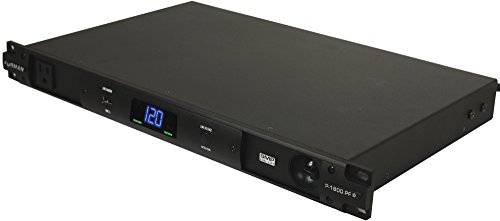
- Regulates 97–137V input to stable 120V output
- Displays voltage and current in real time
- Nine outlets with isolated banks and advanced protection
Best For: Professional racks exposed to unstable power
High-Output Sequenced Power

- 10 sockets with up to 3,000W stated total output
- LCD voltage monitor and eight channel indicators
- Sequential startup, independent switches, USB, and Type-C
Best For: Larger audio and production racks
Premium AV Power Management
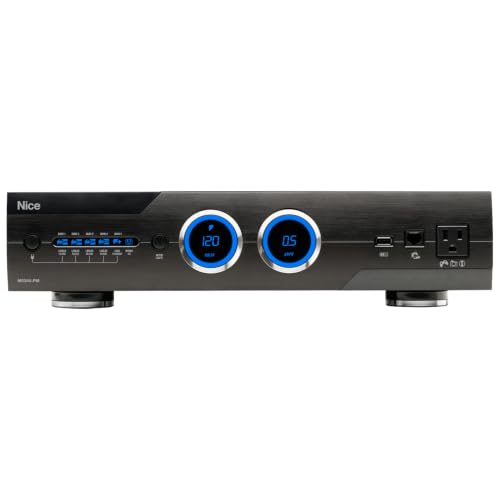
- Digital voltmeter and ammeter
- Five isolated outlet banks
- AVM and Level 4 filtration
Best For: Home theaters and AV racks needing detailed power monitoring
Flexible 20A Rack Sequencer

- Real-time LCD voltage display
- Eight independent sequenced outlets
- 110–230V and remote-switch support
Best For: Audio racks needing detailed sequencing and control
Compact Stage Sequencing
Depusheng D328 8-Outlet Conditioner

- Real-time digital voltage display
- One-second delayed sequencing
- 1U rack-mountable metal housing
Best For: Compact stage and studio racks needing orderly power control
High-Capacity Control

- 2,000W/20A capacity with 10 outlets
- Eight independently switched sequenced outlets
- LCD voltage display and external dry-contact switch
Best For: Larger audio racks and studios needing detailed power control
Stage-Ready Sequencing
Sound Town STPS-1028 Power Conditioner

- Eight sequenced and two always-on outlets
- Spike protection plus EMI/RFI filtering
- Front LCD display and USB charging port
Best For: Stage, studio, and home-theater racks
Precise Monitoring
Depusheng D228 Power Sequencer

- Real-time voltage display with 10 outlets
- One-second delayed channel switching
- 1U metal rack design with 30A relay
Best For: Compact audio racks needing orderly power cycling
Budget-Friendly Rack Control – Pyle PCO875
For buyers comparing stage power conditioners with voltage displays, the Pyle PCO875 combines a digital voltage readout with sequencing, surge protection, and ten outlets in a compact 1U rack design. Its 2,000-watt rating suits smaller stage, studio, and home-theater setups.
Best For: Small rack systems that need straightforward outlet expansion, voltage monitoring, and front-panel charging.
Pros:
- Provides eight rear outlets plus two front always-on outlets.
- Digital LCD display, USB charging port, and one-button operation add convenience.
- Built-in spike, surge, overload, and noise-interference protection.
- Compact 1U metal housing is rack-mountable and weighs about 6 pounds.
Cons:
- Its 2,000-watt capacity is lower than the higher-output models in this roundup.
- The supplied notes do not specify a regulated 120-volt output.
The PCO875 is a practical entry-level choice when outlet access and basic protection matter more than advanced voltage regulation. Confirm that its capacity fits the combined load of your equipment.
Three-Zone Stage Monitoring – Soundavo PMX-3300
The Soundavo PMX-3300 is a useful option for stage power conditioners with voltage displays when you want outlet grouping and front-panel visibility. It offers ten protected outlets, three surge-protected zones, a 15-amp rating, and an LED voltage display.
Best For: Performers and installers who want to organize connected equipment into three power zones and monitor voltage at the rack.
Pros:
- Ten outlets are arranged across three surge-protected zones.
- LED voltage display makes power-level checks easy.
- Pullout light helps illuminate the rack in dark spaces.
- 15-amp rating and 6,500-amp surge protection rating are specified.
Cons:
- The supplied notes do not mention USB charging or a digital current meter.
- Its 19-inch by 7.5-inch rectangular enclosure may require careful rack or shelf planning.
Choose the PMX-3300 if zone-based control is more valuable to you than advanced voltage regulation. Its LED meter and pullout light are particularly practical for live-event racks.
Precision Voltage Regulation – Furman P-1800 AR
For demanding systems, the Furman P-1800 AR stands out among stage power conditioners with voltage displays because it actively regulates input from 97 to 137 volts to a stable 120 volts within plus or minus 5 volts. It also shows incoming voltage and current in real time.
Best For: Professional audio racks and sensitive equipment operating where brownouts, sags, or unstable utility power are concerns.
Pros:
- True RMS regulation stabilizes a broad 97–137-volt input range to 120 volts.
- Front digital voltmeter and ammeter provide live power information.
- Eight rear outlets in two isolated banks plus one front outlet support organized connections.
- Includes non-sacrificial surge suppression, linear noise filtering, and extreme-voltage shutdown.
Cons:
- At about 19.2 pounds, it is substantially heavier than the compact alternatives.
- The supplied dimensions indicate a deeper, larger unit that may require more rack space.
The P-1800 AR is the strongest fit when voltage stabilization is the priority rather than simply adding outlets. Its higher weight and size are tradeoffs for more comprehensive power management.
High-Output Sequenced Power – ST-368 3300W Conditioner
The ST-368 is designed for buyers seeking stage power conditioners with voltage displays and a high-output, multi-device layout. It combines a stated 3,000-watt maximum total output, ten universal sockets, sequential startup, independent channel switches, and an LCD voltage monitor.
Best For: Larger audio or production racks that need high capacity, channel-by-channel control, and convenient USB and Type-C charging.
Pros:
- Offers eight rear sockets and two front normally open sockets.
- LCD monitoring shows voltage fluctuations, while eight LED indicators show channel status.
- Independent switches allow individual channel control alongside one-key sequential startup.
- Includes USB and Type-C charging ports and AC noise filtering.
Cons:
- The notes state a 3,000-watt maximum total output, despite the product title referencing 3,300W.
- The supplied information does not specify active voltage regulation to a fixed output.
- At about 8.63 pounds, it is heavier than some basic 1U conditioners.
The ST-368 is appealing for complex rigs where capacity, sequencing, and channel visibility matter. Verify the exact allowable load and confirm that its voltage-monitoring function meets your need for regulation.
Premium AV Power Management – Panamax M5300-PM
The Panamax M5300-PM is a substantial choice for home theaters, studios, and stage-adjacent AV racks that need stage power conditioners with voltage displays. Its digital voltmeter and ammeter provide at-a-glance monitoring, while five isolated outlet banks, AVM, and Level 4 filtration help organize and protect connected equipment.
Best For: AV setups that need power monitoring, noise isolation, and multiple outlet banks.
Pros:
- Digital voltmeter and ammeter display for power monitoring
- Five isolated outlet banks help reduce cross-contamination between components
- AVM and Level 4 filtration address contaminated or unstable power symptoms
- Includes high-current outlets, USB charging, and LAN/phone protection
Cons:
- Large and heavy at 18 pounds
- Designed around home-theater and AV features rather than sequenced rack outlets
The M5300-PM is best suited to buyers who value comprehensive AV power management over a compact rack footprint. Its monitoring and isolation features make it a capable premium option for a carefully organized equipment system.
Flexible 20A Rack Sequencer – MICNAUX 10-Outlet Conditioner
For stage power conditioners with voltage displays, this MICNAUX rack-mount model adds real-time LCD monitoring to broad outlet control. It provides eight independently controlled, sequenced rear outlets, two always-on front outlets, 20A capacity, and 110–230V compatibility for flexible audio and stage setups.
Best For: Rack systems that need outlet sequencing, remote control, and visible voltage information.
Pros:
- Large LCD screen shows voltage in real time
- Eight independent sequenced controls provide detailed power management
- Offers 10 outlets, including two always-on front outlets
- Includes bypass mode, external dry-contact switching, and 110–230V compatibility
Cons:
- Maximum output is specified at 2,000 watts
- Its multiple controls and sequencing features may be more than simple setups require
This is a strong fit when orderly startup and shutdown matter as much as surge protection. The rack-mount metal enclosure, LCD voltage display, and remote-switch support make it particularly adaptable for structured audio installations.
Compact Stage Sequencing – Depusheng D328 8-Outlet Conditioner
The Depusheng D328 is a practical option among stage power conditioners with voltage displays, combining an 8-outlet rack design with a precise real-time voltage readout. Its one-second channel delays help bring equipment online and shut it down in sequence, while the 1U metal housing keeps the unit space-efficient.
Best For: Stage, KTV, classroom, studio, and conference-room systems needing simple sequenced power control.
Pros:
- Real-time digital voltage display makes operating voltage easy to check
- One-second delays help reduce startup and shutdown impact
- 1U rack-mountable aluminum and metal housing saves space
- 30A relay and 2,200W maximum power support higher-power equipment
Cons:
- Limited to 10A output current
- Manufacturer warranty is listed as 90 days
- Provides eight outlets rather than the larger outlet count of some alternatives
The D328 emphasizes straightforward sequencing and compact installation rather than extensive connectivity. It is a sensible choice for users who want a visible voltage reading and orderly power control in a 1U rack unit.
High-Capacity Control – 20A Rack Power Sequencer
For stage power conditioners with voltage displays, this 20-amp rack-mount model stands out for its high capacity, 10 outlets, and front-panel control. It combines sequenced power, 2P surge protection, and a large LCD voltage readout for monitoring connected audio equipment.
Best For: Larger audio racks, music studios, and setups needing independent outlet control and remote switching flexibility.
Pros:
- Provides 2,000W and 20A capacity with 10 total outlets.
- Offers eight sequenced rear outlets with individual switches and indicators.
- Includes two always-on outlets, an external dry-contact switch, and real-time voltage monitoring.
- Supports 110–230V operation and carries UL, FCC, and RoHS specifications.
Cons:
- Its 20A capacity and extensive controls may be more than smaller rigs require.
- The listed output voltage is 110V despite the product’s 110–230V compatibility description.
This is a feature-rich choice when outlet-level control, sequencing, and a clearly visible voltage display matter as much as basic rack protection.
Stage-Ready Sequencing – Sound Town STPS-1028 Power Conditioner
This Sound Town unit is a practical pick among stage power conditioners with voltage displays, offering eight sequenced outlets, two always-on outlets, and a front LCD readout. Its spike protection, EMI/RFI filtering, and 1U rack format suit live rigs and studio installations.
Best For: Stage, studio, and home-theater systems that need orderly startup, interference filtering, and convenient rack mounting.
Pros:
- Eight sequenced outlets help protect speakers and connected equipment during startup.
- Includes two always-on outlets and a USB charging port.
- Combines spike protection with EMI/RFI filtering.
- Provides a front LCD display for real-time data and supports up to 15A.
Cons:
- Its 15A rating is lower than some higher-capacity rack power conditioners.
- The supplied details do not specify the exact voltage range shown by the display.
With a balanced mix of sequencing, filtering, display functionality, and rack compatibility, the STPS-1028 is well suited to organized stage and studio power management.
Precise Monitoring – Depusheng D228 Power Sequencer
The Depusheng D228 is a compact option for stage power conditioners with voltage displays, pairing a precise real-time voltage readout with 10 outlets and delayed switching. Its 1U metal rack-mount design is intended for orderly power control in audio and other high-power systems.
Best For: Stage, studio, classroom, and home KTV setups that benefit from delayed startup and shutdown between power channels.
Pros:
- Provides eight switched rear outlets and two unswitched front outlets.
- Displays current voltage in real time for easier monitoring.
- Uses one-second intervals between channel groups to reduce current impact during switching.
- Features a 1U metal housing and a 30A relay for overload and short-circuit protection.
Cons:
- The listed 10A rating may limit compatibility with some higher-demand systems.
- Its 2000W maximum is specified for a single channel rather than the entire installation.
The D228 makes orderly sequencing and visible voltage monitoring its central strengths, making it a sensible fit for compact audio racks where controlled power cycling is important.
How We Picked These Stage Power Conditioners with Voltage Displays
We focused on rack-mountable units intended for live sound, studio, home theater, and other professional audio applications. Key considerations included the number and arrangement of outlets, stated amperage and wattage limits, surge-protection features, voltage-display visibility, sequencing controls, and practical installation details such as pullout lights, USB charging, and independent outlet control.
Because specifications and electrical standards vary by model, treat listed capacity as a limit rather than a target. Always confirm the product’s voltage, plug type, regional certification, and intended application before connecting equipment.
Quick Comparison
| Feature | What to compare | Why it matters |
|---|---|---|
| Voltage monitoring | LED, digital, or real-time readout | Helps identify low or high incoming voltage quickly |
| Current capacity | 10A, 13A, 15A, or 20A ratings | Determines how much connected equipment the unit can safely support |
| Sequencing | Timed zones or independent controls | Reduces turn-on surges and can simplify shutdown order |
| Outlets | 8, 10, or 11 protected sockets | Indicates how much rack gear can be powered from one location |
| Extras | USB, USB-C, lights, or filtering | Adds convenience but should not replace core protection features |
Key Buying Factors
Voltage Display and Regulation
A voltage display lets you check venue power before and during operation. That is useful for diagnosing overloaded circuits, long cable runs, or questionable power sources. A display alone does not regulate voltage, so choose a dedicated regulating model when stable output is essential and the specification supports your local electrical system.
Amperage, Wattage, and Outlet Layout
Match the conditioner’s continuous current rating to the combined load of your equipment, leaving headroom for startup demand. Count the outlets and check whether they are grouped into zones, individually controlled, or always-on. Confirm that plugs, receptacle spacing, and rack depth suit your installation.
Sequencing and Protection
Sequenced power can stagger startup and shutdown for amplifiers, processors, mixers, and other connected gear. Look for clearly defined delays and controls that fit your workflow. Surge protection and noise filtering are valuable, but neither makes an overloaded circuit safe; use appropriate branch circuits and follow the manufacturer’s instructions.
Who Should Buy Which Stage Power Conditioners with Voltage Displays?
For Small Mobile Rigs
Choose a compact 8- or 10-outlet model with a clear voltage readout and straightforward sequencing. It is a practical fit for musicians, DJs, and small-format live sound systems that need basic rack distribution and monitoring.
For Larger Audio Racks
Prioritize higher-current 15A or 20A units, ample outlet capacity, and independent controls or multiple zones. These features are useful when powering several amplifiers, signal processors, wireless systems, and accessories from one rack.
For Voltage-Sensitive Equipment
Consider a model that explicitly provides voltage regulation rather than display-only monitoring. This is the better direction for users dealing with known power fluctuations, provided its input range, output rating, and plug configuration match the venue and region.
For Home Theater or Studio Installations
Look for low-noise operation, convenient front-panel access, filtering, and enough outlets for permanent equipment. USB charging and pullout lights can be helpful, but prioritize electrical ratings and protection documentation first.