Cutting the cord does not mean giving up local news, live sports, or major broadcast networks. The right TV antenna can provide free over-the-air channels with a one-time purchase, but performance depends heavily on your location, antenna design, and installation.
This roundup compares 10 TV antennas across indoor, outdoor, portable, and long-range categories so you can choose a model suited to your home, signal conditions, and viewing setup.
Best 10 TV Antennas Picks for 2026
Budget Signal Booster Pick

- Indoor or outdoor installation
- 16.5-foot coaxial cable
- Includes a switchable signal booster
Best For: Flexible placement on a budget
Long-Range Outdoor Pick
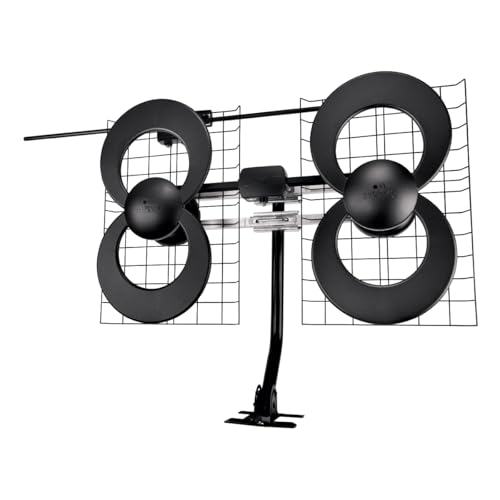
- Reflectors help protect incoming signals
- Indoor, attic, or outdoor installation
- Includes mast and mounting hardware
Best For: Suburban and rural permanent setups
Travel-Friendly Pick

- Compact design for travel
- Magnetic base for metal surfaces
- 360-degree VHF/UHF reception
Best For: Camping, RVs, boating, and tailgating
Attic Installation Pick

- Attic or outdoor mounting
- Weather-resistant design with J-mount
- 70+ mile stated reception range
Best For: Permanent home installations
Best Tabletop Pick
Philips Rabbit Ears Indoor Antenna

- Adjustable VHF/UHF tabletop design
- 5-foot cable and no-tools setup
- ATSC 3.0 compatible
Best For: Simple tabletop cord cutting and backup TV use
Best Flat Design
Channel Master FLATenna Indoor Antenna
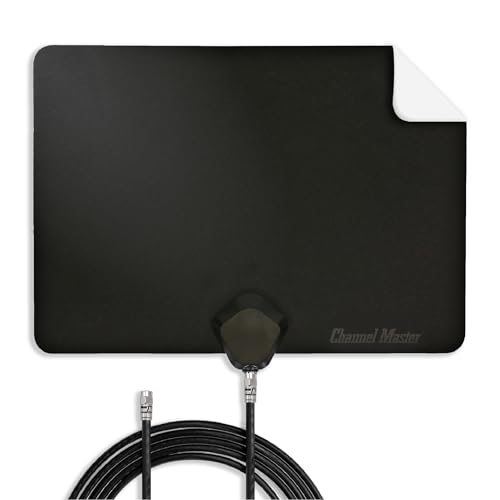
- Thin reversible design for flexible placement
- Includes 12-foot RG6 coaxial cable
- Supports 4K and ATSC 3.0
Best For: Discreet wall, window, or tabletop installation
Best Long-Cable Value

- Includes a 16-foot coaxial cable
- Supports 4K, UHD, and 1080p signals
- Designed for digital and smart TVs
Best For: Flexible placement when extra cable length is important
Best Value Indoor Pick

- Supports 4K and 1080p HD signals
- Includes a 9.8-foot coaxial cable
- Compact design; amplifier sold separately
Best For: Flexible indoor placement on a budget
Best Amplified Option
Smart-Chip Long-Range TV Antenna

- Includes a signal booster and smart chip
- Uses a 16.5-foot shielded cable
- Supports VHF, UHF, smart TVs, and older TVs
Best For: Flexible amplified indoor reception
Best Compact Design

- Compact magnetic-base design
- Includes a 10-foot cable
- Omnidirectional indoor reception
Best For: Small spaces and easy repositioning
Budget Signal Booster Pick – Indoor/Outdoor TV Antenna
If you want tv antennas with flexible placement, this NEOSIGN model supports indoor or outdoor installation and includes a 16.5-foot coaxial cable. Its signal booster can be switched on for longer-distance reception, though actual channel availability depends on local broadcast coverage.
Best For: Households wanting a flexible antenna with a long cable and included booster.
Pros:
- Supports indoor and outdoor use.
- Includes a 16.5-foot coaxial cable for flexible placement.
- Supports 4K and 1080p formats and includes a signal booster.
Cons:
- Reception depends heavily on local signal coverage and obstructions.
- Requires channel rescanning after moving the antenna or changing the range setting.
This is a practical option when cable length and placement flexibility matter. Check local tower coverage before buying, since the advertised range cannot guarantee reception in every location.
Long-Range Outdoor Pick – ClearStream 4V Antenna
Among tv antennas for suburban or rural setups, the Antennas Direct ClearStream 4V stands out for its durable construction, reflector-backed design, and included mounting hardware. It is designed for indoor, attic, or outdoor installation and supports modern broadcast formats.
Best For: Viewers who need a substantial multi-directional antenna for attic or outdoor installation.
Pros:
- Uses four patented loops with Hi-VHF elements and reflectors.
- Supports NEXTGEN TV, 4K, 8K UHD, and Full HD 1080p broadcasts.
- Includes a 20-inch pivoting mast, mounting hardware, and adjustable clamp.
- Backed by a lifetime manufacturer warranty.
Cons:
- Larger than compact indoor antennas.
- Reception varies with tower distance, trees, and building materials.
- Cannot provide cable channels.
The ClearStream 4V is a strong fit for a more permanent installation where signal protection and mounting versatility are priorities. Its 70-mile stated range is useful context, but local conditions remain decisive.
Travel-Friendly Pick – GE Portable HD TV Antenna
For portable tv antennas, this compact GE model is designed for travel, camping, boating, and tailgating. Its magnetic base helps it stay in place on many metal surfaces, while the 360-degree reception design supports VHF and UHF channels.
Best For: Travelers and RV or vehicle users who want a compact antenna for occasional viewing.
Pros:
- Compact design is easy to store in an RV, boat, vehicle, or drawer.
- Magnetic base helps secure the antenna on compatible metal surfaces.
- Supports 1080p, 4K, 8K, and NEXTGEN TV broadcasts where available.
- Includes limited-lifetime replacement coverage and U.S.-based technical support.
Cons:
- Its listed maximum range is 20 feet, limiting it compared with long-range models.
- Reception still depends on local broadcast availability and placement.
This GE antenna prioritizes portability over reach. It makes sense for temporary setups and nearby signals, but a larger outdoor model is a better choice when broadcast towers are farther away.
Attic Installation Pick – GE Outdoor HD Antenna
This GE model is one of the more practical tv antennas for homeowners who want a hidden attic installation or a weather-resistant outdoor setup. It captures VHF and UHF broadcasts from up to 70+ miles according to the supplied specifications and includes a J-mount for installation.
Best For: Homeowners seeking a permanent attic or outdoor antenna with broad TV compatibility.
Pros:
- Designed for attic installation or outdoor mounting.
- Weather-resistant construction supports flexible placement.
- Captures VHF and UHF signals and supports 4K, 8K, and NEXTGEN TV broadcasts.
- Includes a J-mount and limited-lifetime replacement pledge.
Cons:
- Its larger size is less suitable for compact indoor setups.
- Actual reception depends on tower location, terrain, and obstructions.
Choose this GE antenna when you prefer a permanent installation that can stay out of sight in an attic or mount outdoors. It offers useful range and format support, but checking local signal conditions remains essential.
Best Tabletop Pick – Philips Rabbit Ears Indoor Antenna
If you want a simple way to try tv antennas for free local broadcasts, this Philips tabletop model is easy to position and set up. Its adjustable rabbit-ear dipoles and circular UHF loop are designed for VHF/UHF reception, with a listed range of up to 30 miles.
Best For: Viewers who want a compact tabletop antenna for cord cutting, backup TV, or apartments within reasonable range of local broadcast towers.
Pros:
- Adjustable dipoles and UHF loop support VHF/UHF reception
- Includes a 5-foot coaxial cable and requires no tools to install
- Compatible with modern TVs, 1080p broadcasts, and ATSC 3.0 NextGen TV
- Backed by U.S.-based support and a limited-lifetime replacement pledge
Cons:
- Its 30-mile listed range may be limiting for homes farther from towers
- Tabletop placement may require experimentation for the best reception
The Philips is a practical choice when you prefer the familiar rabbit-ear design and a quick, no-tools setup. Its flexible VHF/UHF elements and NextGen TV compatibility add useful versatility, though reception will depend on your location and indoor obstructions.
Best Flat Design – Channel Master FLATenna Indoor Antenna
The Channel Master FLATenna is a flexible option for shoppers comparing tv antennas for indoor use. Its ultra-thin reversible design can be mounted on a wall or window or placed on a tabletop, while the listed 35-mile range is intended for urban and suburban conditions.
Best For: Viewers who want a discreet, flexible indoor antenna with a longer included cable and multiple placement options.
Pros:
- Ultra-thin, lightweight, reversible black-and-white design
- Supports wall, window, and tabletop placement
- Includes a 12-foot professional-grade RG6 coaxial cable
- Supports 4K broadcasts and ATSC 3.0 NextGen TV
Cons:
- Indoor reception can still vary with obstructions and interference
- One-year manufacturer warranty is shorter than some lifetime-replacement offerings
The FLATenna stands out when cable length and discreet placement matter. Its 35-mile design and shielded RG6 cable make it a well-rounded indoor option, but checking local tower locations and testing placement remains important.
Best Long-Cable Value – DAANT Indoor TV Antenna
For shoppers seeking tv antennas with extra cable reach, the DAANT indoor model includes a 16-foot coaxial cable and lists a range of up to 100 miles. It supports digital and smart TVs and is intended for receiving local broadcasts, though placement near a window and testing different orientations may improve results.
Best For: Digital-TV owners who need a long cable for flexible indoor placement and want support for 4K, UHD, and 1080p broadcasts.
Pros:
- Includes a 16-foot coaxial cable for flexible positioning
- Supports 4K, UHD, and 1080p HDTV signals
- Installation involves connecting the cable, aiming toward towers, and scanning for channels
- Online after-sales support is available for product questions
Cons:
- Not suitable for older analog televisions
- Its three-month warranty is relatively short
- Reception depends on placement, orientation, and local signal conditions
The DAANT is appealing when the included 16-foot cable is more useful than a compact setup. Its advertised range and modern broadcast support look promising on paper, but buyers should verify local coverage and treat the range as dependent on real-world conditions.
Best Value Indoor Pick – Long-Cable HD TV Antenna
If you want a straightforward way to receive local channels, this indoor TV antenna supports 4K and 1080p HD signals and connects to smart TVs and other HDTVs. Its 9.8-foot coaxial cable gives you more flexibility when positioning the antenna near a window or higher on a wall.
Best For: Shoppers seeking a basic, compact indoor antenna with a longer-than-average cable and no built-in amplifier.
Pros:
- Supports 4K and 1080p HD channels with filtering intended to reduce signal noise.
- Includes a 9.8-foot coaxial cable for flexible placement.
- Compact black design can be hidden behind a TV or mounted on a wall or window.
- Designed to receive local programming such as ABC, CBS, NBC, PBS, and Fox.
Cons:
- Does not include an amplifier.
- Reception depends on placement and local signal availability.
This is a practical choice for an uncomplicated indoor setup, especially when the TV is not directly beside the best reception spot. Plan to rescan channels whenever you move the antenna, and consider a separate amplifier only if your location needs one.
Best Amplified Option – Smart-Chip Long-Range TV Antenna
Among these TV antennas, this model stands out for its included amplifier and 16.5-foot shielded coaxial cable. It is designed for indoor use, supports VHF and UHF frequencies, and offers 360-degree reception for picking up available local channels in a range of home layouts.
Best For: Viewers who want an amplified indoor antenna with extra cable length and broad TV compatibility.
Pros:
- Built-in smart chip is designed to filter interference from nearby electronics.
- Included signal booster can strengthen weak signals.
- 16.5-foot shielded coaxial cable allows flexible placement near windows or higher locations.
- Works with smart TVs and older TV models and supports both VHF and UHF frequencies.
Cons:
- Actual reception still depends on location, obstacles, and available broadcast signals.
- The prominently stated range and channel figures may not reflect results in every home.
The included amplifier and long cable make this the most flexible choice here for challenging indoor placement. It is also backed by a 12-month warranty, but users should still scan for channels after setup and adjust the antenna position as needed.
Best Compact Design – HIDB Indoor TV Antenna
This HIDB indoor TV antenna is a compact option for receiving local channels without a cable subscription. Its slim form, magnetic base, and 10-foot cable make it easy to place on a TV stand, table, or near a window while keeping the setup unobtrusive.
Best For: Small spaces and viewers who prioritize a lightweight antenna that is easy to reposition.
Pros:
- Compact 2.76-by-2.76-by-6.3-inch design is easy to conceal or move.
- Magnetic base and included 10-foot cable support simple setup.
- Omnidirectional reception can receive signals without constant directional adjustment.
- Uses flame-retardant, moisture-resistant dual PC material for indoor use.
Cons:
- Reception varies with location, terrain, weather, and obstacles.
- Best results may require mounting higher and near a window facing broadcast towers.
This is a sensible pick when a discreet footprint matters more than advanced amplification features. Use a local channel map to check availability, then scan again after moving the antenna to fine-tune reception.
How We Picked These TV Antennas
We focused on antennas designed to receive free over-the-air broadcast channels, including models for apartments, bedrooms, RVs, and permanent outdoor installations. The selection includes compact indoor antennas, amplified and long-range options, and larger outdoor designs for homes farther from transmission towers.
We also considered cable length, installation flexibility, compatibility with modern TVs, advertised reception range, signal reliability, and whether each antenna is practical for its intended use. Range claims are estimates rather than guarantees: terrain, building materials, interference, and tower direction can affect real-world results.
Quick Comparison
| Best For | Recommended Type | What to Look For |
|---|---|---|
| Apartments and bedrooms | Indoor flat or compact antenna | Easy placement, adequate cable length, optional amplification |
| Weak or obstructed signals | Outdoor directional antenna | Higher gain, roof or attic mounting, tower alignment |
| Travel and temporary setups | Portable indoor antenna | Lightweight design, simple setup, durable cable |
| Reliable everyday reception | Established indoor HDTV antenna | Stable signal performance and quality coaxial cable |
Key Buying Factors for TV Antennas
Indoor Versus Outdoor Installation
Indoor antennas are easiest to install and work well when you live near broadcast towers or have unobstructed access to them. Place one near a window and as high as practical. Outdoor antennas generally perform better in rural areas, behind thick walls, or where terrain blocks signals, but they require mounting hardware, weather protection, and sometimes grounding.
Signal Range and Direction
Do not choose solely by the largest advertised mile range. Check your local tower locations first, then consider whether you need an omnidirectional design or a directional antenna aimed toward the towers. A longer coaxial cable can make placement easier, but very long or low-quality cable may reduce signal strength.
Amplification and TV Compatibility
An amplifier can help compensate for cable loss or split signals, but it cannot create channels that are unavailable at your location and may worsen interference in strong-signal areas. Most current televisions with a digital tuner can use these antennas through a standard coaxial connection. A separate tuner or converter may be needed for older TVs.
Channel Scanning and Placement
After connecting an antenna, run the TV’s channel scan and repeat it after moving the antenna. Small placement changes can make a significant difference. Keep the antenna away from large metal objects, routers, and other electronics when possible.
Who Should Buy Which TV Antennas?
Choose a compact indoor model if you rent, live in an apartment, or want the simplest setup. A flat indoor antenna is a practical starting point for nearby towers, while rabbit-ear designs can offer flexible positioning. Consider a portable model for dorm rooms, travel, or temporary viewing areas.
Choose an outdoor antenna if you live farther from towers, have thick exterior walls, or regularly experience dropouts. Homeowners who want the best chance of stable reception should prioritize mounting position and tower alignment over headline range claims. If you are unsure, use a local broadcast coverage tool before buying and confirm whether your area needs a directional, amplified, or outdoor antenna.