The best voice recorders for podcasts make it easier to capture clean conversations, interviews, solo episodes, and field recordings without carrying a full studio setup. The right choice depends on your microphone inputs, portability needs, audio quality expectations, and whether built-in transcription matters.
We compared podcast-focused recorders with compact handheld and AI-enabled models to help you choose equipment that fits your recording style, workflow, and budget.
Best 10 Voice Recorders for Podcasts Picks for 2026
Best Podcast Mixer

- Four XLR inputs for multi-person shows
- AI noise reduction and mixing tools
- Four headphone outputs with separate controls
Best For: In-person podcasts with multiple microphones
Best AI Note Recorder
EVISTR L359 Digital Voice Recorder

- AI transcription in 113 languages
- 128GB storage with up to 33 hours of battery life
- OTG transfer to a phone for processing
Best For: Podcast interviews and spoken-note organization
Best Flexible Field Recorder

- Built-in stereo microphones
- Two XLR/TRS inputs for external gear
- 32-bit float recording and USB-C backup
Best For: Portable podcasts, interviews, and video audio
Best Pocket AI Recorder
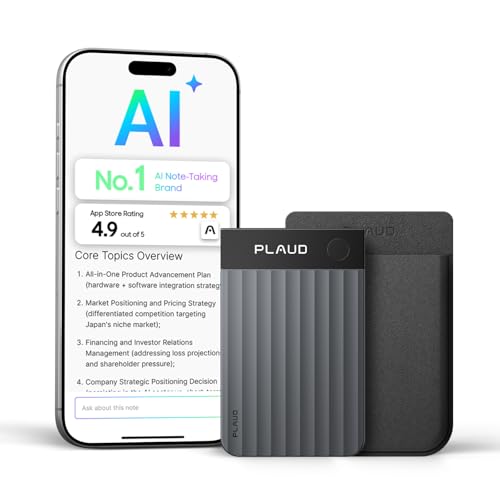
- Captures in-person, phone, and online conversations
- AI transcription in 112 languages
- Ultra-slim design with magnetic accessories
Best For: Interview podcasts and automated conversation notes
Best Two-Person Setup

- Two USB mic inputs and two headphone outputs
- Mix-Minus supports echo-free remote calls
- AI noise reduction and battery operation
Best For: Two-person podcasts and mobile interviews
Best AI Note-Taking Recorder

- One-tap recording for calls and conversations
- Automatic transcripts, summaries, and action items
- Up to 4 days of battery life with MagSafe support
Best For: AI-assisted meeting, interview, and idea capture
Best Portable Stereo Recorder

- X/Y stereo microphones for natural audio
- 32-bit float recording helps avoid clipping
- USB-C mic mode and up to 10-hour battery life
Best For: Portable podcasts, interviews, voiceovers, and field recording
Best High-Capacity Pick
EVISTR L357 Digital Voice Recorder

- 1536kbps PCM stereo recording
- 64GB storage with USB-C transfer
- Voice activation and up to 32-hour recording
Best For: Mobile podcast interviews and long spoken recordings
Best Long-Battery Option

- Up to 68 hours of continuous recording
- 136GB total storage with included TF card
- Dual microphones with 1536kbps PCM audio
Best For: Extended podcast interviews and field recording
Best Organized-File Choice

- 128GB storage with four-folder management
- 1536Kbps WAV and adjustable MP3 recording
- Six-level voice activation and password protection
Best For: Podcasters managing frequent interviews and recordings
Best Podcast Mixer – Zoom PodTrak P4next
For creators comparing voice recorders for podcasts, the Zoom PodTrak P4next is built for multi-person sessions. Four XLR inputs, multitrack recording, AI-assisted sound tools, and four headphone outputs make it practical for a podcast room with several participants.
Best For: In-person podcasts with up to four microphones and a call-in guest.
Pros:
- Four XLR inputs support recording for up to four people.
- AI noise reduction, Tone Enhancement, and compression help streamline mixing.
- Four headphone outputs provide individual volume controls.
- Can send high-quality audio directly to phone video without syncing.
Cons:
- Designed around XLR microphones rather than a built-in microphone.
- Requires two AA batteries for portable operation.
The P4next is the most podcast-focused option here for a dedicated host-and-guest setup. Its input count and headphone monitoring are especially useful when several people need to record and hear themselves clearly.
Best AI Note Recorder – EVISTR L359 Digital Voice Recorder
The EVISTR L359 is a compact choice for shoppers seeking voice recorders for podcasts that also support transcription and organization. It records in up to 3072Kbps, includes noise reduction and voice-activated recording, and connects to a phone through OTG for AI processing.
Best For: Interviewers, researchers, and podcasters who want recordings converted into searchable notes and summaries.
Pros:
- AI transcription supports 113 languages, with summaries, mind maps, and speaker identification.
- 128GB storage can hold up to 9,216 hours at 32kbps.
- Up to 33 hours of continuous recording and a lightweight 65g design.
- One-touch recording, a privacy lock, and a HOLD switch simplify use.
Cons:
- Its built-in microphone is intended for speech recording rather than multi-microphone podcast production.
- AI processing relies on the AI DVR Link app and a wired OTG connection.
The L359 is better suited to capturing interviews or research than running a conventional multi-host podcast. Its strongest advantage is the recording-to-transcription workflow, especially for users who value compact size and generous storage.
Best Flexible Field Recorder – Zoom H4 Essential
Among voice recorders for podcasts, the Zoom H4 Essential offers a flexible setup for creators who record in different environments. Its built-in stereo microphones, two XLR/TRS inputs, 32-bit float recording, and USB-C connectivity cover podcasts, interviews, video audio, and live performances.
Best For: Podcasters and filmmakers who need built-in microphones plus connections for external gear.
Pros:
- Built-in stereo microphones provide a ready-to-use recording option.
- Two XLR/TRS inputs support external microphones, instruments, mixers, and soundboards.
- 32-bit float recording helps capture loud and quiet sources without clipped takes.
- Can record or stream through USB-C while saving a backup to an SD card.
Cons:
- Only two external XLR/TRS inputs are provided.
- Battery life and recording time depend on two AA batteries and the recording setup.
The H4 Essential is a strong middle ground for solo creators and small podcast teams. It is more adaptable than a basic voice recorder, while its built-in microphones make it practical when carrying a larger microphone setup is inconvenient.
Best Pocket AI Recorder – Plaud Note Pro
The Plaud Note Pro is a pocket-sized option for creators looking beyond basic voice recorders for podcasts. Its four MEMS microphones and voice-processing unit support in-person, phone, and online conversations, while the companion workspace can transcribe recordings, identify speakers, and create structured summaries.
Best For: Podcasters who record interviews, calls, or online meetings and want automated notes afterward.
Pros:
- Supports in-person and phone-call recording with automatic dual-mode switching.
- Transcribes in 112 languages with speaker labels, action items, and follow-ups.
- Ultra-slim 1.06-ounce design includes a magnetic case and ring.
- Offers a free plan with 300 minutes of monthly AI transcription.
Cons:
- No headphone jack is included.
- AI features depend on the Plaud app, desktop, or web workspace and plan limits.
- It is not designed with XLR inputs for conventional multi-microphone podcast mixing.
The Note Pro is best viewed as a conversation-capture and workflow tool rather than a traditional podcast recorder. Its portability and automated summaries can be valuable for interview-heavy shows, provided you are comfortable using the Plaud ecosystem and observing recording-consent requirements.
Best Two-Person Setup – Zoom PodTrak P2
For creators comparing voice recorders for podcasts, the Zoom PodTrak P2 is built around a straightforward two-person workflow. It accepts two USB microphones, provides two headphone outputs, and records individual tracks to an SD card while also supporting livestreaming.
Best For: Two-person podcasts, mobile interviews, and creators who need remote-guest support.
Pros:
- Two USB mic inputs and two headphone outputs simplify podcast setup.
- Built-in Mix-Minus helps prevent echo when bringing in a phone or computer guest.
- AI noise reduction, tone shaping, compression, and de-essing reduce post-production work.
- Battery, USB bus, and AC power options support recording in different locations.
Cons:
- Battery life is rated at up to 4 hours on four AA batteries.
- Its two-microphone design is less suited to larger panel discussions.
The P2 is a focused podcast recorder rather than a general-purpose pocket note taker. Choose it when simple two-mic recording, remote calls, and built-in voice processing matter most.
Best AI Note-Taking Recorder – Pocket AI Voice Recorder
The Pocket AI Voice Recorder takes a productivity-first approach to voice recorders for podcasts and conversations. One-tap recording is paired with automatic transcription, summaries, action items, and searchable insights, making it useful when reviewing spoken material matters as much as capturing it.
Best For: Recording meetings, calls, interview ideas, and conversations that need quick summaries.
Pros:
- One-tap recording captures calls, meetings, and in-person conversations with minimal interruption.
- AI can produce transcriptions, summaries, action items, and conversation maps.
- “Ask Pocket” lets users query information grounded in their recordings.
- Up to 4 days of battery life and MagSafe compatibility support portable use.
Cons:
- Some advanced features require an optional subscription.
- It uses a built-in microphone rather than separate podcast microphone inputs.
This recorder is best for people who want usable notes and follow-up actions from recordings, not just stored audio files. For a conventional multi-microphone podcast rig, another option in this roundup is a better fit.
Best Portable Stereo Recorder – Zoom H1 Essential
The Zoom H1 Essential is a compact choice among voice recorders for podcasts, interviews, and content creation. Its X/Y stereo microphones capture natural audio, while 32-bit float recording is designed for clip-free capture and USB-C connectivity allows it to work as a microphone for calls, livestreams, and desktop or mobile recording.
Best For: Solo creators, interviews, voiceovers, field recording, and portable stereo capture.
Pros:
- X/Y stereo microphones provide natural stereo sound for voices and environments.
- 32-bit float recording supports clip-free audio capture.
- USB-C microphone mode works for livestreams, calls, podcasts, and voiceovers.
- Runs for up to 10 hours on two AAA batteries.
Cons:
- It has stereo built-in microphones rather than multiple separate mic inputs.
- Two AAA batteries are required for battery operation.
The H1 Essential is a versatile handheld recorder for creators who need better audio than a phone or camera alone can provide. It is especially practical for solo podcasting, interviews, and location sound where portability matters.
Best High-Capacity Pick – EVISTR L357 Digital Voice Recorder
For shoppers comparing voice recorders for podcasts, the EVISTR L357 is a practical portable option with PCM recording, adjustable gain, and a built-in noise-reduction microphone. Its Type-C connection, playback controls, and large storage capacity also make it useful for recording interviews, planning sessions, and spoken notes.
Best For: Podcasters who want a compact recorder with extensive storage, adjustable recording sensitivity, and simple file transfers.
Pros:
- Records up to 1536kbps stereo audio with PCM noise reduction.
- 64GB storage can hold up to 4,660 hours at 32Kbps.
- Offers voice activation, adjustable gain, variable-speed playback, and A-B repeat.
- Runs for up to 32 hours of continuous recording and transfers files over USB-C.
Cons:
- Its built-in microphone may be less flexible than a dedicated podcast microphone.
- The feature-rich menu may require time to learn.
The L357 stands out for long recording sessions and straightforward operation. It is a sensible choice for mobile podcast interviews and spoken recordings, though creators seeking a traditional multi-microphone setup will need additional equipment.
Best Long-Battery Option – Tonfarb 136GB Voice Recorder
Among voice recorders for podcasts, the Tonfarb model is designed for extended use, pairing 1536kbps PCM recording with dual noise-reduction microphones and a 1100mAh battery. Its one-click recording control and included TF card provide a convenient setup for interviews, meetings, and field recording.
Best For: Podcasters who prioritize long battery life, high storage capacity, and quick one-touch recording.
Pros:
- Dual microphones and automatic noise reduction support 1536kbps PCM recording.
- Includes 8GB built-in storage plus a 128GB TF card, for 136GB total capacity.
- Provides up to 68 hours of continuous recording on one charge.
- Includes voice activation, password protection, A-B repeat, and USB-C file transfer.
Cons:
- The recorder is intended for built-in-microphone use rather than a stated external microphone setup.
- Its 97-gram metal body is portable but not the lightest option in the group.
The Tonfarb is especially appealing for back-to-back interviews or extended recording days. Its large capacity and battery endurance reduce the need for frequent charging or file management, while one-click controls keep operation simple.
Best Organized-File Choice – EVIDA V618 Voice Recorder
The EVIDA V618 is a useful choice for voice recorders for podcasts when organized file storage and flexible quality settings matter. It supports 128Kbps and 192Kbps MP3 recording as well as 1536Kbps WAV, with voice activation, password protection, and four storage folders for managing recordings.
Best For: Podcasters who want multiple recording formats, organized folders, and playback features in a compact recorder.
Pros:
- Supports 1536Kbps PCM-quality WAV recording and two MP3 bit rates.
- 128GB capacity stores up to 9,296 hours of recordings.
- Voice activation offers six sensitivity levels to reduce silent sections.
- Includes four-folder file management, password protection, bookmarks, and auto-record.
Cons:
- Its listed microphone is mono, which may be less suitable for stereo ambience.
- The details list no headphone jack for direct monitoring.
- Continuous recording is rated at up to 54 hours, less than the Tonfarb model.
The V618 is a strong organizational pick for creators who record many interviews or planning sessions and want files separated into folders. Its format choices are useful, but podcasters who need live headphone monitoring or stereo capture may prefer a more specialized setup.
How We Picked the Best Voice Recorders for Podcasts
We prioritized recording reliability, microphone connectivity, ease of use, portability, storage, and workflow features. Podcast-focused models were evaluated for input count, USB compatibility, monitoring, and control during live sessions. Handheld recorders were considered for their microphones, file quality, and usefulness for interviews or location work. AI voice recorders were assessed mainly for transcription and note-taking convenience rather than studio-grade audio production.
Because these products serve different purposes, the best model for a remote interview may not be the best option for a two-person show or music-focused podcast. Always confirm current specifications, included accessories, software compatibility, and app or subscription requirements before buying.
Quick Comparison
| Best For | Look For | Recommended Type |
|---|---|---|
| Multi-person podcasts | Several microphone inputs and headphone monitoring | Podcast recorder or mixer |
| Solo creators | Simple controls, USB connectivity, and compact size | Small podcast recorder or handheld recorder |
| Interviews and field recording | Built-in microphones, battery life, and durable design | Handheld recorder |
| Meetings and fast notes | Automatic transcription and searchable files | AI voice recorder |
| Lectures and long sessions | Large storage, voice activation, and playback | Digital dictaphone |
Key Buying Factors for Voice Recorders for Podcasts
Inputs and Microphone Compatibility
Count how many people you expect to record at once. A two-person show may need two microphone inputs, while panel discussions require more. Check connector types, phantom-power support for condenser microphones, and whether USB microphones work directly with the recorder.
Audio Quality and Monitoring
Look for suitable recording formats, dependable preamps, gain controls, and headphone monitoring. Built-in microphones are convenient, but external microphones usually provide better control over room noise and vocal tone.
Portability and Power
For travel, interviews, or outdoor work, choose a compact recorder with practical battery life and accessible controls. Consider whether it uses replaceable batteries, USB charging, or a proprietary power solution.
Transcription and Storage
AI transcription can speed up show notes, interview summaries, and content repurposing, but accuracy varies with accents, background noise, speakers, and language. Also check internal storage, expandable memory, file transfer options, and any recurring service fees.
Who Should Buy Which Voice Recorders for Podcasts?
Choose a podcast recorder or mixer if you want dedicated controls, multiple microphone inputs, live monitoring, and a reliable setup for recurring episodes. These are generally the strongest choices for co-hosted or guest-based shows.
Choose a handheld recorder if you record interviews, live events, music, video sound, or podcasts in changing locations. They offer flexibility without requiring a complete desktop setup.
Choose an AI voice recorder if transcription, summaries, and searchable notes are more important than multitrack production. These devices suit meetings, research, interviews, and creators who want to turn spoken material into written content quickly.
Choose a high-capacity digital recorder for lectures, long meetings, backup recordings, or simple voice memos. These models can be convenient, but verify their microphone quality and file-transfer process before relying on them for polished podcast audio.