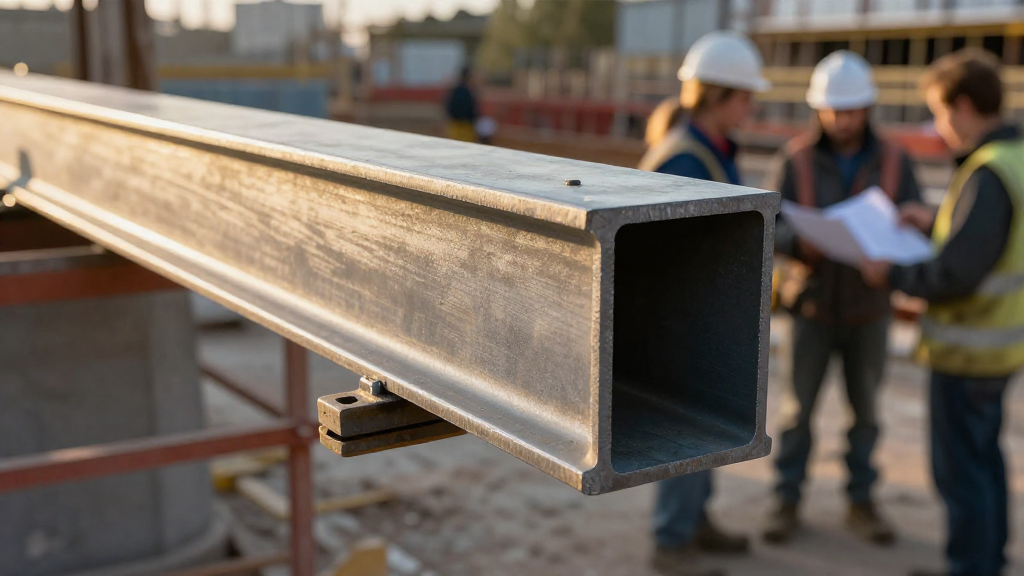
Beam end conditions are crucial in understanding how structures respond to loads.
They directly impact the performance, safety, and design of various frameworks in construction and engineering fields.
In this article, we will explore what beam end conditions are, their types, and how they affect structural integrity.
What Are Beam End Conditions in Structural Engineering?
Beam end conditions define how the ends of a beam are supported and how they connect to other parts of a structure.
These conditions are typically categorized into four main types:
- Simply Supported
- Cantilever
- Fixed
- Continuous
Each of these beam end conditions plays a significant role in how forces are transferred through the beam and the overall stability of the structure.
Why Are Beam End Conditions Important?
Understanding beam end conditions is essential for several reasons:
-
Load Distribution: Different end conditions will distribute loads differently across the beam.
-
Deflection: The way a beam deflects under various loads depends significantly on its end conditions.
-
Stress Levels: The stress levels in the beam can vary dramatically based on how it is supported.
-
Design Flexibility: Knowing the end conditions allows engineers to design more flexible structures that can withstand various loads.
Now, let’s explore the specific types of beam end conditions.
What Are the Types of Beam End Conditions?
What are Simply Supported Beam End Conditions?
Simply supported beam end conditions occur when a beam is supported at both ends.
Each end rests on supports that allow for vertical movement but do not restrict horizontal movement or rotation.
- Characteristics:
- Can freely rotate.
- Subject to bending and shear forces.
- Commonly used in bridges and buildings.
This type of support ensures that the beam can expand and contract with temperature fluctuations without causing structural issues.
What are Cantilever Beam End Conditions?
Cantilever beam end conditions describe a scenario where one end of the beam is fixed, while the other end is free.
- Characteristics:
- The fixed end can resist moments and shears.
- The free end cannot support any external loads.
- Commonly used in balconies, signboards, and bridges.
Cantilever beams can experience significant moments at their fixed ends, making their design crucial for stability.
What are Fixed Beam End Conditions?
Fixed beam end conditions indicate that both ends of the beam are securely fixed.
- Characteristics:
- Cannot rotate or move vertically.
- Subject to maximum internal stresses.
- Often found in rigid frames and multi-story buildings.
Fixed beams can carry heavier loads without deflecting as much compared to simply supported beams, making them a suitable option for many applications.
What are Continuous Beam End Conditions?
Continuous beam end conditions exist when a beam spans over three or more supports.
- Characteristics:
- Each support provides equal support to the beam.
- More stable and strong than simply supported beams.
- Often found in complex structural frameworks like bridges and high-rise buildings.
Continuous beams help reduce deflection and distribute loads more evenly, contributing to overall structural integrity.
How Do Beam End Conditions Affect Structural Design?
What is the Impact on Load Distribution?
The type of beam end conditions dramatically influences how loads are transferred through a beam.
For example, in simply supported beams, loads are transmitted directly to supports with minimal bending moments.
In contrast, fixed beams can carry loads more efficiently, distributing stresses more uniformly across their length.
What About Deflection?
Deflection is a critical factor in structural design.
Simply supported beams tend to deflect more than fixed or continuous beams under the same load.
- Minimizing Deflection Strategies:
- Use materials with higher stiffness.
- Increase moment of inertia by using larger cross-sectional areas.
- Implement various end conditions strategically.
Choosing the appropriate beam end conditions can significantly impact deflection characteristics and overall safety.
What Are the Stress Levels in Beam End Conditions?
Different beam end conditions create varying stress profiles within the beam:
- Fixed beams experience increased maximum stress levels due to constraints at both ends.
- Simply supported beams have lower maximum stresses given their ability to rotate freely.
Engineers must analyze these conditions to avoid potential failure and ensure longevity.
What are Common Applications of Beam End Conditions?
Where Are Simply Supported Beams Used?
Simply supported beams play a prominent role in:
- Residential buildings
- Lightweight bridges
- Roof trusses
Where Are Cantilever Beams Used?
Cantilever beams serve critical functions in:
- Balconies
- Unbalanced loads in structures
- Billboards and signs
Where Are Fixed Beams Applied?
Fixed beams are often found in:
- Multi-story buildings
- Bridges with heavy traffic
- Rigid frames for industrial spaces
Where Are Continuous Beams Utilized?
Continuous beams are vital in:
- Complex bridges
- Long-span roofs
- Multi-bay warehouse buildings
Conclusion: How Can Beam End Conditions Be Optimized?
Understanding beam end conditions is essential for engineers and architects aiming for efficient and safe designs.
Utilizing these conditions correctly ensures that structures can withstand various loads while remaining economically feasible.
To optimize your designs, consider the following strategies:
- Analyze load requirements accurately.
- Select appropriate materials to meet design needs.
- Consider future expansions or modifications in your design.
By understanding beam end conditions, designers can create structures that are not only safe but also efficient and aesthetically pleasing.