Need more storage, better redundancy, or a cleaner way to manage multiple drives? The right RAID enclosure can turn a pile of SATA drives into a flexible, high-capacity storage system.
In this roundup, we focused on 10 RAID enclosures that balance speed, bay count, cooling, and compatibility for home offices, creators, and small businesses.
Best 10 Raid Enclosures Picks for 2026
Compact Two-Bay RAID Pick
TERRAMASTER D2-320 2-Bay USB 3.2 Gen2

- USB 3.2 Gen 2 up to 10Gbps
- RAID 0, RAID 1, JBOD, and Single support
- Tool-free trays with push-lock design
Best For: Compact direct-attached storage with fast two-drive RAID setup
High-Capacity Flexible RAID Option
ORICO 5-Bay RAID HDD Enclosure

- Eight modes including RAID 5 and RAID 10
- Up to 110TB total capacity
- Aluminum case with 80mm silent fan
Best For: Large local storage setups that need flexible RAID modes
Fast Non-RAID 4-Bay DAS

- USB 3.2 Gen 2 up to 10Gbps
- Four individual disks with no RAID function
- Hot swap support and tool-free trays
Best For: Users who want quick multi-drive direct storage without RAID
Business-Oriented RAID DAS
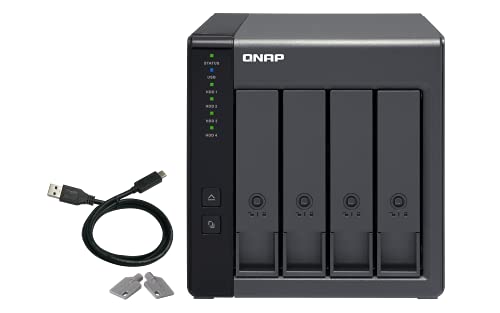
- Hardware RAID with RAID 0/1/5/JBOD
- USB-C direct-attached storage for major OSes
- Lockable bays and NAS backup support
Best For: Backup and expansion workflows with hardware RAID support
WAVLINK 4-Bay Speed and Display Dock

- Up to 88TB across four SATA bays
- 10Gbps USB-C plus 4K HDMI output
- Dual fans and aluminum shell for cooling
Best For: Storage expansion with display output and active cooling
ORICO Pro RAID Enclosure

- Six RAID modes including RAID 0/1/5/10
- Up to 20Gbps over USB 3.2 Gen 2x2
- Supports up to 104TB across four bays
Best For: Power users who need flexible RAID and high-capacity storage
MAIWO Flexible RAID Box

- Supports RAID 0, 1/10, 3, 5, Clone, and JBOD
- Up to 96TB total capacity
- Two cooling fans with switch control
Best For: Backups, media libraries, and surveillance storage
High-Capacity Pick
CENMATE 8-Bay Aluminum RAID Enclosure

- 8 bays with up to 160TB capacity
- 8 modes including RAID0, RAID5, RAID50, and clone
- Dual fans, aluminum build, USB/eSATA support
Best For: Large-capacity DAS users who need flexible RAID modes
Compact Desktop Pick
CENMATE 4-Bay Aluminum RAID Enclosure

- 4 bays with up to 80TB capacity
- RAID 0/1/3/5/10 plus clone and normal modes
- USB 3.0 and eSATA with aluminum cooling design
Best For: Small-office or personal users who want a compact RAID enclosure
Maximum Expansion Pick
CENMATE 10-Bay Aluminum RAID Enclosure

- 10 bays with up to 200TB capacity
- 8 modes including RAID0, RAID5, RAID50, and clone
- Aluminum body, dual fans, USB/eSATA support
Best For: Users who need the largest DAS storage capacity in this group
Compact Two-Bay RAID Pick – TERRAMASTER D2-320 2-Bay USB 3.2 Gen2
If you want one of the more compact raid enclosures for a small desktop setup, the TerraMaster D2-320 is built around speed, simple RAID modes, and tool-free drive access. It is a DAS rather than a NAS, so it fits best when you want directly attached storage for fast local backups, media work, or mirrored data protection.
Best For: Users who want a fast 2-bay hardware RAID enclosure for direct-attached storage with RAID 0/1 and easy drive swaps.
Pros:
- USB 3.2 Gen 2 supports up to 10Gbps for fast transfers.
- Hardware RAID options include RAID 0, RAID 1, JBOD, and Single.
- Tool-free trays and TerraMaster’s push-lock design simplify installation.
- Intelligent temperature-controlled fan helps manage heat and noise.
Cons:
- Only two bays, so capacity is more limited than larger enclosures.
- As a DAS, it is not a NAS and does not provide network storage features.
For buyers who want a straightforward two-drive RAID enclosure with modern USB-C speed and a mirror option for safer storage, the D2-320 is a practical pick. It is especially appealing if you value quick setup and compact size over large-bay expandability.
High-Capacity Flexible RAID Option – ORICO 5-Bay RAID HDD Enclosure
Among raid enclosures built for larger local storage pools, the ORICO 5-bay model stands out for its broad RAID mode selection and high total capacity. It is designed for users who need centralized storage for big video files, engineering projects, or backup-heavy workflows and want more than the usual basic RAID choices.
Best For: Users who need a 5-bay RAID enclosure with many mode options and high-capacity 3.5-inch drive support.
Pros:
- Supports eight modes: RAID 0, 1, 3, 5, 10, JBOD, CLONE, and CLEAR.
- Accommodates up to 22TB per drive for as much as 110TB total.
- USB 3.0 offers up to 5Gbps connectivity and up to 235MB/s transfer speed.
- Aluminum build, silent 80mm fan, and front/rear vents help with cooling.
Cons:
- Designed for 3.5-inch SATA disks only, so it is less flexible for mixed drive types.
- Mode switching requires caution and the notes recommend backing up data first.
- USB 3.0 is slower than newer 10Gbps enclosures.
This ORICO enclosure is a strong fit if you want RAID flexibility and room to grow. Its mix of high capacity, multiple modes, and built-in cooling makes it better suited to heavier storage tasks than simple two-bay desktop units.
Fast Non-RAID 4-Bay DAS – TERRAMASTER D4-320 4-Bay
If you are comparing raid enclosures but do not actually need RAID, the TerraMaster D4-320 is worth a look for pure direct-attached speed and simplicity. It supports four individual disks, fast USB 3.2 Gen 2 connectivity, and hot swapping, making it a useful option for users who want quick access to multiple drives without RAID management.
Best For: Users who want a 4-bay DAS for fast, separate-drive storage without RAID.
Pros:
- USB 3.2 Gen 2 supports up to 10Gbps transfers.
- Can reach up to 1,016 MB/s with four drives installed.
- Supports hot swapping for convenient drive replacement.
- Tool-free trays and push-lock design make installation easy.
Cons:
- No RAID function, so it is not for users who need array-based redundancy.
- Best suited to direct-attached workflows rather than network sharing.
The D4-320 makes sense if your priority is fast external storage with easy drive handling, not RAID features. It offers the speed and convenience of a modern DAS while staying quiet and compatible across major operating systems.
Business-Oriented RAID DAS – QNAP TR-004 4-Bay USB-C DAS
QNAP TR-004 4 Bay USB Type-C Direct Attached Storage (DAS) with hardware RAID (Diskless)
Check Price On AmazonThe QNAP TR-004 is one of the more established raid enclosures for users who want hardware RAID plus cross-platform direct-attached storage. It connects over USB Type-C, supports Windows, macOS, and Linux, and is also positioned for NAS backup or expansion use with compatible QNAP systems.
Best For: Users who want a 4-bay hardware RAID DAS for backup, expansion, and business or personal storage.
Pros:
- Hardware RAID supports RAID 0, 1, 5, JBOD, and individual disks.
- USB Type-C direct-attached storage works with Windows, macOS, and Linux.
- Lockable drive bays add physical security.
- Can be used for NAS backup or to expand compatible QNAP NAS capacity.
Cons:
- Compatibility limitations apply with some older QNAP NAS models.
- It cannot be used to install NAS applications.
- Drive migration is limited to another TR-004, not a NAS or other device.
The TR-004 is a practical choice if you want a flexible RAID enclosure with QNAP’s ecosystem support and a more business-oriented feature set. Its mix of hardware RAID, lockable bays, and backup-friendly positioning makes it a solid fit for structured storage workflows.
WAVLINK 4-Bay Speed and Display Dock – 4-Bay USB-C HDD Enclosure
If you want raid enclosures that do more than just hold drives, this WAVLINK 4-bay model combines storage expansion, fast USB-C connectivity, and even 4K HDMI output. It supports both 3.5-inch and 2.5-inch SATA HDDs/SSDs, offers up to 88TB total capacity, and uses an aluminum shell with dual temperature-controlled fans for active cooling.
Best For: Users who want a flexible 4-bay enclosure for storage expansion plus a dock-style setup with display output.
Pros:
- Supports 4 SATA bays for 3.5-inch and 2.5-inch drives, with up to 88TB capacity
- USB 3.2 Type-C connection delivers up to 10Gbps transfer speeds
- Includes 4K@60Hz HDMI output and an extra USB-C port for peripherals or daisy-chaining
- Dual fans and aluminum construction are designed for better heat dissipation
Cons:
- 2.5-inch hard drives need separate 2.5-inch to 3.5-inch mounting brackets
- HDMI output requires a host USB-C port that supports video output and a USB-C to C cable
- The 4-bay design may be more than some basic backup setups need
Overall, this is a strong choice if you want a raid enclosures option that can handle storage, cooling, and desktop connectivity in one unit. The standout feature is its mix of high-capacity drive support and HDMI output, which makes it useful for both data work and workstation setups.
ORICO Pro RAID Enclosure – 4-Bay 20Gbps RAID
For buyers comparing raid enclosures with serious performance and flexibility, this ORICO 4-bay unit stands out with six RAID modes and a 20Gbps USB 3.2 Gen 2×2 connection. It supports 3.5-inch and 2.5-inch SATA drives, up to 104TB total capacity, and is aimed at users handling large transfers, backups, or multi-drive storage workflows.
Best For: Power users, video editors, and IT teams who need configurable RAID modes and high-capacity storage.
Pros:
- Supports RAID 0, 1, 5, 10, JBOD, and Normal modes
- USB 3.2 Gen 2×2 interface is rated for up to 20Gbps
- Holds up to four 26TB drives for a 104TB maximum capacity
- Built-in fan, aluminum alloy body, and cooling grille help manage heat
Cons:
- Thunderbolt connections are limited to around 10Gbps due to bandwidth constraints
- Changing RAID mode erases drives, so backups are required first
- The advanced feature set may be more than casual users need
This ORICO enclosure is best when you need RAID flexibility without giving up speed or capacity. The mix of multiple RAID options, high total storage, and strong cooling makes it a practical fit for demanding storage builds.
MAIWO Flexible RAID Box – 4-Bay 96TB RAID Enclosure
This MAIWO option is a practical pick among raid enclosures if you want broad RAID support without moving to a complex setup. It handles 3.5-inch SATA drives, offers Normal, 0, 3, 5, 1/10, Clone, and Large (JBOD) modes, and pairs that flexibility with a 96TB maximum capacity and built-in cooling fans.
Best For: Users who want an affordable-style flexible RAID enclosure for backups, media, or surveillance storage.
Pros:
- Supports Normal, RAID 0, 3, 5, 1/10, Clone, and Large (JBOD)
- Up to 96TB total capacity with four 24TB drives
- Includes two cooling fans with a switch for on/off control
- USB A-C and C-C cables are included for easier setup
Cons:
- USB 3.1 transfer speed is limited to up to 5Gbps
- Designed for 3.5-inch SATA drives, so it is not as flexible for mixed drive types
- The feature set is solid, but not as fast as higher-end 20Gbps models
Overall, this enclosure focuses on versatility and dependable storage rather than top-end speed. If your priority is RAID mode choice, large capacity, and straightforward drive cooling, it covers the essentials well.
High-Capacity Pick – CENMATE 8-Bay Aluminum RAID Enclosure
If you need one of the larger raid enclosures for a home lab or office backup setup, this CENMATE 8-bay model gives you plenty of room to grow. It supports 2.5/3.5-inch SATA HDDs and SSDs, offers multiple RAID and non-RAID modes, and includes dual fans plus an aluminum body to help with cooling during long runs.
Best For: Users who want a high-capacity 8-bay DAS enclosure with flexible RAID options and USB/eSATA connectivity.
Pros:
- Supports up to 160TB total capacity with 8 drive bays.
- Offers 8 modes, including CLONE, LARGE, NORMAL, RAID0, RAID5, RAID50, and RAID00.
- Includes aluminum construction, two fans, and a 12V 20A power adapter for stable operation.
- Works with Windows, Mac, and Linux, and includes USB A/C 3.0 plus eSATA cables.
Cons:
- RAID setup will format drives, so backups are required first.
- Fan noise is rated around 40-50 dB, which may bother noise-sensitive users.
- Requires specific drive-loading steps for the 8-bay layout and mode switching.
This is a strong fit if you want a large external storage box with broad mode support and don’t mind the setup rules that come with hardware RAID enclosures. It’s built for capacity and practical expansion, not quiet desktop use.
Compact Desktop Pick – CENMATE 4-Bay Aluminum RAID Enclosure
Among raid enclosures, this 4-bay CENMATE model is a practical middle ground for users who want external storage without moving up to a larger chassis. It supports 2.5/3.5-inch HDDs and SSDs, provides RAID and non-RAID modes, and uses aluminum construction with cooling fans for everyday storage needs.
Best For: Users who want a smaller 4-bay RAID enclosure for personal or small-office storage.
Pros:
- Supports up to 80TB total capacity across 4 drives.
- Includes RAID 0/1/3/5/10, plus CLONE, LARGE, and NORMAL modes.
- Offers USB 3.0 and eSATA connectivity with USB A/C 3.0 plus eSATA cables included.
- Compatible with Windows, Mac, and Linux, with plug-and-play use.
Cons:
- RAID changes require switching back to NORMAL first.
- Mac OS is noted as having no RAID software.
- Fan noise is listed around 40-50 dB.
This model makes sense if you want the features of hardware RAID in a more compact enclosure. It has the core essentials for flexible storage, but it is still a DAS unit, not a NAS replacement.
Maximum Expansion Pick – CENMATE 10-Bay Aluminum RAID Enclosure
If you need one of the biggest raid enclosures in this lineup, the CENMATE 10-bay unit is built for serious storage expansion. It supports 2.5/3.5-inch SATA HDDs and SSDs, offers a large 200TB total capacity, and includes dual fans plus a 12V power adapter for sustained use.
Best For: Users who want the highest-capacity DAS enclosure here for large media or backup arrays.
Pros:
- Supports up to 200TB total capacity across 10 drives.
- Includes 8 modes such as CLONE, LARGE, NORMAL, RAID0, RAID5, RAID50, and RAID00.
- Uses aluminum construction and two fans to help manage heat.
- Comes with USB A/C 3.0 plus eSATA cables and broad OS compatibility.
Cons:
- RAID setup will format drives, so backups are essential.
- Requires careful drive-by-drive verification when troubleshooting.
- Fan noise is listed around 40-50 dB.
This is the most expansion-friendly choice of the three, but it also demands the most attention during setup. If your priority is maximum bay count in a DAS enclosure, it delivers the biggest footprint.
How We Picked These Raid Enclosures
We prioritized practical features that matter in real-world use: supported drive sizes, RAID mode flexibility, connection speed, cooling design, build quality, and ease of setup. We also looked for models that make sense for different storage needs, from compact 2-bay units to larger 8-bay and 10-bay options.
Quick Comparison: Which Type Fits Your Needs?
Two-bay Raid Enclosures are best for simple redundancy or a fast mirrored backup setup. Four-bay models offer the best all-around balance of capacity, expandability, and cost. If you need large media libraries, surveillance storage, or heavier workloads, 8-bay and 10-bay options provide more headroom and better long-term value.
Key Buying Factors for Raid Enclosures
RAID Level Support
Choose a unit that supports the RAID mode you actually need. RAID 1 is common for mirroring, while RAID 5 and RAID 10 are better when you want a mix of capacity and fault tolerance. Not every enclosure supports every mode, so verify before buying.
Drive Compatibility
Make sure the enclosure supports your drive type and size. Some Raid Enclosures work with both 2.5-inch and 3.5-inch SATA HDDs or SSDs, while others are limited to a specific form factor or drive class.
Connection Speed and Host Port
USB-C, USB 3.2, and higher-speed interfaces help reduce bottlenecks, especially with SSDs or multiple drives. If your workflow includes large transfers or editing directly from the enclosure, connection speed matters more than it does for basic backups.
Cooling and Noise
More bays usually mean more heat. Look for active cooling, temperature-controlled fans, and an aluminum chassis if the enclosure will run for long periods. Better cooling can improve drive longevity and reduce performance throttling.
Capacity and Future Growth
Think beyond today’s storage need. A larger enclosure can save money later if you expect your library, backup set, or project files to grow. In many cases, buying a few extra bays now is cheaper than replacing the enclosure later.
Who Should Buy Which Raid Enclosures?
If you want a compact backup solution, a 2-bay model is the simplest choice. For most buyers, 4-bay Raid Enclosures deliver the best mix of price, capacity, and flexibility. Choose a 5-bay unit if you want a little more room without jumping to a larger chassis. Pick 8-bay or 10-bay models if you need serious storage expansion, long-term scalability, or a dedicated multi-drive workstation setup.
Whichever route you take, match the enclosure to your drives, workload, and RAID goal first. That is the fastest way to get reliable storage without overpaying for features you will not use.