Finding the right scanner can make digitizing books feel simple instead of tedious. The best models balance page quality, ease of use, and practical features for everyday home projects.
Whether you want to archive a family library, scan textbooks, or capture oversized pages, this roundup highlights the most useful options for different budgets and workflows.
Best 10 Book Scanners for Home Use Picks for 2026
Book-Friendly Pick
CZUR Aura Pro Portable Book Scanner

- Three-laser page flattening for curved books
- About 2 seconds per page scanning speed
- OCR supports 180+ languages
Best For: Home users scanning curved books and mixed-size documents
Compact All-Rounder
ScanSnap iX1300 Wireless Scanner

- Space-saving design for small desks
- Up to 30 ppm duplex scanning
- USB or Wi-Fi with cloud sharing
Best For: Small home offices needing a compact everyday scanner
Portable Budget Pick

- Lightweight handheld design for portability
- Up to 900 dpi scanning resolution
- 16GB SD card included for storage
Best For: Occasional home scanning when portability matters most
Ultra-Portable Scanner
Brother DS-640 Compact Mobile Scanner

- Fits easily in a bag or pocket
- Up to 16 ppm scanning speed
- USB-powered with image cleanup tools
Best For: Space-conscious users needing a tiny portable scanner
Portable Handheld Scanning

- 900 DPI handheld page scanning
- Includes 16GB SD storage
- USB transfer for Mac, Windows, Linux
Best For: Home users who need a lightweight scanner for books and papers
Overhead Book Digitizing
VIISAN A2/A3 Document Camera Scanner

- A2/A3 overhead scanning for books and journals
- Auto-flatten, finger removal, and OCR
- 26MP capture with software-enhanced 600 DPI
Best For: Home archiving of books and large documents with OCR support
Media Organization Scanning

- Barcode scanning auto-fills item details
- Built for books, movies, and media catalogs
- Simple handheld USB workflow
Best For: Collectors who want to catalog home libraries and media
Portable Library Scanner
Compact QR & Book Barcode Reader
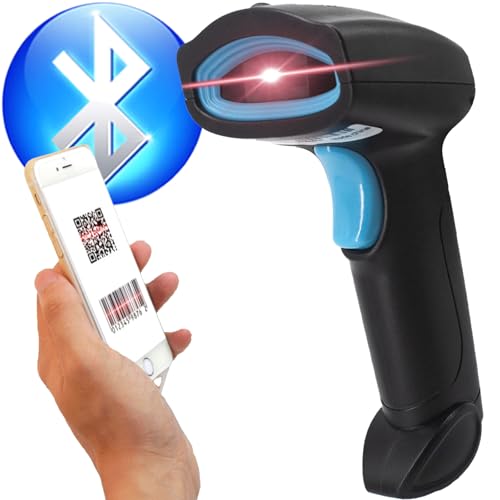
- Works with Libib on phones, tablets, and computers.
- Reads 30+ code types, including QR codes.
- Bluetooth, USB receiver, and wired modes plus 2000mAh battery.
Best For: home library cataloging without a stand
Portable Page Scanner

- Scans A3/A4 pages in about 1 second per page.
- Patented flattening helps with thinner books.
- Also works as a USB document camera with OCR.
Best For: fast home scanning of thin books and flat pages
Wireless Library Scanner
Libib Bluetooth Barcode Reader

- Built for personal library management with Libib.
- Reads 30+ barcode types, including QR and Data Matrix.
- Bluetooth, USB receiver, and wired connections with 72-hour battery.
Best For: wireless home library organization
Book-Friendly Pick – CZUR Aura Pro Portable Book Scanner
If you want book scanners for home use that can handle curved pages with less manual flattening, the CZUR Aura Pro is built around that job. Its three-laser page-flattening system, fast capture speed, and OCR support make it a practical pick for digitizing books, documents, and other materials up to A3 size.
Best For: Home users who want a faster, book-friendly scanner with page-flattening help and desk-lamp functionality.
Pros:
- Three laser lines help flatten curved book pages for cleaner scans.
- Fast scanning speed of about 2 seconds per page for single sheets and double-page books.
- Supports OCR for 180+ languages for searchable text conversion.
- Includes supplemental side lights and multiple lamp color modes for better visibility.
Cons:
- Sound-controlled lamp features can be affected by noise and distance.
- Thai, Hebrew, and Arabic are not currently supported in OCR.
- Mac compatibility has specific OS version requirements.
Overall, the Aura Pro stands out if your main priority is scanning books at home rather than feeding loose pages through a traditional desktop scanner. It combines book-focused capture features with useful lighting extras, but it works best when you can stay within its software and compatibility limits.
Compact All-Rounder – ScanSnap iX1300 Wireless Scanner
Among book scanners for home use, the ScanSnap iX1300 is a strong all-around option if you also need a compact scanner for everyday paperwork. It is designed to stay out of the way on a small desk, while still offering fast duplex scanning, automatic image cleanup, and easy wireless or USB connectivity.
Best For: Home offices and shared spaces where you want a compact scanner for books, documents, photos, and cards.
Pros:
- Space-saving design fits well in small home setups.
- Scans up to 30 ppm with duplex support and automatic de-skew.
- Handles documents, photos, cards, thick items, and plastic cards.
- Works via USB or Wi-Fi and can send scans to multiple devices and cloud services.
Cons:
- It is a sheet-fed document scanner, so it is less specialized for flat book scanning than overhead models.
- Resolution is listed at 600 dpi, which may be limiting for some archival needs.
- Best results depend on ScanSnap software rather than a very simple standalone workflow.
For home users who need a compact scanner that does more than book pages, the iX1300 offers a polished, low-fuss experience. It is especially attractive if you value speed, small size, and automatic cleanup over book-specific page flattening.
Portable Budget Pick – MUNBYN 900 DPI Wand Scanner
If you want book scanners for home use that are highly portable, the MUNBYN wand scanner is built for scanning pages one at a time without a feeder. It captures book pages, photos, and documents at up to 900 dpi, and its lightweight body plus SD card storage make it easy to use away from a desk.
Best For: Users who want a lightweight, battery-powered scanner for occasional book pages and documents.
Pros:
- Very portable at 0.66 lb with a compact, pen-like shape.
- Scans book pages independently without folding or damaging them.
- Up to 900 dpi resolution for high-detail capture.
- Includes a 16GB SD card for local file storage.
Cons:
- Handheld scanning takes practice to get consistent results.
- AA batteries are required and must be purchased separately.
- OCR support depends on separate software, rather than built-in workflow simplicity.
This is a practical pick if portability matters more than speed or automation. It is best for occasional scanning sessions at home, especially when you want to avoid feeding delicate pages through a traditional scanner.
Ultra-Portable Scanner – Brother DS-640 Compact Mobile Scanner
The Brother DS-640 is a compact document scanner that can fit into a home setup where space is tight, but it is not specifically a flatbed-style book scanner. For book scanners for home use, it makes the most sense if your priority is quick page scanning, portability, and simple document handling rather than specialized book-page flattening.
Best For: Home users who want a tiny, fast scanner for documents, receipts, and occasional book-related pages.
Pros:
- Very compact and light enough to carry in a bag or even a pocket.
- Fast scanning up to 16 ppm for color and black-and-white pages.
- Powered by micro USB 3.0, so it can run without needing a wall outlet.
- Includes image optimization features like text enhancement, background removal, and bleed-through prevention.
Cons:
- It is a sheet-fed mobile scanner, so it is not ideal for scanning bound books directly.
- Standard sheet capacity is just one page at a time.
- Resolution is listed at 300 dpi, which is modest compared with higher-detail scanners.
As a home scanner, the DS-640 is best viewed as a highly portable document tool rather than a dedicated book scanner. It is a good fit if you want the smallest possible scanner and are comfortable working page by page.
Portable Handheld Scanning – MUNBYN 900 DPI Wand Scanner
If you want book scanners for home use without dedicating desk space to a large setup, this handheld MUNBYN model is a practical option. It scans flat pages directly and stores files on the included 16GB SD card, making it useful for books, magazines, recipes, and old photos when you want a portable, no-installation workflow.
Best For: Home users who want a lightweight handheld scanner for books, photos, and everyday documents.
Pros:
- 900 DPI resolution for detailed scans
- Portable 10-inch, 0.44 lb design for easy carry
- Works independently from a computer and includes a 16GB SD card
- Compatible with Mac, Windows, and Linux via USB transfer
Cons:
- Requires practice to keep scanning speed consistent
- 2 AA batteries are not included
- Handheld scanning takes more technique than a feed-through scanner
This is a sensible pick if portability matters most and you mainly need to digitize pages one at a time. It is especially useful when you want to protect delicate materials from feeder rollers.
Overhead Book Digitizing – VIISAN A2/A3 Document Camera Scanner
For book scanners for home use that handle larger volumes and oversized pages, the VIISAN S21 is built like an overhead book and document scanner. Its adjustable A2/A3 capture area, auto-flatten tools, and OCR support make it a strong fit for digitizing books, journals, manuscripts, and newspapers from above.
Best For: Home users who want an overhead scanner for books, large pages, and OCR-ready files.
Pros:
- Large A2 capture size for books, journals, and maps
- Auto-flatten, finger removal, and double-page split features
- Built-in OCR can export to PDF, Word, Excel, EPUB, and text formats
- 26MP capture with software-enhanced up to 600 DPI
Cons:
- Bundled software is not compatible with ARM-based devices
- Glary paper is not recommended
- Best results depend on the included software
This scanner makes sense if you want a more book-friendly overhead setup than a handheld model. It offers the most automation here for page cleanup and document conversion, especially for home archiving.
Media Organization Scanning – IntelliScanner Classic
If your goal is organizing a home library rather than scanning full pages, the IntelliScanner Classic takes a different approach from typical book scanners for home use. It scans barcodes to auto-fill item details, which is handy for quickly cataloging books, movies, and other media in a personal collection.
Best For: Home collectors who want to catalog books and media by barcode instead of scanning pages.
Pros:
- Automatically fills in item details after barcode scanning
- Designed for books, movies, and media organization
- Simple handheld USB workflow
- Included software uses AutoFill technology
Cons:
- Not intended for page-by-page book digitizing
- Requires barcode labels to get full value
- Windows 7 minimum system requirement may limit newer setups
This is the most specialized option in the group, and it works best when your main task is building a catalog. If you need to archive printed pages, the other two models are better matches.
Portable Library Scanner – Compact QR & Book Barcode Reader
If you want book scanners for home use that make cataloging a personal library faster, this Bluetooth barcode scanner is built around app-based organization and broad code support. It works with Libib and connects to PC, Mac, laptop, iPhone, iPad, and Android devices, while its 2D CMOS sensor reads more than 30 code types, including QR codes.
Best For: Home library owners who want a portable barcode scanner that works with Libib across phones, tablets, and computers.
Pros:
- Compatible with Libib and multiple device types, including desktop, laptop, smartphone, and tablet.
- Supports 1D and 2D codes, with 30+ code types including QR codes.
- Offers Bluetooth, 2.4G USB, and wired connection options.
- Built-in 2000mAh battery is rated for about 72 hours of use and 30 days standby.
Cons:
- Sold without a stand, so it is more hands-on than docked book scanners.
- It is a barcode scanner rather than a full-page document scanner.
For simple home cataloging, this model focuses on flexibility, long battery life, and broad device compatibility. It makes sense if your main goal is quickly scanning book barcodes into an app instead of scanning pages or covers.
Portable Page Scanner – Fast Thin Book Scanner
Among book scanners for home use, this CZUR model stands out if you need to scan pages rather than just book barcodes. It is designed for A3 and A4 documents, scans in about 1 second per page, and uses patented page-flattening technology to handle thinner books more cleanly.
Best For: Home users who want a fast, portable book and document scanner for thinner books and flat pages.
Pros:
- Scans A3 and A4-sized material at about 1 second per page.
- Patented technology helps flatten curved book pages.
- Works as both a book/document scanner and a USB document camera for Zoom and Google Meet.
- Supports OCR in 180+ languages and includes smart paging, auto cropping, and color modes.
Cons:
- Only suitable for thinner books; thicker books call for CZUR ET series.
- Not compatible with Android or iOS.
This is a stronger fit for scanning pages, notes, and reference books at home than for barcode-only library sorting. Its fast capture speed and folding, lightweight design make it practical when you need a portable desktop scanner.
Wireless Library Scanner – Libib Bluetooth Barcode Reader
If you are comparing book scanners for home use and want something aimed at library organization, this Bluetooth barcode scanner is designed for personal collections and Libib syncing. It supports over 30 barcode types, connects by Bluetooth, 2.4GHz USB receiver, or wired mode, and works with laptops, PCs, Macs, iPhones, iPads, and Android phones.
Best For: Organizing a home book collection with a flexible wireless barcode scanner that syncs well with Libib.
Pros:
- Designed for personal library management with Libib.
- Supports 1D, 2D, QR codes, Data Matrix, UPC, EAN, and more.
- Three connection methods: wired, 2.4GHz USB receiver, and Bluetooth.
- 2000mAh battery is rated for about 72 hours of use and 30 days standby.
Cons:
- No stand is included, so it is not a hands-free scanning setup.
- It is optimized for barcode scanning, not for scanning book pages or covers.
For home inventory tasks, this scanner is easy to place into a workflow because it works across multiple devices and code types. It is a good fit if you want a portable way to add books into an app without dealing with cables every time.
How We Picked the Best Book Scanners for Home Use
We focused on Book Scanners for Home Use that are practical for shelves, desks, and small workspaces. Priority went to models with strong image quality, simple setup, useful desk-friendly designs, and features that reduce page curvature or cleanup work after scanning.
We also looked at versatility: portable hand scanners, compact document scanners, overhead book scanners, and library-focused organizers each serve different needs. That mix helps you match the scanner to your actual scanning habits instead of overbuying for features you may not use.
Quick Comparison
If speed and convenience matter most, compact automatic feed scanners are often the easiest to live with. If you scan bound books, larger overhead or camera-style units are typically better because they handle pages without forcing the spine flat. Handheld and wand scanners can work well for occasional jobs, but they usually require more care and a steadier technique.
Key Buying Factors for Book Scanners for Home Use
Scan Quality and Resolution
Look for enough resolution to preserve small text, photos, and illustrations. Higher resolution helps, but software correction matters too. Auto-flatten, de-skew, and fingerprint removal can improve results more than raw DPI alone.
Book Handling and Page Protection
For older or delicate books, choose a scanner that minimizes pressure on the spine. Overhead styles and camera-based scanners are usually safer than flatbed methods for bound volumes.
Speed Versus Effort
Automatic duplex scanners are faster for loose pages and receipts, while overhead scanners are better for books and irregular materials. If your priority is speed, focus on page throughput and one-button workflows. If your priority is bound books, workflow convenience should come second to page handling.
Software and File Organization
Many buyers overlook software, but it is a major part of the experience. OCR, auto-crop, and library organization tools can save time if you plan to search text or manage a large home archive.
Who Should Buy Which Book Scanners for Home Use?
If you want the easiest everyday setup for mixed scanning, choose a compact desktop scanner. If you are digitizing a home library, textbooks, or oversized books, an overhead or large-format model is usually the smarter choice. If you only scan occasionally and need portability, a handheld or wand scanner may be enough. For users focused on cataloging rather than page-by-page archiving, book-and-movie organization scanners are a better fit than pure document scanners.
In short, the best choice depends on whether you value speed, book safety, portability, or organization. Matching the scanner to your workspace and collection will make the entire process faster and far less frustrating.