Handheld field recorders have become essential tools for creators who need reliable audio without hauling a full studio setup. From quick ambience captures to dialogue, music rehearsal, and field work, the right recorder can make production simpler and cleaner.
In this roundup, we focus on models that balance sound quality, portability, inputs, and ease of use so you can choose a recorder that fits your workflow—not just the spec sheet.
Best 10 Handheld Field Recorders Picks for 2026
Interchangeable Capsule Workhorse
Zoom H5 4-Track Handheld Recorder
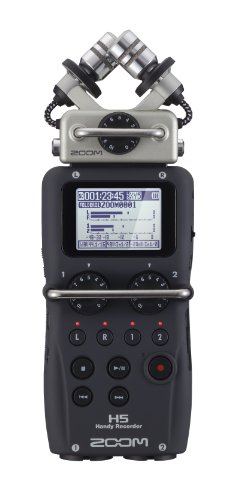
- Swappable input capsules for flexible setups
- Detachable X/Y mic with reduced handling noise
- Two combo inputs with phantom power support
Best For: Filmmakers and musicians who need flexible, compact recording
Hi-Res Bluetooth Pick
Roland R-07 Portable Audio Recorder

- Integrated stereo mics in a compact body
- Bluetooth control with wireless monitoring
- Up to 16 hours of continuous recording
Best For: Travel-friendly recording with wireless control and quick setup
32-Bit Float Safety Net
Zoom F3 32-Bit Float Field Recorder Bundle

- 32-bit float recording helps avoid clipping
- Dual XLR inputs with phantom power support
- Bundle includes memory card, batteries, and accessories
Best For: Professional field recording where clean levels matter most
Compact Float Recorder
Xvive XV1-R Portable Stereo Recorder

- 32-bit float stereo recording with X/Y mics
- USB-C mic mode for computer and mobile use
- Supports WAV and AAC recording formats
Best For: Creators who want portable float recording and USB mic flexibility
Studio-Ready 4-Channel Flexibility
TASCAM DR-40XP 4-Channel Float Recorder
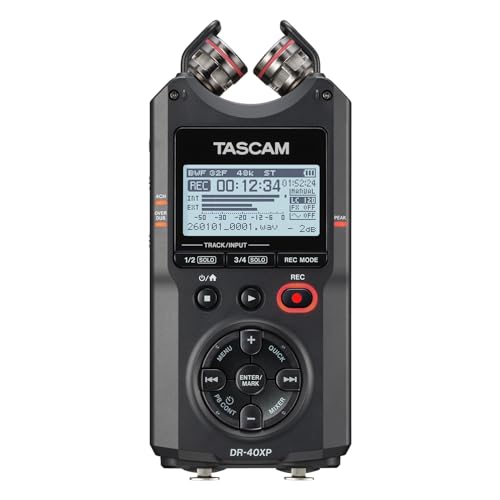
- 4-channel recording with built-in mics and external inputs
- 32-bit float, 24-bit, and 16-bit WAV recording options
- USB-C audio interface for computer recording
Best For: Musicians and creators who need a flexible handheld recorder for music, video, and interviews
Accessible Multi-Pattern Capture
Zoom H2 Essential Multi-Mic Handheld Recorder

- Three built-in mics with nine selectable patterns
- 32-bit float recording without gain adjustment
- USB mic mode plus SD recording for backup
Best For: Field recordists who want easy clip-free capture and flexible mic patterns
Lightweight Stereo Recording
TASCAM DR-05XP Compact Stereo Recorder

- Compact 4.48-ounce handheld recorder
- 32-bit float, 24-bit, 16-bit, and MP3 recording
- USB-C interface for direct computer recording
Best For: Anyone who wants a simple, portable handheld recorder for stereo capture
Flagship Handheld Recorder

- 19.4mm X/Y stereo mics
- 32-bit float clip-free recording
- Up to 4 tracks at 192kHz WAV
Best For: Filmmakers and musicians needing big onboard mics and tactile control
Portable USB-C Recorder

- Adjustable AB/XY stereo mics
- 32-bit float with USB-C interface
- Up to 17.5 hours on AA batteries
Best For: Lightweight users who need field recording and USB-C interface mode
Guided 4-Track Recorder

- 32-bit float with 4-track capture
- Built-in mics plus 2 XLR/TRS inputs
- Spoken menu guidance for easier use
Best For: Creators who want an approachable recorder for podcasts and interviews
Interchangeable Capsule Workhorse – Zoom H5 4-Track Handheld Recorder
The Zoom H5 is a versatile handheld field recorder built for users who want flexible inputs and dependable capture in one compact unit. Its interchangeable capsule system, detachable X/Y mic, and dual XLR/TRS inputs make it a practical choice for handheld field recordings, video work, and music sessions.
Best For: Filmmakers, musicians, and anyone who wants a handheld recorder with swappable mic options and pro-style inputs.
Pros:
- Interchangeable input capsules add flexibility for different recording setups.
- Detachable X/Y capsule includes shock-mounted mics to help reduce handling noise.
- Two XLR/TRS combo inputs support phantom power and a -20 dB pad.
- Records four tracks simultaneously and can work as a USB audio interface.
Cons:
- Runs on 2 AA batteries, so power management matters on longer shoots.
- Records to SD/SDHC cards up to 32 GB, which is less spacious than some newer options.
Overall, the H5 stands out if you need a handheld field recorder that can adapt to different sources without adding much complexity. It is especially appealing when you want built-in stereo mics plus expandable input options in the same recorder.
Hi-Res Bluetooth Pick – Roland R-07 Portable Audio Recorder
The Roland R-07 is a lightweight handheld field recorder that focuses on simple operation, high-resolution capture, and wireless convenience. With integrated stereo microphones, Bluetooth control, and one-touch templates, it suits users who want quick setup and easy playback in the field.
Best For: Users who want a compact recorder with Bluetooth control, built-in mics, and straightforward hi-res recording.
Pros:
- Integrated stereo microphones keep the recorder compact and ready to use.
- Bluetooth control and low-latency wireless monitoring add flexibility.
- One-touch templates simplify setup for different recording scenarios.
- Runs up to 16 hours of continuous recording on two AA batteries or can use USB bus power.
Cons:
- Uses micro SD cards, so you will need compatible storage on hand.
- Recording time listed in the details is modest compared with some dedicated field units.
The R-07 is a smart fit if you value portability and convenience more than complex input options. It combines useful wireless features with hi-res WAV and MP3 recording in a small, easy-to-carry package.
32-Bit Float Safety Net – Zoom F3 32-Bit Float Field Recorder Bundle
The Zoom F3 is a purpose-built handheld field recorder for users who want simple inputs and maximum recording safety. Its 32-bit float workflow and dual A/D converters are aimed at keeping audio clean whether you are capturing quiet dialogue or unexpectedly loud sound sources.
Best For: Filmmakers, journalists, and sound designers who want distortion-free 32-bit float recording with professional XLR inputs.
Pros:
- 32-bit float recording helps prevent clipping and removes the need for gain adjustment.
- Two balanced XLR mic/line inputs with switchable +48V phantom power.
- Supports BWF recording and sample rates up to 192 kHz.
- Bundle includes batteries, charger, memory card, cables, and carrying accessories.
Cons:
- It is a 2-input / 2-track recorder, so it is less expandable than capsule-based models.
- The bundle adds value, but the recorder itself is still a focused, minimalist tool.
The F3 is an excellent option when recording consistency matters more than onboard bells and whistles. If you want a field recorder that makes level-setting easier and keeps takes usable in tough conditions, this one is built for that job.
Compact Float Recorder – Xvive XV1-R Portable Stereo Recorder
The Xvive XV1-R is a portable stereo field recorder built for users who want 32-bit float capture in a compact, easy-to-carry form. With X/Y microphones, auto-record features, and USB microphone support, it works well for handheld recording, streaming, and everyday content capture.
Best For: Musicians, podcasters, and creators who want a lightweight stereo recorder with 32-bit float and USB-C connectivity.
Pros:
- 32-bit float recording reduces the risk of bad gain settings.
- X/Y microphones are rated to capture clean audio up to 130 dB SPL.
- Supports WAV and AAC formats for either fidelity or smaller file sizes.
- Works as a USB microphone with PC, Mac, iOS, and Android devices.
Cons:
- No headphone jack is listed in the details.
- Maximum recording time is listed at up to 12 hours, which may be limiting for long sessions.
The XV1-R is a strong pick if you want a modern handheld field recorder that doubles as a USB mic. It combines practical portability with flexible recording modes, making it useful for both field capture and desk-based work.
Studio-Ready 4-Channel Flexibility – TASCAM DR-40XP 4-Channel Float Recorder
If you want handheld field recorders that can move between music, interviews, and video work without changing gear, the TASCAM DR-40XP is built for that kind of flexibility. Its 4-channel design lets you capture the built-in adjustable mics and external inputs at the same time, while 32-bit float recording helps keep takes clip-free in demanding environments.
Best For: Musicians, creators, and videographers who need a versatile recorder with external inputs and built-in stereo mics.
Pros:
- 4-channel recording supports built-in mics plus external inputs together.
- 32-bit float recording is available alongside 24-bit and 16-bit WAV modes.
- Adjustable A-B or X-Y unidirectional condenser microphones handle up to 125 dB SPL.
- USB-C 2-in/2-out interface makes it useful as a direct audio interface.
Cons:
- microSD card and batteries are not included.
- More advanced than a basic stereo handheld recorder if you only need simple voice capture.
The DR-40XP is a strong choice when you need one recorder that can cover several workflows. With low-noise preamps, flexible mic positioning, and USB-C connectivity, it offers a practical balance of portability and production-ready features.
Accessible Multi-Pattern Capture – Zoom H2 Essential Multi-Mic Handheld Recorder
Among handheld field recorders, the Zoom H2 Essential stands out for its simple gain-free workflow and unusually flexible mic setup. With three built-in microphones and nine selectable recording patterns, it can handle interviews, music, and wider ambient capture while recording up to 32-bit float/96 kHz.
Best For: Journalists, podcasters, filmmakers, and field recordists who want flexible pickup patterns and easy clip-free recording.
Pros:
- Three built-in mics with nine selectable recording patterns.
- 32-bit float recording supports clip-free capture without manual gain adjustment.
- Can work as a USB microphone while also recording to SD card.
- Bluetooth timecode sync supports multi-unit recordings.
Cons:
- Runs on 2 AA batteries, so power is not rechargeable from the spec list.
- The feature set may be more than you need for simple single-track voice notes.
For buyers who value ease of use and flexible pickup options, the H2 Essential is a very practical handheld recorder. Its accessibility features, USB mic mode, and backup recording approach make it especially appealing for on-the-go production.
Lightweight Stereo Recording – TASCAM DR-05XP Compact Stereo Recorder
If you need handheld field recorders for straightforward stereo capture, the TASCAM DR-05XP keeps the formula simple and portable. It records music, voice, meetings, and audio for video with built-in omnidirectional condenser microphones, 32-bit float support, and a USB-C interface for direct computer recording.
Best For: Buyers who want a compact handheld recorder for stereo voice, music, meetings, and video audio.
Pros:
- Compact and lightweight at 4.48 ounces.
- 32-bit float recording plus 24-bit, 16-bit, and MP3 options.
- Built-in omnidirectional mics are rated for loud sources up to 125 dB SPL.
- USB-C 2-in/2-out interface supports recording directly to a computer.
Cons:
- Stereo-only design is less flexible than multi-channel field recorders.
- SD card and batteries are not included.
The DR-05XP is a sensible pick when you want portability and easy operation over advanced routing. It delivers core handheld recording features in a small package, making it a good fit for everyday capture tasks.
Flagship Handheld Recorder – Zoom H5 Studio
The Zoom H5 Studio is a strong pick for handheld field recorders when you want big built-in mics, clip-free capture, and fast hands-on level control. Its 19.4mm X/Y capsule, 32-bit float recording, and four AA battery power make it a practical choice for location recording, filmmaking, and music work.
Best For: Filmmakers and musicians who want a portable recorder with large stereo mics and simple, tactile control.
Pros:
- Large 19.4mm X/Y stereo mics for detailed, wide-range audio
- 32-bit float recording helps prevent clipped takes
- Dedicated gain knobs make level changes quick and intuitive
- Can record up to 4 tracks at up to 192kHz WAV
Cons:
- Uses 4 AA batteries for portable operation
- Heavier than compact pocket-style recorders at 14.4 ounces
Overall, this is the most feature-rich option in the group for users who value strong onboard microphones and flexible multi-track recording. It fits well on set, in the field, or anywhere you need dependable capture without much setup.
Portable USB-C Recorder – TASCAM DR-07XP
The TASCAM DR-07XP is a compact option in handheld field recorders, built for straightforward stereo capture with flexible recording formats and USB-C connectivity. Its adjustable AB/XY condenser mics, 32-bit float support, and 2-in/2-out interface mode make it a useful tool for music, voice, meetings, and video work.
Best For: Users who want a lightweight handheld recorder that can also work as a USB-C audio interface.
Pros:
- 32-bit float plus 24-bit and 16-bit recording options
- Adjustable AB/XY stereo mics handle loud sources up to 125dB SPL
- USB-C 2-in/2-out interface mode for computer recording
- Very light at 4.8 ounces and rated for up to 17.5 hours on AA batteries
Cons:
- Memory card is not included
- Requires 2 AA batteries sold separately
For buyers who want a simple handheld recorder with modern connectivity, the DR-07XP offers a practical mix of portability and versatility. It is especially appealing if you need one device for field capture and direct computer recording.
Guided 4-Track Recorder – Zoom H4 Essential
The Zoom H4 Essential is a flexible handheld field recorder for creators who want built-in stereo mics, external inputs, and a more guided menu experience. It supports 32-bit float recording, two XLR/TRS inputs, and USB-C recording to a phone, tablet, or computer while also saving to SD card.
Best For: Creators who want an easy-to-navigate handheld recorder for podcasts, interviews, and field audio.
Pros:
- 32-bit float with 4-track recording for safer capture
- Built-in stereo mics plus two XLR/TRS inputs
- USB-C recording or streaming to phone, tablet, or computer
- Spoken menu guidance can make operation easier for more users
Cons:
- Rated digital recording time is 10 hours
- Uses 2 AA batteries
This model stands out if you want a recorder that combines flexibility with a more approachable interface. It is a strong fit for creators who need clean audio for voice, video, or live performance without a steep learning curve.
How We Picked the Best Handheld Field Recorders
We prioritized recording quality, input flexibility, portability, battery life, monitoring options, and how practical each unit is for real-world use. Because Handheld Field Recorders are often used on the move, we also looked at build quality, menu simplicity, and whether the recorder works well as a standalone tool or part of a larger setup.
Quick Comparison
Some models lean toward simple stereo capture, while others add XLR/TRS inputs, 32-bit float recording, and USB audio interface functions. That means the best choice depends less on “most features” and more on what you record most often: interviews, sound effects, music, or field ambience.
Key Buying Factors for Handheld Field Recorders
Input Type and Channel Count
If you only need stereo ambience or voice notes, a compact two-mic recorder may be enough. If you record lavaliers, instruments, or multi-source interviews, look for XLR/TRS inputs and additional tracks.
32-Bit Float Vs. Traditional Recording
32-bit float can help protect against clipped takes and simplify gain staging, which is especially useful for unpredictable environments. Traditional recorders can still sound excellent, but they usually require more careful level setting.
Mic Design and Handling Noise
Built-in mics vary a lot. Fixed XY capsules, adjustable mics, and higher-end mic preamps all affect how well a recorder handles rooms, outdoor ambiences, and movement noise.
Workflow Features
USB-C audio interface support, auto record, file format options, and easy metering can save time. For field work, small details like screen visibility and one-handed operation matter more than many buyers expect.
Who Should Buy Which Handheld Field Recorders?
Choose a compact stereo model if you want the simplest setup for notes, interviews, and quick environmental recording. Pick a recorder with XLR/TRS inputs if you need more flexibility for microphones and instruments. If you work in unpredictable audio situations, 32-bit float Handheld Field Recorders are often the safest bet. Filmmakers may prefer models with stronger monitoring and input control, while musicians and podcasters may value interface mode and fast desktop editing workflows.
In short, the best recorder is the one that matches your recording style, not just your budget. Focus on how you’ll use it day to day, and you’ll get cleaner results with less hassle.