The best DJ controllers with standalone mode let you prepare and perform without relying on a laptop, making them appealing for home setups, mobile DJs, and live events. Touchscreens, built-in speakers, streaming support, and battery power can make a major difference in everyday use.
We compare 10 capable options across Denon DJ, Numark, Pioneer DJ, Gemini, Reloop, and RANE to help you find the right balance of portability, control, connectivity, and performance features.
Best 10 Dj Controllers with Standalone Mode Picks for 2026
Versatile Standalone Performer
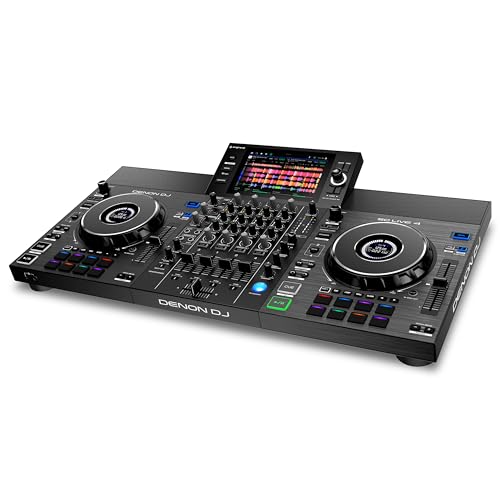
- Four-deck Engine DJ standalone control
- 7-inch touchscreen with streaming access
- Built-in speakers and pro connectivity
Best For: Mobile, streaming, and club DJs needing flexible four-channel control
Portable Battery DJing

- Battery-powered Engine DJ performance
- Built-in speakers and 7-inch touchscreen
- Streaming, USB, SD, and Dropbox support
Best For: On-the-go DJs needing laptop-free, battery-powered sets
Club-Style Standalone System

- Two-channel USB standalone playback
- 10.1-inch touchscreen and CDJ-style layout
- Beat FX, Sound Color FX, and 16 pads
Best For: DJs wanting a familiar club workflow for home or small venues
Ultra-Portable Streaming Power
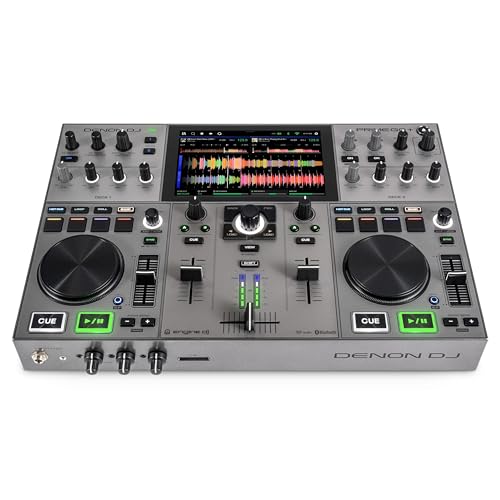
- Battery-powered Engine DJ standalone control
- Wi-Fi access to supported streaming services
- Advanced FX, Stems, and pro outputs
Best For: Mobile DJs seeking compact streaming and performance flexibility
Best Plug-and-Play Pick
Mixstream Pro Standalone System

- Two-deck standalone operation
- Built-in speakers and 7-inch touchscreen
- Wi-Fi, SD, USB, and Dropbox music access
Best For: Beginners, home DJs, and mobile performers
Best Four-Deck Option
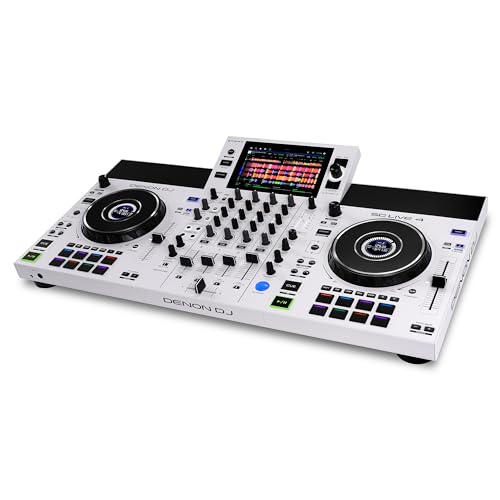
- Four-channel standalone mixing
- Onboard Stems and 7-inch screen
- Wi-Fi, Bluetooth, SD, and USB support
Best For: DJs seeking four-deck control and hybrid software compatibility
Best Feature-Packed Value

- Laptop-free two-deck performance
- Streaming, SD, USB, and Dropbox support
- Built-in speakers and lighting controls
Best For: Portable DJs who want streaming and expandable performance features
Club-Style USB Player

- 8-inch adjustable-tension jog wheel
- Standalone USB and VirtualDJ MIDI support
- Link up to four players with Sync mode
Best For: Home practice and club-style multi-deck setups
Hybrid Four-Channel Mixer

- Four-channel standalone mixer
- Phono and line inputs for external sources
- Dual USB interface for DJ handoffs
Best For: Hybrid digital-analog rigs and multi-DJ workflows
Motorized Standalone Flagship
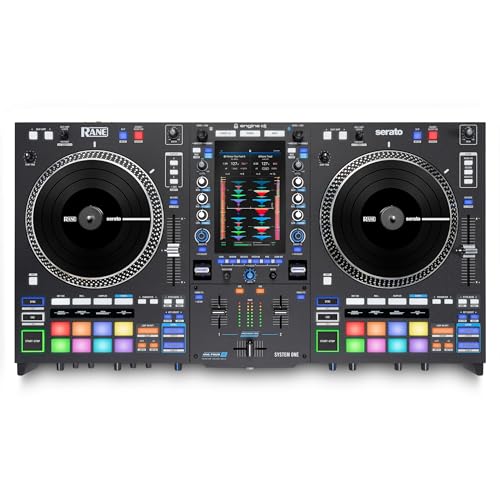
- Motorized 7.2-inch aluminum platters
- Engine DJ, USB/SD, streaming, and Serato support
- Standalone Stems and professional I/O
Best For: Open-format performance and advanced stage setups
Versatile Standalone Performer – Denon DJ SC LIVE 4
The Denon DJ SC LIVE 4 is a strong choice among dj controllers with standalone mode for performers who want four-deck control without a laptop. Its Engine DJ OS, 7-inch touchscreen, built-in speakers, Wi-Fi streaming, SD slot, and two USB inputs support flexible home, mobile, and club setups.
Best For: Mobile, streaming, and club DJs who want four-channel, laptop-free performance options.
Pros:
- Four-deck standalone operation with Engine DJ OS and a 7-inch touchscreen.
- Supports SD, USB, Wi-Fi streaming, and Bluetooth audio input.
- Built-in speakers and professional XLR, RCA, and booth outputs.
- Compatible with Serato DJ and VirtualDJ for computer-based workflows.
Cons:
- Its 28.3-inch width and 13.6-pound weight may be less convenient for frequent transport.
- Requires corded power rather than offering battery-powered operation.
The SC LIVE 4 stands out when deck count and connectivity matter more than compact portability. It is especially practical for DJs who want one controller to cover standalone sets, streaming, and software-controlled performances.
Portable Battery DJing – Numark Mixstream Pro Go
The Numark Mixstream Pro Go is one of the most travel-friendly dj controllers with standalone mode, combining Engine DJ operation, built-in speakers, Wi-Fi streaming, and a rechargeable battery. It is designed for laptop-free sets wherever AC power and a full DJ booth are unavailable.
Best For: DJs who prioritize portability, battery-powered performances, and built-in sound.
Pros:
- Battery-powered standalone operation with included lithium-ion battery.
- Built-in speakers, 6-inch jog wheels, and a 7-inch adjustable touchscreen.
- Supports streaming services, SD cards, USB drives, and Dropbox libraries.
- Includes wireless DJ-light control and standalone Stems support after preparation in Engine DJ Desktop.
Cons:
- Two-deck operation provides less deck capacity than four-channel alternatives.
- Standalone Stems require tracks or playlists to be pre-rendered with Engine DJ Desktop.
Choose the Mixstream Pro Go when easy setup and freedom from wall power are central to your buying decision. Its compact 9.24-pound design and onboard speakers make it particularly useful for casual events, practice, and mobile performances.
Club-Style Standalone System – Pioneer DJ XDJ-RX3
The Pioneer DJ XDJ-RX3 is a two-channel all-in-one option for DJs comparing dj controllers with standalone mode and wanting a familiar club-style layout. It plays prepared rekordbox sets from USB drives and adds a 10.1-inch touchscreen, performance pads, and extensive effects.
Best For: Home, mobile, and small-venue DJs seeking a club-oriented USB workflow.
Pros:
- Runs prepared rekordbox sets from USB drives without a laptop.
- 10.1-inch touchscreen and CDJ-style layout support an intuitive workflow.
- Includes Beat FX, Sound Color FX, and 16 performance pads.
- Hardware unlocks rekordbox Performance mode and supports Serato DJ Pro control.
Cons:
- Two-channel design offers less deck capacity than four-channel systems.
- At 21 pounds, it is comparatively heavy for frequent transport.
- Standalone playback is centered on prepared USB sets rather than built-in streaming.
The XDJ-RX3 is a sensible pick for DJs who value Pioneer DJ-style controls and a large touchscreen over battery portability or wireless streaming. Its familiar layout can also make the transition to professional booth equipment easier.
Ultra-Portable Streaming Power – Denon DJ PRIME GO+
The Denon DJ PRIME GO+ brings powerful standalone features to a compact, battery-powered design. For shoppers considering dj controllers with standalone mode, it combines Engine DJ OS, built-in Wi-Fi streaming, SD and USB media support, extensive effects, and professional outputs in an 8.11-pound controller.
Best For: DJs on the move who want streaming access, battery operation, and advanced performance controls.
Pros:
- Battery-powered, laptop-free performance in a compact portable chassis.
- Accesses more than 100 million tracks through supported streaming services.
- Offers 26 main FX, Touch FX, sampler functions, and standalone Stems support.
- Provides XLR, booth, RCA, AUX, Bluetooth, and two mic inputs.
Cons:
- Its compact format may offer less physical control surface than larger controllers.
- Standalone Stems require pre-rendering through Engine DJ Desktop.
- Streaming availability depends on supported services and wireless connectivity.
The PRIME GO+ is a compelling fit when portability does not mean giving up streaming or creative effects. Its battery, broad connection options, and Engine DJ feature set make it well suited to flexible mobile performances.
Best Plug-and-Play Pick – Mixstream Pro Standalone System
If you want dj controllers with standalone mode that are ready to use without a laptop, the Numark Mixstream Pro is a practical option. It combines two-deck control, a 7-inch touchscreen, built-in speakers, Wi-Fi streaming, and flexible media inputs in one compact system.
Best For: Beginners, home DJs, and mobile performers who want an all-in-one standalone setup with built-in speakers.
Pros:
- Plays tracks from SD cards, USB drives, Dropbox, and supported streaming services.
- Built-in speakers have dedicated volume control for practice and casual sets.
- Includes two decks, a three-band EQ mixer, performance pads, and four effects.
- Supports wireless Philips Hue light-show control through Engine DJ.
Cons:
- Limited to two-channel mixing.
- Its built-in speaker system may not replace a dedicated PA for larger events.
The Mixstream Pro emphasizes simplicity and quick setup. Its touchscreen and broad music-source support make it a strong choice for DJs who want to mix without preparing tracks on a computer.
Best Four-Deck Option – Denon DJ SC LIVE 4 White
Among dj controllers with standalone mode, the Denon DJ SC LIVE 4 stands out for four-channel control, onboard Stems, and extensive wireless streaming. Its 7-inch screen and built-in speakers support laptop-free practice, performances, and streaming-focused sets.
Best For: DJs who want four-deck flexibility, Stems features, and compatibility with both standalone and computer-based workflows.
Pros:
- Four-channel standalone mixer with onboard Stems and multiple moving waveforms.
- Built-in Wi-Fi accesses supported services, including Amazon Music Unlimited, Apple Music, TIDAL, and others.
- Built-in speakers have independent volume control for practice and track previewing.
- Supports Serato DJ Pro and VirtualDJ, with Bluetooth, SD, and USB connectivity.
Cons:
- Its larger 28.3-inch width may require more booth space.
- The white finish may not suit every setup.
The SC LIVE 4 is the most feature-rich choice here for DJs who may move between standalone performance and software-controlled sets. Four-deck mixing and Stems add creative flexibility beyond a basic two-deck layout.
Best Feature-Packed Value – Numark Mixstream Pro+
The Numark Mixstream Pro+ is a versatile choice for shoppers comparing dj controllers with standalone mode. It adds built-in speakers, six-inch jog wheels, a 7-inch touchscreen, streaming access, wireless lighting control, and optional Stems playback to a portable two-deck format.
Best For: DJs who want a portable standalone controller with broad streaming support, lighting features, and a path to Stems performance.
Pros:
- Works without a computer using Engine DJ, SD cards, USB drives, Dropbox, and supported streaming apps.
- Built-in speakers and dedicated controls make casual practice convenient.
- Supports Amazon Music Unlimited, Apple Music, TIDAL, Beatport, Beatsource, and SoundCloud Go+.
- Offers wireless control for Philips Hue, Nanoleaf, and DMX lighting systems.
Cons:
- Stems require pre-rendering with Engine DJ Desktop and a one-time software license purchase.
- It uses a two-deck layout rather than four-channel control.
The Mixstream Pro+ balances portability and feature depth. It is especially appealing if streaming, built-in audio, and lighting control matter as much as core mixing controls.
Club-Style USB Player – Gemini MDJ-900
The Gemini MDJ-900 is a practical choice for DJs seeking dj controllers with standalone mode and a traditional deck layout. Its 8-inch jog wheel, USB playback, performance pads, and full-color display provide hands-on control without requiring a laptop, while MIDI support adds flexibility for VirtualDJ setups.
Best For: Home practice, club-style multi-deck training, and DJs building a USB-based standalone setup.
Pros:
- Large 8-inch touch-sensitive jog wheel with adjustable tension and customizable start/stop timing.
- Standalone USB playback, plus MIDI controller functionality for VirtualDJ.
- Master, Sync, and Link modes support connections of up to four MDJ-900 units.
- Dedicated hot cue and loop pads, multiple performance modes, and a 4.3-inch color display.
Cons:
- It is a media-player-style unit rather than a complete all-in-one controller with an integrated mixer.
- Track preparation relies on the included V-Case software and a computer before loading music to USB.
The MDJ-900 stands out for its large jog wheel and professional player form factor. Choose it when you want standalone USB operation and expandable multi-deck practice, especially if you already have or plan to add a separate mixer.
Hybrid Four-Channel Mixer – Reloop Mixon 8 Pro
The Reloop Mixon 8 Pro suits DJs comparing dj controllers with standalone mode who also need a flexible mixer for digital and analog sources. Its built-in standalone mixer accepts turntables or media players, while dual USB connectivity supports laptop handoffs and compatible iPad or MacBook workflows.
Best For: Four-channel hybrid setups, back-to-back DJ handovers, and users mixing digital and analog sources.
Pros:
- Four-channel standalone mixer with independent input and output level meters.
- Inputs support two phono or four line sources for turntables and media players.
- Dual USB audio interface enables two-laptop connections and supports USB-C devices.
- Large jog wheels, FX paddles, channel EQs, filters, and eight color-coded performance modes.
Cons:
- The supplied notes describe standalone mixing capability, but not complete standalone deck playback from onboard media.
- Its broad feature set and 12.9-pound build may be more than a simple two-channel setup requires.
The Mixon 8 Pro is best understood as a powerful four-channel hybrid controller and standalone mixer rather than a fully self-contained media player. It is a strong fit when external decks, turntables, multiple computers, or seamless DJ transitions are central to your workflow.
Motorized Standalone Flagship – RANE SYSTEM ONE
The RANE SYSTEM ONE is a premium option among dj controllers with standalone mode, combining laptop-free Engine DJ operation with motorized 7.2-inch aluminum platters. It also supports USB and SD media, streaming services, Serato DJ Pro, djay PRO, standalone Stems, and a touchscreen-centered performance workflow.
Best For: Open-format DJs, professional performances, and users who want motorized platters with broad media, streaming, and software support.
Pros:
- Standalone Engine DJ system with motorized 7.2-inch aluminum platters and adjustable-tension MAG FOUR crossfader.
- OmniSource playback supports USB, SD, an internal drive slot, streaming services, Serato DJ Pro, and djay PRO.
- Standalone Stems, onboard Stems rendering, Stem FX, and dedicated acapella and instrumental controls.
- Vertical HD touchscreen, extensive FX, professional outputs, dual mic inputs, and SoundSwitch lighting support.
Cons:
- At 29.4 pounds, it is substantially heavier than compact controllers.
- Its extensive feature set may be excessive for DJs who only need basic standalone playback.
The SYSTEM ONE is designed for DJs who prioritize turntable-style feel and maximum source flexibility. Its motorized platters, standalone Stems features, and professional I/O make it particularly compelling for demanding open-format sets and stage use.
How We Picked the Best Dj Controllers with Standalone Mode
We focused on systems that can run DJ software or media directly from the hardware rather than requiring a connected computer for core playback. Our comparison considered workflow, deck count, screen quality, jog-wheel control, storage and streaming options, portability, audio outputs, effects, and suitability for home or professional use.
We also considered practical differences between compact battery-powered units, full-size all-in-one systems, and controllers designed for more advanced performance techniques. Features such as speakers, motorized platters, standalone media playback, and wireless connectivity were weighed according to the types of DJs they benefit most.
Quick Comparison
| Best For | What to Prioritize |
|---|---|
| Home practice | Responsive controls, a clear display, and manageable size |
| Mobile DJs | Portability, battery life, reliable outputs, and built-in speakers |
| Club-style performance | Large jog wheels, professional connectivity, and familiar layouts |
| Streaming and discovery | Wi-Fi, supported music services, and fast library browsing |
| Advanced live performance | Four-channel control, flexible effects, and specialized platters |
Key Buying Factors for Dj Controllers with Standalone Mode
Standalone Workflow and Music Access
Check which file formats, USB devices, streaming services, and library-management tools the unit supports. Some systems are designed around USB media, while others add Wi-Fi and cloud-based music access. Confirm that your preferred preparation software and music sources are compatible.
Size, Power, and Portability
Compact units are easier to transport, but larger systems typically provide more spacious layouts and stronger connectivity. Battery-powered models are useful for outdoor or location-based work, while mains-powered controllers may offer larger displays, speakers, and more demanding performance hardware.
Control Layout and Performance Features
Consider whether you need two or four channels, dedicated effects, performance pads, stem-style tools, or motorized jog wheels. A familiar club-style layout can shorten the learning curve, while specialized controls may be worthwhile for turntablists and scratch-focused performers.
Outputs and Setup Flexibility
Look for balanced master outputs when connecting to professional sound systems, plus booth, headphone, microphone, and auxiliary connections if your setup requires them. Built-in speakers are convenient for practice but should not replace checking the controller’s external audio capabilities.
Who Should Buy Which Dj Controllers with Standalone Mode?
Choose a compact standalone model if you value quick setup, travel convenience, or battery operation. A speaker-equipped system suits casual practice, small gatherings, and mobile use. DJs who want a more club-like experience should consider a larger all-in-one layout with a generous screen and full-size jog wheels.
Four-channel users and performers who mix multiple sources should prioritize expanded channel control and connectivity. Scratch-oriented DJs may prefer motorized platters, while streaming-focused users should select a model with dependable Wi-Fi and support for their preferred services. Before buying, match the controller’s library workflow and inputs to the way you actually perform.