Dead zones, buffering, and unreliable connections can make even a fast internet plan frustrating. The best mesh WiFi systems use multiple coordinated nodes to spread stable coverage throughout your home.
This roundup compares 10 options across WiFi 6, WiFi 6E, and WiFi 7, with choices for budget-conscious shoppers, busy households, gigabit plans, and large properties.
Best 10 Mesh Wifi Systems Picks for 2026
Best Overall Coverage

- Wi-Fi 6 AX3000 mesh performance
- Up to 6,500 sq. ft. of coverage
- Supports up to 150 connected devices
Best For: Large homes and busy households
Best Wi-Fi 7 Value

- Wi-Fi 7 with multi-link operation
- Supports internet plans up to 2.5 Gbps
- Covers up to 6,000 sq. ft.
Best For: Future-focused homes with fast internet
Best Budget Coverage
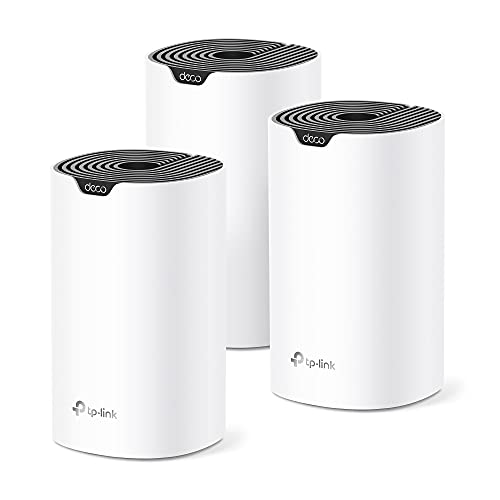
- Covers up to 5,500 sq. ft.
- Seamless roaming with one network name
- Supports up to 100 devices
Best For: Budget-conscious homes needing broad coverage
Best Smart-Home Pick

- Wi-Fi 6 for plans up to a gigabit
- Covers up to 4,500 sq. ft.
- Built-in Thread and Zigbee hub
Best For: Families with compatible smart-home devices
Best Wi-Fi 6E Value

- Tri-band Wi-Fi 6E with a 6 GHz band
- Up to 2,900 sq. ft. and 200 devices
- 2.5 Gbps port on every unit
Best For: Homes seeking Wi-Fi 6E and multi-gig wired connectivity
Best for Large Homes

- Up to 8,000 sq. ft. of stated coverage
- Wi-Fi 7 speeds up to 11 Gbps
- Supports up to 100 connected devices
Best For: Large homes with busy networks and high-speed internet
Best Wi-Fi 7 Midrange Pick

- Wi-Fi 7 with MLO, Multi-RUs, and 4K-QAM
- Up to 6,500 sq. ft. and 150 devices
- Two 2.5 Gbps ports per unit
Best For: Homes wanting Wi-Fi 7 and flexible multi-gig wired networking
Best for Maximum Capacity

- Tri-band Wi-Fi 7 performance up to BE10000
- Coverage rated up to 7,600 square feet
- Includes 10G and multiple 2.5G ports
Best For: Large, device-heavy homes and future-ready networks
Best Heavy-Duty Pick
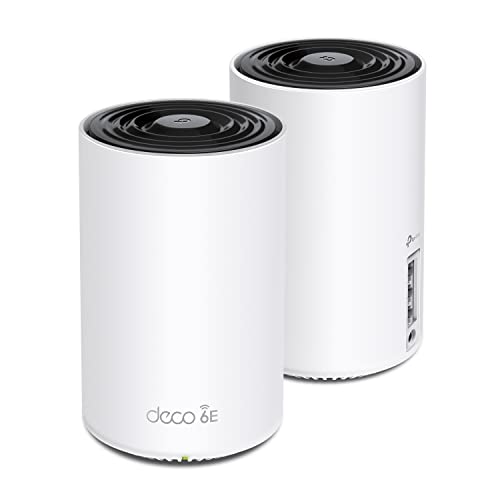
- Adds a cleaner 6 GHz Wi-Fi 6E band
- Two-pack coverage up to 5,500 square feet
- Supports up to 200 devices and 5,400 Mbps
Best For: Homes wanting Wi-Fi 6E capacity at a practical scale
Best for Affordable Wi-Fi 7 Coverage
Deco 7 BE5000 WiFi 7 Mesh System

- Dual-band Wi-Fi 7 speeds up to BE5000
- Coverage rated up to 6,600 square feet
- Includes 2.5G Ethernet and expandable Deco compatibility
Best For: Families wanting broad, easy-to-manage Wi-Fi 7 coverage
Best Overall Coverage – TP-Link Deco X55 3-Pack
For shoppers comparing mesh wifi systems for a larger home, the TP-Link Deco X55 stands out with Wi-Fi 6 performance, coverage up to 6,500 square feet, and support for up to 150 devices. Its three units can also use wired Ethernet backhaul for more consistent speeds.
Best For: Larger homes with many connected devices, gigabit networking, and users who want strong coverage plus app-based management.
Pros:
- Wi-Fi 6 AX3000 performance with coverage up to 6,500 square feet.
- Supports up to 150 devices and includes three Gigabit Ethernet ports per unit.
- Deco app, AI-driven mesh optimization, HomeShield security, and parental controls.
Cons:
- Its three-unit design may be more equipment than smaller homes need.
- Most internet providers require a separate modem.
The Deco X55 is a practical all-around choice when coverage, capacity, and wired expansion matter more than having the newest Wi-Fi generation.
Best Wi-Fi 7 Value – Amazon eero 7 3-Pack
The Amazon eero 7 is a forward-looking option among mesh wifi systems, pairing Wi-Fi 7 features with support for internet plans up to 2.5 Gbps. This three-pack covers up to 6,000 square feet and uses eero software to help maintain reliable connections throughout the home.
Best For: Households upgrading to faster internet plans and shoppers who want Wi-Fi 7 features with simple app-guided management.
Pros:
- Supports plans up to 2.5 Gbps and includes two auto-sensing 2.5 GbE ports.
- Three units cover up to 6,000 square feet and support more than 120 devices.
- Includes Wi-Fi 7 features such as multi-link operation and eero TrueMesh software.
Cons:
- Advanced security and several additional controls require an optional eero Plus subscription.
- Its dual-band design may offer fewer wireless-band options than some premium systems.
Choose the eero 7 if faster wired networking and Wi-Fi 7 readiness are priorities, especially when you want a guided setup and automated connection management.
Best Budget Coverage – TP-Link Deco S4 3-Pack
The TP-Link Deco S4 is a budget-friendly pick among mesh wifi systems, using three Wi-Fi 5 units to cover up to 5,500 square feet. It creates one network name for seamless roaming and includes basic family controls through the Deco app.
Best For: Larger households that need broad, straightforward coverage without paying for newer Wi-Fi 6 or Wi-Fi 7 hardware.
Pros:
- Three-unit system covers up to 5,500 square feet.
- Seamless roaming uses one network name and password throughout the home.
- Supports up to 100 devices and offers Gigabit Ethernet ports with wired backhaul.
Cons:
- Uses Wi-Fi 5 rather than the newer Wi-Fi 6 or Wi-Fi 7 standards.
- Each unit has two Gigabit Ethernet ports, fewer than the Deco X55.
The Deco S4 makes sense when dependable whole-home coverage and simple controls matter more than maximum wireless speed or the latest connectivity standard.
Best Smart-Home Pick – Amazon eero 6+ 3-Pack
The Amazon eero 6+ combines Wi-Fi 6 performance with coverage up to 4,500 square feet, making it a well-rounded choice among mesh wifi systems for everyday households. Its TrueMesh software helps reduce dead spots, while the built-in smart home hub can connect compatible Thread and Zigbee devices.
Best For: Families that want gigabit-capable Wi-Fi, easy app management, and a built-in hub for compatible smart-home devices.
Pros:
- Supports internet speeds up to a gigabit and includes Wi-Fi 6 with a 160 MHz channel.
- Three units cover up to 4,500 square feet and support more than 75 devices.
- Built-in Thread and Zigbee smart-home hub can reduce the need for separate hubs.
Cons:
- Coverage and device capacity are lower than those of the larger three-pack systems listed here.
- Online security and additional network controls require a separate subscription.
The eero 6+ is a strong fit for connected homes that value simple setup, reliable everyday coverage, and smart-home integration in one system.
Best Wi-Fi 6E Value – TP-Link Deco XE70 Pro
The TP-Link Deco XE70 Pro is a strong option for shoppers comparing mesh wifi systems and wanting access to the newer, less-congested 6 GHz band. Its three-unit design, multi-gig wired ports, and app-based management make it practical for busy homes with many connected devices.
Best For: Homes that want Wi-Fi 6E performance, broad coverage, and fast wired connectivity for gaming PCs, NAS devices, or other demanding equipment.
Pros:
- Tri-band Wi-Fi 6E supports the 6 GHz band and speeds up to 4.9 Gbps.
- Three-pack coverage is rated for up to 2,900 square feet and up to 200 devices.
- Each unit includes a 2.5 Gbps port and two Gigabit ports.
- Deco app setup, AI-assisted roaming, and wired or wireless backhaul simplify management.
Cons:
- The 2,900-square-foot coverage rating may be limiting for especially large homes.
- Some advanced security features require TP-Link’s premium security service.
- Full 6 GHz benefits require compatible Wi-Fi 6E devices.
The XE70 Pro is a balanced pick when you want the benefits of Wi-Fi 6E without giving up useful wired networking. It is particularly appealing for multi-device households that can take advantage of 6 GHz clients or 2.5 Gbps connections.
Best for Large Homes – NETGEAR Orbi 770 Wi-Fi 7
For shoppers prioritizing coverage, the NETGEAR Orbi 770 is one of the more expansive mesh wifi systems in this lineup. Its router-and-two-satellite setup is rated for up to 8,000 square feet, while Wi-Fi 7 and enhanced backhaul are designed to keep multiple devices connected smoothly.
Best For: Large or multi-story homes with many simultaneous users, high-speed internet plans, and demanding activities such as 8K streaming, gaming, VR, or video calls.
Pros:
- Three-pack coverage is rated for up to 8,000 square feet and 100 devices.
- Wi-Fi 7 delivers advertised speeds up to 11 Gbps and supports compatible Wi-Fi 6 and Wi-Fi 5 devices.
- Tri-band operation with enhanced backhaul helps maintain performance across the network.
- Orbi app setup and built-in security features make administration straightforward.
Cons:
- Actual coverage and speeds depend on home construction, placement, connected devices, and internet service.
- NETGEAR Armor is offered as a 30-day trial and requires a separate subscription afterward.
- The system is made for use in the US only.
The Orbi 770 stands out when maximum stated coverage matters more than compact size or entry-level pricing. It is a particularly sensible match for large properties and households that expect to add more Wi-Fi 7 devices over time.
Best Wi-Fi 7 Midrange Pick – TP-Link Deco 7 BE23
The TP-Link Deco 7 BE23 brings Wi-Fi 7 features to a three-unit mesh system aimed at homes that need broad coverage and strong wired options. It is a practical choice among mesh wifi systems for users with newer devices, gigabit-plus internet, or a mix of wireless and Ethernet-connected equipment.
Best For: Remote workers, gamers, students, and families seeking Wi-Fi 7 features, coverage up to 6,500 square feet, and 2.5 Gbps wired connections.
Pros:
- Wi-Fi 7 features include Multi-Link Operation, Multi-RUs, and 4K-QAM.
- Three-pack coverage is rated for up to 6,500 square feet and 150 devices.
- Each unit has two 2.5 Gbps WAN/LAN ports.
- Supports simultaneous wireless and wired backhaul, AI roaming, WPA3, and a separate IoT network.
Cons:
- It is dual-band, so it does not provide a dedicated 6 GHz band.
- Real-world Wi-Fi performance depends on compatible client devices and network conditions.
- Some premium security functions may require an additional TP-Link service.
The Deco 7 BE23 is a well-rounded Wi-Fi 7 option for buyers who value wired flexibility and generous coverage. Its dual-band design may be less compelling for those specifically seeking 6 GHz, but its two 2.5 Gbps ports per unit are useful for multi-gig home networks.
Best for Maximum Capacity – Deco 7 Pro WiFi 7 Mesh System
For large homes, busy households, and demanding networks, this mesh wifi systems option combines tri-band Wi-Fi 7 with extensive coverage and high-speed wired connectivity. The three-unit system is rated for up to 7,600 square feet and more than 200 devices, though real-world performance depends on walls, distance, and other conditions.
Best For: Large homes with many connected devices, 10G networking needs, and high-bandwidth streaming or gaming.
Pros:
- Tri-band Wi-Fi 7 with combined speeds up to BE10000
- Three-pack coverage rated up to 7,600 square feet and over 200 devices
- Four 2.5G WAN/LAN ports, a 10G port, and USB 3.0 support
- AI roaming, parental controls, IoT protection, and VPN support
Cons:
- Requires a separate modem for most internet providers
- Some advanced capabilities depend on compatible Wi-Fi 7 devices and network conditions
The Deco 7 Pro is the most expansive and connection-rich choice here. It makes the strongest case for buyers planning a high-capacity home network, but its capabilities may exceed the needs of smaller households or slower internet plans.
Best Heavy-Duty Pick – Deco XE75 AXE5400 Mesh System
The Deco XE75 is a practical choice among mesh wifi systems for households that want access to the newer 6 GHz band without moving to Wi-Fi 7. This two-pack covers up to 5,500 square feet, supports up to 200 devices, and can use 6 GHz as a dedicated backhaul or for compatible client devices.
Best For: Homes seeking Wi-Fi 6E capacity, reduced legacy-device interference, and straightforward app-based management.
Pros:
- Tri-band Wi-Fi 6E with a dedicated 6 GHz band
- Coverage rated up to 5,500 square feet for up to 200 devices
- Combined speeds up to 5,400 Mbps across the three bands
- App setup, Alexa compatibility, AI-driven roaming, and basic security tools
Cons:
- Maximum 1Gbps-class Ethernet ports are less suited to multi-gig wired networks
- 6 GHz benefits require compatible Wi-Fi 6E devices and suitable conditions
The XE75 balances modern wireless capacity with a simpler two-unit setup. It is a sensible middle ground for users who want the cleaner 6 GHz band and broad coverage but do not need the newer Wi-Fi 7 features or faster wired ports of the Deco 7 models.
Best for Affordable Wi-Fi 7 Coverage – Deco 7 BE5000 WiFi 7 Mesh System
This Deco 7 system offers an accessible way to build mesh wifi systems coverage around Wi-Fi 7. Its dual-band design is rated for up to 6,600 square feet and more than 150 devices, while 2.5G Ethernet and expandable Deco compatibility provide room to grow.
Best For: Families wanting broad Wi-Fi 7 coverage, simple management, and strong everyday performance without a tri-band setup.
Pros:
- Wi-Fi 7 with combined speeds up to BE5000
- Coverage rated up to 6,600 square feet and over 150 devices
- 2.5G Ethernet supports faster wired connections and mesh backhaul
- AI roaming, parental controls, IoT security, and VPN support
Cons:
- Dual-band design offers less dedicated wireless capacity than tri-band systems
- Requires a separate modem for most internet providers
- Wireless performance varies with distance, walls, and connected devices
The Deco 7 is a strong fit when coverage and Wi-Fi 7 support matter more than maximum multi-band capacity. It also offers a straightforward upgrade path because additional Deco routers can be added to expand the network.
How We Picked These Mesh Wifi Systems
We selected systems that represent the main buying decisions shoppers face in 2026: wireless generation, coverage, speed capacity, band configuration, device support, and price tier. The lineup includes affordable dual-band WiFi 5 and WiFi 6 systems, newer WiFi 6E models with access to the 6 GHz band, and WiFi 7 systems designed for faster plans and newer devices.
We also considered practical setup and expansion factors. A system should offer enough nodes for the home size, provide useful management controls, and avoid promising speeds that exceed the capabilities of the household’s internet plan or client devices.
Quick Comparison
| Best For | Recommended Type | Why It Makes Sense |
|---|---|---|
| Lower-cost whole-home coverage | WiFi 5 or WiFi 6 dual-band | Good everyday performance without paying for the newest standard |
| Busy households | WiFi 6 or WiFi 6E tri-band | More capacity for simultaneous streaming, gaming, and work devices |
| Multi-gigabit internet | WiFi 7 | Better suited to very fast plans and newer wireless clients |
| Large homes | Three-pack or expandable system | More placement flexibility and broader coverage |
Key Buying Factors for Mesh Wifi Systems
Coverage and Node Placement
Use the manufacturer’s coverage estimate as a starting point, not a guarantee. Walls, floors, construction materials, and interference can reduce range. Place the primary unit near the modem and position satellite nodes where they still receive a strong signal from the network. Wired Ethernet backhaul can improve performance when available.
WiFi Generation and Speed
WiFi 6 is sufficient for many households and offers strong efficiency with modern phones, laptops, and streaming devices. WiFi 6E adds the less-congested 6 GHz band, while WiFi 7 can provide higher throughput and improved handling of compatible devices. Avoid paying for peak theoretical speeds if your internet service is much slower.
Dual-Band Versus Tri-Band
Dual-band systems use 2.4 GHz and 5 GHz. Tri-band models add another 5 GHz or 6 GHz band, which can help reduce congestion and improve wireless communication between nodes. A tri-band design is especially useful in larger homes or when satellites connect wirelessly.
Ports, Capacity, and Features
Check the number and speed of Ethernet ports, particularly if you use wired desktops, consoles, storage, or smart-home hubs. Also compare parental controls, guest networking, security subscriptions, automatic updates, and app-based management before buying.
Who Should Buy Which Mesh Wifi Systems?
Choose a Budget Dual-Band System If:
You need to eliminate dead zones in a small or medium home, have a modest broadband plan, and mainly stream, browse, video-call, and connect standard smart-home devices.
Choose WiFi 6E If:
You have compatible 6 GHz devices, a crowded wireless environment, or a household with many simultaneous connections. It offers a useful middle ground between mainstream WiFi 6 and premium WiFi 7.
Choose WiFi 7 If:
You use multi-gigabit internet, own several newer WiFi 7 devices, or want a system with more headroom for demanding networking over the next several years. Otherwise, a less expensive WiFi 6 or WiFi 6E option may deliver better value.
Choose a Larger Three-Pack If:
Your home has multiple floors, distant rooms, or difficult construction. For smaller layouts, buying fewer nodes can reduce interference and cost while still providing complete coverage.