Shooting smooth video while keeping a person or subject in frame is easier with the right tracking gimbal. This roundup compares 10 options for smartphones, action cameras, and interchangeable-lens cameras.
We’ve focused on stabilization, tracking capabilities, camera compatibility, controls, portability, and overall value so you can choose a setup that fits your filming style.
Best 10 Camera Gimbal with Subject Tracking Picks for 2026
Best DSLR Tracking Gimbal

- Built-in AI tracking sensor with gesture control
- Supports cameras up to 2.5 kg
- Touchscreen and quick vertical shooting
Best For: DSLR and mirrorless creators needing integrated tracking and higher payload capacity
Best Phone Tracking Kit

- Native tracking with audio and lighting support
- Built-in extension rod and tripod
- Up to 10-hour battery life
Best For: Vloggers and smartphone creators filming travel, live streams, and daily content
Best GoPro Tracking Gimbal

- AI face and body tracking module
- Works with GoPro cameras and smartphones
- Integrated fill light and 360-degree rotation
Best For: GoPro and mobile creators filming moving subjects or vlogs
Best Mirrorless Tracking Gimbal

- Includes RS Intelligent Tracking Module
- Supports up to 2 kg of camera gear
- Fast vertical switching and auto axis locks
Best For: Mirrorless and vlog-camera users needing quick setup and vertical shooting
Best All-in-One Phone Gimbal
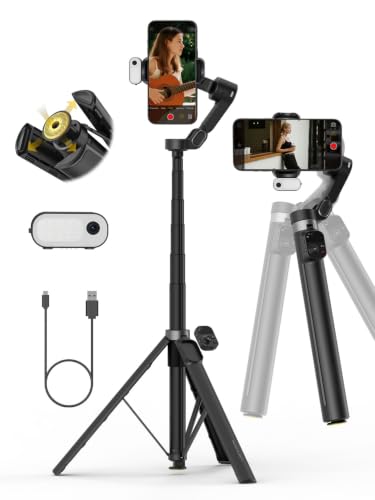
- Built-in AI tracking, fill light, and gesture controls
- 51.2-inch extension rod with tripod functionality
- Three-axis stabilization and 360-degree pan rotation
Best For: Vloggers and live streamers needing flexible phone shooting
Best Pro Camera Add-On
DJI RS Enhanced Tracking Module
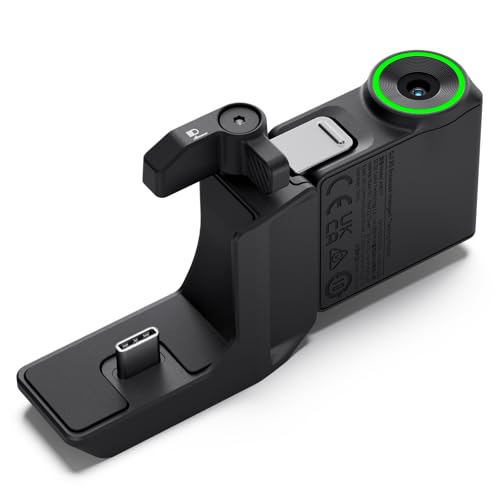
- Tracks people, vehicles, cats, dogs, and selected subjects
- Magnetic attachment for compatible DJI RS gimbals
- Designed for orbit, backward-tracking, and solo shots
Best For: DJI RS users adding subject tracking to camera rigs
Best Portable Phone Gimbal

- Foldable 0.79-pound design for travel
- AI tracking and gesture control through Hohem Joy app
- Three-axis stabilization with 11-hour battery life
Best For: Beginners and mobile creators filming on the go
Best All-in-One Pick

- Native tracking with audio and lighting support
- 3-axis stabilization with 360-degree pan rotation
- Built-in extension rod, tripod, and 10-hour battery
Best For: Creators wanting an all-in-one phone gimbal for vlogging and live streaming
Best Premium Tracking Setup

- Tracking, lighting, and DJI mic reception module included
- 3-axis stabilization with dual-lens enhanced tracking
- Extension rod, tripod, and quick magnetic setup
Best For: Content creators building a more complete phone-filming setup
Best Lightweight Option

- 300 g foldable design for easier carrying
- ActiveTrack 7.0 with dual-lens enhanced tracking
- Built-in tripod and 10-hour operating time
Best For: Travelers and solo creators seeking a lightweight tracking gimbal
Best DSLR Tracking Gimbal – FeiyuTech SCORP 2
The FeiyuTech SCORP 2 is a strong camera gimbal with subject tracking for DSLR and mirrorless users who want integrated tracking without adding a separate module. Its 2.5 kg payload, motorized three-axis stabilization, vertical-shooting support, and camera-control options make it suited to more advanced filming setups.
Best For: DSLR and mirrorless creators who need built-in AI tracking, a higher payload capacity, and hands-on camera controls.
Pros:
- Integrated AI tracking sensor activates with an OK gesture, with additional gesture controls.
- Supports cameras up to 2.5 kg and provides motorized three-axis stabilization.
- Quick-release system supports vertical filming without extra accessories.
- Includes a 1.3-inch touchscreen, multifunction knob, Bluetooth, and wired camera control.
Cons:
- At 1,070 g, it is less travel-friendly than lighter phone-focused gimbals.
- It is not water resistant.
- Camera compatibility and wireless control may vary by camera model.
The SCORP 2 stands out when you want subject tracking built into a capable camera stabilizer rather than relying on an add-on. Its larger payload and control interface are useful for interchangeable-lens setups, while the vertical workflow benefits creators producing mobile-first video.
Best Phone Tracking Kit – DJI Osmo Mobile 8
The DJI Osmo Mobile 8 is a phone-focused camera gimbal with subject tracking that combines three-axis stabilization, native tracking, audio reception, and lighting in one portable kit. Its built-in extension rod, tripod, and 10-hour battery make it practical for vlogging, travel, live streaming, and everyday recording.
Best For: Smartphone creators who want tracking, an included microphone transmitter, lighting support, and flexible handheld or tripod shooting.
Pros:
- Provides native subject tracking with integrated audio and lighting capabilities.
- Offers 360-degree horizontal pan rotation for dynamic shots.
- Built-in extension rod and tripod support group shots, low angles, and hands-free filming.
- Up to 10 hours of battery life and phone charging support extend filming time.
Cons:
- Designed for cellphones and iPhones rather than DSLR or mirrorless cameras.
- The DJI Mimo app is not available through Google Play and requires an official-site download.
- It is not water resistant.
For mobile creators, the Osmo Mobile 8 is a convenient all-in-one option. The included Mic Mini transmitter and multifunction module reduce the amount of extra equipment needed, while the foldable design and built-in support features suit quick, on-the-go production.
Best GoPro Tracking Gimbal – GoPro Fluid Pro AI
The GoPro Fluid Pro AI is a versatile camera gimbal with subject tracking for GoPro cameras, smartphones, and select compact cameras. Its interchangeable mounts, forward- or rear-facing AI tracker, integrated fill light, and 360-degree rotation give action creators a flexible setup for vlogging and moving subjects.
Best For: GoPro owners and mobile creators who want AI person tracking, wireless camera control, and a compact multi-device stabilizer.
Pros:
- AI tracking module follows a person’s face or body from forward- or rear-facing positions.
- Interchangeable mounts support smartphones, GoPro cameras, and select compact cameras.
- Integrated fill light helps balance lighting in the shot.
- Includes a tripod base, charging cables, and a zippered case.
Cons:
- Bluetooth functionality is specified for GoPro HERO9 through HERO13 Black models.
- It is not water resistant, despite its action-camera compatibility.
- The listed maximum video resolution is dependent on the connected camera and is not a gimbal output specification.
The Fluid Pro AI is a useful middle ground for creators who switch between a GoPro and phone. Its tracking module and interchangeable mounts add flexibility, while the included light and case help create a more complete portable shooting kit.
Best Mirrorless Tracking Gimbal – DJI RS 4 Mini
The DJI RS 4 Mini is a camera gimbal with subject tracking built for compatible mirrorless, vlog, and smartphone setups. With a 2 kg payload, included RS Intelligent Tracking Module, auto axis locks, improved balancing, and fast vertical switching, it targets creators who need a compact but capable camera rig.
Best For: Videographers using compatible mirrorless or vlog cameras who want modular tracking, rapid setup, and vertical-content support.
Pros:
- Includes the RS Intelligent Tracking Module for keeping subjects framed during solo filming and orbit shots.
- Auto axis locks help speed setup, while Teflon-enhanced balancing supports quick adjustments.
- Switches between horizontal and vertical shooting in about 10 seconds.
- Supports cameras and smartphones up to 2 kg and includes a briefcase handle.
Cons:
- Its 2 kg payload is lower than the FeiyuTech SCORP 2’s listed 2.5 kg capacity.
- The DJI Ronin app is not available through Google Play and requires an official-site download.
- It is not water resistant.
The RS 4 Mini is a compelling choice for creators who prioritize fast transitions and a compact camera workflow. Its tracking module is included rather than optional, and the quick vertical switch is particularly useful for short-form and mobile-first production.
Best All-in-One Phone Gimbal – AOCHUAN Smart V3
The AOCHUAN Smart V3 is a versatile camera gimbal with subject tracking for phone creators who want stabilization, hands-free shooting, and extra reach in one setup. Its built-in AI tracker, fill light, extension rod, remote, and tripod make it particularly flexible for selfies, live streams, group shots, and moving footage.
Best For: Vloggers, live streamers, group photos, and outdoor creators who want a tall, feature-rich phone gimbal.
Pros:
- Built-in AI tracking, gesture controls, and adjustable fill light work without a separate tracking accessory.
- 51.2-inch extension rod and 90-degree folding top support elevated, low-angle, full-body, and group shots.
- Three-axis stabilization, continuous 360-degree pan rotation, and six shooting modes suit dynamic footage.
- Detachable remote works from up to 32.81 feet, while the one-click tripod supports fixed shooting.
Cons:
- Its extended design and 1.3-pound weight are less compact than a simple foldable phone gimbal.
- The feature-rich setup may be more than beginners need for basic handheld stabilization.
The Smart V3 stands out when versatility matters more than pocketability. It combines subject tracking, lighting, remote control, and a built-in extension system, making it a strong choice for solo filming and varied shooting angles.
Best Pro Camera Add-On – DJI RS Enhanced Tracking Module
The DJI RS Enhanced Intelligent Tracking Module is a camera gimbal with subject tracking designed as an accessory for compatible DJI RS systems. It can track a person, vehicle, pet, or another selected subject after framing through the gimbal touchscreen, helping solo filmmakers capture orbiting and backward-tracking shots.
Best For: DJI RS 5, RS 4 Pro, RS 4 Mini, and RS 4 users who need dedicated subject tracking for solo camera work.
Pros:
- Supports tracking of a person, vehicle, cat, dog, or other selected subject.
- Magnetic locking enables quick attachment to the DJI RS 5 or RS 4 Mini.
- Included adapter mount adds compatibility with the DJI RS 4 Pro and DJI RS 4.
- Useful for orbit shots, backward tracking, and fixed-position solo filming.
Cons:
- It is an accessory, not a standalone gimbal, and requires a compatible DJI RS model.
- On the RS 4, RS 4 Pro, or RS 4 Mini, tracking is limited to one recognizable subject in a suitable environment.
- Using the adapter mount occupies the RSS port, preventing use of the camera control cable.
This module is best viewed as a targeted upgrade for an existing DJI RS setup. Check compatibility and firmware requirements before buying, especially if camera control through the RSS port is important to your workflow.
Best Portable Phone Gimbal – hohem iSteady X3 SE
The hohem iSteady X3 SE is a compact camera gimbal with subject tracking for iPhone and Android users who want smooth footage without a complicated setup. It combines three-axis stabilization with AI tracking through the Hohem Joy app, plus a foldable design, detachable remote, and long battery life for travel and everyday content.
Best For: Beginners, travelers, vloggers, and social creators who prioritize portability and simple phone operation.
Pros:
- Foldable 0.79-pound design fits easily into a travel setup.
- Hohem Joy app provides AI tracking, gesture control, creative templates, and shooting modes.
- Three-axis stabilization supports smooth footage while jogging or jumping.
- Offers up to 11 hours of operation, a detachable remote, and quick landscape-to-portrait switching.
Cons:
- AI tracking depends on using the Hohem Joy app.
- The 0.66-pound payload capacity may limit compatibility with heavier phone setups.
- It lacks the built-in extension rod and fill light included with some larger phone gimbals.
The iSteady X3 SE is a practical pick for creators who want a lightweight, beginner-friendly stabilizer with app-based tracking. Its portability and 11-hour battery make it especially convenient for travel, events, and extended filming sessions.
Best All-in-One Pick – DJI Osmo Mobile 8
For shoppers seeking a camera gimbal with subject tracking, the DJI Osmo Mobile 8 combines 3-axis stabilization with native tracking, integrated audio reception, and lighting support. Its 360-degree pan rotation, built-in extension rod, tripod, and 10-hour battery make it well suited to flexible phone filming.
Best For: Vloggers, live streamers, travelers, and creators who want tracking, lighting, audio, and support features in one phone gimbal.
Pros:
- Native subject tracking with integrated audio and lighting capabilities.
- 3-axis stabilization and 360-degree horizontal pan rotation support smooth, flexible shots.
- Built-in extension rod and tripod help with selfies, low-angle footage, and hands-free filming.
- 10-hour battery can charge a phone while filming.
Cons:
- The DJI Mimo app must be downloaded from DJI’s official website because it is unavailable on Google Play.
- At 370 g, it is slightly heavier than the Osmo Mobile 7.
The Osmo Mobile 8 is the most feature-packed option here, especially if you want native tracking alongside built-in audio and lighting functions. It is a strong choice for creators who value an all-in-one setup over the lightest possible design.
Best Premium Tracking Setup – DJI Osmo Mobile 7P
The DJI Osmo Mobile 7P is a capable camera gimbal with subject tracking for iPhone and Android phones. Its Multifunctional Module combines tracking, lighting, and DJI Mic 2 or Mic Mini reception, while 3-axis stabilization, an extension rod, and a tripod support polished solo filming.
Best For: Content creators who want enhanced tracking plus lighting and wireless microphone reception in a compact phone-gimbal setup.
Pros:
- Multifunctional Module supports intelligent tracking, lighting, and DJI microphone reception.
- 3-axis stabilization helps produce smooth footage.
- Built-in extension rod and tripod add flexibility for selfies and steady vlogs.
- Quick launch, magnetic mounting, ShotGuides, and one-tap editing simplify setup and creation.
Cons:
- The DJI Mimo app is not available on Google Play and requires downloading from DJI’s website.
- The 7P weighs 368 g, making it less lightweight than the 300 g Osmo Mobile 7.
The Osmo Mobile 7P stands out when tracking is only part of your setup and you also need lighting and microphone-reception features. Choose it over the standard 7 if the included Multifunctional Module better matches your filming workflow.
Best Lightweight Option – DJI Osmo Mobile 7
If portability matters, the DJI Osmo Mobile 7 offers a lightweight way to use a camera gimbal with subject tracking. It combines ActiveTrack 7.0, 3-axis stabilization, a built-in tripod, and a 10-hour operating time in a 300 g foldable design.
Best For: Travelers, vloggers, and solo creators who prioritize a lighter gimbal with tracking and hands-free filming support.
Pros:
- ActiveTrack 7.0 and dual-lens enhanced tracking help keep moving subjects in focus.
- At 300 g, it is the lightest of these three gimbals.
- Built-in tripod and foldable design support easy solo shooting and storage.
- 10-hour operating time and USB-C phone charging suit longer filming sessions.
Cons:
- The tracking kit is sold separately for additional creative possibilities.
- It does not include the 7P’s Multifunctional Module for lighting and microphone reception.
- The DJI Mimo app must be downloaded from DJI’s official website rather than Google Play.
The Osmo Mobile 7 is the practical pick for creators who want tracking without carrying a heavier, more feature-dense kit. Its lower weight and built-in tripod make it especially convenient for travel and extended handheld use.
How We Picked the Best Camera Gimbal with Subject Tracking
We evaluated these camera gimbals with subject tracking across the features that matter most in real-world shooting: stabilization performance, tracking method, device compatibility, payload capacity, battery life, controls, portability, and included accessories. The selection covers phone gimbals, action-camera models, mirrorless-camera systems, and standalone tracking modules.
Because tracking features vary widely, we considered whether tracking is built in, app-dependent, accessory-based, or designed for a specific camera ecosystem. We also looked for practical differences between compact travel models and heavier rigs intended for interchangeable-lens cameras.
Quick Comparison
| Best For | Look For |
|---|---|
| Smartphone creators | Native tracking, app support, compact folding design, and phone compatibility |
| Action-camera users | Secure mounting, wireless control, lighting options, and rugged portability |
| Mirrorless-camera users | Payload capacity, balancing range, focus or camera control, and tracking accessories |
| Travel and casual filming | Low weight, fast setup, built-in extension features, and dependable battery life |
Key Buying Factors for a Camera Gimbal with Subject Tracking
Compatibility and Payload
Start with the device you plan to use. Smartphone gimbals are not suitable for most mirrorless cameras, while camera gimbals need enough payload capacity for the body, lens, microphone, and accessories—not just the camera body.
Tracking Method
Tracking may work through a companion app, an integrated AI sensor, or an add-on module. App-based systems can offer useful creative controls but may limit compatibility. Hardware tracking is often more flexible, though it can add cost, weight, or setup time.
Stabilization and Controls
Three-axis stabilization is the baseline for smooth pan, tilt, and roll movement. Check for follow modes, locking modes, joystick responsiveness, orientation changes, and the ability to control recording or zoom from the handle.
Size, Battery, and Accessories
A lighter gimbal is easier to carry and hold for long sessions. Compare rated runtime, charging method, folded dimensions, tripod or extension options, lighting, microphones, and included tracking hardware before deciding between similarly priced models.
Who Should Buy Which Camera Gimbal with Subject Tracking?
Choose a smartphone gimbal if you primarily film social content, travel videos, interviews, or family events with an iPhone or Android phone. Models with native or integrated tracking are the simplest choice for solo creators.
Choose an action-camera gimbal if you want smoother GoPro footage, wireless camera operation, or a compact setup for movement-heavy shooting. For mirrorless cameras, prioritize payload capacity and lens support first, then add a compatible tracking module if automated subject framing is important.
If you already own a compatible DJI RS gimbal, an enhanced tracking module may be a more economical upgrade than replacing the entire stabilizer. For occasional use or frequent travel, favor a compact model with quick balancing and minimal accessories.