Finding the best DJ mixer for scratch DJs means looking beyond channel count. Crossfader feel, curve adjustment, layout, connectivity, and compatibility with your preferred software can have a greater effect on your performance than extra effects or flashy features.
This roundup covers dedicated two-channel scratch mixers, DJ controllers, four-channel options, and compact Bluetooth models. Use the guide below to match each type to your setup, skill level, and budget before you buy.
Best 10 Dj Mixer for Scratch Djs Picks for 2026
Pro Scratch Control
Numark Scratch 2-Channel DJ Scratch Mixer
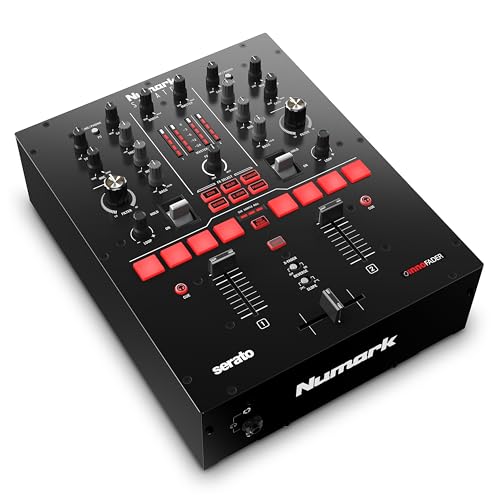
- Innofader crossfader with reverse and slope controls
- Serato DJ Pro and DVS license included
- FX paddles, pads, and flexible outputs
Best For: Scratch DJs building a Serato DVS setup
Battle-Style Starter
Pioneer DJ DDJ-REV1 Serato Controller

- Open battle-style layout for scratch practice
- Serato DJ Lite included for immediate setup
- Compact, affordable design with Tracking Scratch
Best For: Beginners learning scratch and open-format DJing
Simple Analog Value
Numark M2 2-Channel Scratch DJ Mixer

- Replaceable crossfader with reverse and slope controls
- Phono/line inputs for turntables and players
- Three-band EQ and rack-mountable design
Best For: Affordable analog scratch practice and basic DJ setups
Flexible Learning Platform
Pioneer DJ DDJ-FLX4 DJ Controller
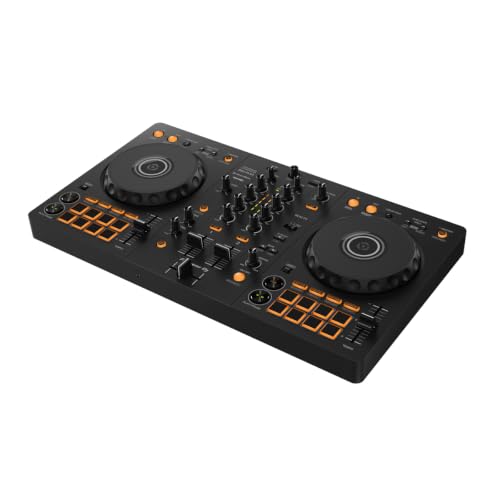
- Two-deck control with 16 performance pads
- Smart Fader simplifies transitions
- USB and Bluetooth support across multiple devices
Best For: Beginners wanting scratch, streaming, and broader DJ flexibility
Best Value Analog Pick
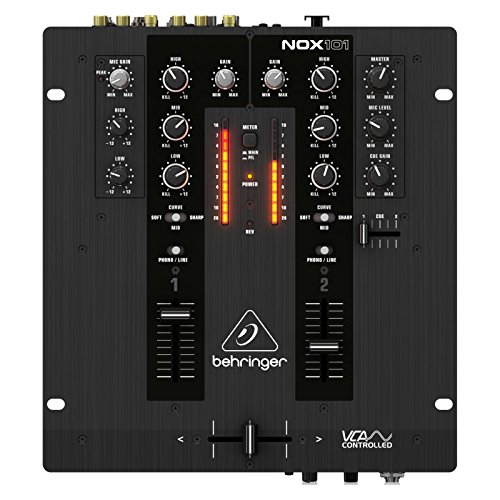
- Two channels with three-band EQs
- Full-kill filters and Ultraglide crossfader
- XLR, TRS, and RCA connectivity
Best For: Home DJs building a separate two-channel setup
Best Beginner Controller
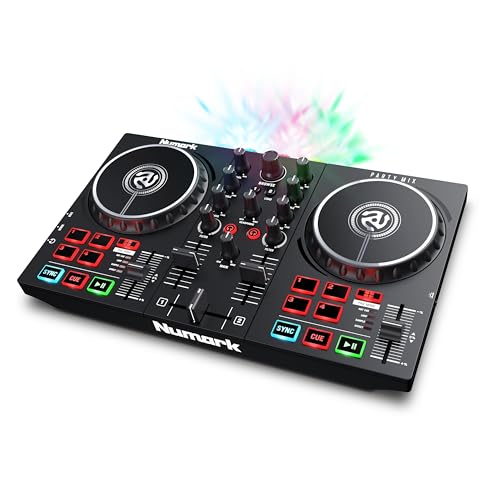
- Two decks with touch-sensitive jog wheels
- Serato DJ Lite and USB connectivity
- Built-in lights and performance pads
Best For: Laptop-based beginners learning mixing and basic scratching
Best Club-Style Scratch Mixer

- Two-channel professional-style workflow
- Smooth Magvel Fader for cuts
- Includes rekordbox DVS upgrade
Best For: Home practice with turntables or media players
Versatile 4-Channel Pick

- Four channels with three-band EQ and cue controls
- Replaceable, slope-adjustable crossfader
- USB computer connectivity for playback or recording
Best For: Flexible scratch practice, gigs, and multi-source DJ setups
Scratch Control Specialist

- 40mm crossfader with curve adjustment and reverse
- Bluetooth input for wireless streaming
- Compact all-metal two-channel design
Best For: Scratch practice and compact live setups
Portable Practice Choice

- Compact two-channel mixer with 45mm crossfader
- Bluetooth and RCA inputs for flexible sourcing
- Mic, cue, master, and booth connections
Best For: Traveling DJs, bedroom practice, and compact party setups
Pro Scratch Control – Numark Scratch 2-Channel DJ Scratch Mixer
The Numark Scratch is a strong choice if you want a dedicated dj mixer for scratch djs with Serato DVS support. Its Innofader crossfader, performance pads, FX paddles, and flexible output options suit hands-on battle mixing and performance setups.
Best For: Scratch DJs who want Serato DJ Pro and DVS functionality in a dedicated two-channel mixer.
Pros:
- Innofader crossfader includes reverse and slope controls.
- Serato DJ Pro and a DVS license are included.
- Six effect selectors, dual paddle triggers, and eight performance pads support live routines.
- Balanced XLR master output, booth/zone output, and dual headphone cueing offer flexible connectivity.
Cons:
- NoiseMap control vinyl or CDs are available separately.
- It is a corded, dedicated mixer rather than an all-in-one controller.
Choose the Numark Scratch when scratch performance and DVS are priorities. It costs more than a basic analog mixer, but the included software, Innofader, and performance-focused controls make it the most purpose-built option here.
Battle-Style Starter – Pioneer DJ DDJ-REV1 Serato Controller
The Pioneer DJ DDJ-REV1 is a budget-friendly entry point for shoppers seeking a dj mixer for scratch djs but who prefer a laptop controller. Its battle-style layout, tall pitch faders, and Serato DJ Lite support make it approachable for learning scratch techniques.
Best For: Beginners who want an affordable, compact controller for hip-hop, scratch, and open-format mixing.
Pros:
- Battle-style layout mirrors a turntable and mixer setup.
- Serato DJ Lite unlocks when you connect the controller.
- Tall pitch faders and quick effect controls support scratch practice.
- Tracking Scratch can trigger scratch routines with a single motion.
Cons:
- It is a controller for PC or Mac, not a standalone mixer.
- Its single USB port and auxiliary connectivity provide a more limited connection setup.
The DDJ-REV1 makes sense for first-time scratch DJs who want guided features and a familiar battle orientation without buying separate turntables and a mixer. Experienced users may want a dedicated mixer with broader hardware connectivity.
Simple Analog Value – Numark M2 2-Channel Scratch DJ Mixer
The Numark M2 is a straightforward dj mixer for scratch djs who want essential analog controls without bundled software or digital performance features. It accepts turntables, CD players, media players, and a microphone, making it practical for home practice and general DJ setups.
Best For: Beginners and experienced DJs seeking an affordable, rack-mountable two-channel mixer with basic scratch controls.
Pros:
- Two phono/line switchable inputs support turntables and line-level sources.
- Replaceable crossfader has reverse and slope controls.
- Three-band EQ is provided on both channels.
- Rack-mountable design includes master, record, and headphone outputs.
Cons:
- It does not include Serato software or a DVS license.
- Outputs are RCA, so it lacks the balanced XLR output found on the Numark Scratch.
- It has fewer performance-oriented controls than the digital options.
The M2 is a sensible choice when reliable basic mixing matters more than software integration and onboard effects. Its replaceable crossfader and phono/line inputs give scratch-focused users the essentials at a lower-complexity price point.
Flexible Learning Platform – Pioneer DJ DDJ-FLX4 DJ Controller
The Pioneer DJ DDJ-FLX4 is a versatile alternative for anyone comparing a dj mixer for scratch djs with a broader beginner controller. It offers two-deck control, 16 performance pads, a built-in sound card, and compatibility with rekordbox, Serato DJ Pro, and djay across several device platforms.
Best For: New DJs who want to learn, stream, and expand beyond scratch-focused mixing.
Pros:
- Simple layout is designed to support learning and growth.
- Sixteen performance pads provide Hot Cue, Pad FX, Beat Jump, and Sampler control.
- Smart Fader can adjust volume, bass, and BPM for easier transitions.
- Works with PC, Mac, iPhone, iPad, or Android through USB or Bluetooth.
Cons:
- It is a controller rather than a dedicated standalone scratch mixer.
- Its broad feature set may be less specialized for battle-style scratching than the DDJ-REV1.
Select the DDJ-FLX4 if scratch is one part of a wider DJ journey. Its portability, streaming support, app compatibility, and performance pads make it a more flexible learning platform, while dedicated scratch users may prefer a battle-oriented layout or hardware mixer.
Best Value Analog Pick – Behringer NOX101
The Behringer PRO MIXER NOX101 is a straightforward choice for a dj mixer for scratch djs who want a compact, traditional two-channel mixer. Its full-kill filters, three-band EQs, and Ultraglide crossfader provide the core controls for hands-on mixing and basic scratch work.
Best For: Home DJs seeking an affordable two-channel mixer with dedicated EQ, filters, and a crossfader.
Pros:
- Two-channel layout with three-band EQs and full-kill filters.
- Ultraglide crossfader with full VCA control.
- Offers XLR, TRS, and RCA connectivity.
Cons:
- Does not include built-in decks, jog wheels, or DJ software.
- Requires a separate computer, turntable, or media player setup.
The NOX101 focuses on essential mixer controls rather than extras. It is a practical fit if you already have playback equipment and want dedicated filtering and crossfader control in a two-channel format.
Best Beginner Controller – Numark Party Mix II
The Numark Party Mix II is an approachable dj mixer for scratch djs who want an all-in-one USB controller rather than a standalone mixer. It combines two decks, touch-sensitive jog wheels, performance pads, an integrated mixer, and Serato DJ Lite support in a lightweight package.
Best For: Beginners who want to learn mixing and basic scratching with a laptop-based setup.
Pros:
- Includes two decks, touch-sensitive jog wheels, and a built-in audio interface.
- Provides performance pads for effects, cues, loops, and sampling.
- Includes integrated mixer controls, headphone output, and a main output.
- Built-in LED lighting syncs to the mix.
Cons:
- Uses a two-band EQ rather than a three-band mixer EQ.
- Its plastic construction and compact layout are geared toward beginners.
- Requires a Mac or Windows computer for the Serato DJ Lite workflow.
The Party Mix II is more controller than traditional scratch mixer, but its jog wheels and crossfader make it a convenient starting point. Choose it when portability, software access, and built-in decks matter more than club-style mixer connections.
Best Club-Style Scratch Mixer – Pioneer DJM-250MK2
The Pioneer DJM-250MK2 is a strong dj mixer for scratch djs who want a professional-style two-channel layout for home practice. Its Magvel Fader is designed for smooth cuts, while channel filters and the included rekordbox DVS upgrade support flexible digital or separate-deck setups.
Best For: DJs learning club-style workflows, beatmatching, and light scratching with turntables or media players.
Pros:
- Two-channel layout mirrors a standard professional booth workflow.
- Magvel Fader offers smooth, durable crossfader performance.
- Dedicated Sound Color FX Filter is available on each channel.
- Includes a free rekordbox DVS unlock for digital files with turntables or media players.
Cons:
- Does not include decks, jog wheels, or built-in playback controls.
- Its two-channel design is limited for larger multi-deck setups.
The DJM-250MK2 prioritizes a familiar club-mixer workflow and useful scratch-oriented fader control. It is the better choice for building a separates setup and practicing techniques that transfer to professional-style equipment.
Versatile 4-Channel Pick – Numark M6 USB
The Numark M6 USB is a practical dj mixer for scratch djs who want four channels, flexible source connections, and useful controls for both practice and event setups. Its replaceable, slope-adjustable crossfader and dedicated cue controls support hands-on mixing, while USB connectivity lets you integrate a Mac or PC.
Best For: DJs who need a versatile four-channel mixer for scratch practice, parties, weddings, clubs, or recording sets.
Pros:
- Replaceable crossfader with slope controls for scratch-oriented adjustment.
- Four channels with dedicated level faders, cue controls, and three-band EQ.
- Built-in USB audio interface supports computer playback and set recording.
- Multiple phono, line, mic, master, booth, record, and headphone connections.
Cons:
- Larger and heavier than the compact two-channel options in this roundup.
- Its broad feature set may be more than a beginner needs for a simple setup.
The M6 USB is the strongest choice here for expanding beyond two channels. Choose it if you value routing flexibility and a replaceable crossfader more than a minimal footprint.
Scratch Control Specialist – Gemini MXR-01BT
The Gemini MXR-01BT is a focused dj mixer for scratch djs who want a two-channel layout with a 40mm crossfader designed for adjustable performance. Bluetooth adds convenient wireless streaming, while the all-metal chassis and dedicated mic and headphone controls suit practice and live use.
Best For: Scratch-focused DJs who want crossfader curve adjustment, reverse switching, Bluetooth input, and a compact two-channel mixer.
Pros:
- 40mm crossfader includes adjustable curve and reverse switch.
- Bluetooth supports streaming from a smartphone or tablet.
- All-metal chassis is compact at approximately 6 by 11 inches.
- Dedicated microphone volume/EQ and headphone level controls.
Cons:
- Only two channels, limiting expansion compared with four-channel mixers.
- Bluetooth is convenient, but RCA remains necessary for compatible wired sources.
With its dedicated crossfader controls, the MXR-01BT is the most directly scratch-oriented option in this group. It is a good fit when fader technique matters more than extra channels or computer USB integration.
Portable Practice Choice – Gemini MM1BT
The Gemini MM1BT is a portable dj mixer for scratch djs who need a small, travel-friendly unit with a crossfader, gain, EQ, and Bluetooth. Its RCA and wireless inputs can be used alongside turntables or other line-level gear, while mic, headphone, master, and booth connections keep the basic setup flexible.
Best For: Mobile DJs, bedroom practice, livestreaming, and house-party setups where compact size and Bluetooth are priorities.
Pros:
- Very compact design with a rugged metal housing for travel.
- 45mm crossfader, two-band EQ, and gain controls provide hands-on mixing control.
- Bluetooth and RCA inputs can be used together for multiple sources.
- Includes mic and cue connections plus master and booth RCA outputs.
Cons:
- Two-band EQ offers less tonal control than the Numark’s three-band EQ.
- It has two channels and does not list a USB audio interface.
The MM1BT prioritizes portability without removing core mixing controls. Pick it for a backpack-friendly scratch and practice mixer; choose a larger model if you need more channels or deeper EQ control.
How We Picked the Best Dj Mixer for Scratch Djs
We focused on the features that matter most for scratching and quick cuts: crossfader response, adjustable curve controls, channel layout, input and output flexibility, software compatibility, and overall practicality. Dedicated mixers are generally the strongest fit for turntablists, while controllers can be better choices for beginners who want decks, pads, and software control in one unit.
We also considered setup size and use case. A compact two-channel mixer may be ideal for home practice, whereas a four-channel model offers room to expand. Bluetooth models are convenient for casual playback, but they are not automatically the best choice for demanding scratch routines.
Quick Comparison
| Type | Best For | What to Look For |
|---|---|---|
| Dedicated scratch mixer | Turntable or DVS setups | Fast crossfader, curve adjustment, phono inputs |
| DJ controller | Digital beginners and mobile DJs | Included software, jog wheels, pads, USB connectivity |
| Four-channel mixer | Expandable home or performance rigs | More inputs, flexible routing, durable controls |
| Bluetooth mixer | Casual playback and compact systems | Wireless convenience, basic EQ, portable design |
Key Buying Factors for a Dj Mixer for Scratch Djs
Crossfader and Curve Control
The crossfader is the central control for scratching. Look for a smooth, low-resistance fader and a curve adjustment that lets you move from gradual fades to sharp, instant cuts. If replacement faders are available, that can also extend the mixer’s useful life.
Inputs, Outputs, and Setup Compatibility
Check whether you need phono inputs for turntables, line inputs for media players, or USB connectivity for computer-based mixing. A controller may include jog wheels and software integration, while a traditional mixer usually requires separate decks. Confirm that the unit offers the output connections your speakers, headphones, or recording setup use.
Software and Performance Controls
Digital DJs should verify included software and operating-system support before buying. Performance pads, hot cues, looping, and deck controls can make a controller more versatile, but they may add cost without improving a traditional turntable scratch workflow.
Build, Size, and Budget
Choose a sturdy layout with controls spaced far enough apart for fast movement. Compact models save desk space and travel well; larger mixers may provide more routing options. Set aside budget for cartridges, cables, headphones, speakers, or a DVS interface if they are not included.
Who Should Buy Which Dj Mixer for Scratch Djs?
Choose a dedicated two-channel scratch mixer if cutting and turntable technique are your priorities. Pick a DJ controller if you want an all-in-one digital system with jog wheels, pads, and beginner-friendly software control. A four-channel mixer suits DJs planning to add more decks or external sources. Bluetooth models are best for simple, portable playback and casual mixing rather than serious battle-style performance.