The right direct box can make an acoustic-electric guitar sound clearer, quieter, and more consistent through a mixer, PA, or recording interface. The best choice depends on more than the connector layout: onboard EQ, gain control, phantom-power compatibility, noise handling, and portability all matter.
We compared 10 popular DI solutions for different performance and recording needs, including simple passive boxes, dual-channel designs, and acoustic-focused preamp pedals.
Best 10 Di Boxes for Acoustic Electric Guitars Picks for 2026
Premium Acoustic Control
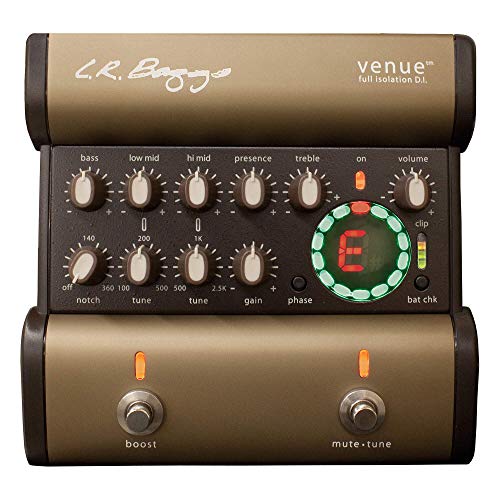
- Adjustable gain for passive and active pickups
- Five-band EQ with tunable mid bands
- Tuner, notch filter, and boost for live use
Best For: Players wanting an acoustic preamp and DI with extensive stage controls
Simple Passive Reliability
Radial Pro DI Passive Direct Box

- Passive mono direct-box design
- Custom transformer and rugged I-beam construction
- Suitable for guitars, bass, keyboards, and studio use
Best For: Straightforward live or studio signal conversion
Flexible Acoustic Tone Shaping

- Five-band EQ with tunable notch and midrange bands
- Phase inversion for feedback control
- XLR and 1/4-inch outputs with battery or phantom power
Best For: Acoustic players who need detailed EQ and flexible connections
Pedalboard-Ready Acoustic Processing

- Balanced XLR output with pre/post EQ switching
- Footswitchable boost and onboard compression
- Five-band EQ, phase control, and acoustic preamp
Best For: Performers wanting DI, dynamics, and foot control in one pedal
Versatile Stereo Choice
Radial ProD2 Passive 2 Channel DI

- Two passive channels
- Isolation transformer and ground lift
- 15dB pad with 1/4-inch and XLR connections
Best For: Two-channel acoustic-electric guitar and instrument setups
Acoustic Tone Control
Caline CP-40 DI-Box for Acoustic Guitar
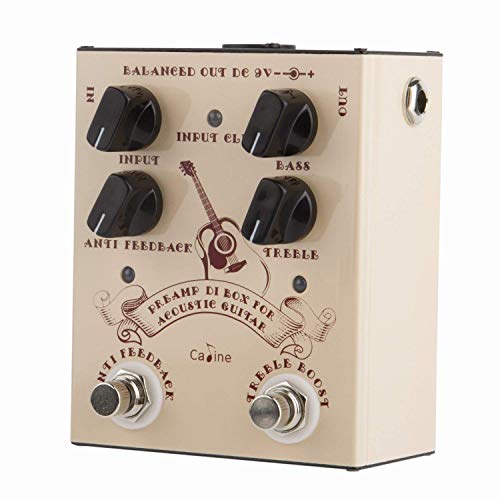
- Built for acoustic guitar
- True-bypass anti-feedback foot switch
- Preamp DI with higher boost
Best For: Live acoustic players wanting boost and anti-feedback control
Simple Stage Workhorse
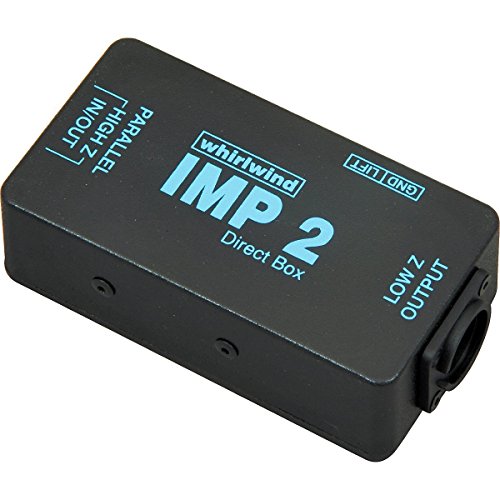
- Single-channel passive design
- Converts unbalanced signal to balanced mic level
- Riveted TRHL transformer and economical build
Best For: Budget-conscious live setups needing basic DI conversion
Simple Stage Signal Path
Hosa DIB-443 Sidekick Passive DI Box

- Converts 1/4-inch TS to balanced XLR3M
- No external power required
- Metal construction for live use
Best For: Straightforward guitar-to-PA signal conversion
Hum-Free Stage Routing
Donner Special-I Passive DI Box

- Transformer isolation reduces ground-loop hum
- Ground-lift switch helps manage noise
- Thru output supports amp-and-PA routing
Best For: Stage rigs needing flexible, low-noise routing
Flexible Instrument Connections
Pyle PDC21 Premium Passive DI Box

- Supports guitars, basses, keyboards, and more
- Includes input attenuation and ground lift
- Connects to balanced or unbalanced equipment
Best For: Versatile instrument and line-source connections
Premium Acoustic Control – L.R. Baggs Venue DI
For players comparing di boxes for acoustic electric guitars, the L.R. Baggs Venue DI adds extensive hands-on control for shaping a guitar signal before it reaches a mixer or amplifier. Its adjustable gain, five-band EQ, notch filter, tuner, and boost are especially useful in live acoustic setups.
Best For: Acoustic-electric guitarists who want an all-in-one preamp, feedback control, tuner, and DI.
Pros:
- Adjustable gain supports passive and active pickups.
- Five-band EQ includes tunable low-mid and high-mid bands.
- Notch filter, footswitchable tuner mute, and volume boost add live-performance flexibility.
- Compact analog design with 1/4-inch audio connectivity.
Cons:
- More features and controls than players seeking a basic direct box may need.
- Battery-powered operation may require monitoring battery life.
The Venue DI is a feature-rich choice when tone shaping and stage control matter as much as sending a balanced-ready guitar signal. It is less suited to buyers who only need simple passive signal conversion.
Simple Passive Reliability – Radial Pro DI Passive Direct Box
The Radial Pro DI is a straightforward option for shoppers seeking di boxes for acoustic electric guitars without onboard EQ or battery-dependent processing. This passive mono direct box uses a custom transformer and rugged I-beam construction for live or studio instrument connections.
Best For: Guitarists, bassists, keyboard players, and studios needing a durable passive mono direct box.
Pros:
- Passive design requires no battery-powered operation.
- Custom transformer supports direct-box signal conversion.
- Rugged I-beam construction and stainless-steel enclosure are suited to regular use.
- Works with acoustic guitars, bass, keyboards, drum machines, and professional snake systems or consoles.
Cons:
- No onboard EQ, tuner, boost, or feedback-control features are listed.
- Mono operation may be limiting for stereo sources.
The Pro DI makes sense when reliability and simplicity take priority over instrument-specific tone shaping. Players who need acoustic preamp controls should consider a more feature-rich active unit.
Flexible Acoustic Tone Shaping – LR Baggs Para Acoustic D.I.
The LR Baggs Para Acoustic D.I. is designed for acoustic-electric players who want more than basic connectivity from di boxes for acoustic electric guitars. It combines adjustable pickup gain, five-band EQ, notch and phase controls, and both XLR and 1/4-inch outputs.
Best For: Acoustic guitarists needing detailed EQ and feedback-management options in a compact DI preamp.
Pros:
- Adjustable gain accommodates passive and active pickups.
- Five-band EQ includes tunable notch and midrange bands.
- Phase inversion helps with sound shaping and feedback control.
- Runs from a 9V battery or 48V phantom power and offers XLR plus 1/4-inch outputs.
Cons:
- It does not list an onboard tuner, boost, or compression feature.
- The available controls may be more involved than necessary for basic DI duties.
The Para Acoustic D.I. is a strong middle ground for players who want acoustic-focused preamp control without the larger feature set of a pedal such as the Venue DI. Its phantom-power compatibility also suits console-based setups.
Pedalboard-Ready Acoustic Processing – Fishman Platinum Pro EQ/DI
The Fishman Platinum Pro EQ/DI is a pedal-style choice for shoppers comparing di boxes for acoustic electric guitars with onboard processing. It combines an acoustic guitar preamp with five-band EQ, compression, phase control, a footswitchable boost, and balanced XLR output.
Best For: Acoustic-electric players who want DI connectivity plus footswitchable boost and onboard compression.
Pros:
- Balanced XLR output includes a pre/post EQ switch.
- Footswitchable boost has its own level control.
- Combines DI, acoustic preamp, five-band EQ, compression, and phase control.
- Limited lifetime warranty is listed in the supplied specifications.
Cons:
- Only one output channel quantity is listed.
- The supplied notes do not specify battery operation, so power requirements should be checked before purchase.
The Platinum Pro EQ/DI is aimed at performers who want practical pedal control and dynamics processing alongside a balanced output. It offers more stage functionality than a basic passive DI, particularly when boost and compression are useful.
Versatile Stereo Choice – Radial ProD2 Passive 2 Channel DI
The Radial ProD2 is a practical option for players comparing DI boxes for acoustic electric guitars and needing two-channel, passive signal handling. Its isolation transformer, ground-lift switch, and 15dB pad add useful flexibility for connecting instruments and managing signal levels.
Best For: Acoustic-electric guitarists and setups that need two passive channels with transformer isolation.
Pros:
- Provides two passive channels in one unit.
- Includes an isolation transformer and ground-lift switch.
- Offers a 15dB pad for accommodating stronger signals.
- Uses 1/4-inch and XLR connectors.
Cons:
- Passive design does not provide a built-in preamp or boost.
- Its two-channel format may be more than needed for a single-instrument setup.
Choose the ProD2 when channel count and isolation are priorities. It is a straightforward, durable-feeling passive DI with stainless steel construction, though players wanting onboard acoustic-guitar tone shaping will need separate equipment.
Acoustic Tone Control – Caline CP-40 DI-Box for Acoustic Guitar
The Caline CP-40 is designed specifically for acoustic guitar, making it a focused choice among DI boxes for acoustic electric guitars. It combines a preamp DI format with a true-bypass anti-feedback foot switch and boost capability, while running from a 9-volt power source.
Best For: Acoustic-electric players seeking a compact preamp DI with anti-feedback switching and boost.
Pros:
- Designed for acoustic guitar applications.
- Includes a true-bypass anti-feedback foot switch.
- Provides higher boost through its preamp DI design.
- Compact format with a 1/4-inch audio jack.
Cons:
- Requires 9-volt power and draws 50 milliamps.
- Its listed connector is a 1/4-inch audio jack, so additional connectivity may be needed for some rigs.
The CP-40 is the most feature-focused option here for acoustic players who want more than basic signal conversion. Its compact enclosure and footswitch-oriented design suit practical live setups, provided the 9-volt power requirement fits your pedalboard.
Simple Stage Workhorse – Whirlwind IMP 2 Passive DI
The Whirlwind IMP 2 is a no-frills option for shoppers comparing DI boxes for acoustic electric guitars on a budget. This single-channel passive direct box converts an unbalanced instrument- or line-level signal to a low-impedance, balanced microphone-level output through an in-line transformer.
Best For: Players and live rigs needing an economical, single-channel passive DI with a compact footprint.
Pros:
- Offers a simple single-channel passive design.
- Converts unbalanced instrument or line signals to balanced mic level.
- Uses Whirlwind’s TRHL transformer, riveted to the chassis.
- Designed as an economical, durable direct box.
Cons:
- Does not include a preamp, boost, or acoustic-specific anti-feedback controls.
- Provides one channel only.
The IMP 2 makes sense when reliability and straightforward signal conversion matter more than tone-shaping features. It is a focused passive solution for routing an acoustic-electric guitar into a balanced microphone-level system, without adding unnecessary controls.
Simple Stage Signal Path – Hosa DIB-443 Sidekick Passive DI Box
For basic di boxes for acoustic electric guitars setups, the Hosa DIB-443 provides a straightforward way to convert an unbalanced 1/4-inch TS instrument signal to a balanced XLR output. Its passive design needs no external power, making it convenient for connecting a guitar to a mixer or PA.
Best For: Guitarists who want a simple, passive DI for live performance and longer cable runs.
Pros:
- Converts 1/4-inch TS signals to balanced XLR3M.
- Passive, plug-and-play design requires no external power.
- Metal construction is suited to live-use handling.
- Helps reduce unwanted noise on long cable runs.
Cons:
- Offers a single passive DI channel.
- Its listed connectivity is focused on 1/4-inch TS and XLR.
The DIB-443 is a practical choice when you need uncomplicated signal conversion and a rugged enclosure rather than extra controls or powered features.
Hum-Free Stage Routing – Donner Special-I Passive DI Box
The Donner Special-I is one of the more flexible di boxes for acoustic electric guitars when you need instrument-to-PA routing with hum reduction. It uses transformer isolation and includes a ground-lift switch, while its thru connection lets you feed an amplifier alongside the balanced output.
Best For: Stage and studio guitar setups that need amp-through routing and help with ground-loop hum.
Pros:
- Converts unbalanced instrument-level signals to balanced mic-level output.
- Transformer isolation helps reduce hum and buzz from ground loops.
- Ground-lift switch provides additional noise-control flexibility.
- Thru signal can be sent to an amplifier while output feeds the PA.
Cons:
- Passive operation does not provide powered DI features.
- The housing uses plastic materials.
With its transformer-based isolation, ground lift, and amp-through path, the Special-I is well suited to guitarists managing noise and multiple destinations onstage.
Flexible Instrument Connections – Pyle PDC21 Premium Passive DI Box
The Pyle PDC21 offers useful flexibility for di boxes for acoustic electric guitars, basses, keyboards, and other unbalanced sources. Its 1/4-inch input, impedance transformer, input attenuator, and ground-lift connection are designed to help route instruments to balanced or unbalanced equipment while reducing buzz and hum.
Best For: Home and live setups connecting guitars or other unbalanced sources to PA or recording mixers.
Pros:
- Connects 1/4-inch instrument sources to balanced or unbalanced XLR equipment.
- Includes an input attenuator for added signal-management flexibility.
- Ground-lift function helps address buzz and hum.
- Works with guitars, basses, keyboards, and other line-level sources.
Cons:
- The supplied notes describe it as a passive unit but also mention a detachable AC cord, so power requirements should be confirmed before setup.
- Its compact enclosure may offer fewer connection options than larger DI systems.
The PDC21 stands out for its broad source compatibility and input attenuation, making it a sensible option when one DI needs to handle more than an acoustic-electric guitar alone.
How We Picked the Best Di Boxes for Acoustic Electric Guitars
We focused on signal reliability, practical connectivity, ease of use, and suitability for acoustic-electric instruments. The lineup includes passive direct boxes for straightforward balancing and isolation, as well as active preamp/DI units that add gain, EQ, notch filtering, tuners, or feedback-control features. We also considered whether each model makes sense for live players, home studios, churches, rehearsal spaces, and multi-instrument setups.
Because pickup systems vary widely, no single unit is ideal for every guitar. A passive DI can be an excellent solution for an active pickup or a strong line-level source, while a passive undersaddle pickup may benefit from the gain and impedance options found in an active acoustic preamp.
Quick Comparison
| Type | Best For | What to Expect |
|---|---|---|
| Acoustic preamp/DI | Live acoustic performers | More control over EQ, gain, feedback, and output level |
| Single-channel passive DI | Simple guitar-to-PA connections | Reliable balancing and isolation with minimal setup |
| Two-channel passive DI | Stereo or multi-source rigs | Handles two signals in one enclosure |
| Budget compact DI | Practice, backup, and basic gigs | Affordable signal conversion with fewer controls |
Key Buying Factors for Di Boxes for Acoustic Electric Guitars
Active or Passive Design
Passive DIs generally need no battery and are simple to operate, making them dependable for keyboards, mixers, and many active pickup systems. Active DIs can provide higher input impedance, gain, and more flexibility, which may better suit passive piezo pickups.
Input Impedance and Headroom
Check the DI’s input specifications when possible. A suitable impedance helps preserve the guitar’s volume, treble, and dynamics. Adequate headroom also reduces unwanted distortion when using a strong onboard preamp.
Controls and Acoustic-Specific Features
EQ, phase reversal, notch filtering, low-cut filters, and a tuner output can be valuable onstage. These features cost more and add setup decisions, but they can help shape an uneven pickup response or control feedback in difficult rooms.
Connections, Power, and Durability
Look for a balanced XLR output, a suitable 1/4-inch input, and reliable through or link connections if you need to feed an amplifier. Confirm whether the unit uses phantom power, a battery, or an external supply. A rugged enclosure and protected switches are especially important for frequent gigging.
Who Should Buy Which Di Boxes for Acoustic Electric Guitars?
Choose an acoustic-focused preamp/DI if you perform regularly and need tone shaping or feedback control. Pick a passive single-channel model for the simplest, most dependable connection from guitar to mixer. A two-channel DI is the better fit for stereo outputs, two instruments, or a compact multi-source rig. Budget models make sense as inexpensive backups or for occasional use, provided their controls and noise performance meet your setup’s needs.