Accurate color matters for student photographers, designers, filmmakers, and digital artists, but professional calibration hardware can be expensive and complicated. The right tool can make assignments, portfolio work, and printed projects look more consistent from screen to screen.
We’ve selected 10 color calibration tools for students, covering straightforward entry-level options, advanced display colorimeters, and portable charts for camera-based color and white-balance control.
Best 10 Color Calibration Tools for Students Picks for 2026
Proven Budget Pick

- Full calibration takes less than five minutes
- Monitors room light for appropriate brightness
- Includes photo-based before-and-after evaluation
Best For: Photography and design students focused on consistent screen-to-print results
Best Entry-Level Option

- Provides edit-ready color in about 90 seconds
- Uses a simple three-step setup
- Supports up to three connected displays per workstation
Best For: Beginners who want fast, uncomplicated screen calibration
Best Budget Camera Reference

- Includes 12% and 18% gray references
- Compact 5-by-7-inch format is portable
- Comes with a stand and user guide
Best For: Students learning photography or videography on a budget
Best for Straightforward Monitor Calibration

- Automates color and brightness calibration
- Calibrates multiple displays with one sensor
- Includes a fast ReCAL assistant
Best For: Students seeking automated calibration for coursework and creative projects
Professional Display Control

- Advanced calibration with deeper measurement options
- Supports modern displays and high brightness levels
- Includes analysis, projector, LUT, and multi-monitor tools
Best For: Students with advanced photography, design, or video workflows
Camera Color Reference
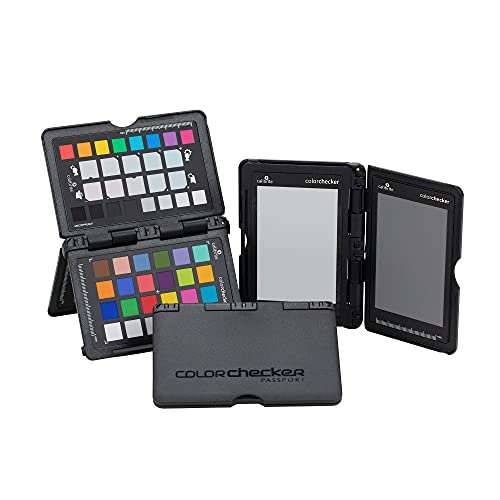
- Four targets cover exposure and white balance
- Creates custom DNG and ICC camera profiles
- Portable folding case suits location shoots
Best For: Photography and video students managing camera color consistency
Simple Monitor Calibration

- Guided 1 2 3 calibration workflow
- Supports up to two monitors
- Includes before-and-after accuracy check
Best For: Students seeking easy monitor calibration for editing
Best Overall – Datacolor Spyder Monitor Calibrator
For students seeking color calibration tools for students that can grow with digital photography, design, or content work, this Spyder offers quick setup, broad display compatibility, and useful automation. It calibrates laptop and desktop screens, including OLED, mini-LED, and Apple Liquid Retina XDR displays.
Best For: Students who want fast, beginner-friendly calibration with room for more advanced control.
Pros:
- Reaches an accurate color starting point in about 90 seconds.
- Supports modern OLED, mini-LED, and Liquid Retina XDR displays.
- Ambient light monitoring can recommend or automate recalibration profiles.
- DevicePreview Beta simulates how photos may appear on other devices.
Cons:
- Some features, including DevicePreview Beta, may be more useful to photo-focused students.
- Requires a nonstandard battery.
This is a well-rounded pick for students who want simple operation now but may later use customizable calibration settings for more demanding creative work.
Proven Budget Pick – Datacolor Spyder5PRO
Datacolor Spyder5PRO – Designed for Serious Photographers and Designers (S5P100)
Check Price On AmazonThe Spyder5PRO is a practical choice among color calibration tools for students who edit photos and want their screen, shared images, and prints to look more consistent. Its full calibration takes about five minutes and includes room-light monitoring and display analysis.
Best For: Photography and design students working with laptop or desktop displays and printed projects.
Pros:
- Calibrates a monitor in less than five minutes.
- Room-light monitoring helps set appropriate monitor brightness.
- Before-and-after evaluation uses your own photographs.
- Display Analysis compares the performance of laptop and desktop monitors.
Cons:
- The notes specifically caution against direct light falling on the display during calibration.
- Requires two CR123A batteries.
- It is an older Spyder5 model rather than a current-generation device.
Choose this model if its established photo-oriented workflow and display-analysis tools fit your coursework, especially when reducing the print-edit-print cycle matters.
Advanced Display Pick – Calibrite Display Pro HL
For students using bright HDR, mini-LED, OLED, or Apple XDR screens, the Calibrite Display Pro HL is one of the more capable color calibration tools for students. Its high-luminance sensor measures up to 3000 nits, while PROFILER software supports both straightforward and highly customized workflows.
Best For: Advanced photo, video, and design students using modern high-brightness displays or multiple monitors.
Pros:
- Measures displays up to 3000 nits.
- Supports LCD, mini-LED, OLED, Apple XDR displays, and compatible projectors.
- Offers Basic and Advanced PROFILER modes with custom presets.
- Includes validation, uniformity, flare-correction, and multi-display tools.
Cons:
- Its advanced controls may be more than beginners need.
- High-luminance capabilities may be unnecessary for ordinary displays.
This is the strongest fit for students whose coursework involves HDR or high-brightness panels and who value detailed verification across several screens.
Best Entry-Level Option – Datacolor SpyderExpress
SpyderExpress keeps color calibration approachable for students who need reliable screen color without a complicated workflow. It reaches edit-ready color in about 90 seconds, supports everyday monitors and Liquid Retina XDR displays, and uses a simple three-step setup.
Best For: Beginners editing photos, designing graphics, or producing content on a student budget.
Pros:
- Three-step setup and approximately 90-second calibration.
- Supports Liquid Retina XDR displays, including the MacBook M4 mini-LED screen.
- Can save profiles and calibrate up to three connected displays per workstation.
- Software upgrades can add ambient-light adjustment, multi-display profiling, and DevicePreview.
Cons:
- OLED and advanced mini-LED support requires a software upgrade.
- Several advanced features are optional upgrades rather than included capabilities.
SpyderExpress makes sense for students who prioritize speed and simplicity, while its upgrade path leaves room for more advanced color-management needs later.
Best for HDR Workflows – Display Plus HL
For students learning video editing, color grading, or display management, the Calibrite Display Plus HL is a high-end choice among color calibration tools for students. Its high-luminance sensor is designed for bright LCD, mini LED, OLED, Apple XDR, and compatible projector displays.
Best For: Students working with HDR video, bright professional displays, or multi-monitor editing setups.
Pros:
- Measures displays up to 10,000 nits for HDR calibration.
- Includes PROFILER software for Mac and Windows with Basic and Advanced modes.
- Offers validation, uniformity, and multi-monitor profiling tools.
- Includes USB-C connectivity, USB-A adapter, pouch, and a 1/4-inch mount thread.
Cons:
- Its advanced capabilities may be more than beginners need.
- Designed for display calibration rather than simple camera white-balance reference.
This is the most capable option here for students using HDR-capable equipment or building professional color workflows. For basic coursework, its feature set may be difficult to justify, but it offers substantial room to grow.
Best Budget Camera Reference – DKK White Balance Charts
The DKK chart set is a simple, portable option for students who need color calibration tools for students that work directly with cameras and video shoots. It combines color bars with 12% and 18% gray references to support white balance and exposure checks.
Best For: Students learning photography or videography who need an affordable, portable on-set reference.
Pros:
- Includes two compact 5-by-7-inch calibration charts.
- Provides color-bar and grayscale references for color balance and exposure.
- Includes a frame stand and user guide for straightforward setup.
- Portable design is convenient for shoots and classroom projects.
Cons:
- Does not provide automated monitor calibration.
- Requires manual use with a camera or video-editing workflow.
Choose this set if your assignments focus on capturing consistent footage rather than profiling a computer display. It is easy to carry and approachable for beginners, though it cannot replace a colorimeter for monitor calibration.
Best for Straightforward Monitor Calibration – Spyder4Pro
The Datacolor Spyder4Pro is a dedicated display colorimeter for students seeking color calibration tools for students who need automated color and brightness calibration. Its full-spectrum sensor can calibrate multiple displays and includes a recalibration assistant for ongoing maintenance.
Best For: Students who want an automated monitor-calibration device for repeated coursework and creative projects.
Pros:
- Automates color and brightness calibration.
- Full-spectrum sensor supports display calibration.
- One sensor can calibrate multiple displays.
- ReCAL helps simplify recalibration as displays change over time.
Cons:
- It is an older Spyder4 model, so compatibility and software support should be checked before buying.
- Does not include the HDR-focused specifications listed for the Calibrite model.
The Spyder4Pro is a practical fit when you want a dedicated colorimeter without the complexity of a high-luminance HDR workflow. Because it is an older model, students should verify that it works with their current computer and display software.
Professional Display Control – SpyderPro Monitor Calibrator
The SpyderPro is a powerful choice among color calibration tools for students working in photography, design, or video editing. It supports modern display types, detailed calibration controls, and analysis features for users who need accurate, repeatable screen results.
Best For: Students with advanced creative workflows, multiple displays, or high-end monitors.
Pros:
- Supports Wide LED, OLED, QD-OLED, Mini LED, and other backlight types.
- Offers Standard and Deeper Calibration modes, plus gamma, white-point, and brightness controls.
- Supports unlimited displays per computer capability and includes USB-C with a USB-A adapter.
- Provides display analysis, projector calibration, 3D LUT export, and multi-monitor matching tools.
Cons:
- Its broad feature set may be more advanced than beginners need.
- Requires a nonstandard battery.
Choose the SpyderPro if you want a calibration tool that can grow with demanding coursework and creative projects. Its deeper analysis and multi-display features make it especially useful for students building a serious editing setup.
Camera Color Reference – ColorChecker Passport Photo 2
The ColorChecker Passport Photo 2 is a portable option among color calibration tools for students who need consistent color from camera capture through editing. Its four targets help with white balance, exposure, camera profiling, and reference adjustments during location or studio work.
Best For: Photography and video students who need portable camera profiling and repeatable color references.
Pros:
- Combines exposure, white-balance, profiling, and enhancement targets in one kit.
- Supports custom DNG and ICC profiles through Calibrite PROFILER software.
- Folding protective case offers multiple positioning options and includes a lanyard.
- Helps reduce color casts and repeated corrections across a project.
Cons:
- It calibrates camera workflows rather than computer monitors.
- Creating profiles requires using the included software workflow.
This kit is a practical fit for students learning controlled capture and color-managed editing. Its small, protective design makes it easy to carry between classes, shoots, and assignments.
Simple Monitor Calibration – Calibrite Display 123
The Calibrite Display 123 offers an approachable entry point among color calibration tools for students. Its guided 1 2 3 software workflow, USB-C connection, and before-and-after check make basic monitor calibration easier without requiring extensive technical setup.
Best For: Students who want straightforward monitor calibration for photo editing and creative assignments.
Pros:
- Guided software workflow keeps setup simple and accessible.
- Supports calibration of up to two displays for a matched workspace.
- USB-C connection and adjustable counterweight support convenient screen placement.
- Before-and-after comparison helps verify the visible calibration change.
Cons:
- Supports only up to two displays.
- Offers a simpler feature set than more advanced calibration systems.
Display 123 is a sensible choice for students who value ease of use over extensive calibration controls. It can help make monitor color more consistent while keeping the setup process manageable.
How We Picked the Best Color Calibration Tools for Students
We compared these tools by calibration purpose, display compatibility, software simplicity, portability, measurement range, and likely value for a student budget. The selection includes monitor colorimeters for routine screen profiling, higher-performance options for bright HDR and OLED displays, and camera calibration charts for photography and video work.
Because students often use more than one computer or work across classrooms, studios, and home offices, we also considered setup time, USB connectivity, workflow flexibility, and whether a tool supports recurring recalibration. A useful calibration device should be easy enough to use regularly rather than something that remains in a drawer.
Quick Comparison
- Best for straightforward monitor calibration: Choose an entry-level Datacolor or Calibrite model with guided software.
- Best for advanced photo and design work: Look for a Pro or Plus model with broader display support and more control.
- Best for bright HDR, Mini LED, and OLED screens: Select a high-luminance colorimeter rated for modern displays.
- Best for camera color and white balance: Use a ColorChecker or gray-card set alongside monitor calibration.
- Best for older or secondary monitors: A previous-generation colorimeter may provide good value if its software and operating-system support remain compatible.
Key Buying Factors for Color Calibration Tools for Students
Screen Compatibility
Check whether the device supports your panel type, including LCD, Mini LED, OLED, or HDR displays. Bright modern monitors may need a sensor designed for higher luminance; a basic colorimeter can be less suitable for these screens.
Software and Learning Curve
Guided workflows are valuable when calibration is new. Look for software that explains placement, ambient-light settings, target brightness, and recalibration schedules without requiring extensive color-management knowledge.
Calibration Frequency and Portability
Displays change over time, so plan to recalibrate periodically and after major brightness or color-setting changes. A compact USB-powered tool is convenient for students moving between a laptop, external monitor, lab workstation, and home setup.
Monitor Calibration Versus Camera Calibration
A colorimeter profiles a display; it does not directly correct camera color. If your coursework involves photography or video, a gray card or ColorChecker can help establish white balance and exposure in the capture workflow. Many students benefit from using both types of tool.
Who Should Buy Which Color Calibration Tools for Students?
Students on a tight budget should start with an entry-level monitor calibrator or a proven older model, provided it works with their operating system and display. Photography and graphic-design students should consider a Pro-level colorimeter when accurate editing and print matching are central to their coursework. Students using HDR, OLED, or very bright Mini LED monitors should prioritize a newer high-luminance sensor. Film, video, and photography students should add a portable color chart or gray-card kit for camera-side consistency.
Before buying, identify the display you need to calibrate, confirm software compatibility, and decide whether your main problem is screen accuracy, camera white balance, or both. For most students, a simple monitor colorimeter is the best first purchase, while advanced sensors and chart kits make sense as specialized upgrades.