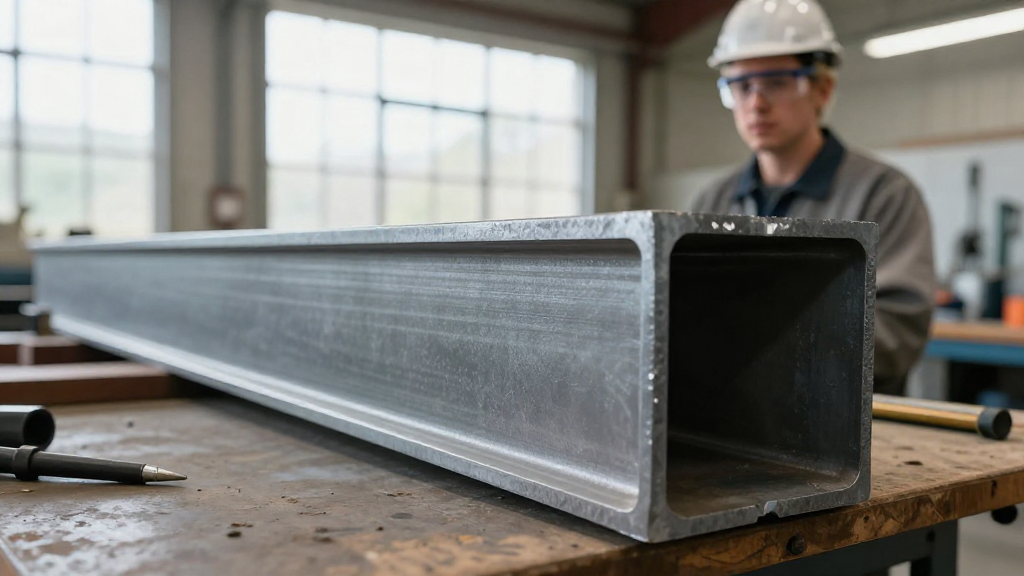
When it comes to structural engineering, understanding beam deformation modes is crucial for designing safe and effective structures.
What Are Beam Deformation Modes?
Beam deformation modes refer to the various ways a beam can deform or bend when subjected to loads.
These deformation modes are vital in engineering and construction, as they help engineers predict how a beam will react under stress.
Here are some common beam deformation modes:
- Bending
- Shear
- Torsion
- Axial deformation
In the following sections, we will delve deeper into each of these beam deformation modes and explore their significance.
What Is Bending in Beam Deformation?
Bending is one of the most common beam deformation modes, often seen in beams supporting loads, like flooring or roofing systems.
When a beam bends, it experiences:
- Tension on one side
- Compression on the other side
This deformation mode is characterized by a change in the curvature of the beam and is governed by factors such as:
- The material properties (modulus of elasticity)
- The geometry of the beam (length, width, and height)
- The type and magnitude of the applied load
Engineers often use the Euler-Bernoulli beam theory to describe bending behavior, allowing them to calculate the maximum deflection and stress distribution within the beam.
How Does Shear Affect Beam Deformation?
Shear deformation occurs when forces act parallel to the cross-section of a beam.
This deformation mode is crucial in beams that experience transverse loads.
Shear forces can lead to two types of shear deformation:
- Vertical shear
- Horizontal shear
The impact of shear can be amplified in shorter beams or beams with large cross-sectional areas.
Two critical parameters in evaluating shear deformation are the shear modulus and beam dimensions, affecting how a beam responds to shear forces.
What Is Torsion in Beam Deformation?
Torsion refers to the twisting of a beam caused by an applied torque.
This beam deformation mode is prevalent in structural elements like shafts and beams subjected to twisting moments.
When a beam experiences torsion, it undergoes:
- Angular displacement at the ends
- Shearing stress along the beam’s length
Torsional behavior is essential for designs such as bridges and mechanical components, where twisting forces are common.
The analysis of torsion can be complex.
However, basic formulas for circular shafts can provide insights into shear stress and angle of twist, and engineers must consider:
- Cross-sectional shape
- Material properties
What Are Axial Deformations in Beams?
Axial deformation occurs when forces are applied along the length of a beam, causing it to either stretch or compress.
This beam deformation mode is essential for understanding how beams react to longitudinal forces.
Some significant factors influencing axial deformation include:
- Young’s modulus (material stiffness)
- Beam length and cross-sectional area
- Applied load magnitude
When calculating axial deformation, engineers often apply Hooke’s Law, which relates stress and strain in elastic materials.
Why Are Beam Deformation Modes Important?
Understanding beam deformation modes is critical for several reasons:
- Safety: Knowing how a beam will deform helps prevent structural failures.
- Design Optimization: Engineers can refine designs based on deformation behavior, ensuring materials are not overused.
- Cost-Effectiveness: By accurately assessing deformation modes, unnecessary expenses related to over-engineering can be avoided.
- Performance Predictions: Knowing how beams will react under loads leads to better predictions of overall structural performance.
How to Analyze Beam Deformation Modes?
To analyze beam deformation modes, engineers utilize several methods and approaches:
- Finite Element Analysis (FEA): A computational technique that models complex structures to predict behavior under loads.
- Analytical Methods: Simple formulas and theories (like Euler-Bernoulli beam theory) can be applied for standard cases.
- Experimental Testing: Physical models of beams can be tested under controlled conditions to observe real-world deformation behaviors.
These methods provide critical data that helps in refining structural designs and ensuring safety.
What Are Material Considerations in Beam Deformation?
Material properties significantly influence beam deformation modes.
Key aspects to consider include:
- Modulus of Elasticity (E): Determines the beam’s stiffness and how much it will deform under load.
- Shear Modulus (G): Influences the beam’s response to shear forces.
- Yield Strength: The maximum stress a material can withstand before plastic deformation occurs.
Choosing the right materials can help optimize beam performance, ensuring that structures can handle various loads and conditions.
What Roles Do Support Conditions Play in Beam Deformation?
The way a beam is supported also affects its deformation mode.
Common support types include:
- Simply Supported: Allows rotation at the supports but does not resist moments.
- Fixed Support: Restrains rotation and offers greater resistance to deformation.
- Cantilever Support: Projects out extensively, leading to unique bending and shear characteristics.
The support types lead to distinct deformation patterns and influence the methods used in analysis.
Conclusion: Understanding Beam Deformation Modes
Understanding beam deformation modes is important for successful structural design.
Applying knowledge of bending, shear, torsion, and axial deformation can lead to safer, more efficient constructions.
As technology advances, engineers must keep up-to-date with new analysis techniques and material properties to optimize designs effectively.
By recognizing the critical factors influencing beam deformation, professionals can enhance performance.
This ultimately contributes to creating structures that are not only functional but also resilient to various loads and demands.
As you embark on your projects, keep these fundamental aspects in mind—it could make all the difference in your structural design outcomes!