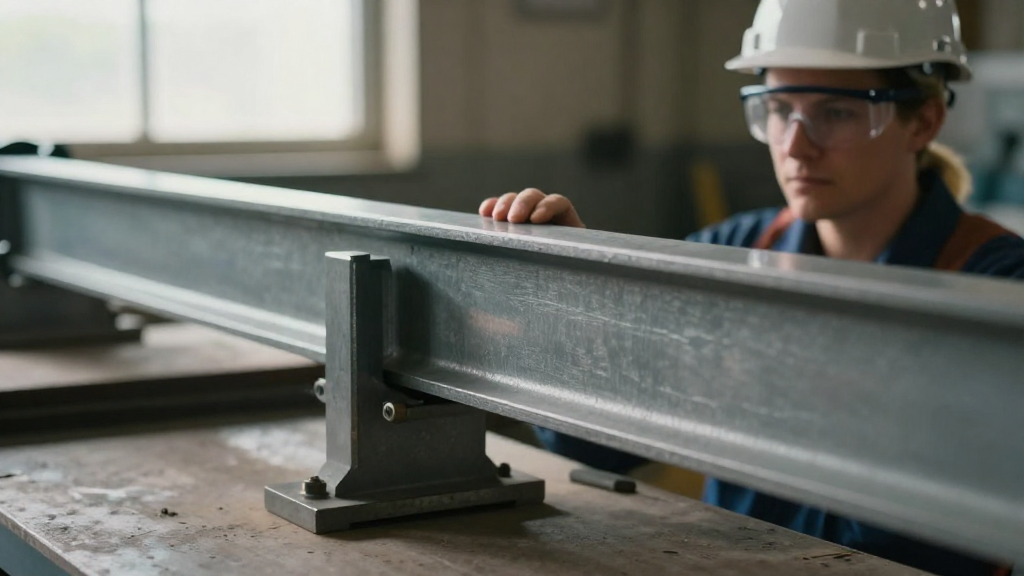
In engineering and structural analysis, the beam fixed support plays a crucial role in determining how a beam behaves under various loads and conditions. Understanding this concept is vital for engineers and designers to ensure safety, reliability, and efficiency in their structures.
What is a Fixed Support in Beam Analysis?
A fixed support is a type of support that restrains a beam from translating or rotating at the point of support.
This means that the following conditions apply:
- Translation in any direction is prevented.
- Rotation about the support point is also restricted.
The fixed support ensures that the beam remains stable and rigid at the point of connection, allowing it to bear loads effectively and maintain its shape.
How Does Fixed Support Influence Beam Deflection?
One of the most significant ways a beam fixed support affects beam behavior is through deflection.
Deflection is the degree to which a structural element is displaced under a load.
Here’s how fixed supports impact deflection:
-
Increased Rigidity: With a fixed support, the beam’s effective length is shortened since the support restricts rotation. This increased rigidity leads to lower deflection values when the same loads are applied compared to simply supported beams.
-
Load Distribution: The presence of fixed supports changes how loads are distributed along a beam. Fixed supports can lead to higher reaction forces at the support points, which can significantly affect how the beam handles loads.
-
Bending Moments: A fixed support creates a moment at the support point due to externally applied loads. This moment must be considered in the design process, as it can lead to increased stress in the beam.
In summary, using beam fixed support significantly alters the deflection characteristics, making them an essential factor in structural design.
What Are the Advantages of Using Fixed Supports?
The use of fixed supports offers several advantages in beam design:
-
Enhanced Load Capacity: Fixed supports can handle more significant loads without excessive deformation, as they provide greater stability to structures.
-
Prevention of Instability: In structures where lateral stability is a concern, fixed supports help in preventing buckling or lateral-torsional instability.
-
Simplified Analysis: While analyzing fixed beams may be slightly more complex than simply supported beams, the predictable nature of fixed supports allows engineers to use established methods for calculations.
-
Combined Load Handling: Fixed supports permit the handling of various load types, including vertical, lateral, and moment loads, making them versatile for different applications.
By incorporating beam fixed support, designers benefit from these advantages, leading to more robust and reliable structures.
What Are the Disadvantages of Fixed Supports?
Despite their benefits, fixed supports also come with some disadvantages:
-
Higher Stress Concentration: Fixed supports can lead to increased stress at the support points due to the restraint against rotation. This means that careful consideration must be given to the materials used, especially for larger beams.
-
Complicated Analysis: The analysis of fixed beams requires a thorough understanding of static equilibrium and strain distribution, making them somewhat more complex than simpler support types.
-
Foundation Requirements: Because fixed supports impose additional loads on foundations, engineers must ensure that the foundations are designed adequately to resist these forces.
-
Thermal Expansion Issues: Fixed supports can complicate thermal expansion, as they do not allow for beam movement. During temperature changes, beams may experience stress, leading to potential failures if not properly designed.
In conclusion, while beam fixed support provides numerous advantages, its disadvantages must also be considered during the design phase to ensure structural integrity.
How Do Fixed Supports Affect Different Beam Materials?
Different materials respond differently when subjected to the constraints of fixed support. Here are some examples:
-
Steel Beams: Steel has high tensile and compressive strength, which works well with fixed supports. The rigidity often helps mitigate deflections, making it a preferred material for heavily loaded beams.
-
Concrete Beams: Concrete is good in compression but weaker in tension. Using fixed supports can concentrate tensile stresses, which can lead to cracking if not accounted for in design.
-
Wood Beams: Wood, being anisotropic, can behave unpredictably under fixed supports. It’s essential to consider its grain orientation and moisture content during design to avoid unexpected deformations.
Understanding how fixed support interacts with various materials enables engineers to specify the appropriate beam types for specific applications.
What is the Role of Fixed Support in Dynamic Loading?
In dynamic loading situations (such as earthquakes or wind loads), the role of beam fixed support becomes even more critical. Here’s how:
-
Reduced Vibrations: A fixed support can reduce the amplitude of vibrations compared to a simply supported beam, thus improving the overall stability of the structure.
-
Dynamic Response: Fixed supports can affect the natural frequency of beams. Engineers must conduct vibration analysis to ensure that the natural frequency does not coincide with dynamic load frequencies to avoid resonance.
-
Damping Effects: Fixed supports can introduce dampening effects due to the fixed connection, which can reduce the response of a beam under dynamic conditions.
Understanding how fixed supports impact the behavior of beams under dynamic loads is crucial for ensuring structures remain safe under varying conditions.
What Are Common Applications of Fixed Supports?
Fixed supports are commonly found in various applications in structural engineering, including:
-
Bridges: The fixed support can effectively handle the high moments and shear forces due to traffic loads.
-
Tall Buildings: Used in the columns that support floors and roofs, fixed supports minimize lateral displacement during wind loads.
-
Industrial Structures: Fixed supports in factory buildings can support heavy machinery and equipment while minimizing vibrations.
-
Frames and Trusses: Used in various architectural designs to improve the stability of entire frameworks against loads.
Incorporating beam fixed supports in these applications ensures enhanced safety and functionality across multidisciplinary engineering projects.
Conclusion
In summary, the beam fixed support is a fundamental aspect of structural engineering that significantly impacts beam behavior under various loading conditions.
Understanding how fixed supports influence deflection, stress distribution, and dynamic loading responses is essential for designing safe and efficient structures.
While fixed supports offer distinct advantages, including enhanced load capacity and stability, engineers must also be aware of their limitations in the design process.
Taking all these factors into account will lead to better-informed engineering decisions that account for both performance and safety in beam design.