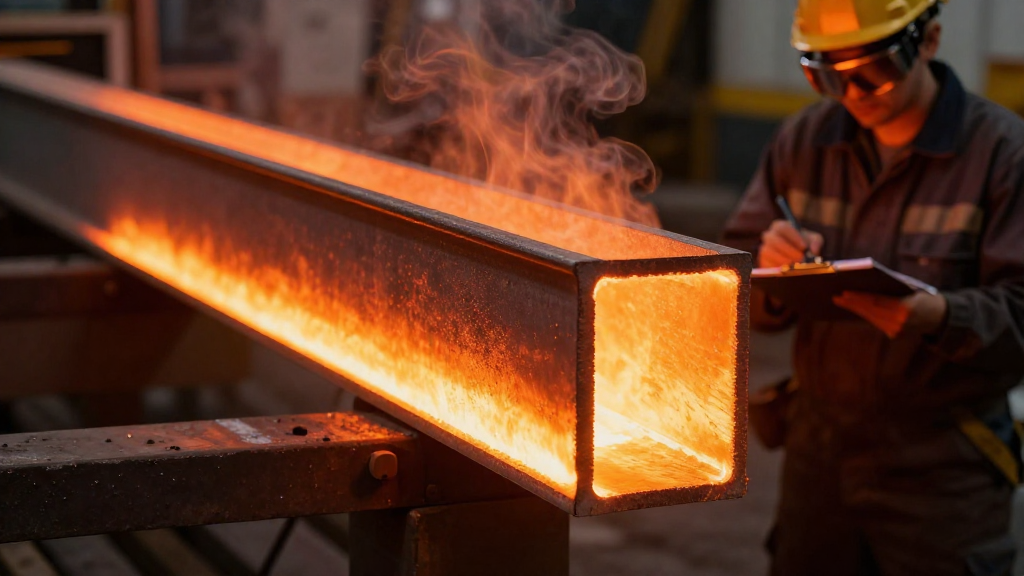
Beam heat transfer plays a crucial role in determining the performance and safety of various structural applications.
In this article, we will delve into how heat transfer affects beams, including the different types of heat transfer, the implications on structural integrity, and the methods to mitigate potential issues.
What Are the Types of Heat Transfer that Affect Beams?
Understanding the types of heat transfer is essential to grasp how they interact with beams. There are three primary modes of heat transfer:
-
Conduction:
– The direct transfer of heat through a material.
– Occurs when two materials at different temperatures are in contact.
– Important for beams made of metals and other conductive materials. -
Convection:
– The transfer of heat through the movement of fluids (liquids and gases).
– Influences beams exposed to air or liquids.
– Can significantly affect temperature distribution across a beam. -
Radiation:
– The transfer of heat through electromagnetic waves.
– Affects beams in conditions of high temperature, even at a distance.
– Important for structures located in environments with concentrated heat sources, such as near furnaces or in solar applications.
Understanding beam heat transfer through these three mechanisms is vital for engineers and architects when designing structures that require thermal efficiency and durability.
How Does Heat Transfer Affect the Performance of Beams?
The performance of beams can be significantly affected by heat transfer, particularly in structural applications. Here are the main effects:
- Material Degradation:
- Continuous exposure to high temperatures can lead to thermal fatigue, causing materials to lose strength.
-
Over time, this degradation can lead to failure if not monitored and mitigated.
-
Thermal Expansion:
- Beams often expand and contract with temperature changes.
- Differential expansion can create additional stresses within a structure, potentially leading to warping or cracking.
-
Proper design must account for these movements to ensure safety.
-
Change in Load Capacity:
- Elevated temperatures can reduce the load-bearing capacity of beams significantly.
-
This change is crucial to consider during high-temperature applications, such as industrial environments.
-
Loss of Stiffness:
- Temperature increases can lower the stiffness of materials, which may lead to deflections that are beyond acceptable limits.
- This can have serious implications for structural integrity.
By understanding how beam heat transfer can impact these factors, engineers can better predict and mitigate potential failures.
What are the Implications of Beam Heat Transfer in Structural Design?
Incorporating the effects of beam heat transfer into structural design is critical. Some of the primary implications include:
-
Design Considerations:
– Engineers must select appropriate materials based on their thermal properties.
– For example, using steel versus aluminum might be crucial based on the expected temperatures and load conditions. -
Thermal Insulation:
– Insulating materials can be used to minimize heat transfer.
– This helps in protecting beams from extreme temperature variations. -
Expansion Joints:
– These joints allow for movement caused by thermal expansion or contraction.
– Proper placement of expansion joints can help maintain structural integrity. -
Thermal Analysis:
– Conducting thorough thermal analysis during design can predict potential issues.
– This analysis can help in determining how heat flows through beams under various conditions. -
Fire Safety Measures:
– In fire-prone environments, special considerations and materials should be used to reduce the risk of failure.
– Utilizing fire-resistant materials is a common approach.
Implementing these design strategies ensures that the effects of beam heat transfer are accounted for in the integrity and longevity of structures.
How Can Engineers Mitigate Negative Effects of Beam Heat Transfer?
To safeguard structural performance against negative effects of heat transfer, engineers can adopt several mitigation strategies:
- Material Selection:
- Choose materials that maintain structural properties at varying temperatures.
-
Consider thermally-rated materials for high-temperature applications.
-
Active Cooling or Heating Systems:
- In specific applications, installing cooling or heating systems can help maintain optimal temperatures.
-
For example, in industrial settings, coolants may be circulated to maintain structural integrity.
-
Regular Inspection and Maintenance:
- Establish a routine inspection program to identify thermal damage.
-
Early detection can prevent more significant structural failure.
-
Thermal Monitoring:
- Utilize sensors that monitor real-time temperature across beams.
- This data can help inform maintenance decisions and avoid catastrophic failures.
What Are the Case Studies Illustrating Beam Heat Transfer Effects?
Example 1: Long-Span Bridges
In the case of long-span bridges, beam heat transfer can greatly influence structural behavior.
- During summer, extensive heat can cause bridge components to expand.
- Engineers often design bridges with specific expansion joints that accommodate expected thermal expansion.
Example 2: Commercial Buildings
Additionally, commercial buildings equipped with large glass facades can experience significant thermal changes.
- The heat absorption by the glazing can cause beams to react differently than anticipated.
- Proper use of thermal breaks in these beams can aid in minimizing heat transfer from the exterior.
Example 3: Industrial Applications
Industries that operate in high-temperature environments need special consideration.
- For example, a factory housing furnaces requires beams that can withstand extreme heat without deforming.
- Incorporating materials that are heat resistant ensures longevity and performance reliability.
Conclusion: Understanding Beam Heat Transfer
Beam heat transfer is a vital concept that significantly impacts the durability and safety of structural elements.
By understanding the different modes of heat transfer and their implications, engineers can design structures that withstand thermal stresses effectively.
Through the thoughtful selection of materials, the implementation of insulation strategies, and the establishment of effective monitoring systems, the adverse effects of beam heat transfer can be minimized, ensuring that structures perform as intended over their lifespan.
Investing in comprehensively understanding this topic is not just about compliance but about ensuring the safety and efficacy of structural designs.