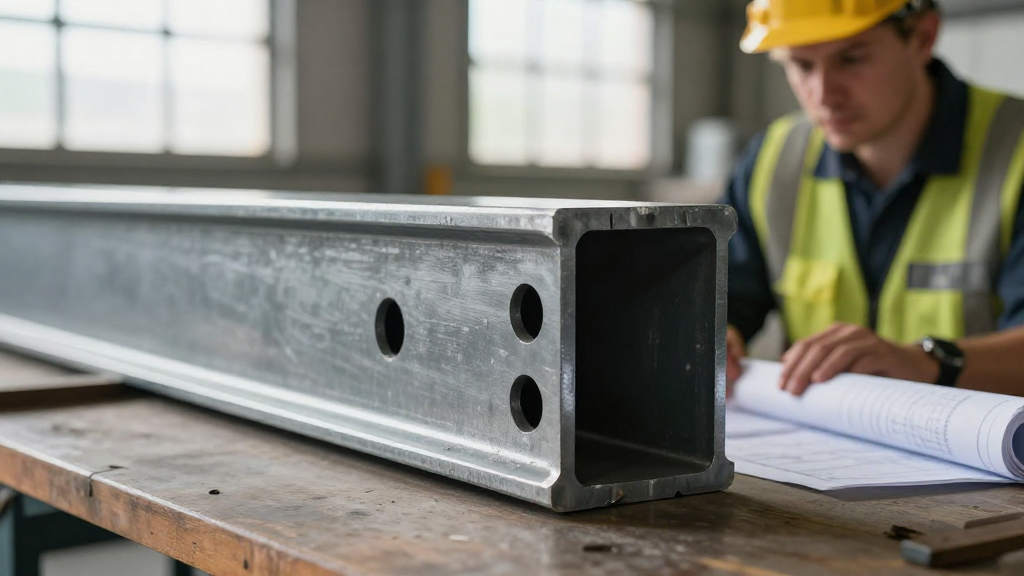
Understanding how beam holes and cutouts affect a beam’s strength is crucial for engineers and architects alike.
It’s essential to comprehend the balance between structural integrity and the functional requirements that necessitate these modifications.
What Are Beam Holes and Cutouts?
Beam holes and cutouts are intentional voids or notches made in structural beams, often necessary for various reasons:
- Utility lines: Running electrical, plumbing, or HVAC systems.
- Aesthetic design: Creating unique architectural features.
- Weight reduction: Minimizing the mass of a structure.
While these adjustments can serve many purposes, they inherently impact the beam’s strength and load-bearing capacity.
How Do Beam Holes and Cutouts Impact Strength?
The introduction of beam holes and cutouts changes the distribution of stress within a beam.
Let’s delve into how these alterations influence strength:
What Happens to Load Distribution?
When a hole or cutout is added to a beam:
-
Stress Concentration: The beam’s original load path is disrupted.
This can lead to increased stress in areas adjacent to the cutouts, making them more susceptible to failure. -
Effective Area Reduction: The cross-sectional area that can resist bending and shear forces is reduced.
This leads to an overall decrease in the beam’s capacity to carry loads. -
Failure Modes: Holes can create regions where failure occurs before the rest of the beam fails.
This localized failure is often characterized by:
– Tearing
– Cracking
– Buckling
Are There Safe Limits for Holes and Cutouts?
Yes! When considering beam holes and cutouts, there are guidelines to ensure the structure’s integrity:
- Hole Size Limitations: Use a fraction of the beam height (typically no more than 1/3) to determine allowable hole size.
- Spacing Requirements: Ensure adequate spacing between holes and cutouts to prevent cumulative effects that lead to weaknesses.
- Location Considerations: Avoid placing holes near supports or points of maximum moment, which could elevate stress in critical areas.
How Do Different Materials Respond to Beam Holes and Cutouts?
Material type significantly affects how beam holes and cutouts influence strength:
-
Steel Beams
Steel has high tensile strength, but holes can cause stress concentrations due to welding and fabrication techniques.
Using techniques like reducing the hole size or employing stiffeners can help mitigate risk. -
Concrete Beams
Concrete has lower tensile strength compared to steel.
Cutouts in concrete can lead to cracks that compromise the entire beam if not designed and executed correctly. -
Composite Materials
These materials can be engineered for better responsiveness to stress.
However, attention must be paid when designing cutouts since the layered makeup may create weak points.
What Design Strategies Can Minimize Risks?
Engineers can adopt several design strategies that can help minimize the effects of beam holes and cutouts on strength:
- Reinforcing Elements: Adding additional elements such as plates or cross bracing can redistribute loads.
- Brackets and Stiffeners: Enhance bending resistance near cutouts to improve overall strength.
- Advanced Modeling: Use simulation software to predict stress impacts in three-dimensional models before implementing changes.
Should Beam Holes and Cutouts Be Avoided?
While it’s essential to consider the potential drawbacks, it’s not always necessary to avoid beam holes and cutouts entirely.
They can serve vital functional roles.
However, it’s about finding the right balance between utility and structural safety.
How Do Codes and Standards Influence the Design Process?
Building codes and standards provide critical guidelines regarding beam holes and cutouts.
Standards set by organizations like the American Institute of Steel Construction (AISC) and various international building codes specify requirements necessary for maintaining structural integrity.
These standards often include:
- Material Properties: Guidelines on how to approach the specifications for different materials used in beams.
- Load Calculations: Mandatory calculations to determine if the beam can safely support the intended loads.
- Inspection Protocols: Regular inspection requirements to ensure the integrity of the beam post-construction.
Conclusion: How to Balance Utility and Strength in Beam Design
Understanding how beam holes and cutouts affect strength is a fundamental part of structural engineering.
While these modifications can serve practical and design purposes, the impact on load-bearing capacity and stress distribution must be carefully evaluated.
Using appropriate design strategies, adhering to codes, and choosing the right materials can help mitigate the negative effects of beam holes and cutouts.
The goal should always be a combination of safety, functionality, and aesthetic appeal.
Ultimately, making informed design decisions shows the importance of maintaining the fundamental principle of structural integrity while allowing for innovation and creativity in construction.