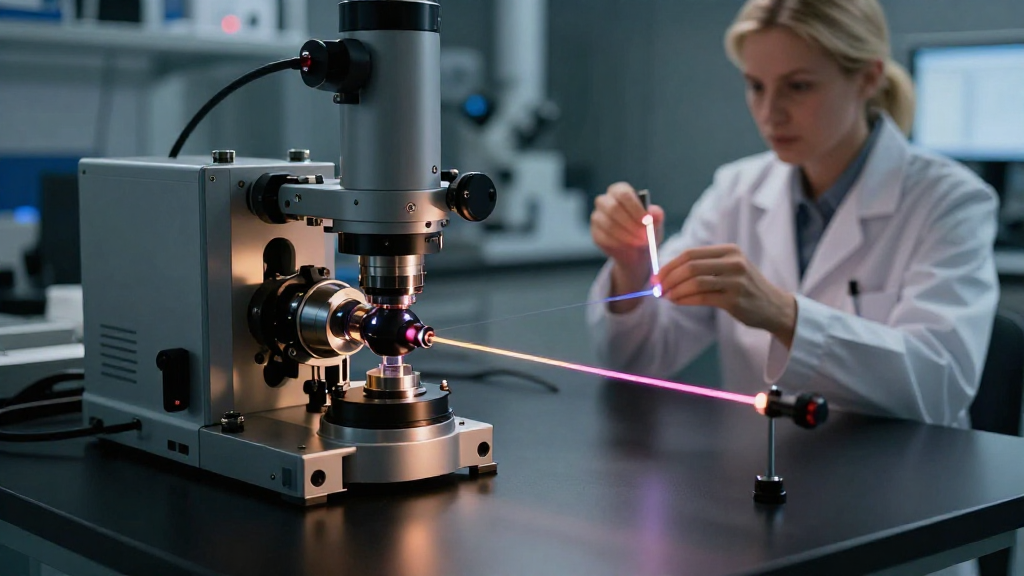
Simulating beam optics involves utilizing various models and software to replicate the behavior of light as it interacts with different mediums.
In this article, we’ll explore how you can effectively simulate beam optics, what tools are available, and tips for successful simulation.
What is Beam Optics Simulation?
Beam optics simulation refers to the process of using mathematical and computational methods to predict how light behaves as it passes through optical systems.
This can include phenomena such as refraction, diffraction, and more complex wave interactions.
Understanding and simulating these effects are crucial for designing optical devices like lenses, mirrors, and lasers.
What Tools are Available for Beam Optics Simulation?
When embarking on a project to simulate beam optics, you have a variety of software options at your disposal:
-
Zemax:
– Primarily used in lens design and optical system simulation.
– Offers both ray tracing and wave optical capabilities. -
COMSOL Multiphysics:
– Useful for simulating electromagnetic wave propagation.
– Good for modeling wave optics and higher-dimensional problems. -
OpticStudio:
– Allows users to design and analyze optical systems in a virtual environment.
– Supports both ray optics and wave optics simulations. -
FDTD Solutions:
– Used for simulating light-matter interactions.
– Ideal for nanophotonic designs. -
LightTools:
– A powerful tool for illumination systems and optical design.
– Combines ray tracing with advanced illumination modeling.
Choosing the right tool depends on the specific requirements of your project and your expertise level.
How Do You Set Up Your Simulation?
Setting up your beam optics simulation involves several critical steps to ensure accurate results:
-
Define the Objective:
– What do you want to achieve with your simulation?
– Specify the type of optical phenomena or design you are exploring. -
Select the Software:
– Choose from the aforementioned tools based on your needs. -
Create the Optical Model:
– Input the geometrical properties of your optics (like lenses and mirrors).
– Use precise measurements to ensure accuracy. -
Set Up Light Sources:
– Determine the type and characteristics of the light source you’ll use (e.g., laser beams or LEDs).
– Define wavelength and intensity settings for the simulation. -
Configure Simulation Parameters:
– Establish parameters like boundary conditions, mesh sizes, and solver settings. -
Run the Simulation:
– Execute the simulation and monitor for issues like convergence or instability. -
Analyze Results:
– Review the output data for phase shifts, intensity distributions, and more.
– Adjust your model based on the results obtained for further iterations.
By following these steps, you’ll be well on your way to effectively simulating beam optics.
Why is Beam Optics Simulation Important?
What are the Benefits of Simulation?
Simulating beam optics offers numerous benefits, enhancing both design processes and educational perspectives:
- Cost-Effective:
- Reduces the need for physical prototypes.
-
Allows for inexpensive troubleshooting and refinement.
-
Time-Saving:
- Accelerates the design process.
-
Rapid testing and iterations yield faster results.
-
Enhanced Understanding:
- Provides insights into complex optical phenomena.
-
Useful for educational purposes, explaining concepts like diffraction and interference.
-
Risk Reduction:
- Identifies potential design flaws before physical fabrication.
- Enables better preparation for real-world testing.
These advantages underscore the importance of utilizing beam optics simulation in both research and product development.
What Concepts Should You Understand?
Key Concepts in Beam Optics Simulation
Gaining a solid understanding of beam optics requires familiarity with several core concepts:
- Ray Tracing:
- A method of simulating how light travels through systems.
-
Based on geometrical optics and assumes light travels in straight lines.
-
Diffraction:
- The bending of light waves around obstacles and through apertures.
-
Important when dealing with small-scale optics.
-
Refraction:
- The bending of light as it passes from one medium to another.
-
Governed by Snell’s law and significantly affects lens design.
-
Interference:
- Occurs when two or more beams overlap and combine.
- Important in applications like holography and thin films.
By mastering these concepts, you’ll enhance your ability to perform effective simulations in beam optics.
How Can You Improve Your Simulation Skills?
Tips for Effective Beam Optics Simulation
Improving your simulation skills in beam optics requires practice and a focus on specific strategies:
- Practice Regularly:
- Engage with different projects.
-
Experiment with various optical configurations and materials.
-
Utilize Tutorials:
- Take advantage of online courses and resources.
-
Look for tutorials specific to your chosen simulation software.
-
Join Forums:
- Participate in optics discussion boards and communities.
-
Exchange ideas with other practitioners and experts.
-
Stay Updated:
- Follow the latest advancements in optical physics and engineering.
-
Implement new techniques and technologies in your work.
-
Seek Feedback:
- Share your simulation results with peers for constructive criticism.
- Use feedback to refine your approaches and improve accuracy.
By consistently applying these strategies, you’ll advance your skills in beam optics simulation, leading to more proficient and insightful outcomes.
Conclusion: What’s Next in Beam Optics?
Simulating beam optics is a fascinating and scientifically rich endeavor that opens doors to innovation and understanding in optoelectronics and photonics.
With the right tools and a solid understanding of key concepts, you can create highly accurate simulations that reflect real-world phenomena.
Remember to keep practicing, exploring new techniques, and engaging with the community as you evolve your skills in beam optics simulation.
Whether for educational purposes, research, or product development, mastering this field is bound to yield significant rewards.