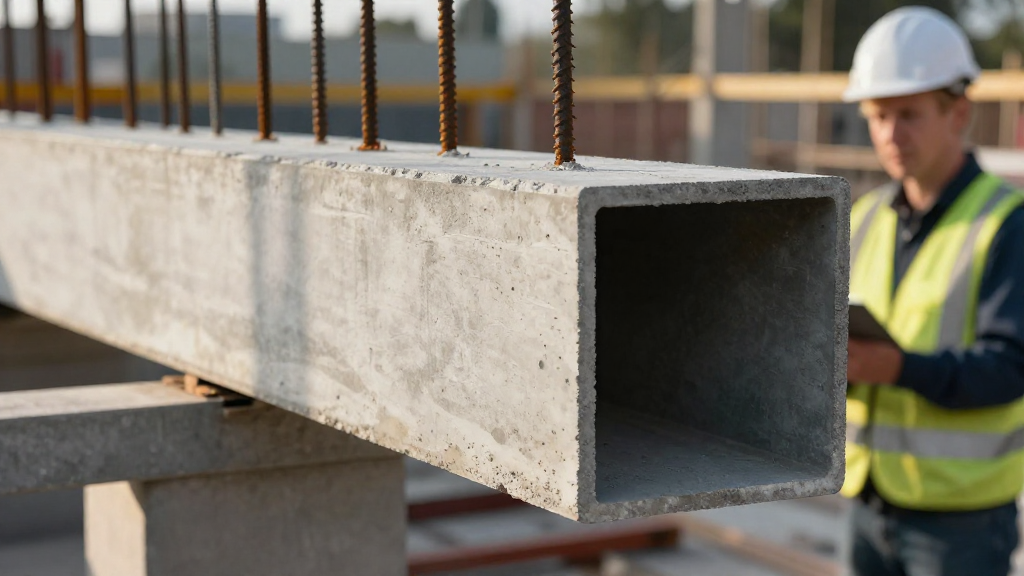
Beam reinforcement details are crucial for the structural integrity and durability of buildings and civil engineering works.
In this article, we will explore beam reinforcement details, including the types of reinforcement, the materials used, and the best practices for implementation.
What Is Beam Reinforcement?
Beam reinforcement refers to the process of adding materials, usually steel, to concrete beams to ensure they have the strength and flexibility to carry loads.
Concrete beams, while strong in compression, are weak in tension.
Thus, they need reinforcement to handle various stresses.
Key aspects of beam reinforcement include:
-
Types of Reinforcement: These can be either steel bars (rebar) or steel mesh.
-
Material Selection: The right materials contribute significantly to the effectiveness of the reinforcement.
-
Design and Orientation: The configuration of reinforcement can affect a beam’s performance.
Why Is Beam Reinforcement Necessary?
How Does Beam Reinforcement Improve Structural Integrity?
Beam reinforcement details contribute to the overall stability and safety of structures.
Here’s why it’s essential:
-
Load-Bearing Capacity: Reinforced beams can bear greater loads without failure.
-
Flexibility: Beam reinforcement allows for slight movements, reducing the risk of cracks.
-
Durability: Properly reinforced beams can withstand weather elements, chemicals, and wear over time.
-
Safety: They provide a secure structural foundation, reducing the risks of collapse.
What Types of Reinforcement Are Commonly Used?
Which Materials Are Used for Beam Reinforcement?
The two most commonly used types of reinforcement in beams are:
-
Reinforcing Steel Bars (Rebar):
-
Generally available in different grades and sizes.
-
Provides excellent tensile strength.
-
Can be shaped and bent to fit design needs.
-
Steel Mesh:
-
Usually constituted of a grid of steel wires.
-
Used in slabs and walls but may be integrated into beam designs depending on requirements.
Both materials have distinct advantages, depending on the specific beam reinforcement details of a project.
What Are the Key Design Considerations?
How Should Beam Reinforcements Be Designed?
When designing beam reinforcement, several factors should be taken into consideration:
- Load Calculations:
- Consider static and dynamic loads the beam will endure.
- Beam Dimensions:
- Determine width and depth; larger dimensions may require more reinforcement.
- Splice Length:
- The overlap length, or splice, should be adequate to maintain load transfer.
- Environmental Factors:
- Consider corrosive environments, which may require protective coatings or alternative materials.
How Are Beam Reinforcement Details Implemented?
What Are the Steps for Proper Beam Reinforcement?
Implementing beam reinforcement requires precision.
Here is a step-by-step guide:
- Preparation of the Site:
- Ensure that the concrete formwork is in place and level.
- Cutting and Bending Rebar:
- Cut and shape rebar according to the pre-established design.
- Placement of Reinforcement:
- Position the rebar or mesh in accordance with design specifications.
- Securing Reinforcements:
- Use ties or clamps to secure reinforcement in place.
- Pouring Concrete:
- After verifying placement, pour concrete surrounding the reinforcement.
- Curing the Concrete:
- Allow time for the concrete to cure appropriately, ensuring strength development.
What Are Common Mistakes to Avoid?
Which Errors Can Compromise Beam Reinforcement Effectiveness?
Even experienced contractors can make mistakes. Here are some common pitfalls to avoid:
- Insufficient Cover:
- Failure to provide adequate concrete cover can expose reinforcement to corrosion.
- Incorrect Placement:
- Misalignment can weaken the structure significantly.
- Underestimating Loads:
- Not accurately calculating loads can result in beam failure.
- Neglecting Design Changes:
- Any changes in design must be reflected in the reinforcement details.
What Are the Regulatory Standards in Beam Reinforcement?
Are There Codes of Practice for Beam Reinforcement?
Different regions have specific codes governing beam reinforcement.
These codes ensure safety and performance standards are met.
Some widely recognized codes include:
-
American Concrete Institute (ACI) Standards
-
Eurocode Standards
-
National Building Code (NBC)
Always consult local regulations and standards to verify compliance.
How Do Advances in Technology Influence Beam Reinforcement?
What Innovations Are Changing Beam Reinforcement Practices?
Technology has revolutionized beam reinforcement in many aspects:
-
Advanced Materials:
-
High-strength and lightweight materials have improved beam performance.
-
Software Optimization:
-
Structural analysis software assists in designing more effective reinforcement layouts.
-
3D Printing:
-
Although still in development, 3D printing holds potential for creating pre-reinforced concrete components.
These innovations aim to improve not only the beam reinforcement details, but also the efficiency and overall project deliveries.
Conclusion: Why Understanding Beam Reinforcement Details is Essential
In summary, the details of beam reinforcement are vital for creating safe, durable, and efficient structures.
Understanding how to implement beam reinforcement correctly ensures that buildings can withstand various loads and environmental conditions while maintaining structural integrity.
Focusing on the key aspects such as material type, design considerations, and common pitfalls will lead to successful construction outcomes.
Being aware of regulatory standards and technological advances further enhances the effectiveness of beam reinforcement practices.
By mastering these details, engineers and builders can ensure robust construction that withstands the test of time.
Make sure to engage with industry resources, continue education, and consult the latest codes to stay ahead in the field of concrete technology and beam reinforcement.