Choosing among today’s 4K computer monitors is easier when you focus on the right mix of resolution, size, refresh rate, and panel quality. The best models can make everything from spreadsheets to streaming look sharper and feel more comfortable to use.
This roundup highlights ten strong options for different needs, whether you want a fast IPS display for gaming, a color-accurate screen for work, or a larger smart monitor for a more flexible setup.
Best 10 4K Computer Monitors Picks for 2026
Smooth 4K all-rounder

- 27-inch 4K IPS panel with 99% sRGB
- 120Hz refresh with AMD FreeSync Premium
- ComfortView Plus and built-in speakers
Best For: Work, media, and light gaming
Large everyday display

- 32-inch screen with three-sided borderless design
- 75Hz with AMD FreeSync for smoother visuals
- Eye Saver Mode and Flicker Free support comfort
Best For: General use on a large screen
Clean USB-C setup
Dell 27 S2725QC 4K USB-C 120Hz

- 4K IPS display with 99% sRGB color
- USB-C with up to 65W power delivery
- 120Hz FreeSync Premium and ComfortView Plus
Best For: Creators and professionals who want simple connectivity
Work-first 4K display
Samsung ViewFinity S7 27-inch 4K

- 27-inch 4K IPS panel with HDR10
- Samsung Display Manager adds workflow tools
- Good viewing angles and productivity focus
Best For: Business and editing workflows
Color-Accurate 4K Everyday Monitor
LG 27US500-W 27-Inch 4K UHD IPS
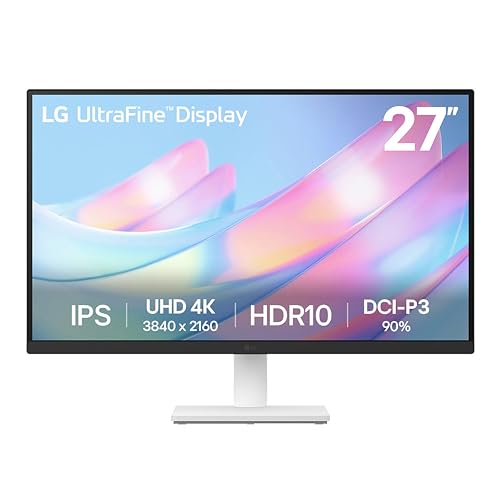
- 27-inch IPS 4K UHD panel
- HDR10 with up to 90% DCI-P3
- Onscreen Control and ergonomic stand
Best For: Creative work, office setups, and general-purpose 4K viewing
Professional 4K Workspace Pick
Samsung 32" ViewFinity S7 (S71H)

- 32-inch 4K UHD IPS panel
- HDR10 and 1B+ color support
- Eye Saver Mode helps reduce strain
Best For: Business, photo/video editing, and detail-focused work
Ultrawide Motion Pick

- 34-inch curved ultrawide display
- 100Hz refresh rate for smoother motion
- Built-in speakers and VESA support
Best For: Gaming, multitasking, and wide desktop setups
Smooth 4K all-rounder – Dell 27 S2725QS 4K IPS 120Hz
If you’re comparing 4k computer monitors for a balanced mix of productivity and casual gaming, the Dell S2725QS is built to cover both bases well. Its 27-inch IPS panel, 120Hz refresh rate, and 99% sRGB coverage make it a strong fit for crisp text, vivid visuals, and smoother motion than a typical office display.
Best For: Users who want a sharp, color-rich 4K monitor for work, media, and light gaming.
Pros:
- 4K UHD IPS panel with 99% sRGB for detailed, vibrant image quality
- 120Hz refresh rate with AMD FreeSync Premium for smoother motion
- Improved ComfortView Plus reduces harmful blue light by up to 35%
- Built-in speakers and a modern ultra-thin bezel design
Cons:
- 27-inch size may feel smaller than larger 4K alternatives for multitasking
- Best motion performance depends on compatible FreeSync support
Overall, this Dell is a practical all-rounder if you want a sharper and smoother monitor without giving up comfort features. It makes the most sense for buyers who value image quality first, but still want enough refresh rate headroom for occasional gaming or fast-moving content.
Large everyday display – Samsung 32" flat FHD monitor
Among 4k computer monitors, this Samsung model stands out more for screen size and value-oriented basics than for resolution. It uses a 32-inch FHD panel with a three-sided borderless design, so it’s a sensible option for general computing, streaming, and multi-monitor setups when you want a larger display without extra frills.
Best For: Buyers who want a large everyday monitor for business, multimedia, and personal use.
Pros:
- 32-inch screen provides plenty of room for everyday tasks
- Three-sided borderless design looks clean in single or multi-monitor setups
- AMD FreeSync and 75Hz refresh help reduce tearing and improve smoothness
- Eye Saver Mode and Flicker Free tech support more comfortable viewing
Cons:
- Not a 4K display; native resolution is 1920×1080
- 8ms response time is modest compared with faster panels
This is the right pick if your priority is a roomy 32-inch screen rather than high-resolution detail. It offers a straightforward feature set with some gaming and eye-comfort extras, but shoppers specifically seeking 4K should look elsewhere.
Clean USB-C setup – Dell 27 S2725QC 4K USB-C 120Hz
If you want 4k computer monitors that are easy to connect and comfortable for long sessions, the Dell S2725QC is a very practical choice. It pairs a 27-inch 4K IPS panel with 120Hz refresh, 99% sRGB, and USB-C connectivity with up to 65W power delivery, making it especially convenient for streamlined desk setups.
Best For: Professionals and creators who want a 4K USB-C monitor with strong color and simple cable management.
Pros:
- 4K IPS panel with 99% sRGB for sharp, accurate-looking visuals
- USB-C connection with up to 65W power delivery reduces cable clutter
- 120Hz refresh rate and FreeSync Premium support smoother motion
- ComfortView Plus helps reduce harmful blue light without sacrificing color accuracy
Cons:
- 27 inches may be limiting for users who want a larger 4K workspace
- 4ms response time is good, but not as fast as the 0.03ms figure listed in the feature set
For buyers who want a clean single-cable setup, this Dell is the most desk-friendly option in the group. It suits office work, photo/video editing, and mixed-use computing best, while still offering enough refresh rate for smoother everyday motion.
Work-first 4K display – Samsung ViewFinity S7 27-inch 4K
For shoppers focused on sharp text and workspace clarity, this Samsung ViewFinity S7 fits well into a roundup of 4k computer monitors. The 27-inch IPS panel delivers 3840 x 2160 resolution, HDR10, and a 178-degree viewing angle, which makes it a solid fit for business use and photo/video editing.
Best For: Productivity users who want a sharp 4K display with useful monitor-management tools.
Pros:
- 4K UHD resolution with high pixel density for detailed visuals
- IPS panel and 178-degree viewing angle keep images consistent
- HDR10 improves contrast with brighter highlights and darker blacks
- Samsung Display Manager adds split screen, KVM, PIP/PBP, and calibration tools
Cons:
- 60Hz refresh rate is less suited to fast gaming or high-motion use
- 5ms response time is fine for work, but not a speed-focused spec sheet
This monitor makes the most sense if your priority is productivity rather than gaming. It combines the core strengths of 4K resolution with helpful software features, so it can streamline a more organized desk setup.
Color-Accurate 4K Everyday Monitor – LG 27US500-W 27-Inch 4K UHD IPS
If you want one of the more practical 4k computer monitors for mixed work and media use, the LG 27US500-W focuses on sharp 4K detail, wide viewing angles, and easy desktop control. Its IPS panel, HDR10 support, and 90% DCI-P3 coverage make it a sensible pick for creators and anyone who values cleaner text and more consistent color.
Best For: Creative work, office setups, and general-purpose 4K viewing
Pros:
- 27-inch 4K UHD IPS panel with 1000:1 contrast for crisp detail and solid blacks
- HDR10 with up to 90% DCI-P3 color gamut for richer color expression
- Onscreen Control makes it easy to split the screen and adjust settings
- Ergonomic stand plus flicker-safe support for more comfortable daily use
Cons:
- 60Hz refresh rate is aimed at productivity, not fast gaming
- Response time is rated at 5ms, which is fine for work but not ideal for esports
- 27 inches may feel compact if you want a larger 4K workspace
Overall, this LG is a straightforward 4K monitor choice if your priority is a clean image, dependable color, and flexible everyday use. It leans more toward productivity and content viewing than high-refresh entertainment.
Immersive Curved Gaming Display – Samsung Odyssey G5 34-Inch Ultrawide
The Samsung Odyssey G5 is a strong fit if you want a more immersive monitor for gaming, but it is not one of the typical 4k computer monitors. Instead, it uses a 34-inch 3440 x 1440 ultrawide panel with a 1000R curve, which creates a wide field of view for racing, action, and open-world play. Its 165Hz refresh rate and 1ms response time are the real selling points here.
Best For: Immersive ultrawide gaming with fast motion handling
Pros:
- 1000R curved 34-inch screen wraps around your field of view
- 165Hz refresh rate with 1ms MPRT for smoother competitive play
- FreeSync Premium helps reduce tearing, stutter, and input latency
- HDR10 support adds better color accuracy and scene detail
Cons:
- Resolution is 3440 x 1440, not true 4K UHD
- VA panel brightness is listed at 250 cd/m2, which is modest
- Designed for gaming first, so it is less suited to color-critical work than IPS 4K displays
This monitor makes the most sense if you care more about immersion and speed than ultra-sharp 4K resolution. It is a gaming-first ultrawide that trades pixel density for a wider, more dramatic view.
Large-Screen Value 4K Monitor – Sceptre 32-Inch 4K UHD U325W-UPT
If you want a larger-screen option in the world of 4k computer monitors, the Sceptre 32-inch model emphasizes workspace room, sharp 3840 x 2160 detail, and flexible connectivity. It is built for users who want a big canvas for documents, timelines, or light gaming without jumping to a premium price tier.
Best For: Big-screen productivity, casual media, and light gaming
Pros:
- 32-inch 4K UHD panel gives you lots of room for multitasking
- 100% sRGB support and 4K resolution help keep visuals clean and vivid
- Up to 70Hz refresh rate is a little smoother than standard 60Hz
- Built-in speakers and multiple HDMI/DisplayPort inputs improve convenience
Cons:
- 70Hz is still far below the refresh rates of gaming-focused displays
- Integrated speakers are handy, but external speakers will usually sound better
- Best suited to work and light gaming rather than demanding competitive play
This Sceptre is a practical large-format 4K monitor for buyers who value screen space and simple setup. It is especially appealing if you want a roomy desktop display with broad connectivity and basic comfort features.
Professional 4K Workspace Pick – Samsung 32" ViewFinity S7 (S71H)
If you’re comparing 4k computer monitors for office work, photo editing, or detailed content creation, this 32-inch Samsung ViewFinity S7 is built around clarity and usable screen space. Its 4K UHD IPS panel, HDR10 support, and matte finish make it a practical choice for long work sessions where text sharpness and color accuracy matter.
Best For: Professionals who want a large 4K monitor for business tasks, design work, and photo/video editing.
Pros:
- 32-inch 4K UHD IPS display for crisp detail and wide 178-degree viewing angles
- HDR10 with support for more than 1 billion colors for richer contrast and color depth
- Eye Saver Mode and flicker reduction help reduce strain during long sessions
- HDMI and DisplayPort connectivity keeps setup straightforward
Cons:
- 60Hz refresh rate is fine for productivity, but not aimed at fast gaming
- Only one HDMI port may feel limited for multi-device setups
- Built-in speakers are not listed
This Samsung model is a strong fit if your priority is a roomy, professional 4K display rather than gaming extras. It focuses on core productivity features and dependable image quality.
Ultrawide Motion Pick – ZZA 34-Inch Curved Monitor
For shoppers looking at 4k computer monitors but wanting a wider, more immersive desktop view, this ZZA 34-inch curved display offers an ultrawide 3440 x 1440 panel with a 100Hz refresh rate. It leans into gaming and everyday productivity with a curved screen, built-in speakers, and VESA support.
Best For: Users who want an ultrawide curved monitor for gaming, multitasking, and everyday desktop use.
Pros:
- 34-inch 21:9 curved display with 3440 x 1440 resolution for wide-screen workspace use
- 100Hz refresh rate helps motion look smoother in games and fast-moving content
- 100% sRGB color coverage supports accurate-looking color for creative work
- Built-in speakers and HDMI/DisplayPort inputs add convenience
Cons:
- Not a true 4K UHD panel, despite the product positioning
- Brightness is listed at 250, which may be modest for very bright rooms
- Single HDMI port may limit multi-source flexibility
This model makes the most sense if you value immersion and extra horizontal space over a standard 4K resolution. It combines practical features with a gaming-friendly refresh rate.
Smart Entertainment Pick – Samsung 43" M7 Series 4K Smart Monitor
If you want one of the more feature-packed 4k computer monitors for work and entertainment, the 43-inch Samsung M7 stands out with streaming apps, smart-home tools, and USB-C connectivity. Its 4K UHD panel, AI picture features, and integrated voice and search functions make it more than just a display.
Best For: Buyers who want a large 4K smart monitor for streaming, mixed-use computing, and connected home convenience.
Pros:
- 43-inch 4K UHD screen gives you lots of space and sharp image detail
- Built-in streaming access and Samsung TV Plus reduce the need for extra devices
- USB-C, HDMI, USB-A, Bluetooth, and Wi-Fi support flexible connectivity
- AI Picture Optimizer and Active Voice Amplifier add useful smart features
Cons:
- 60Hz refresh rate is not designed for high-performance gaming
- Glossy screen finish may reflect more light than matte alternatives
- Large 43-inch size may be too big for smaller desks
This is a strong choice if you want a monitor that doubles as a smart entertainment hub. It focuses on convenience, connectivity, and broad everyday versatility.
How We Picked These 4K Computer Monitors
We focused on practical features that matter in real use: 4K resolution, panel type, refresh rate, color coverage, connectivity, and overall value. We also looked at whether each display suits office work, gaming, creative tasks, or mixed-use setups.
For 4K Computer Monitors, the best choice is not always the one with the highest specs. It is the one that matches your desk space, your GPU or laptop output, and the kind of work you do most often.
Quick Comparison
In general, 27-inch 4K models offer a sharp image and are ideal for desks where you sit fairly close. 32-inch monitors give you more screen space without feeling cramped, while ultrawide and 43-inch options are better for multitasking, immersive viewing, or replacing a small dual-monitor setup.
Higher refresh rates are most useful for gaming and smoother motion, while creators and office users may prioritize color accuracy, IPS viewing angles, and text clarity instead.
Key Buying Factors for 4K Computer Monitors
Screen Size and Pixel Density
A 27-inch 4K display looks especially crisp, while 32-inch models balance sharpness with larger on-screen elements. Bigger screens can be great, but make sure scaling in your operating system feels comfortable.
Refresh Rate and Response Time
If you game or watch a lot of fast-moving content, look for 120Hz or similar higher-refresh options. For general productivity, 60Hz to 70Hz is usually sufficient, though smoother scrolling can still be a nice upgrade.
Panel Type and Color
IPS panels are usually the safest bet for wide viewing angles and consistent color. If you work with photos, video, or design, look for strong color coverage such as sRGB support and useful HDR features, while remembering that HDR claims vary widely by monitor.
Ports and Features
Check for HDMI, DisplayPort, and USB-C if you want easier laptop connectivity. Built-in speakers, smart TV functions, and eye-comfort features can add convenience, but they should not replace core display quality.
Who Should Buy Which 4K Computer Monitors?
Choose a 27-inch 4K monitor if you want crisp text and a compact footprint. Go with a 32-inch option if you prefer more workspace and easier readability. Pick a higher-refresh model if gaming matters most. If you want a bigger screen for streaming, casual use, or a flexible home setup, a smart 43-inch display can make sense. Ultrawide models are best for users who want more horizontal space for timelines, windows, and multitasking.
In short, the best 4K Computer Monitors are the ones that fit your desk, your devices, and your daily routine—not just the spec sheet.