The best audio compressors under $500 can add control, punch, consistency, and character without requiring a high-end rack budget. This lineup includes rack units, 500 Series modules, channel strips, and pedal-style designs for different recording and live-sound workflows.
Whether you need transparent level management, vintage FET coloration, vocal control, or flexible stereo processing, the right compressor depends on your setup, connectivity, and preferred sound.
Best 10 Audio Compressors Under 500 Picks for 2026
Tour-Ready Dynamics

- Compression, gating, and expander functions
- Separate LED meters for fast setup
- 1U rack design for live or studio use
Best For: Live rigs, project studios, and flexible dynamics control
Channel-Strip Simplicity
SSL SiX 500 Series Channel Strip
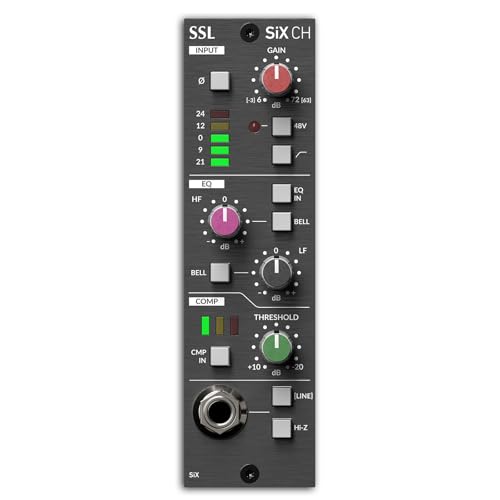
- Mic preamp, EQ, and compressor in one module
- Single-knob compressor with variable threshold
- 500 Series format with phantom power
Best For: Compact recording setups and individual channel processing
Versatile Two-Channel Control
Behringer Composer Pro-XL MDX2600

- Two-channel compressor, limiter, and gate
- Built-in de-esser for added control
- Intended for production, mixing, and mastering
Best For: Stereo processing and general audio-production workflows
Classic FET Character

- FET-style design with selectable compression ratios
- Discrete path, Class-A amplifier, and MIDAS transformers
- Adjustable attack, release, and all-button mode
Best For: Professional audio work and vintage-inspired compression
Versatile Rack Dynamics
ART SCL2 Dual/Stereo Compressor

- Dual-channel or linked-stereo operation
- Compression, limiting, expansion, and gate functions
- Balanced TRS and XLR connectivity
Best For: Studios and live setups needing flexible stereo or dual-mono processing
500-Series FET Control
7X-500 500 Series FET Compressor
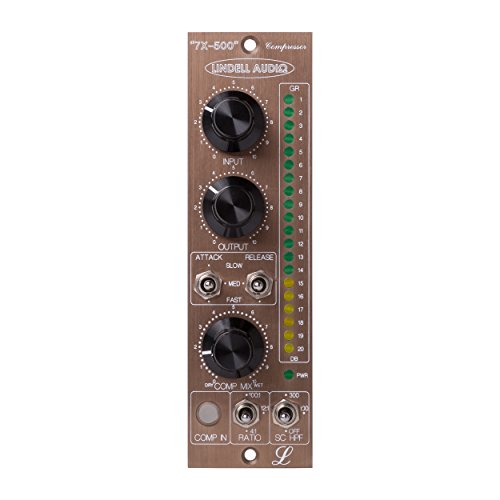
- FET compressor/limiter design
- Built-in highpass sidechain filter
- Stepped controls and true bypass
Best For: 500 Series rack users wanting compact FET dynamics control
Dual-Channel Studio Processor
Professional Dual-Channel Audio Compressor

- Dual-channel compression with auto attack/release
- Built-in noise gate and LED monitoring
- Sidechain insert with XLR/TRS connectivity
Best For: Studio, live, and streaming setups needing flexible signal processing
Flexible 500-Series Pick

- Transparent leveling or character compression
- THAT 2180 VCA analog design
- Continuously variable fast-to-slow release
Best For: 500 Series users needing versatile analog compression
Multi-Voice Rackmount Choice

- Selectable tube and solid-state voicing
- Optical compression circuit
- Variable compressed/uncompressed blend
Best For: Studio tracking and mixing with tonal flexibility
Vintage-Style Pedal Pick

- 660-inspired vintage compressor character
- Adds smoothness, EQ, and growl
- Compact, overbuilt pedal design
Best For: Guitarists wanting studio-style compression on a pedalboard
Tour-Ready Dynamics – dbx 266xs Compressor/Gate
The dbx 266xs is a practical choice among audio compressors under 500 for users who want straightforward compression and gating in a single 1U rack unit. Its front-panel controls and dedicated LED displays support quick setup for live, studio, and portable applications.
Best For: Live rigs, project studios, and users who need both compression and gating.
Pros:
- Compression can smooth uneven levels, add guitar sustain, fatten drums, and tighten mixes.
- Program-adaptive expander/gates and updated gate timing algorithms support smooth operation.
- Separate LED displays show gain reduction, compression threshold, and gate threshold.
Cons:
- Its 1U rack format may be more hardware than a compact setup needs.
- The unit uses a corded electric power source.
Choose the 266xs when flexible dynamics control and easy visual monitoring matter more than a minimal desktop footprint.
Channel-Strip Simplicity – SSL SiX 500 Series Channel Strip
Solid State Logic SiX Channel Strip 500 Series | Mic-Pre, EQ, and Single Knob Compressor
Check Price On AmazonThe Solid State Logic SiX Channel Strip is a compact option among audio compressors under 500 for 500 Series users who want compression alongside mic-preamp and EQ functions. Its single-knob compressor and front-panel connectivity keep operation focused and accessible.
Best For: 500 Series racks, vocal channels, and compact recording setups.
Pros:
- Combines a mic preamp, EQ, and single-knob compressor in one module.
- Provides +48V phantom power for compatible microphones.
- Includes a switchable 75 Hz, 12 dB/octave high-pass filter and front-panel TRS line input with Hi-Z switching.
Cons:
- It is a single-channel 500 Series module, not a standalone rack processor.
- The compressor offers a streamlined single-knob design rather than extensive control options.
The SiX is a sensible fit when you want an integrated channel strip and uncomplicated compression in a 500 Series format.
Versatile Two-Channel Control – Behringer Composer Pro-XL MDX2600
The Behringer Composer Pro-XL MDX2600 is a practical option among audio compressors under 500 for users who need two-channel processing in a rack-style unit. Its listed compressor, limiter, gate, and de-esser functions make it suited to broader audio-production and mixing duties.
Best For: Stereo processing, mixing, mastering, and general audio production.
Pros:
- Provides two-channel compressor, limiter, and gate processing.
- Includes a de-esser for additional vocal and program-control duties.
- Designed for audio production, mixing, and mastering applications.
Cons:
- The supplied specifications provide limited detail about individual controls and metering.
- It uses a corded electric power source and a rack-oriented form factor.
The MDX2600 makes the most sense when channel count and multiple dynamics functions are priorities for a flexible processing setup.
Classic FET Character – Klark Teknik 76-KT Compressor
The Klark Teknik 76-KT is a strong consideration among audio compressors under 500 for users seeking classic FET-style operation in a rackmount design. Its discrete signal path, Class-A output amplifier, and MIDAS transformers emphasize a vintage-inspired hardware approach.
Best For: Professional audio applications, tracking, and users who want FET-style compression.
Pros:
- Classic FET-style design modeled after the 1176LN D and E revisions.
- Offers push-button 4:1, 8:1, 12:1, and 20:1 compression ratios.
- Includes adjustable attack and release times, plus an all-button mode.
- Uses a completely discrete signal path, Class-A output amplifier, and MIDAS transformers.
Cons:
- Its vintage-style, rackmount design may be excessive for users wanting a compact compressor.
- The supplied notes do not specify features such as sidechain connectivity or onboard metering.
Pick the 76-KT when selectable FET-style ratios, adjustable timing, and transformer-equipped analog circuitry are central to your buying decision.
Versatile Rack Dynamics – ART SCL2 Dual/Stereo Compressor
The ART SCL2 is a flexible choice among audio compressors under 500 for users who need two-channel processing in a standard rack-friendly format. It supports dual-channel or linked-stereo operation and combines compression, limiting, expansion, and gating in one analog unit.
Best For: Home studios, live sound setups, and stereo or dual-mono processing.
Pros:
- Supports dual-channel and linked-stereo operation.
- Offers balanced 1/4-inch TRS and XLR inputs.
- Includes selectable automatic or manual attack and release controls.
- Provides precise LED level meters and a stereo balance control.
Cons:
- Requires corded electric power.
- Its 19-inch rack-style dimensions may be less convenient for compact setups.
The SCL2 stands out for buyers wanting more than basic compression, especially if expansion and gating are useful to their signal chain. Its linked-stereo mode and balanced connectivity also make it practical for broader studio and live applications.
500-Series FET Control – 7X-500 500 Series FET Compressor
The 7X-500 is a focused option for shoppers comparing audio compressors under 500 who already use a 500 Series rack. Its FET compressor/limiter design, stepped controls, highpass sidechain filter, and true bypass provide a straightforward dynamics-processing setup.
Best For: 500 Series owners seeking a compact FET compressor/limiter module.
Pros:
- Uses the space-efficient 500 Series rack format.
- Combines FET compression and limiting.
- Includes a built-in highpass sidechain filter.
- Features stepped controls and true bypass.
Cons:
- Requires a compatible 500 Series rack format.
- Its compact module format may be less suitable for users wanting a standalone rack unit.
The 7X-500 makes the most sense when your system is already built around 500 Series hardware. Its sidechain filter and true-bypass function add useful control while keeping the module compact.
Dual-Channel Studio Processor – Professional Dual-Channel Audio Compressor
This dual-channel processor is a practical contender among audio compressors under 500 for studio, live, and streaming systems. It combines compression with a noise gate, sidechain insert, LED monitoring, and XLR/TRS connectivity in a 1U rackmount design.
Best For: Users processing vocals, instruments, or streaming sources that need dual channels, gating, and sidechain routing.
Pros:
- Provides two channels with auto attack/release and OverEasy compression settings.
- Includes a built-in noise gate with independent LED indicators for monitoring.
- Offers XLR and 1/4-inch TRS inputs and outputs.
- Features a sidechain insert for targeted frequency control.
Cons:
- Uses 110-volt AC power, which may require power compatibility checks in some regions.
- The 1U rackmount format may be more equipment than casual users need.
With its dual channels, gate function, and sidechain insert, this unit is aimed at users who want a broad set of routing and dynamics tools in one rackmount processor. LED indicators also make it easier to monitor compression and gate activity while adjusting the controls.
Flexible 500-Series Pick – Harrison Compressor
If you need one of the more adaptable audio compressors under 500, the 500 Series Harrison Compressor is built to cover both transparent leveling and more characterful compression. Its analog VCA design and continuously variable release control make it a practical choice for shaping a range of sources.
Best For: 500 Series users who want flexible analog compression in a compact module.
Pros:
- Can operate from transparent “leveler” compression to character-style compression.
- Uses a THAT 2180 VCA chip for analog performance.
- Offers continuously variable release from fast to slow.
- Works with 500 Series format chassis.
Cons:
- Requires a compatible 500 Series chassis.
- Provides a single-channel module rather than a standalone rack unit.
The Harrison Compressor stands out for buyers who already use the 500 Series ecosystem and want broad control over compression behavior without choosing between subtle leveling and more noticeable character.
Multi-Voice Rackmount Choice – ART Solo VLA Compressor
The ART Solo VLA is a strong option among audio compressors under 500 for users who want selectable tube or solid-state voicing in a single-channel unit. Its optical compression circuit, blend control, and switchable operating levels support flexible tracking and mixing applications.
Best For: Studio users seeking tube/solid-state color and parallel-style blend control.
Pros:
- Provides selectable MultiVoice tube and solid-state control.
- Uses OPTO analog optical isolators for compression.
- Includes variable blending of uncompressed and compressed signals.
- Supports switchable +4 dBu and -10 dBV level modes.
Cons:
- Its 7.03-pound, corded-electric design is less portable than a compact pedal or module.
- It is a single-channel compressor.
With its multiple voicing options and blend control, the Solo VLA is suited to buyers who want more than basic dynamics control and value the ability to mix compressed and uncompressed signal paths.
Vintage-Style Pedal Pick – Airchild Six Sixty Compressor
For guitarists comparing audio compressors under 500, the J. Rockett Airchild Six Sixty offers a pedal-format interpretation of the vintage 660 studio compressor. It is designed to add smoothness, EQ, and the classic 660 “growl,” making it suitable as an always-on tone-shaping effect.
Best For: Guitarists who want vintage studio-compressor character in a durable pedal.
Pros:
- Provides a sonic interpretation of the vintage 660 studio compressor.
- Adds smoothness, EQ, and classic 660-style growl.
- Compact 1.2-pound pedal format with vintage looks.
- Built with an overbuilt construction approach.
Cons:
- Operates at 9 volts DC, so it is aimed at pedalboard use rather than studio rack integration.
- Its control format is knob-based and focused on guitar-tone applications.
The Airchild Six Sixty is the most guitar-focused choice here, prioritizing recognizable vintage compressor color and convenient pedalboard use over the broad routing and connectivity of a studio unit.
How We Picked the Best Audio Compressors Under 500
We selected these compressors based on their intended use, control layout, format, signal-routing options, and value for musicians, engineers, streamers, and live-sound operators. The list covers practical budget rack processors, 500 Series modules, channel-strip designs, and character compressors rather than focusing on one circuit type.
We also considered features that affect real-world flexibility, including sidechain access, stereo operation, expansion or gating, transformer coloration, metering, multi-voice operation, and suitability for portable rigs. Prices can change, so confirm current pricing and included accessories before buying.
Quick Comparison
- Best for portable and general-purpose rack use: dbx 266xs.
- Best for an all-in-one 500 Series channel strip: Solid State Logic SiX Channel.
- Best for versatile budget rack processing: Behringer Composer Pro-XL MDX2600.
- Best for classic FET-style coloration: Klark Teknik 76-KT.
- Best for dual-channel control: ART SCL2 or the dual-channel black dynamic processor.
- Best for a 500 Series FET compressor: 7X-500.
- Best for Harrison-style 500 Series processing: 500 Series Harrison Compressor.
- Best for variable tube-inspired character: ART Solo VLA.
- Best for pedal-format compression: J. Rockett Audio Designs Airchild Six Sixty.
Key Buying Factors for Audio Compressors Under $500
Format and System Compatibility
Rack units are convenient for standalone studio, live, and streaming setups, while 500 Series modules require a compatible lunchbox or rack chassis. A pedal-style compressor is better suited to guitar or compact performance rigs than balanced studio routing.
Compression Character
FET-style designs are often chosen for fast, assertive punch and coloration. VCA compressors commonly provide precise control and practical stereo operation, while optical or multi-voice designs can offer smoother, more forgiving leveling. Choose the circuit style that matches the source and the sound you want.
Routing and Control
Check whether the unit provides sidechain inserts, external key inputs, de-essing, expansion, gating, mix control, or stereo linking. These features can matter more than extra knobs when processing vocals, drums, broadcast audio, or a full mix.
Metering, I/O, and Headroom
Clear gain-reduction metering makes setup easier, especially during live use. Confirm the available input and output connections, channel count, rack depth, power requirements, and nominal operating level before integrating a processor into your system.
Who Should Buy Which Audio Compressors Under 500?
Home and project studios should prioritize flexible I/O, easy metering, and a format that fits existing equipment. A rack compressor is usually the simplest first purchase, while a 500 Series model makes sense if you already own a compatible chassis.
Live engineers and touring musicians may prefer durable rack processors with dual-channel operation, gating, expansion, or sidechain control. These features can help manage vocals, drums, wireless systems, and inconsistent stage sources.
Producers seeking color should consider FET-style or transformer-equipped models for more pronounced attack and saturation characteristics. For smoother vocal leveling or broader source compatibility, a multi-voice or optical-style design may be the better fit.
Streamers and content creators should choose a compressor with straightforward controls, dependable metering, and compatibility with their interface or mixer. Avoid paying for advanced routing you will not use, but leave enough headroom and control for changing microphones and speaking levels.