The best subwoofers for small rooms add depth and impact without overwhelming the space. Compact powered models can make a noticeable difference for music, movies, and gaming while remaining easier to place than large home-theater subs.
This roundup compares 10 space-conscious options across woofer sizes, amplifier power, cabinet designs, and setup features. Use the guide below to match output, connectivity, and placement flexibility to your room and listening habits.
Best 10 Subwoofers for Small Rooms Picks for 2026
Best Compact Pick

- 6-inch front-firing driver
- 210-watt maximum output
- Compact wired design
Best For: Small living areas and desktop audio setups
Best Adjustable Setup

- 100W RMS power
- Adjustable crossover and phase
- RCA and speaker-level connections
Best For: Fine-tuning bass in compact home theater systems
Best Larger Driver
Polk Audio PSW10 10-Inch Subwoofer
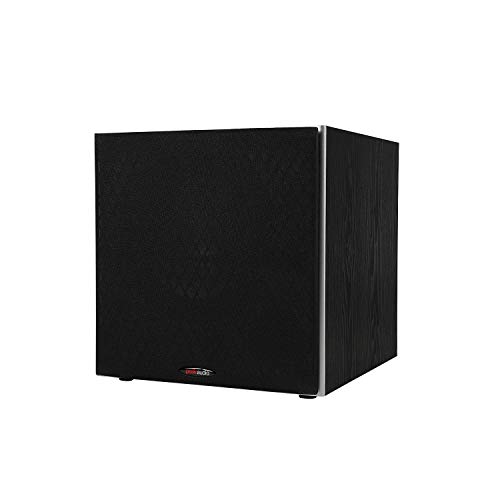
- 10-inch woofer
- Up to 100 watts of power
- Variable 80–160 Hz crossover
Best For: Small-to-mid-size rooms needing fuller bass
Best Balanced Option
Yamaha NS-SW050BL 8-Inch Subwoofer

- 8-inch cone woofer
- 100-watt dynamic power
- Twisted Flare Port
Best For: Compact home theater and music systems
Compact Deep-Bass Choice

- 10-inch front-firing woofer
- 300W peak all-digital amplifier
- LFE RCA input and adjustable controls
Best For: Small-room home theater and music systems
High-Output Value Pick

- 300W RMS and 600W peak output
- Class-D amplifier with bass boost
- RCA and high-level connections
Best For: Powerful home theater, TV, and gaming bass
Space-Saving Setup
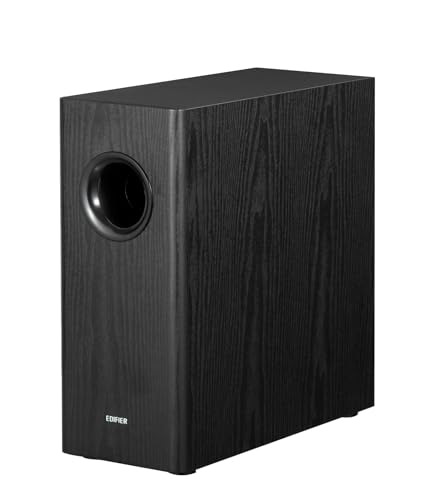
- Slim 6.69-inch-wide cabinet
- 70W RMS and 35Hz deep bass
- Auto-standby with included cables
Best For: Desktop audio and compact bookshelf-speaker systems
Best Compact Side-Firing Pick

- 6.5-inch side-firing driver
- Line/LFE and speaker-level inputs
- Adjustable crossover and volume
Best For: Small rooms, desktops, and flexible wired setups
Best Tunable Down-Firing Pick

- DSP and Class-D amplifier
- 40–250Hz low-pass control
- Phase switch and dual wired inputs
Best For: Small-room systems needing precise bass adjustment
Best Connectivity-Focused Pick
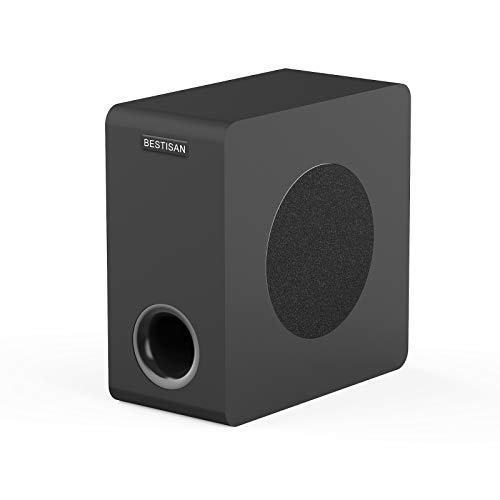
- RCA, AUX, LFE, and high-level connections
- Side-firing 6.5-inch woofer
- Compact bass-reflex cabinet
Best For: Small home theaters with varied wired audio sources
Best Compact Pick – Audioengine S6 Mini Subwoofer
For shoppers seeking subwoofers for small rooms, the Audioengine S6 offers a space-conscious way to add deeper bass. Its 6-inch driver, front-firing design, and compact footprint suit desktop, stereo, gaming, and home theater setups.
Best For: Small living areas, desktop systems, and listeners who want strong bass in a compact enclosure.
Pros:
- Compact 9.92-by-8.74-by-9.96-inch design
- 210-watt maximum output with a 33 Hz frequency response
- Includes RCA and 3.5mm cables, plus a three-year warranty
Cons:
- Wired rather than wirelessly connected
- Does not include a remote control
The S6 is a practical choice when floor space is limited but you still want a powered subwoofer with flexible analog connectivity and a clean, compact presentation.
Best Adjustable Setup – Rockville Rock Shaker 6.5
The Rockville Rock Shaker is among the more adaptable subwoofers for small rooms, combining a 6.5-inch woofer with adjustable crossover and phase controls. Its compact black cabinet can add bass to home theater, music, or gaming systems without dominating the room.
Best For: Users who want control over bass integration and broad wired compatibility.
Pros:
- 200-watt peak and 100-watt RMS power ratings
- Adjustable crossover and phase controls
- RCA and speaker-level inputs and outputs
- Compact cabinet with a detachable grille
Cons:
- Wired connectivity only
- One-year warranty is shorter than some alternatives
With its tuning controls and multiple connection options, the Rock Shaker is a sensible pick for a small-room system that may need careful blending with existing speakers.
Best Larger Driver – Polk Audio PSW10 10-Inch Subwoofer
The Polk Audio PSW10 uses a 10-inch woofer to deliver fuller low-frequency impact while retaining a compact-design focus. It is designed for small-to-mid-size rooms and connects to existing systems through line-level or speaker-level connections.
Best For: Small-to-mid-size rooms where deeper, more substantial bass is a priority.
Pros:
- 10-inch Dynamic Balance woofer
- Built-in 50-watt RMS amplifier with up to 100 watts of power
- Continuously variable 80–160 Hz crossover
- Five-year warranty, with three years on the amplifier
Cons:
- Larger 17-by-14.25-by-14.5-inch footprint
- Wired connectivity only
The PSW10 makes sense when you want a larger driver and flexible integration without moving to a more complex subwoofer system, though it requires more floor space than the mini models here.
Best Balanced Option – Yamaha NS-SW050BL 8-Inch Subwoofer
The Yamaha NS-SW050BL is a straightforward choice among subwoofers for small rooms, pairing an 8-inch cone woofer with Yamaha Advanced YST II technology. Its 12-by-14-by-12-inch cabinet offers a manageable size for home theater and music spaces.
Best For: Listeners who want a compact, simple powered subwoofer from an established audio brand.
Pros:
- 8-inch Advanced YST II cone woofer
- 100-watt dynamic power rating
- Twisted Flare Port is designed for clear, tight bass
- Two-year manufacturer warranty
Cons:
- Wired subwoofer connectivity
- Fewer adjustment details are listed than for some competing models
The NS-SW050BL is a well-sized option for compact home theater or music setups, especially if you prefer a simple design and a moderate power rating over extensive tuning controls.
Compact Deep-Bass Choice – Klipsch R-100SW 10-Inch
For shoppers comparing subwoofers for small rooms, the Klipsch R-100SW offers a useful balance of a 10-inch driver, compact cabinet, and adjustable controls. Its front-firing woofer and 32Hz–120Hz frequency response are suited to adding deeper impact to movies, music, and games without requiring a large-format subwoofer.
Best For: Small-room home theater and music systems that need adjustable, room-friendly bass.
Pros:
- 10-inch front-firing spun-copper IMG woofer
- 150W continuous and 300W peak amplifier power
- Low-pass crossover, volume, and 0/180-degree phase controls
- Line-level LFE RCA inputs for broad receiver compatibility
Cons:
- It is larger than an 8-inch compact subwoofer
- Wired RCA connectivity only
With dimensions of 14.5 by 12.5 by 16.4 inches, the R-100SW remains reasonably compact while offering more driver area than smaller desktop models. The adjustable crossover and phase controls help integrate it with an existing system.
High-Output Value Pick – Rockville Rock Shaker 10-Inch
The Rockville Rock Shaker is a practical option for listeners who want strong bass output from a powered subwoofer. Its 10-inch woofer, built-in Class-D amplifier, and multiple control and connection options make it flexible for home theater, television, music, and gaming setups.
Best For: Buyers prioritizing powerful, adjustable bass and flexible wired connections.
Pros:
- 10-inch woofer with 300W RMS and 600W peak output ratings
- Built-in Class-D amplifier matched to the woofer and enclosure
- Volume, crossover, phase, and bass-boost controls
- RCA and high-level speaker inputs and outputs
Cons:
- Its 18.9-inch depth and 18.3-inch width require careful placement in a small room
- Wired rather than wireless connectivity
The Rock Shaker provides more connection flexibility than many basic powered subwoofers, but its listed 18.9 by 18.3 by 14.6-inch dimensions make it the least space-conscious choice here. Measure the intended location before buying.
Space-Saving Setup – Edifier T5s 8-Inch
The Edifier T5s is designed for listeners seeking subwoofers for small rooms, desktops, and bookshelf-speaker systems. Its slim 6.69-inch width, 8-inch long-throw woofer, 70W RMS Class-D amplifier, and 35Hz response provide a compact way to add deeper bass.
Best For: Desktop audio, compact stereo systems, and rooms where a narrow cabinet matters.
Pros:
- Slim 6.69-inch-wide cabinet with an 8-inch woofer
- 70W RMS Class-D amplification and 35Hz frequency response
- Adjustable 30Hz–160Hz low-pass filter and 0/180-degree phase selector
- Auto-standby and included 3.5mm-to-RCA and RCA cables
Cons:
- Lower power output than the two 10-inch alternatives
- RCA wired connections only
- Series connection without a sub out requires main speakers with line input
The T5s is the easiest fit when floor space is limited, though its 8-inch driver and 70W RMS rating favor compact listening environments over maximum room-filling output. Its included cables and auto-standby also support a straightforward setup.
Best Compact Side-Firing Pick – BSETISAN Basscore 65
If you need subwoofers for small rooms, the BSETISAN Basscore 65 is designed to add punchy low-end without taking up much floor space. Its 6.5-inch side-firing driver, flexible inputs, and adjustable low-pass crossover make it practical for desktop, bookshelf-speaker, and compact home-audio setups.
Best For: Small rooms, desktops, and systems that need flexible wired connectivity.
Pros:
- Compact 6.5-inch driver and 6-inch width fit tight spaces.
- Side-firing design allows flexible placement beside a sofa or under a desk.
- Supports line/LFE and speaker-level connections for newer and legacy systems.
- Adjustable low-pass crossover and volume control help blend it with main speakers.
Cons:
- Its 100-watt maximum output is intended for compact setups rather than very large rooms.
- Connectivity is wired through RCA-based connections.
The Basscore 65 is a sensible choice when placement flexibility matters as much as bass output. Auto-standby after 15 minutes and included RCA cables also simplify everyday use.
Best Tunable Down-Firing Pick – LITTOAK BS02
Among subwoofers for small rooms, the LITTOAK BS02 stands out for its compact cabinet and detailed tuning controls. Its DSP, Class-D amplifier, adjustable 40–250Hz low-pass dial, and phase switch let you tailor the bass to a desktop, TV, gaming, or compact home-theater system.
Best For: Users who want compact bass with more control over crossover and phase settings.
Pros:
- DSP and Class-D amplification provide up to 100 watts of peak power.
- Adjustable low-pass range and 0–180-degree phase switch support system matching.
- Down-firing 6.5-inch woofer and MDF cabinet suit compact installations.
- Includes an RCA-to-3.5mm cable, power cord, and 12-month warranty.
Cons:
- Only wired outputs are supported; Bluetooth, USB, and optical connections are not compatible.
- The compact enclosure may be less suited to listeners seeking very high output in a large space.
The BS02 is a strong fit for small-room listeners who want to fine-tune bass rather than simply add volume. Its dual connection modes cover LFE and line-out sources, provided your equipment has a compatible wired output.
Best Connectivity-Focused Pick – BESTISAN SW65D
The BESTISAN SW65D is a practical option for shoppers comparing subwoofers for small rooms and mixed home-audio systems. Its 6.5-inch side-firing woofer, compact wood cabinet, and broad selection of RCA, AUX, LFE, and high-level speaker connections make it easy to integrate with TVs, receivers, soundbars, and bookshelf speakers.
Best For: Compact home theaters and users who need several wired connection options.
Pros:
- Side-firing 6.5-inch woofer and bass-reflex cabinet deliver compact low-frequency reinforcement.
- Supports RCA, 3.5mm AUX, LFE, and high-level speaker input/output connections.
- 35–200Hz stated frequency response suits TV, music, movie, and gaming use.
- Compact 6.3-inch width and 12.6-inch height are easy to accommodate.
Cons:
- Best results require a source outputting 850mV or less, according to the supplied guidance.
- It uses wired subwoofer connectivity despite the listed Bluetooth specification.
- The compact design is better suited to small or medium spaces than large-room bass demands.
The SW65D is especially appealing when compatibility is the priority. Its high-level speaker connections can help it work with systems that lack a dedicated subwoofer output, while the side-firing design keeps placement relatively flexible.
How We Picked the Best Subwoofers for Small Rooms
We focused on powered subwoofers that suit bedrooms, offices, apartments, and compact living rooms. Selection criteria included cabinet size, driver diameter, amplifier rating, stated frequency response, connection options, and practical placement features such as down-firing or side-firing designs. We also considered the range of listening needs represented here, from adding warmth to TV audio to creating more convincing home-theater impact.
Specifications can vary by manufacturer and listening results depend on room acoustics, so treat wattage and bass-extension claims as comparison points rather than guarantees. A smaller, well-positioned subwoofer may perform better in a compact room than a larger model that is difficult to place or integrate.
Quick Comparison
- Most compact: The Audioengine S6, BSETISAN, LITTOAK, and BESTISAN models are aimed at setups with limited floor space.
- Balanced small-room choices: The Yamaha NS-SW050BL and Edifier T5s offer compact formats with enough output for everyday music, TV, and gaming.
- More room-filling impact: The Polk PSW10, Klipsch R-100SW, and Rockville 10-inch model use larger drivers for stronger low-frequency output.
- Flexible system matching: Check each model’s inputs and outputs before buying, especially if you are connecting it to a soundbar, powered speakers, stereo receiver, or AV receiver.
Key Buying Factors for Subwoofers for Small Rooms
Size and Output
An 8-inch or smaller driver is often easier to control in a compact room and can provide useful bass reinforcement without excessive volume. A 10-inch model may deliver deeper, more forceful effects, but it needs more space and careful level adjustment. More amplifier power does not automatically mean better sound; clean integration matters more than maximum volume.
Connections and Compatibility
Confirm whether the subwoofer accepts RCA line-level connections, speaker-level inputs, or another connection type supported by your equipment. Some compact speakers and soundbars have limited subwoofer compatibility, so verify the system manual before ordering.
Placement and Controls
Start near the front of the room, then move the subwoofer gradually to find smoother bass. Adjustable crossover and volume controls make blending easier. Down-firing and side-firing designs can offer placement flexibility, but they still require clearance from walls, furniture, and corners.
Room Behavior
Small rooms can create strong peaks and uneven bass. Keep the level moderate, avoid placing the cabinet tightly in a corner unless needed for output, and use the phase control or room-correction features when available.
Who Should Buy Which Subwoofers for Small Rooms?
Choose a mini 6.5-inch model if space, budget, and low-volume listening are your priorities. These are suitable for desktop audio, bedrooms, and modest TV systems.
Choose an 8-inch model for a practical middle ground with fuller music and movie bass while keeping the cabinet relatively manageable.
Choose a 10-inch model if you want stronger cinematic impact or listen in a larger small-to-medium room. Expect to spend more time adjusting placement and output.
Before buying, measure the available footprint, identify the connection you need, and decide whether your priority is subtle bass extension or pronounced home-theater impact. The right subwoofer should complement your main speakers rather than dominate them.