Clear speech can make or break an interview. The best wireless microphones for interviews reduce distracting room noise, keep speakers audible, and give you more freedom to position the camera.
This roundup covers compact lavalier kits, handheld options, and higher-end dual-transmitter systems for phones, cameras, and hybrid recording setups. Use the buying guide below to match features, compatibility, and workflow to your needs.
Best 10 Wireless Microphones for Interviews Picks for 2026
Best AI-Enhanced Lavalier
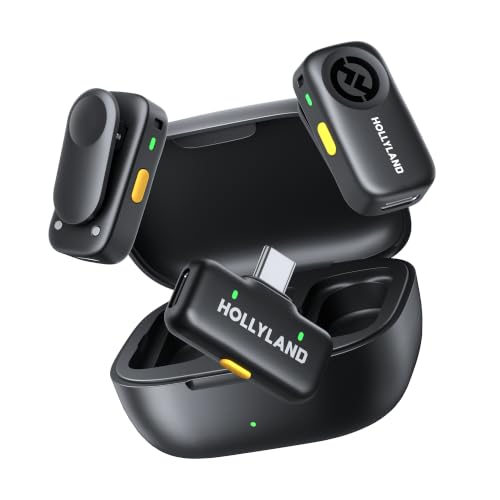
- 48kHz/24-bit audio with AI voice tuning
- Noise cancellation, Auto-Limit, and safety track
- Two transmitters and up to 42-hour case battery
Best For: Two-person interviews and mobile content creation
Best Lightweight Long-Range Set

- 10g transmitters with 48kHz audio
- 400m stated range and automatic limiting
- Up to 48 hours with the charging case
Best For: Travel interviews and DJI OsmoAudio users
Best Handheld Interview Mic
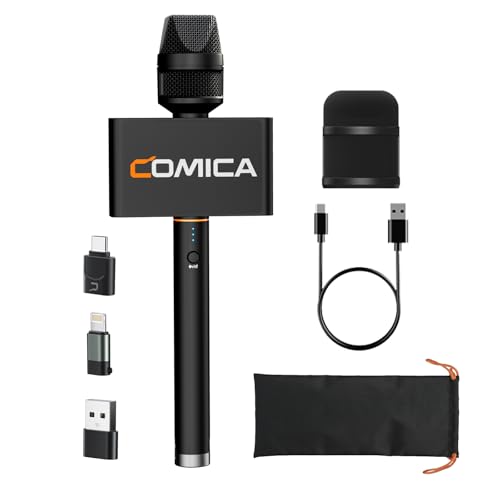
- Cardioid 14mm condenser capsule
- 48kHz/24-bit audio with one-key denoise
- Up to 15 hours and broad adapter support
Best For: Street interviews and news-style smartphone video
Best Backup Recording

- 32-bit float internal recording
- Two transmitters with up to 14-hour standalone recording
- Noise cancellation and 250m stated range
Best For: Important interviews and mixed camera-phone workflows
Best Dual-Phone Pick
2-Pack Mini Lavalier Microphones

- Two clip-on mics for two-person interviews
- USB-C and Lightning receiver included
- 65-foot range and up to 6-hour battery life
Best For: Two-person interviews across iPhone and Android phones
Best Interview Versatility
4-in-1 Mini Wireless Microphone

- Handheld, clip-on, and desk-stand modes
- Noise reduction button and windscreen
- USB-C and Lightning plug-and-play support
Best For: Flexible handheld or desk-based smartphone interviews
Best Everyday Carry
MAYBESTA Mini Lavalier Microphones

- Two lavalier microphones with dual-phone receiver
- Automatic pairing with no app or Bluetooth menu
- Mute function, windscreens, and case-friendly plug
Best For: Quick, portable interviews with iPhone or Android phones
Best Plug-and-Play Pick

- USB-C and Lightning adapters included
- Two lavalier microphones with wind protection
- Up to 6 hours of recording
Best For: Mobile interviews and outdoor creator recording
Best for Monitoring Audio

- Real-time headphone monitoring
- Standard, reverb, and mute modes
- Two transmitters with wind protection
Best For: Interviews requiring audio checks during recording
Best for Two-Person Interviews

- Two transmitters for simultaneous recording
- Up to 98 feet of stated transmission range
- USB-C and iOS device support
Best For: Two-person interviews and podcast-style video shoots
Best AI-Enhanced Lavalier – Hollyland LARK A2
For creators seeking wireless microphones for interviews, the Hollyland LARK A2 combines detailed 48kHz/24-bit audio with AI-assisted cleanup. Its dual-transmitter setup, noise cancellation, safety track, and long battery life make it a practical choice for interviews with one or two speakers.
Best For: Interviews, podcasts, outdoor videos, and two-person shoots where automatic audio protection is useful.
Pros:
- 48kHz/24-bit recording with a stated signal-to-noise ratio of at least 68dB.
- Adjustable AI noise cancellation, AI Auto-Limit, and a -6dB safety track help manage unpredictable sound.
- Up to 42 hours of total battery life with the charging case and up to 200m/650ft transmission range.
- Lightweight 8.5g transmitters arrive pre-paired for quick setup.
Cons:
- The omnidirectional lavalier design may capture more surrounding sound than a directional handheld microphone.
- Some voice-tuning and noise-control features depend on the HollyAudio app.
The LARK A2 is a strong fit when you want discreet, low-latency audio and extra protection against clipping. Its two-transmitter configuration is especially convenient for interviewer-and-guest recordings.
Best Lightweight Long-Range Set – DJI Mic Mini
The DJI Mic Mini is a compact option for wireless microphones for interviews, especially when you need discreet transmitters and dependable range. It records 48kHz audio, offers two noise-cancellation modes, and includes two transmitters for interviewing guests or recording multiple speakers.
Best For: Travel interviews, outdoor reporting, livestreams, and creators already using DJI OsmoAudio devices.
Pros:
- Ultralight 10g transmitters are designed to be comfortable and discreet on camera.
- Provides 48kHz audio, automatic limiting, and a stated maximum transmission range of 400m.
- Up to 48 hours of battery life with the charging case.
- Offers Basic and Strong noise cancellation modes for different environments.
Cons:
- The strongest ecosystem-specific features are most useful with compatible DJI OsmoAudio devices.
- The supplied notes describe two noise-cancellation levels rather than a wider range of adjustments.
Choose the Mic Mini if portability and battery endurance matter most. Its dual-channel kit and long stated range give interviewers flexibility, while direct OsmoAudio connection can simplify compatible DJI setups.
Best Handheld Interview Mic – COMICA Revo S
The COMICA Revo S takes a different approach to wireless microphones for interviews: it uses a handheld reporter-style design rather than a clip-on lavalier. Its cardioid capsule, one-key denoise, and adjustable gain are well suited to directing attention toward the person speaking.
Best For: Street interviews, news-style video, podcasts, and single-speaker recordings with phones or computers.
Pros:
- 14mm condenser capsule and cardioid pattern focus capture toward the speaker.
- 48kHz/24-bit recording and one-key CalMix denoise support clear spoken audio.
- Three gain levels allow basic adjustment for different speaking distances and volumes.
- Built-in battery provides up to 15 hours of use, and the kit includes USB-C, Lightning, and Type-A adapters.
Cons:
- It is a single handheld microphone, so it is less suited to two-person wireless lavalier setups.
- Lightning-connected devices may require an OTG-compatible USB-C-to-Lightning adapter.
The Revo S is a practical choice when the visible handheld microphone style suits your production. Its cardioid pickup and gain controls make it particularly appropriate for one-at-a-time interviews and on-location reporting.
Best Backup Recording – DJI Mic 2
The DJI Mic 2 is a versatile pick among wireless microphones for interviews when recording security is a priority. Its two transmitters support standalone internal recording with 32-bit float, while intelligent noise cancellation, a 250m stated range, and phone and camera adapters support varied shooting conditions.
Best For: Professional interviews, unpredictable locations, multi-speaker videos, and creators who want internal recording as a backup.
Pros:
- Transmitters can record internally for up to 14 hours, helping protect interviews from wireless dropouts.
- 32-bit float internal recording is designed to handle sudden level changes more safely.
- Two transmitters, a dual-channel receiver, and up to 18 hours of operation support extended or multi-speaker shoots.
- Includes USB-C and Lightning adapters, plus intelligent noise cancellation and a 250m/820ft stated range.
Cons:
- The system has a shorter stated range than the LARK A2 and DJI Mic Mini.
- Internal recording and some advanced functions add setup considerations compared with a basic plug-and-play mic.
For important interviews, the Mic 2 stands out because each transmitter can serve as an independent backup recorder. It is a well-rounded kit for crews moving between cameras, smartphones, and challenging audio environments.
Best Dual-Phone Pick – 2-Pack Mini Lavalier Microphones
For interviews using either an iPhone or Android phone, this two-microphone wireless kit offers a flexible setup with both USB-C and Lightning connectivity. Its noise reduction, 65-foot range, and up to six hours of use per microphone make it practical for mobile interviews, podcasts, and outdoor recording.
Best For: Two-person interviews and creators who switch between iPhone and Android devices.
Pros:
- Includes two clip-on microphones for recording an interviewer and subject.
- USB-C and Lightning receiver supports compatible iPhone and Android devices.
- Built-in noise reduction, 65-foot wireless range, and ultra-low claimed latency.
- Each microphone runs for up to six hours and supports recording while charging.
Cons:
- Compatibility is centered on phones with USB-C or Lightning connections.
- The compact microphones may offer less physical control than larger interview mics.
This is a well-rounded choice when your wireless microphones for interviews need to cover two speakers while staying lightweight and travel-friendly. The included storage pouch also helps keep the small components organized.
Best Interview Versatility – 4-in-1 Mini Wireless Microphone
This 4-in-1 wireless microphone kit is designed for interviewers who want more than a standard lapel mic. It can be used as a handheld interview microphone with a windscreen, as a clip-on mic, or with its desk stand and smartphone mount for stationary recording.
Best For: Smartphone interview setups that may alternate between handheld and desk-based recording.
Pros:
- Supports handheld interview use, clip-on recording, and desk-stand configurations.
- One-touch noise reduction and an included windscreen help limit unwanted sound.
- USB-C and Lightning connectors work with compatible iPhone, Android, and iPad devices.
- Plug-and-play design uses automatic pairing without an app or Bluetooth setup.
Cons:
- The setup requires following the supplied transmitter-slot and power instructions for handheld use.
- It is listed as a single microphone kit, so it may be less suited to simultaneously miking two speakers.
Choose this model if flexibility matters more than a traditional lavalier-only design. The handheld form and windscreen are particularly useful for on-camera interviews, while the stand and phone mount support more controlled indoor recordings.
Best Everyday Carry – MAYBESTA Mini Lavalier Microphones
For portable wireless microphones for interviews, the MAYBESTA kit emphasizes quick setup and everyday convenience. Its receiver supports both USB-C and Lightning phones, while automatic pairing, a case-friendly plug, noise reduction, and a mute function help streamline mobile recording.
Best For: Mobile interviewers and content creators who want a compact, low-setup kit for daily use.
Pros:
- Dual USB-C and Lightning receiver works with compatible phones without an adapter.
- Automatic connection avoids Bluetooth menus, apps, and lengthy setup.
- Includes two lavalier microphones, clips, windscreens, and a mute function.
- Extended plug is designed to work with most phone cases still attached.
Cons:
- The supplied notes do not specify an exact wireless range or battery runtime.
- Its mini lavalier design may be less suitable than a handheld microphone for formal street interviews.
This kit is a practical option when speed and portability are priorities. The two microphones support conversations with an interviewer and guest, while the mute control can help prevent incidental comments from reaching the recording.
Best Plug-and-Play Pick – Mini Mic Pro
For creators seeking wireless microphones for interviews, the Mini Mic Pro is a compact plug-and-play option for iPhone, Android, tablets, and laptops. It includes USB-C and Lightning adapters, noise-reduction accessories, and two lavalier microphones for flexible recording.
Best For: Mobile interviews, creator content, and outdoor recording where portability and quick setup matter.
Pros:
- Works without apps or Bluetooth and includes USB-C and Lightning adapters.
- Includes foam and deadcat wind protection for outdoor use.
- Offers up to 6 hours of recording and allows simultaneous device charging.
- Compact design weighs under an ounce.
Cons:
- The listed warranty coverage is limited to a 90-day refund guarantee and six months of free replacement or warranty service.
- Its omnidirectional pickup may capture surrounding sound along with the speaker.
The Mini Mic Pro stands out for straightforward compatibility and a lightweight design. Its included accessories make it a practical choice for interviews recorded in changing indoor or outdoor environments.
Best for Monitoring Audio – wedaniya WM189
The wedaniya WM189 is a two-microphone kit for shoppers comparing wireless microphones for interviews. It pairs with phones, tablets, or laptops without an app or Bluetooth and adds receiver-based headphone monitoring plus selectable recording modes.
Best For: Interviewers who want to monitor captured audio and switch between standard, reverb, and mute modes.
Pros:
- Supports USB-C and Lightning connections with instant pairing.
- Headphones can connect to the receiver for real-time monitoring.
- Includes standard, reverb, and mute modes.
- Comes with foam and deadcat windshields and offers up to 6 hours of recording.
Cons:
- The listed signal-to-noise ratio is 70 dB, lower than some competing specifications in this roundup.
- The product notes specify charging the microphone before first use.
With two transmitters and real-time monitoring, the WM189 is particularly useful when you want more control during an interview. Its compact build and included carrying bag also suit mobile recording setups.
Best for Two-Person Interviews – CZOCPOS Wireless Lavalier Mic
The CZOCPOS two-pack is designed for wireless microphones for interviews with two participants. Its two transmitters can record simultaneously, while the USB-C connector and iOS adapter support iPhones, iPads, Android phones, Windows PCs, and Mac computers.
Best For: Two-person interviews, podcasts, and video shoots that require separate wireless transmitters.
Pros:
- Two microphones support simultaneous recording by two users.
- Automatic pairing requires no Bluetooth, adapters, or recording apps.
- Offers up to 98 feet of wireless transmission according to the supplied notes.
- Includes noise reduction, mute, and reverb modes.
Cons:
- Android users may need to enable OTG before use.
- Battery life is listed at up to 5 hours, shorter than some alternatives here.
- The supplied compatibility details emphasize smartphones, so confirm device support for other equipment.
The CZOCPOS kit is the most directly suited to interviews involving two speakers. Its separate transmitters, broad stated device compatibility, and phone-charging capability during use make it a flexible choice for longer shoots.
How We Picked the Best Wireless Microphones for Interviews
We focused on the features that matter most when recording real conversations: voice clarity, wireless range, connection reliability, battery life, portability, and device compatibility. We also considered whether each microphone is better suited to a single subject, two-person interview, handheld reporting, or casual mobile content.
Because interview setups vary, this list includes both dedicated receiver-based systems and simple plug-and-play microphones. A more advanced kit may provide stronger monitoring and recording options, while a compact phone microphone can be faster to use and easier to carry.
Quick Comparison
| Type | Best For | What to Check |
|---|---|---|
| Dual-transmitter system | Two-person interviews | Receiver compatibility, battery case, range |
| Wireless lavalier pair | Mobile interviews on a budget | Phone connector, noise reduction, battery life |
| Handheld wireless mic | Street interviews and reporting | Handling noise, receiver type, phone support |
| Single mini clip-on mic | Solo creators and quick videos | Fit, wind protection, charging method |
Key Buying Factors for Wireless Microphones for Interviews
Compatibility and Connection Type
Confirm whether the microphone works with your recording device before buying. USB-C, Lightning, camera, and computer connections are not interchangeable without the correct receiver or adapter. If you use both iPhone and Android devices, choose a kit with the connectors you need or a receiver designed for multiple platforms.
One or Two Transmitters
A two-transmitter kit is usually the most flexible choice for interviews because it can capture two speakers separately or let you record yourself and a guest. A single transmitter is smaller and often sufficient for solo presentations or one-person interviews.
Audio Control and Noise Handling
Look for reliable gain control, wind protection, and noise-reduction options. Automatic limiting can help prevent sudden peaks from distorting, but aggressive noise cancellation may affect natural speech. For professional work, monitoring through the receiver or recording a backup track is valuable.
Battery Life, Range, and Setup
Check rated operating time and remember that charging cases improve portability but add another item to manage. Claimed range is measured in open conditions; walls, crowds, and interference can reduce it. A simple plug-and-play system may be preferable when fast setup matters more than advanced controls.
Who Should Buy Which Wireless Microphones for Interviews?
Choose a dual-transmitter system if you regularly film seated interviews, podcasts, documentaries, or two-person videos. Choose a compact lavalier pair if you want affordable, lightweight audio for phone-based interviews. Choose a handheld wireless microphone for street reporting, event coverage, or situations where subjects need to share one microphone naturally. Choose a mini single-mic kit if you prioritize low cost, quick setup, and occasional recording.
Before ordering, verify the connector, included receiver, microphone placement, return policy, and whether your phone can record while the receiver is attached. The right model is the one that fits your workflow without adding unnecessary setup between you and your subject.