Dead zones, dropped connections, and overloaded routers can make even a fast internet plan feel slow. Compact mesh WiFi systems solve that problem by using multiple coordinated nodes to spread coverage more evenly throughout the home.
This roundup compares 10 options across WiFi 5, WiFi 6, WiFi 6E, and WiFi 7, with choices for apartments, larger homes, busy households, and gigabit internet plans.
Best 10 Compact Mesh Wifi Systems Picks for 2026
Best Performance Pick

- Wi-Fi 6 AX3000 performance
- Covers up to 6,500 sq. ft.
- Three Gigabit ports per unit
Best For: Large homes and high-device households
Best Compact Value

- Covers up to 3,500 sq. ft.
- Supports up to 80 devices
- Simple app-based management
Best For: Smaller homes with moderate network demands
Best for Large Wi-Fi 5 Homes
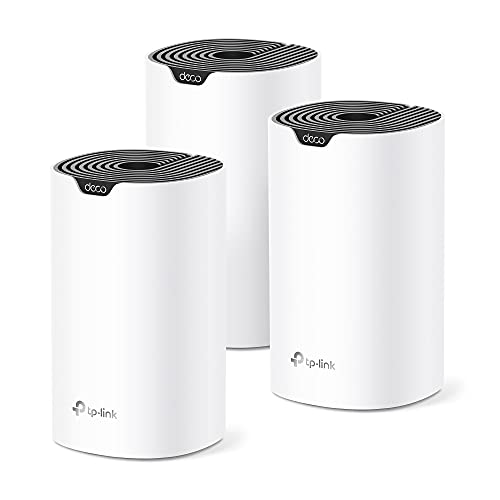
- Covers up to 5,500 sq. ft.
- Supports up to 100 devices
- Includes Gigabit ports and parental controls
Best For: Large homes staying with Wi-Fi 5
Best Smart-Home Integration

- Wi-Fi 6 for gigabit plans
- Covers up to 4,500 sq. ft.
- Built-in Thread and Zigbee hub
Best For: Smart homes and gigabit internet users
Best Wi-Fi 6E Upgrade

- Tri-band Wi-Fi 6E with a 6 GHz band
- Up to 7,200 sq. ft. of coverage
- Supports up to 200 devices
Best For: Larger homes and Wi-Fi 6E households
Best Wi-Fi 7 Value

- Wi-Fi 7 speeds up to 5 Gbps
- Coverage up to 6,000 sq. ft.
- 2.5 Gbps LAN support
Best For: Multi-gig homes wanting Wi-Fi 7
Best Budget Coverage
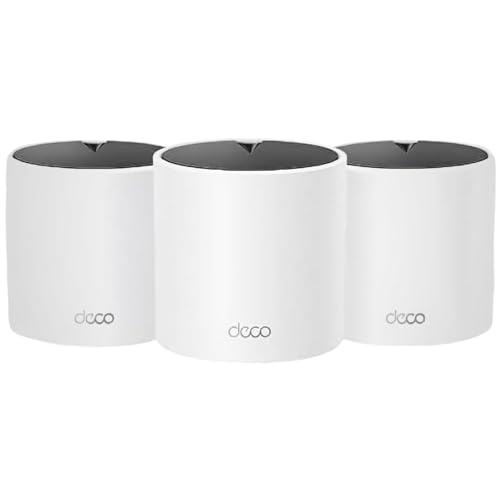
- Wi-Fi 6 speeds up to 1,501 Mbps
- Coverage up to 5,600 sq. ft.
- Six Gigabit Ethernet ports in the 3-pack
Best For: Budget-minded homes needing broad coverage
Best Premium 6E Performance

- Tri-band Wi-Fi 6E with a 6 GHz band
- Up to 4.9 Gbps combined wireless speed
- 2.5 Gbps and Gigabit ports on every unit
Best For: Busy homes with Wi-Fi 6E devices and wired performance needs
Best Wi-Fi 7 Coverage

- Wi-Fi 7 with up to 5,000 Mbps
- Coverage up to 6,600 square feet
- Expandable with additional Deco routers
Best For: Large homes wanting expandable Wi-Fi 7 coverage
Best Balanced 6E Value
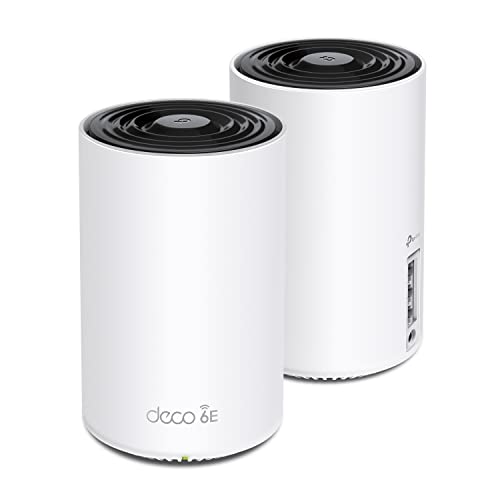
- Tri-band Wi-Fi 6E up to 5,400 Mbps
- Up to 5,500 square feet of coverage
- 6 GHz backhaul and app-based management
Best For: Homes seeking broad, easy-to-manage Wi-Fi 6E coverage
Best Performance Pick – TP-Link Deco X55 AX3000
For shoppers comparing compact mesh wifi systems, the TP-Link Deco X55 stands out when you need Wi-Fi 6 performance, broad coverage, and plenty of capacity for connected devices. This three-pack covers up to 6,500 square feet and supports up to 150 devices.
Best For: Large homes with many connected devices, gigabit networking needs, and shoppers who want Wi-Fi 6.
Pros:
- Wi-Fi 6 AX3000 speeds with 160 MHz channel support.
- Up to 6,500 square feet of coverage and support for up to 150 devices.
- Three Gigabit Ethernet ports per unit, with wired Ethernet backhaul support.
- Deco app setup plus included HomeShield security features and parental controls.
Cons:
- Its larger coverage and higher device capacity may be more than smaller homes require.
- Most internet providers still require a separate modem.
The Deco X55 is the strongest all-around option here for demanding households. Its Wi-Fi 6 standard, extensive coverage, and flexible Ethernet connections make it a practical upgrade for busy networks.
Best Compact Value – Tenda Nova MW5G AC1200
The Tenda Nova MW5G is a straightforward choice among compact mesh wifi systems for smaller homes. Its three-node AC1200 system covers up to 3,500 square feet, uses one network name, and supports up to 80 devices.
Best For: Smaller homes that need simple whole-home coverage and basic mesh management.
Pros:
- Three-pack coverage rated for up to 3,500 square feet.
- Seamless roaming with one network name and password.
- Supports up to 80 devices with MU-MIMO and beamforming.
- App-based setup and management, plus Alexa and Google Assistant compatibility.
Cons:
- Uses older Wi-Fi 5 rather than Wi-Fi 6.
- Security features are centered on WPA2-PSK and a basic firewall.
- Its coverage is lower than the larger systems in this roundup.
The MW5G keeps things simple and affordable for moderate connectivity needs. It is a sensible fit when easy roaming matters more than the newest wireless standard or maximum coverage.
Best for Large Wi-Fi 5 Homes – TP-Link Deco S4 AC1900
The TP-Link Deco S4 is a practical option for shoppers seeking compact mesh wifi systems with generous coverage on a Wi-Fi 5 network. Its three units cover up to 5,500 square feet, support up to 100 devices, and provide seamless roaming.
Best For: Larger homes that want broad coverage, wired backhaul support, and family-friendly controls without moving to Wi-Fi 6.
Pros:
- Three-pack coverage reaches up to 5,500 square feet.
- Supports up to 100 devices with AC1900 speeds.
- Two Gigabit Ethernet ports on each unit and wired backhaul support.
- Includes profile-based parental controls and Alexa compatibility.
Cons:
- Uses Wi-Fi 5 rather than the newer Wi-Fi 6 standard.
- Each unit has fewer Ethernet ports than the Deco X55.
Deco S4 offers a useful balance of coverage and features for households that do not need Wi-Fi 6. Its Ethernet backhaul option and parental controls add flexibility for family networks.
Best Smart-Home Integration – Amazon eero 6+
The Amazon eero 6+ is a streamlined choice among compact mesh wifi systems for households that want gigabit-capable Wi-Fi 6 and simple management. This three-pack covers up to 4,500 square feet, supports 75-plus devices, and includes a built-in smart-home hub.
Best For: Homes with gigabit internet plans, multiple simultaneous users, and compatible Thread or Zigbee smart-home devices.
Pros:
- Supports internet plans up to a gigabit and Wi-Fi 6 connectivity.
- 160 MHz channel support provides additional bandwidth.
- TrueMesh routing is designed to reduce drop-offs and dead spots.
- Built-in Thread and Zigbee smart-home hub with Alexa integration.
Cons:
- Online security and additional management features require a separate subscription.
- Its stated coverage and device capacity are lower than the Deco X55.
The eero 6+ is especially appealing when easy setup and smart-home compatibility are priorities. Automatic updates and app-based remote management make it convenient, while Wi-Fi 6 keeps it suited to fast internet plans.
Best Wi-Fi 6E Upgrade – TP-Link Deco XE75
For shoppers comparing compact mesh wifi systems, the TP-Link Deco XE75 stands out as a tri-band Wi-Fi 6E kit with a dedicated 6 GHz band. Its three units can cover up to 7,200 square feet, while the Deco app simplifies setup and network management.
Best For: Larger homes, Wi-Fi 6E devices, and households that want a dedicated wireless backhaul band.
Pros:
- Tri-band Wi-Fi 6E supports up to 5,400 Mbps and up to 200 devices.
- 6 GHz band can provide a stable backhaul or connect compatible Wi-Fi 6E devices.
- Includes app-based management, AI-driven roaming, Ethernet connectivity, and basic HomeShield features.
Cons:
- The 6 GHz band is useful only with compatible devices or when used as backhaul.
- Advanced HomeShield security features may require a subscription.
- A modem is required for most internet providers.
The XE75 is a strong choice when coverage and newer wireless hardware matter more than keeping costs to a minimum. Its 6 GHz flexibility also gives it more headroom than a basic dual-band system.
Best Wi-Fi 7 Value – NETGEAR Orbi 370 Series
The NETGEAR Orbi 370 Series is one of the more forward-looking compact mesh wifi systems, pairing Wi-Fi 7 with a router and two satellites. It covers up to 6,000 square feet and is designed for plans up to 2.5 Gbps.
Best For: Households seeking Wi-Fi 7, multi-gig internet support, and straightforward whole-home coverage.
Pros:
- Wi-Fi 7 delivers advertised speeds up to 5 Gbps.
- Three-unit system covers up to 6,000 square feet and supports up to 70 devices.
- 2.5 Gbps LAN capability, enhanced backhaul, app setup, and automatic firmware updates.
Cons:
- It uses dual-band Wi-Fi rather than tri-band Wi-Fi.
- NETGEAR Armor security is offered as a 30-day trial, with a separate subscription required afterward.
- Coverage and real-world speeds vary with placement, construction, devices, and internet service.
Choose the Orbi 370 if you want current-generation Wi-Fi 7 hardware without stepping up to a larger premium system. Its 2.5 Gbps support makes it a practical match for faster cable or fiber plans.
Best Budget Coverage – TP-Link Deco X15
The TP-Link Deco X15 is a practical pick among compact mesh wifi systems for shoppers who want broad coverage without moving to tri-band or Wi-Fi 7 hardware. This three-pack provides dual-band Wi-Fi 6 coverage for up to 5,600 square feet and supports up to 120 devices.
Best For: Budget-conscious households that need reliable coverage, simple management, and wired backhaul flexibility.
Pros:
- Wi-Fi 6 dual-band performance reaches up to 1,501 Mbps combined.
- Three units cover up to 5,600 square feet and support up to 120 devices.
- Each unit has two Gigabit Ethernet ports and supports wired Ethernet backhaul.
- Deco app, AI roaming, guest mode, and basic security features are included.
Cons:
- Dual-band design has less capacity than a tri-band system.
- Its advertised speeds are lower than newer Wi-Fi 7 and Wi-Fi 6E alternatives.
- A modem is required for most internet providers.
The Deco X15 makes the most sense when coverage and ease of use are higher priorities than maximum throughput. Wired backhaul support is especially useful if your home already has Ethernet cabling.
Best Premium 6E Performance – TP-Link Deco XE70 Pro
If you want compact mesh WiFi systems with advanced wireless performance and strong wired connectivity, the TP-Link Deco XE70 Pro is a compelling three-unit option. Its tri-band Wi-Fi 6E design adds a 6 GHz band, while each unit includes a 2.5 Gbps port and two Gigabit ports.
Best For: Homes with many connected devices, Wi-Fi 6E clients, gaming PCs, NAS storage, and demanding streaming or download needs.
Pros:
- Tri-band Wi-Fi 6E adds a less-congested 6 GHz band.
- Up to 4.9 Gbps combined wireless speeds across six streams.
- Each unit provides one 2.5 Gbps port and two Gigabit ports.
- Supports wireless and wired backhaul, app management, and AI-assisted roaming.
Cons:
- The 6 GHz benefits are most useful with compatible Wi-Fi 6E devices.
- Premium security features beyond the included basic HomeShield service may require an upgrade.
The XE70 Pro is a strong fit when performance and flexible backhaul matter more than choosing the simplest possible setup. Its three-unit design and 2.5 Gbps connectivity make it particularly versatile for busy, technology-heavy homes.
Best Wi-Fi 7 Coverage – Deco 7 BE5000
For shoppers comparing compact mesh WiFi systems with newer wireless standards, the Deco 7 brings Wi-Fi 7 and 2.5G Ethernet to a dual-band mesh platform. It is designed for broad coverage, with support for more than 150 devices and expansion through additional Deco routers.
Best For: Large homes seeking Wi-Fi 7 features, broad coverage, and a mesh system that can grow over time.
Pros:
- Wi-Fi 7 delivers up to 5,000 Mbps combined data rates.
- Coverage reaches up to 6,600 square feet and over 150 devices.
- Wi-Fi 7 and 2.5G Ethernet can work together for backhaul.
- Deco app supports setup, management, and firmware updates.
Cons:
- It is dual-band rather than tri-band.
- A separate modem is required.
- Some backhaul features require at least two Deco units.
The Deco 7 stands out for buyers prioritizing Wi-Fi 7 and expansive coverage. Its expandable Deco compatibility makes it practical for larger spaces, although users should account for modem requirements and the system’s dual-band design.
Best Balanced 6E Value – TP-Link Deco XE75
The TP-Link Deco XE75 is a practical choice among compact mesh WiFi systems for shoppers who want tri-band Wi-Fi 6E coverage without moving to a larger three-pack. Its two units cover up to 5,500 square feet and can use the 6 GHz band as a dedicated backhaul.
Best For: Medium-to-large homes with Wi-Fi 6E devices, multiple simultaneous users, and a preference for simple app-based management.
Pros:
- Tri-band Wi-Fi 6E supports combined speeds up to 5,400 Mbps.
- Two units cover up to 5,500 square feet and up to 200 devices.
- The 6 GHz band can provide a stable backhaul between nodes.
- Deco app offers setup, remote management, and Alexa compatibility.
Cons:
- Its Ethernet ports are Gigabit rather than 2.5 Gbps.
- The 6 GHz band is most beneficial for compatible Wi-Fi 6E devices.
- A modem is required for most internet service providers.
The XE75 balances coverage, capacity, and Wi-Fi 6E functionality in a two-pack. It is a sensible middle ground for homes that need broad coverage and smoother roaming but do not require the XE70 Pro’s faster wired ports.
How We Picked These Compact Mesh Wifi Systems
We selected systems across several price tiers and wireless generations, prioritizing published coverage, speed class, backhaul design, Ethernet ports, device capacity, and ease of setup. The list includes two- and three-pack options, plus systems suited to both modest homes and larger floor plans.
Advertised coverage and device counts are estimates. Walls, construction materials, interference, node placement, and the speed of your internet plan all affect real-world results. We also considered whether each system offers useful upgrade potential, such as WiFi 6E or WiFi 7 support.
Quick Comparison
- Best overall balance: A WiFi 6 AX3000 or similarly rated three-pack offers strong performance for many households without the cost of newer standards.
- Best for budget coverage: WiFi 5 AC1200 or AC1900 systems can be practical for smaller homes and moderate broadband plans.
- Best for newer devices: WiFi 6E adds access to the less-crowded 6GHz band, while WiFi 7 is designed for newer high-performance phones, laptops, and networking hardware.
- Best for larger homes: Three-node systems generally provide more flexible placement than two-node kits, especially across multiple floors.
Key Buying Factors for Compact Mesh Wifi Systems
Wireless Standard and Speed Class
WiFi 6 is a strong mainstream choice for busy homes with many connected devices. WiFi 6E can reduce congestion when compatible devices support 6GHz. WiFi 7 offers the most future-facing performance, but its benefits are limited if most of your devices use older WiFi standards.
Coverage and Node Placement
Use the manufacturer’s coverage figure as a starting point rather than a guarantee. Place the primary node near the modem and position additional nodes where they still receive a strong signal from the previous node. Wired Ethernet backhaul can improve consistency if your home is already wired.
Ports, Backhaul, and Internet Speed
Check whether each node has gigabit or faster Ethernet ports and whether the system supports wired backhaul. A high-speed mesh kit cannot make an internet plan faster, but it can help distribute that connection more reliably around the home.
Management Features
Look for an app that makes setup, guest networking, parental controls, firmware updates, and device management straightforward. Some advanced controls may require a subscription, so check the included features before buying.
Who Should Buy Which Compact Mesh Wifi Systems?
Choose a budget WiFi 5 system for a smaller home, lighter streaming needs, or a moderate internet plan. A WiFi 6 three-pack is the safest all-around choice for families, work-from-home households, and homes with many smart devices. Pick WiFi 6E if you own compatible 6GHz devices and want more room in a congested wireless environment. Choose WiFi 7 when you are upgrading other networking hardware, use very fast broadband, or want the strongest long-term platform.
Finally, select the number of nodes based on your layout rather than the largest advertised coverage figure. Fewer, well-placed nodes are often faster and simpler than adding units to compensate for poor positioning.