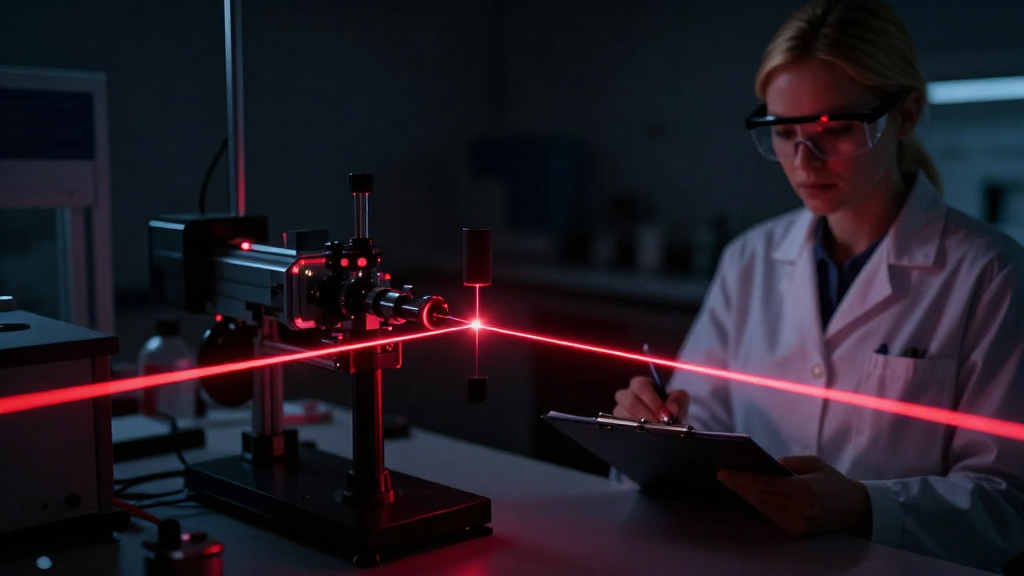
Beam density in physics is a critical concept that pertains to the distribution of energy or particles within a beam, whether it be light, sound, or other types of radiative energy.
In this article, we’ll delve into the intricacies of beam density, its applications, and its relevance in various fields of physics.
What Does Beam Density Refer To in Physics?
The term beam density in physics primarily refers to the amount of matter or energy that is distributed over a specific area or volume within a beam.
This density can generally be calculated as:
- Energy Density: The amount of energy per unit volume in the beam.
- Particle Density: The number of particles (e.g., photons, electrons) per unit volume in the beam.
Why Is Beam Density Important?
Understanding beam density is vital for several reasons:
- Energy Transfer: It helps in determining how effectively energy is transmitted through a medium.
- Interference and Diffraction: High beam density can affect how waves behave when they encounter obstacles.
- Material Interaction: Knowing the beam density allows researchers to predict how different materials will interact with beams, leading to applications in materials science, optics, and engineering.
How Do You Measure Beam Density in Physics?
Measuring beam density involves several techniques, depending on the type of beam being analyzed.
Here are some common methods:
- Photographic Techniques: For light beams, the use of photographic plates can capture the intensity distribution of a beam.
- Particle Counters: These devices can measure particle density by counting the number of particles that pass through a specified area.
- Energy Meters: For electromagnetic radiation, energy meters can be employed to quantify energy density.
What Factors Influence Beam Density?
Multiple factors can influence the beam density in physics:
- Beam Properties: The wavelength and frequency of the beam significantly affect its density.
- Medium Interaction: The material through which the beam is traveling can absorb or scatter energy, altering its density.
- Geometry of the Beam: The shape (e.g., cylindrical, planar) also plays a pivotal role.
What Are the Applications of Beam Density?
The concept of beam density has multiple applications across various domains in physics, engineering, and even biology. Here are some key areas:
-
Optics: In optics, beam density impacts the performance of lasers, lenses, and other optical devices. A high beam density can lead to nonlinear optical effects, which are crucial for advanced technologies like laser surgery and telecommunications.
-
Materials Science: In this field, understanding beam density is crucial for processes like welding and cutting, where high-energy beams (e.g., electron beams or laser beams) interact with materials.
-
Healthcare: The application of beam density is observed in radiation therapy for cancer. Adjusting the beam density allows practitioners to deliver precise doses of radiation to tumors while minimizing exposure to surrounding healthy tissues.
How Is Beam Density Related to Other Concepts?
The concept of beam density relates closely to several fundamental principles in physics:
-
Intensity: Beam density is often associated with intensity, which is defined as power per unit area. High intensity indicates a greater beam density and can result in stronger interactions with materials.
-
Flux: Beam density is also related to particle flux, which refers to the quantity of particles passing through a unit area over time.
-
Pressure: In cases where momentum exchange occurs, such as with light beams, beam density can have an analogous relationship with pressure.
What Are the Challenges in Working With Beam Density in Physics?
Despite its importance, working with beam density in physics comes with challenges:
-
Measurement Accuracy: Achieving accurate measurements can be difficult due to environmental factors or equipment limitations.
-
Beam Instability: Variability in beam conditions, such as fluctuations in intensity or density, can hamper experimental results.
-
Complex Calculations: Calculating beam density may require intricate mathematical modeling, especially in complex systems with varying conditions.
What Are the Future Directions in Research on Beam Density?
Research in beam density has promising future directions:
-
Quantum Computing: Understanding how beam density can control quantum states may unlock new capabilities in quantum information processing.
-
Nanotechnology: Techniques to manipulate beam density at the nanoscale may lead to unprecedented material properties.
-
Astrophysics: Investigating beam density in cosmic rays can contribute to a deeper understanding of cosmic phenomena.
Conclusion
Beam density in physics is a fundamental concept that plays a critical role across various scientific fields.
From its importance in energy transfer to its applications in healthcare and materials science, understanding beam density is crucial for both theoretical and practical advancements.
By measuring and analyzing beam density, researchers can pave the way for innovative technologies and better materials, all while enhancing our fundamental understanding of the physical world.
In summary, grasping the concept of beam density in physics not only enhances our understanding of the interactions of energy and matter, but it also provides practical applications that can significantly impact technology and science in the years to come.