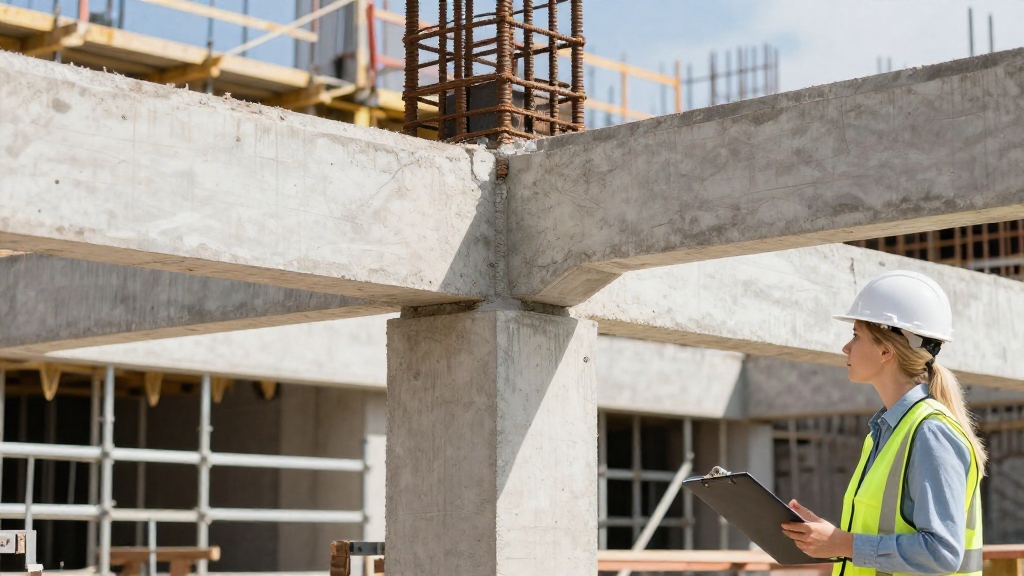
Beam-column interaction is a critical concept in structural engineering that describes the relationship between beams and columns in a structural framework. Understanding this interaction is essential for designing safe and functional buildings.
What Exactly Is Beam-Column Interaction?
Beam-column interaction refers to the way beams (horizontal members) and columns (vertical members) work together within a structure to bear loads and maintain stability.
When a load is applied to a structural frame, various forces come into play, resulting in bending moments, shear forces, and axial loads. The ability of beams and columns to interact effectively is crucial for the overall performance of the structure.
Why Is Beam-Column Interaction Important?
-
Structural Integrity: Proper beam-column interaction ensures that loads are distributed correctly throughout the frame, preventing excessive stress on individual components.
-
Load Transfer: Beams transfer loads to columns, which then distribute those loads to the foundation. A failure in this interaction could lead to structural failure.
-
Stability and Safety: Understanding how beams and columns interact is vital for ensuring the overall stability and safety of buildings, especially in the face of dynamic loads such as wind and earthquakes.
How Do Beams and Columns Interact?
The interaction between beams and columns can be best understood by examining their mechanical behaviors. Here are some key aspects to consider:
1. Load Distribution
-
Gravity Loads: Beams carry gravity loads (such as the weight of the floors, walls, and roof) and transfer them to columns.
-
Lateral Loads: In addition to vertical loads, beams also need to resist lateral forces (like wind and seismic activity) which affect the stability of both beams and columns.
2. Moment Connection
-
Rigid Connections: These connections allow for the transfer of bending moments between beams and columns. They provide continuity and enhance stability.
-
Flexible Connections: In contrast, flexible connections may not transfer moments, leading to different stress distributions.
3. Deflection and Movement
-
Deflections: When loads are applied, beams and columns deflect. The amount and direction of this deflection affect how loads are shared between them.
-
Interdependence: The deflection of a beam will influence the column it is connected to and vice versa.
What Factors Affect Beam-Column Interaction?
There are several factors that can influence beam-column interaction in a structural design:
1. Material Properties
- The strength, ductility, and stiffness of the materials used for beams and columns directly affect how they interact.
2. Load Types and Magnitudes
- Different loads (e.g., live load, dead load, environmental load) lead to various internal forces that affect the performance of the beam-column interaction.
3. Connection Types
- The type of connection (rigid or flexible) significantly impedes or enables the effective transfer of loads and moments between beams and columns.
4. Support Conditions
- How beams and columns are supported within the frame can influence their behavior. Fixed supports provide different interaction effects than simply supported conditions.
How Is Beam-Column Interaction Analyzed?
1. Structural Analysis Methods
To effectively analyze beam-column interaction, engineers often employ several structural analysis methods, including:
-
Static Analysis: Examines structures under non-moving loads to determine stresses, deflections, and reactions.
-
Dynamic Analysis: This method is applied to structures impacted by moving loads or forces over time, such as seismic or wind loads.
-
Finite Element Method (FEM): A numerical technique used for complex interactions, allowing precise modeling of material behavior under loads.
2. Design Considerations
Engineers must consider the beam-column interaction during the design phase to ensure safety. Some design strategies include:
-
Adequate Reinforcement: Ensuring beams and columns are correctly reinforced according to anticipated loads.
-
Regular Inspections: Conducting regular assessments of structural components after construction to identify any potential issues stemming from beam-column interaction.
What Are Common Issues with Beam-Column Interaction?
Understanding beam-column interaction helps identify potential issues early.
Some common problems include:
-
Instability: If the interaction is not adequately analyzed, it may result in buckling or failure of columns.
-
Excessive Deflection: Improper interaction can lead to excessive deflection in beams, compromising structural safety.
-
Vulnerability to Dynamic Loads: Structures that do not properly account for dynamic loads could experience significant damage during events such as earthquakes.
How Can Engineers Mitigate Beam-Column Interaction Issues?
1. Advanced Design Techniques
Engineers should consider incorporating advanced design techniques, including:
-
Damping Systems: These can reduce the dynamic response of the structure during events like earthquakes.
-
Redundant Systems: Adding redundancy in structural design can help distribute loads more evenly among beams and columns.
2. Material Selection
Selecting appropriate materials can significantly enhance beam-column interaction. Engineers often prefer:
-
High-Performance Materials: Materials with excellent strength-to-weight ratios contribute to improved structural behavior.
-
Composite Materials: These materials can provide better fracture resistance and reduce weight while maintaining strength.
Conclusion: The Significance of Understanding Beam-Column Interaction
In summary, beam-column interaction is a fundamental aspect of structural engineering that affects the stability and safety of buildings and structures.
By comprehensively understanding how beams and columns interact, engineers can design more resilient structures capable of withstanding various loads and environmental challenges.
Emphasizing the importance of this interaction during the design and analysis phases ensures that structures function effectively and safely, making beam-column interaction essential knowledge for anyone involved in the field of architecture and engineering.
As architectural styles evolve and engineering techniques advance, appreciating the nuances of beam-column interaction will be crucial in developing innovative and safe structures for the future.