The best portable DACs can make a phone, tablet, or laptop a more capable source for wired headphones and IEMs. Balanced connections may also provide more output power and better channel separation, depending on the design.
We compared these 10 models by connectivity, output options, amplification, format support, portability, and everyday usability so you can choose the right upgrade without paying for features you will not use.
Best 10 Portable Dacs with 2.5mm Balanced Picks for 2026
Best Balanced Dongle

- Dual ESS Sabre DAC balanced circuit
- 4.4mm output with up to 241mW
- PCM 384kHz and DSD256 support
Best For: Lightweight USB-C listening with a 4.4mm balanced connection
Best High-Power Option
Protocol Max Portable DAC-Amplifier

- Up to 600mW balanced output
- 10-band persistent parametric EQ
- 4.4mm and 3.5mm outputs
Best For: Demanding headphones and listeners who want adjustable sound profiles
Best Value Features

- ES9028Q2M and ES9603Q chipset
- 4.4mm balanced plus 3.5mm output
- 100-level volume with memory
Best For: Flexible wired use across phones, tablets, and computers
Best DSP Controls

- Dual CS43198 DAC architecture
- App-based parametric EQ
- 4Vrms and 124 + 124mW output
Best For: Portable listening with detailed EQ customization
Stealth Balanced Power

- 32-bit/384kHz PCM, DSD256, and MQA support
- 4.4mm balanced plus 3.5mm output
- PowerMatch, iEMatch, and XBass controls
Best For: Rugged portable listening with flexible output tuning
Tube-Tuned Balanced Sound
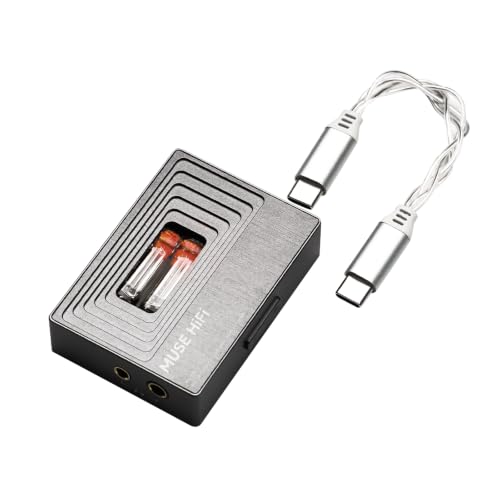
- JAN6418 hybrid tube amplification
- 480mW maximum 4.4mm balanced output
- PCM 384kHz and DSD256 support
Best For: Tube-style listening with powerful balanced output
Ultra-Resolution Dongle

- PCM 768kHz/32-bit and native DSD512
- 4.4mm balanced and 3.5mm outputs
- Manual gain and MFi certification
Best For: High-resolution USB-C listening on the go
Compact Hi-Fi Pick
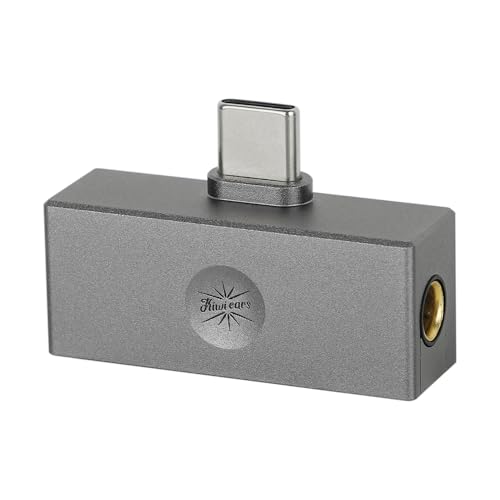
- Aluminum body with compact portable design
- 4.4mm balanced and 3.5mm outputs
- Supports PCM 32-bit/384kHz and DSD128
Best For: Android and PC listeners wanting flexible output options
Most Feature-Rich Dongle

- 4.4mm balanced and 3.5mm outputs
- PCM 32-bit/768kHz and native DSD512
- Built-in spatial processing and 32-band PEQ
Best For: Power users combining music, gaming, and sound customization
High-Output Value Pick

- Dual CS43131 DAC chips
- Up to 170mW per channel at 32 ohms
- 60-step volume controls with memory
Best For: Mobile users needing powerful, simple high-resolution audio
Best Balanced Dongle – iFi Audio Go Link Max
The iFi Audio Go Link Max is a compact choice for listeners seeking portable dacs with 2.5mm balanced capability, although its supplied output is 4.4mm balanced rather than 2.5mm. Dual ESS Sabre DAC chips, plug-and-play USB-C connectivity, and support for PCM 384kHz and DSD256 make it suited to high-resolution listening on compatible devices.
Best For: Portable listeners who want a lightweight USB-C dongle with a balanced 4.4mm output and high-resolution format support.
Pros:
- Dual ESS Sabre DACs form a balanced circuit.
- 4.4mm balanced output provides up to 241mW of power.
- Supports 32-bit/384kHz PCM and native DSD256.
- Lightweight 15g design with a flexible cable.
Cons:
- Uses a 4.4mm balanced connection, not a 2.5mm output.
- Designed for USB-C devices, with no stated wireless connectivity.
The Go Link Max emphasizes portability and straightforward operation. Its 4.4mm balanced output and high-resolution support are appealing, but buyers with 2.5mm headphones will need a suitable adapter or cable.
Best High-Power Option – Protocol Max Portable DAC-Amplifier
The Protocol Max is a powerful portable DAC-amplifier for listeners comparing portable dacs with 2.5mm balanced capability, though this model provides 4.4mm balanced and 3.5mm single-ended outputs. Its dual Cirrus Logic DACs, up to 600mW of balanced output, and adjustable 10-band parametric EQ give it a feature-rich approach to portable headphone listening.
Best For: Users who need substantial amplification, flexible output options, and device-based sound customization.
Pros:
- Up to 600mW through the balanced 4.4mm output.
- Dual Cirrus Logic CS43198 DAC chips.
- 10-band parametric EQ can be saved without an additional app.
- Eco and Boost power modes balance battery life and output performance.
Cons:
- Offers 4.4mm balanced rather than 2.5mm balanced output.
- At 110g, it is heavier than a typical dongle.
- The supplied notes do not specify battery capacity or runtime.
The Protocol Max stands out when driving power and tuning flexibility matter more than minimum size. Its 4.4mm connection will not directly serve 2.5mm headphones, but its dual outputs and persistent EQ broaden its practical use.
Best Value Features – MECHEN AP10 USB DAC Dongle
The MECHEN AP10 combines a portable USB DAC and headphone amplifier with 3.5mm single-ended and 4.4mm balanced outputs. For shoppers researching portable dacs with 2.5mm balanced capability, it is important to note that the AP10 uses 4.4mm instead. Its ES9028Q2M and ES9603Q chips support PCM 384kHz and DSD256, while onboard volume memory adds convenience.
Best For: Phone, tablet, and computer users wanting a compact metal DAC with both single-ended and 4.4mm balanced connections.
Pros:
- Supports PCM 384kHz and native DSD256 decoding.
- Provides 4.4mm balanced and 3.5mm outputs.
- Offers up to 220mW output, with a stated SNR above 120dB.
- 100-level volume adjustment includes volume memory.
Cons:
- Does not provide a 2.5mm balanced output.
- The supplied notes do not state battery capacity or runtime.
The AP10 is a versatile wired option with broad source compatibility and useful volume controls. Its 4.4mm balanced connection makes it better suited to newer balanced cables than to native 2.5mm setups.
Best DSP Controls – MOONDROP Dawn PRO 2
The MOONDROP Dawn PRO 2 is a portable USB DAC/amp with dual CS43198 chips, 3.5mm and 4.4mm outputs, and app-based parametric EQ. While it is relevant to shoppers comparing portable dacs with 2.5mm balanced capability, the supplied specifications identify a 4.4mm balanced connection instead. Its 100-level volume control and aluminum housing add practical appeal.
Best For: Listeners who want app-controlled DSP and a compact balanced DAC/amp for most headphones.
Pros:
- Dual Cirrus Logic CS43198 DAC chips.
- MOONDROP app enables detailed parametric EQ adjustment.
- Provides 4Vrms and 124 + 124mW output.
- Aluminum alloy housing includes a heat-dissipation design.
Cons:
- Uses 4.4mm balanced output rather than 2.5mm balanced.
- Its stated output may be less suitable for especially demanding headphones than higher-powered models.
- The supplied notes do not specify battery capacity or runtime.
The Dawn PRO 2 is a strong fit for buyers who value sound customization and efficient portable operation. Choose it for its app-based EQ and refined control layout, not for native 2.5mm compatibility.
Stealth Balanced Power – iFi Hip-dac 3
The iFi Hip-dac 3 is a compact choice for listeners comparing portable dacs with 2.5mm balanced connections, although its balanced output uses 4.4mm rather than 2.5mm. It combines a durable matte-black aluminum enclosure with high-resolution support, adjustable gain, and controls for tailoring different headphones and IEMs.
Best For: Listeners who want a rugged, battery-powered-style portable DAC/amp with 4.4mm balanced output and flexible headphone tuning.
Pros:
- Supports PCM up to 32-bit/384kHz, DSD256, and full MQA decoding.
- Provides fully balanced 4.4mm and S-Balanced 3.5mm outputs.
- PowerMatch, iEMatch, and XBass help adapt the output to different headphones and IEMs.
- Separate USB-C ports for audio data and charging simplify connections.
Cons:
- Does not provide a 2.5mm balanced headphone output.
- Its 0.2 kg aluminum body may be less pocket-friendly than a small dongle.
Choose the Hip-dac 3 if you value output flexibility and tuning controls more than a native 2.5mm socket. Its included USB-C cables also make it ready for compatible phones, tablets, and computers.
Tube-Tuned Balanced Sound – MUSEHiFi M3 Ultra
The MUSEHiFi M3 Ultra stands out among portable dacs with 2.5mm balanced alternatives by using a 4.4mm balanced output and a JAN6418 vacuum tube. Its hybrid design aims for smooth vocals and rich harmonics while retaining high-resolution playback and enough output power for many wired headphones and IEMs.
Best For: Listeners who prefer tube-influenced sound and want strong 4.4mm balanced output in a portable USB DAC/amp.
Pros:
- JAN6418 tube and hybrid amplification target a warm, natural presentation.
- Delivers up to 480mW through the 4.4mm balanced output and 460mW through 3.5mm.
- Triple noise reduction includes microphonics cancellation and physical shock absorption.
- ES9028Q2M DAC supports PCM up to 32-bit/384kHz and DSD256.
Cons:
- Uses 4.4mm balanced rather than the 2.5mm connection some headphones require.
- Tube hardware and vibration-control circuitry may be more complexity than some users need.
The M3 Ultra is a distinctive pick for buyers who want balanced connectivity without giving up tube character. Consider it when sound flavor and output power matter as much as compact USB compatibility.
Ultra-Resolution Dongle – Questyle M15i
The Questyle M15i is a small, plug-and-play option for shoppers comparing portable dacs with 2.5mm balanced options, but it uses a 4.4mm balanced jack instead. Its ESS DAC, current-mode amplification, manual gain control, and dual headphone outputs make it a versatile upgrade for compatible phones, tablets, PCs, and laptops.
Best For: Hi-fi listeners seeking a lightweight USB-C DAC dongle with very high-resolution support and both balanced and single-ended outputs.
Pros:
- Supports PCM up to 32-bit/768kHz and native DSD512.
- Offers both 4.4mm balanced and 3.5mm single-ended outputs.
- Manual gain control helps accommodate sensitive IEMs and compatible full-size headphones.
- MFi certified and supplied with USB-C cables plus a USB-A adapter.
Cons:
- There is no native 2.5mm balanced output.
- Lightning-device users need an additional Questyle LTC02 adapter.
- Compatibility and maximum resolution depend on the source device, software, and audio files.
The M15i makes the most sense for users who prioritize a lightweight form factor and extreme format support. Its 4.4mm balanced connection is useful, but buyers with 2.5mm-only cables should plan on an adapter or a different DAC.
Compact Hi-Fi Pick – Kiwi Ears Allegro Mini
If you want portable DACs with 2.5mm balanced-style versatility, the Kiwi Ears Allegro Mini is a compact USB-C DAC/amp with a 4.4mm balanced output and a 3.5mm single-ended connection. Its aluminum body, high-resolution support, and low distortion make it a practical option for phone or PC listening.
Best For: Android users and IEM listeners who want a small, durable DAC with both 4.4mm and 3.5mm outputs.
Pros:
- Compact all-aluminum alloy construction for portable use.
- Offers both 4.4mm and 3.5mm headphone outputs.
- Supports PCM up to 32-bit/384kHz and DSD128.
- Low 0.004% THD+N at 32 ohms.
Cons:
- Uses a 4.4mm balanced output rather than a 2.5mm jack.
- Compatibility details specifically emphasize Android 5.1 and newer, phones, and PCs.
The Allegro Mini is a sensible choice when portability and output flexibility matter more than having a built-in battery or a dedicated 2.5mm connection. Its USB-C design and clean specifications suit everyday high-resolution listening.
Most Feature-Rich Dongle – Fosi Audio DS3 USB-C DAC/Amp
For shoppers comparing portable DACs with 2.5mm balanced-style options, the Fosi Audio DS3 combines 3.5mm single-ended and 4.4mm balanced outputs with unusually broad format support. It is a battery-free USB-C dongle designed for phones, PCs, PS5, and Switch.
Best For: Listeners who want powerful balanced output, advanced EQ, spatial processing, and broad gaming-device compatibility.
Pros:
- Supports PCM up to 32-bit/768kHz and native DSD512.
- Provides 220mW at 32 ohms through the balanced output.
- Includes 8 digital filters and a 32-band hardware-level PEQ.
- Lightweight 16g CNC-milled aluminum design.
Cons:
- Uses a 4.4mm balanced connection, not a 2.5mm jack.
- Does not include a built-in microphone.
- Its extra spatial and EQ features may be unnecessary for users seeking a simple dongle.
The DS3 stands out for functionality rather than minimalism. Its high output, advanced customization, and support for multiple platforms make it a strong fit for users who want one portable DAC/amp for music, gaming, and critical listening.
High-Output Value Pick – Fosi Audio DS2 USB-C DAC/Amp
The Fosi Audio DS2 is a straightforward USB-C DAC/amp for shoppers considering portable DACs with 2.5mm balanced-style connectivity. It uses dual CS43131 chips, includes 3.5mm and 4.4mm outputs, and offers physical volume controls for phones, tablets, and computers.
Best For: Mobile listeners who want strong output, independent volume buttons, and high-resolution playback in a metal-bodied dongle.
Pros:
- Offers up to 170mW per channel at 32 ohms.
- Supports 3.5mm single-ended and 4.4mm balanced connections.
- Decodes PCM up to 32-bit/384kHz and DSD256.
- Includes 60-step volume control with memory function.
Cons:
- Uses a 4.4mm balanced output instead of a 2.5mm jack.
- Its supplied details do not mention spatial audio, EQ, or gaming-specific processing.
The DS2 keeps the experience focused on clean amplification and easy control. Its dual-DAC design, low stated noise, and broad device compatibility make it a practical everyday upgrade for phones, tablets, and computers.
How We Picked the Best Portable Dacs with 2.5mm Balanced Support
We focused on compact USB DAC/amp devices that are practical for mobile listening and offer balanced-headphone compatibility or closely related modular output options. Because many current models use 4.4mm rather than 2.5mm balanced sockets, check the connector carefully before buying; a suitable adapter may be required, and balanced wiring should never be combined with an ordinary single-ended adapter without verifying compatibility.
Our comparison considers output power, supported formats, USB-device compatibility, control features, battery or bus-powered operation, size, and value. We also gave weight to useful extras such as gain settings, equalization, volume controls, display information, and low-noise performance with sensitive IEMs.
Quick Comparison
- Best for maximum control: Choose a model with hardware gain, app-based equalization, or a parametric EQ if you want to tailor different headphones.
- Best for simple phone use: A small USB-C dongle with plug-and-play operation is easier to carry and generally uses less power.
- Best for demanding headphones: Look for higher balanced output and a device that can maintain power without distortion at your preferred volume.
- Best for IEMs: Prioritize a quiet output, fine volume adjustment, and low-gain operation over headline wattage.
Key Buying Factors for Portable Dacs with 2.5mm Balanced
Connector and Compatibility
Confirm whether the DAC has a true 2.5mm balanced output, a 4.4mm balanced output, or only a 3.5mm single-ended jack. Also check your phone, tablet, or computer’s USB connector and whether the device requires an adapter, special cable, or operating-system support.
Power and Sound Control
Balanced output is not automatically better, but it can deliver more voltage or current on compatible headphones. Match the DAC’s output to your headphones rather than choosing solely by the largest power specification. Gain switches, digital volume controls, and EQ are particularly useful when switching between efficient IEMs and harder-to-drive headphones.
Format Support and Battery Use
High-resolution PCM and DSD support can be useful for local music libraries, but they should not outweigh real-world usability. Bus-powered dongles are convenient, while larger battery-powered DAC/amps may provide more output without draining a phone as quickly.
Portability and Noise
Consider cable strain, pocket size, heat, buttons, and whether the DAC can remain securely attached to your device. Sensitive IEM users should look for low background hiss and dependable low-volume control.
Who Should Buy Which Portable Dacs with 2.5mm Balanced?
Choose a compact dongle if you mainly stream from a phone and want the smallest improvement over built-in audio. Choose a more powerful DAC/amp if you use full-size headphones, balanced cables, or high listening levels. Models with EQ suit listeners who want to correct tonal balance or create separate profiles, while tube-equipped designs are better for enthusiasts seeking a distinctive presentation and are willing to accept extra size or maintenance.
Finally, verify the exact output and cable standard before ordering. A 4.4mm model can still be useful with 2.5mm headphones through a properly wired adapter, but compatibility should be confirmed rather than assumed.