Dim rooms, evening calls, and uneven lighting can make an ordinary webcam look soft, noisy, or washed out. The best webcams for low light use better sensors, exposure processing, or infrared features to preserve useful detail without demanding a studio setup.
This roundup covers practical options for video meetings, streaming, monitoring, and specialty projects—from simple 1080p webcams to wide-angle and optical-zoom USB camera modules.
Best 10 Webcams for Low Light Picks for 2026
Best All-Around Low-Light Webcam
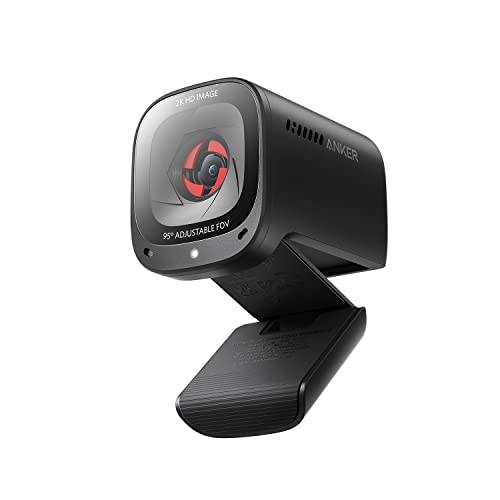
- 2K video with low-light correction
- AI noise-canceling dual microphones
- Adjustable view and privacy cover
Best For: Home offices, video calls, and late-night streaming
Best Proven 1080p Pick for Low Light

- 1080p video at 30fps
- Automatic lighting adjustment and autofocus
- Dual microphones and broad software compatibility
Best For: Everyday meetings, streaming, and desktop video calls
Best for Advanced Low-Light Monitoring

- Back-illuminated IMX462 sensor
- Up to 80fps at 720p
- 98° view with manual-focus M12 lens
Best For: Technical monitoring and custom Windows or Linux setups
Best Business Webcam with Privacy Cover

- 1080p video with RightLight 2 correction
- Built-in sliding privacy cover
- Dual microphones and H.264 encoding
Best For: Professional meetings in dim offices
Best Night-Vision Board
Arducam Day & Night 1080P Camera

- Automatic IR-cut switching for day and night use
- 850nm IR LEDs support dark-scene visibility
- UVC plug-and-play design with 1080p video
Best For: Embedded monitoring and surveillance projects
Best Adjustable Low-Light Zoom

- 2.8–12mm manual varifocal lens
- 4x optical zoom for flexible framing
- 0.01-lux low-illumination specification
Best For: Close-up, industrial, and monitoring applications
Best Ultra-Low-Light Mini
Arducam STARVIS 2 1080P Module

- STARVIS 2 sensor targets dim, lower-noise imaging
- 1080p video at up to 30fps with 95° view
- Tiny, low-power design for embedded systems
Best For: Compact Raspberry Pi, robotics, and security builds
Best Zoom Control
SVPRO 1080P 10X Optical Zoom Webcam
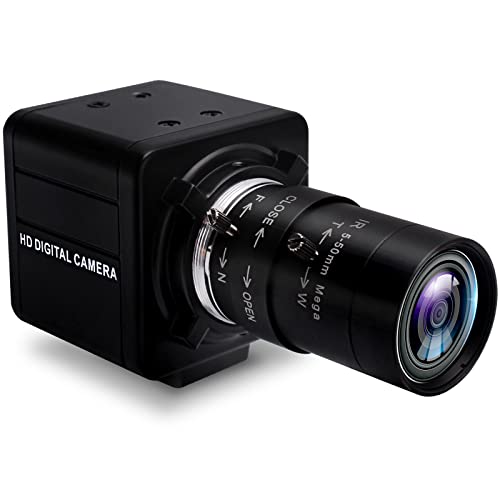
- 0.01-lux Sony IMX323 low-light sensor
- Manual 5–50mm varifocal lens
- 1080p H.264 video at 30fps
Best For: Manual framing, studio recording, and streaming setups
Best for Extreme Low Light
ELP 0.0001Lux Wide-Angle Webcam

- 0.0001-lux low-light capability
- 100dB HDR with 117-degree horizontal view
- 1080p H.264 video at 30fps
Best For: Wide-area monitoring and embedded low-light projects
Best Compact Option
ELP 0.01lux 1080P Webcam Module

- 0.01-lux Sony IMX322 sensor
- Built-in microphone and 1080p video
- Compact wide-angle module design
Best For: Embedded projects, kiosks, robots, and compact setups
Best All-Around Low-Light Webcam – Anker PowerConf C200
The Anker PowerConf C200 is a practical choice for shoppers seeking webcams for low light without adding a separate lamp. Its 2K resolution, low-light correction, autofocus, and adjustable viewing angles make it well suited to home offices, video calls, and late-night streaming.
Best For: Home-office users and streamers who want sharper 2K video, flexible framing, and clear voice pickup in dim rooms.
Pros:
- 2K video provides detailed images for conferences and recordings.
- Low-light correction helps produce crisp images in dim settings.
- AI noise cancellation and dual microphones support clearer conversations.
- Built-in privacy cover and adjustable 65°, 78°, or 95° viewing angles add flexibility.
Cons:
- It supports Windows 7 or later and macOS 10.11 or later, but the supplied notes do not list Linux compatibility.
- The integrated flash memory and media-format specifications may be unnecessary for basic video calls.
Choose the C200 if you want a feature-rich low-light webcam with higher-than-1080p resolution and adaptable framing. It is especially appealing when audio clarity and privacy features matter as much as image quality.
Best Proven 1080p Pick for Low Light – Logitech C920x HD Pro
The Logitech C920x HD Pro is a dependable option among webcams for low light, using automatic lighting adjustment and autofocus to keep Full HD video looking bright and sharp. It also adds dual-microphone stereo audio and broad compatibility for everyday calls, streaming, and recording.
Best For: Users who want a familiar 1080p webcam for meetings, streaming, and laptop or desktop video calls.
Pros:
- Full HD 1080p video records and streams at 30 frames per second.
- Automatic lighting adjustment is designed to improve images in low light.
- Autofocus and dual microphones support clear, natural video and sound.
- Works with Windows, macOS, Zoom, Microsoft Teams, Skype, Google Meet, and OBS.
Cons:
- This model has no privacy shutter.
- Its 78° viewing angle is less expansive than wide-angle alternatives.
- Video resolution is limited to 1080p rather than 2K or higher.
The C920x remains a sensible choice if reliable Full HD performance matters more than maximum resolution. Its automatic lighting adjustment makes it a strong everyday pick for rooms that are not consistently bright.
Best for Advanced Low-Light Monitoring – Arducam IMX462 USB Camera
The Arducam IMX462 USB camera is aimed at buyers who need specialized webcams for low light rather than a conventional conference webcam. Its back-illuminated IMX462 sensor, manual-focus M12 lens, 98° field of view, and programmable frame rates suit monitoring, custom video capture, and other technical setups.
Best For: Windows and Linux users building low-light monitoring, 3D-printer, security-camera, or custom capture systems.
Pros:
- Back-illuminated IMX462 sensor is designed for sharp low-light imaging.
- Programmable frame rates can reach 80fps at 720p.
- 98° wide-angle lens covers a broad scene.
- USB 3.0 plug-and-play compatibility is listed for Windows and Linux.
Cons:
- Manual focus requires more setup than an autofocus webcam.
- The maximum listed video resolution is Full HD, not 4K.
- Its specialized module design may be less convenient for ordinary video meetings.
This Arducam is the better fit when low-light sensitivity, wide coverage, and configurable capture matter more than plug-and-play conferencing features. Consider it for technical projects where manual control is an advantage.
Best Business Webcam with Privacy Cover – Logitech C925-E
The Logitech C925-E is a business-focused choice among webcams for low light, combining 1080p video, autofocus, and RightLight 2 image correction for clearer calls in dim conditions. Its privacy cover, dual microphones, H.264 encoding, and USB-A setup make it practical for professional video meetings.
Best For: Professionals and students who want a straightforward 1080p meeting webcam with privacy protection and low-light correction.
Pros:
- RightLight 2 helps improve image quality in dim lighting.
- 1080p video, autofocus, and a 78° field of view suit standard meetings.
- Built-in sliding privacy cover provides control between calls.
- Dual omnidirectional microphones and H.264 encoding support calls on varied bandwidth.
Cons:
- It uses USB-A, which may require an adapter with newer USB-C-only devices.
- The 78° field of view is narrower than the Arducam’s 98° view.
- It is limited to 1080p at 30fps.
The C925-E is a well-rounded office webcam for users who value privacy and dependable low-light correction. Its professional features make it more compelling for meetings than for high-resolution creative production.
Best Night-Vision Board – Arducam Day & Night 1080P Camera
For shoppers comparing webcams for low light, the Arducam B0205 stands out for automatic day-and-night switching. Its 2MP sensor records up to 1080p, while the IR-cut filter and 850nm IR LEDs are designed to support visibility when ambient light drops.
Best For: Home surveillance, wildlife projects, baby cameras, dashcams, and compact embedded installations that need automatic night vision.
Pros:
- Automatic IR-cut switching adapts between daylight and infrared night operation.
- 850nm IR LEDs support visibility in dark conditions.
- 1080p video and up to 30fps at several supported resolutions.
- UVC plug-and-play compatibility with Windows, Linux, macOS, Android, and Raspberry Pi.
Cons:
- The compact board design is less convenient as a conventional desktop webcam.
- Some higher-resolution modes have lower frame rates, including 5fps at 1080p in YUY2.
- It is not water resistant.
This is a practical choice when true infrared night vision matters more than a polished consumer webcam enclosure. The automatic filter and IR LEDs give it a clear advantage for unattended monitoring and embedded projects.
Best Adjustable Low-Light Zoom – ELP 1.3MP Varifocal Webcam
Among webcams for low light, the ELP USB camera is geared toward situations where framing and focus matter as much as illumination. Its 2.8–12mm manual varifocal lens provides 4x optical zoom, while the 0.01-lux low-illumination rating is intended for dim monitoring and close-up work.
Best For: Industrial or medical imaging, electronics demonstrations, close-up filming, and monitoring setups that benefit from adjustable optical zoom.
Pros:
- 2.8–12mm varifocal lens enables manual zoom and focus adjustment.
- 4x optical zoom helps frame distant or close-up subjects without relying only on digital zoom.
- 0.01-lux low-illumination specification supports use in dim environments.
- UVC plug-and-play operation works with major desktop operating systems and Android devices.
Cons:
- Manual focus requires more adjustment than a typical autofocus webcam.
- Maximum resolution is 1280×960, with 15fps at that setting.
- The industrial-style design may be less suitable for casual video calls.
The ELP is a specialized pick rather than an everyday conference camera. Choose it when manual control, optical zoom, and low-light monitoring are more important than a simple desktop setup or Full HD resolution.
Best Ultra-Low-Light Mini – Arducam STARVIS 2 1080P Module
For a compact option among webcams for low light, this Arducam module combines a STARVIS 2 sensor with a 1080p UVC design. It is built to improve near-infrared sensitivity and reduce noise in dim scenes while remaining small enough for embedded systems and DIY installations.
Best For: Raspberry Pi projects, robotics, machine vision, home security, and space-constrained systems requiring Full HD low-light imaging.
Pros:
- STARVIS 2 technology is designed for improved low-light performance and reduced image noise.
- Captures 1080p video at up to 30fps with a 95-degree diagonal field of view.
- Very compact 19.5 × 15 × 17.3mm module suits embedded installations.
- Low 1.2W power consumption supports continuous and enclosed deployments.
Cons:
- The module format may require custom mounting instead of a standard webcam stand.
- Linux users should select MJPG or H.264 for optimal 1080p30 performance.
- The supplied notes do not indicate built-in IR LEDs for illuminating completely dark scenes.
This is a strong fit for builders who need low-light capability in a very small footprint. Its STARVIS 2 sensor, efficient power use, and broad UVC compatibility make it particularly useful for long-running embedded or monitoring projects.
Best Zoom Control – SVPRO 1080P 10X Optical Zoom Webcam
If you need webcams for low light with flexible framing, the SVPRO combines 1080p video with a manually adjustable 5–50mm varifocal lens. Its Sony IMX323 sensor is rated for 0.01 lux, while the optical zoom can help you switch between close-up and longer-distance shots without relying on digital enlargement.
Best For: Streaming, studio recording, video conferences, and setups that require manual focus or adjustable viewing distance.
Pros:
- 10x optical zoom with manual focus, focal length, and iris adjustment.
- 1080p video at up to 30fps with H.264 support.
- 0.01-lux low-light rating and Sony IMX323 sensor.
- UVC plug-and-play compatibility with Windows, macOS, Linux, Android, and Raspberry Pi.
Cons:
- Manual controls require more setup than a typical fixed webcam.
- The USB 2.0 connection may be less convenient for newer high-bandwidth workflows.
- It does not include a built-in microphone in the supplied specifications.
This is a versatile choice when lens control matters as much as low-light performance. Its compact aluminum body, 3-meter cable, and dual 1/4-inch mounting points also suit tripod, desk, and embedded installations.
Best for Extreme Low Light – ELP 0.0001Lux Wide-Angle Webcam
Among webcams for low light, this ELP model stands out for its stated 0.0001-lux minimum illumination and 100dB wide dynamic range. The 1080p camera pairs that low-light capability with a broad field of view, making it practical when the scene is dark or when several subjects need to fit in the frame.
Best For: Wide-area video, low-light monitoring, Raspberry Pi and Linux projects, machine vision, and compact embedded installations.
Pros:
- 0.0001-lux low-light rating with a 1/1.8-inch SmartSens SC2210 sensor.
- 100dB HDR and an approximately 117-degree horizontal field of view.
- 1080p video at 30fps with H.264, MJPEG, and YUY2 formats.
- UVC plug-and-play support for Windows, macOS, Linux, Android, and Raspberry Pi.
Cons:
- Its very wide angle may show more background than desired for close-up calls.
- Fixed focus offers less framing flexibility than a manual-focus camera.
- The supplied specifications do not mention a built-in microphone.
This is a specialized low-light webcam rather than a conventional desk camera. Its small form factor, 3-meter cable, and wide-angle lens make it particularly suitable for surveillance, monitoring, and embedded applications where illumination and coverage are priorities.
Best Compact Option – ELP 0.01lux 1080P Webcam Module
This compact ELP module is one of the more practical webcams for low light when you need a small camera for a custom installation. Its Sony IMX322 sensor is rated to 0.01 lux, and the 1080p camera adds a built-in microphone, wide-angle lens, and UVC support for use with computers and single-board systems.
Best For: Embedded projects, 3D printers, kiosks, robots, simple surveillance, and video calls where a built-in microphone is useful.
Pros:
- Sony IMX322 sensor with a stated 0.01-lux low-light rating.
- 1080p video at up to 30fps with H.264, MJPEG, and YUY2 support.
- Built-in microphone for audio recording.
- Small 38×38mm or 32×32mm form factor with an approximately 104.5-degree view.
Cons:
- Fixed focus limits adjustment compared with zoom or manual-focus models.
- The module-style design may require more installation work than a standard desktop webcam.
- Its 2.1mm wide-angle lens may be less suitable for tightly framed shots.
Choose this model when size, connectivity, and integrated audio are more important than advanced lens controls. It supports Windows, macOS, Linux, Android, and Raspberry Pi, making it a flexible foundation for compact camera projects.
How We Picked the Best Webcams for Low Light
We focused on the features that matter most when ambient light is limited: sensor performance, automatic exposure and light correction, resolution, frame-rate options, field of view, microphone availability, focus control, and software compatibility. We also separated conventional plug-and-play webcams from board-style cameras that require more setup.
Specifications such as “low lux,” STARVIS sensors, IR-cut switching, and infrared LEDs can indicate stronger dim-light capability, but they do not guarantee a bright, noise-free image in every room. Lens quality, subject distance, background contrast, and the color of available light still affect results.
Quick Comparison
| Best For | Recommended Type | What to Look For |
|---|---|---|
| Everyday video calls | Standard USB webcam | 1080p video, automatic exposure, built-in microphone |
| Sharper desk-based video | 2K webcam | Higher resolution and effective low-light correction |
| Wide or distant subjects | Manual or optical-zoom camera | Adjustable focal length and manual focus |
| Very dark scenes | STARVIS or IR-capable camera | Low-light sensor, IR illumination, or day/night switching |
| DIY and embedded projects | UVC camera module | USB compatibility, mounting options, and configuration controls |
Key Buying Factors for Webcams for Low Light
Sensor and Exposure Performance
A larger or more sensitive image sensor generally produces cleaner footage in dim conditions. Look for STARVIS or similar low-light sensor technology, plus automatic exposure and gain control. Extremely low-light specifications are useful for comparison, but review the actual resolution and frame-rate trade-offs too.
Resolution, Frame Rate, and Compression
1080p is sufficient for most meetings and streaming. A 2K model can provide extra detail in a well-positioned crop, while higher frame rates may help with motion but can reduce image quality in darkness. H.264 support may lower USB or computer bandwidth on compatible cameras.
Lens, Focus, and Viewing Angle
Wide-angle lenses help include multiple people but can make faces appear smaller. Manual-focus and zoom models are better for fixed installations, presentations, or distant subjects; they are less convenient for casual laptop calls. Check whether the advertised zoom is optical or digital.
Day/night Features and Setup
IR LEDs and automatic IR-cut switching are valuable for near-dark monitoring, but infrared footage may appear monochrome and is not always supported by common meeting apps as expected. Confirm USB, operating-system, mounting, and microphone requirements before buying.
Who Should Buy Which Webcams for Low Light?
Choose a conventional Logitech or Anker-style webcam if you want easy setup for work calls, classes, or general streaming. A 2K option suits users who want more detail without building a camera system. Pick an IR or STARVIS model for darker rooms, nighttime monitoring, or controlled installations. Manual-zoom ELP, SVPRO, and similar cameras make more sense for fixed desks, demonstrations, and distance-sensitive framing than for quick plug-and-play calls.
Before purchasing, consider adding a small front-facing lamp. Even the best Webcams for Low Light usually deliver better skin tones and less noise with modest, indirect illumination.